

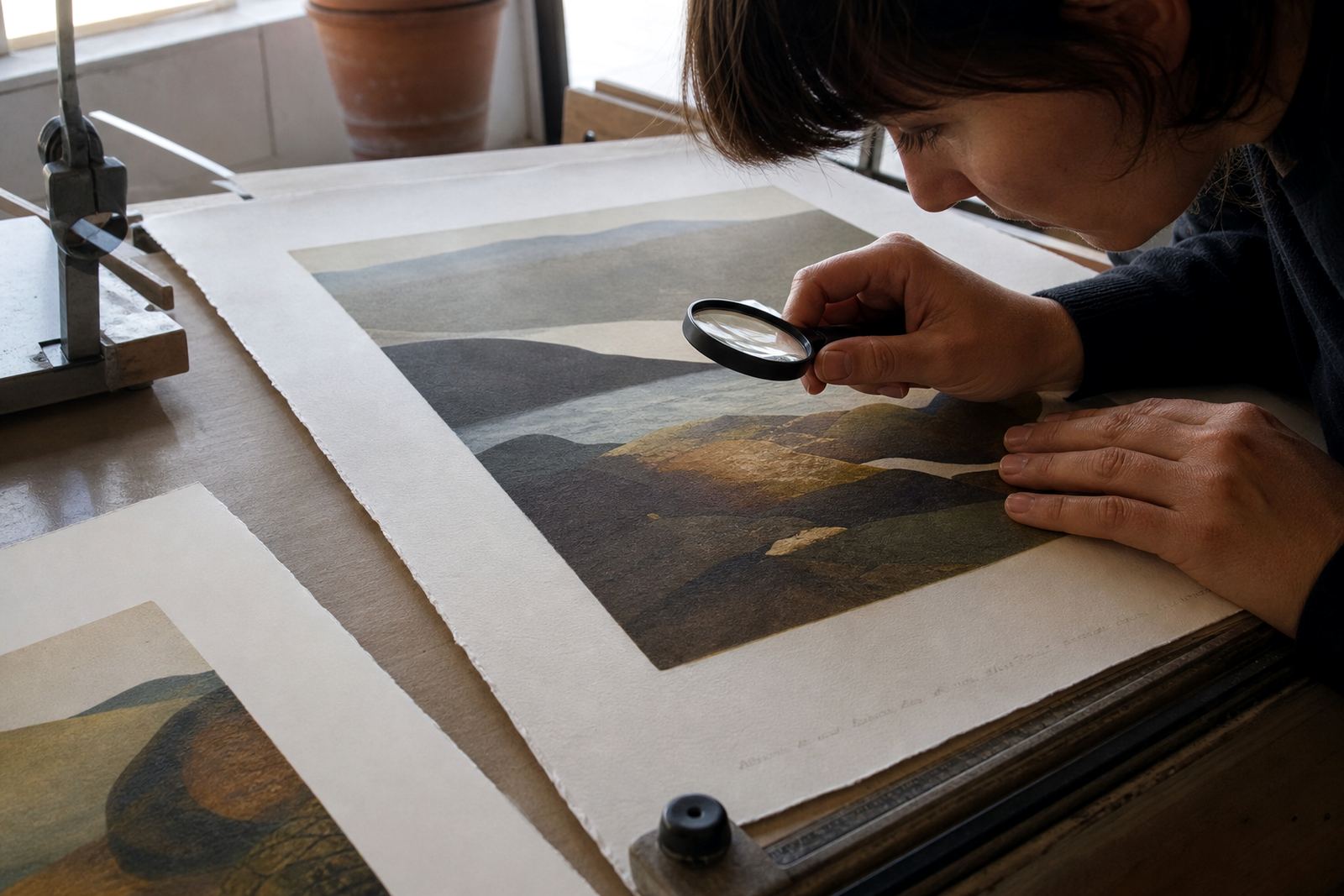

How We Shape A Lithography Collaboration
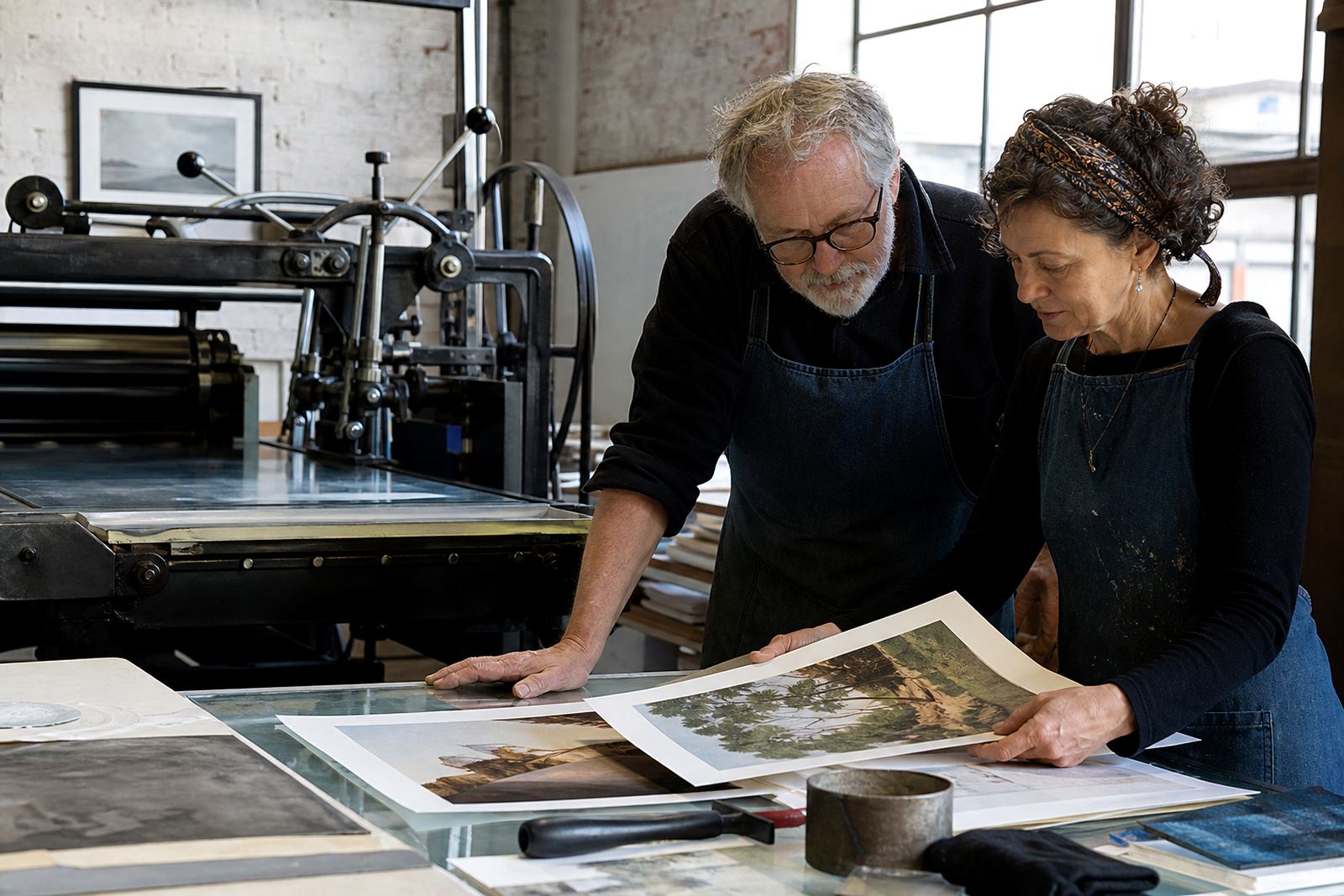
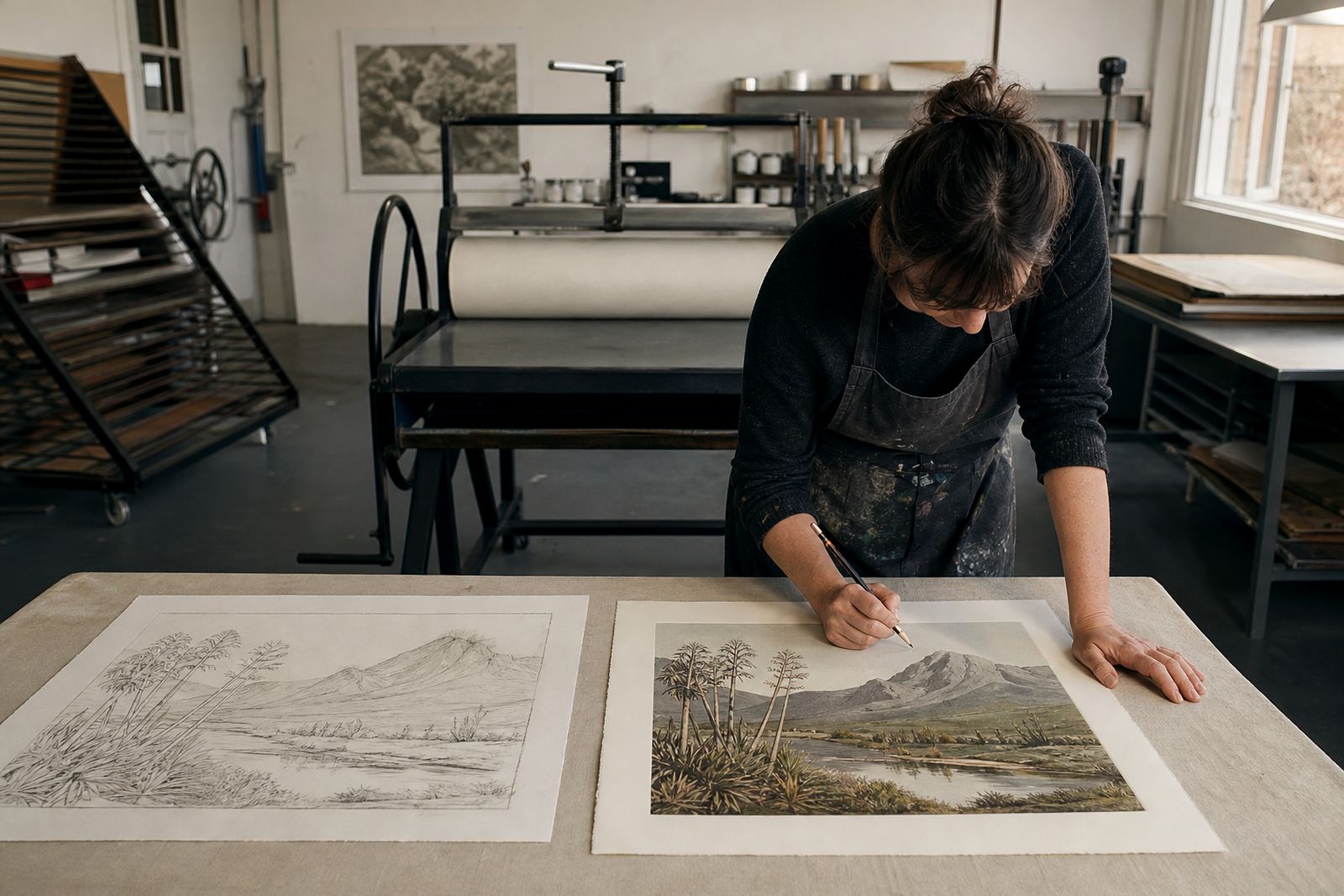
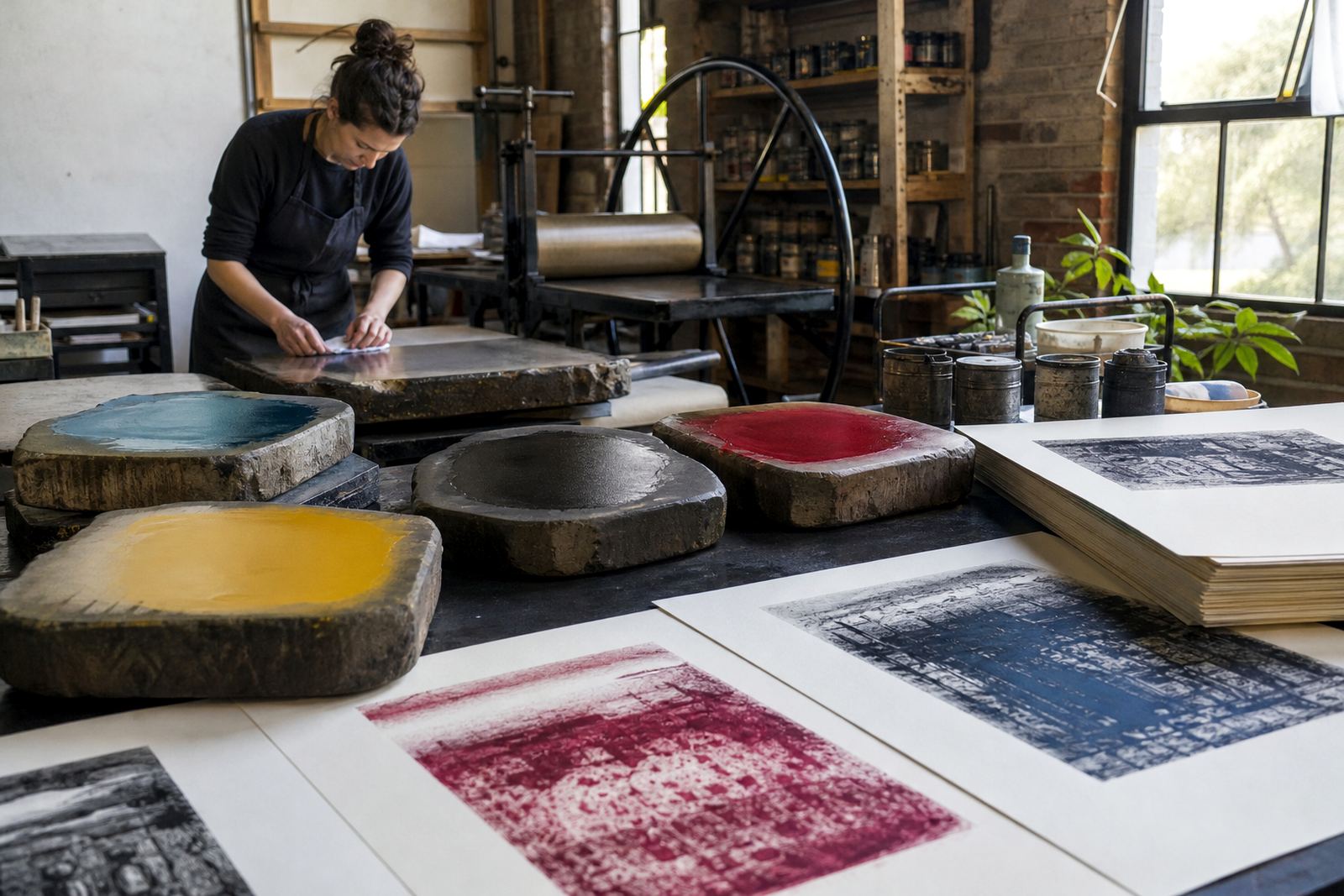
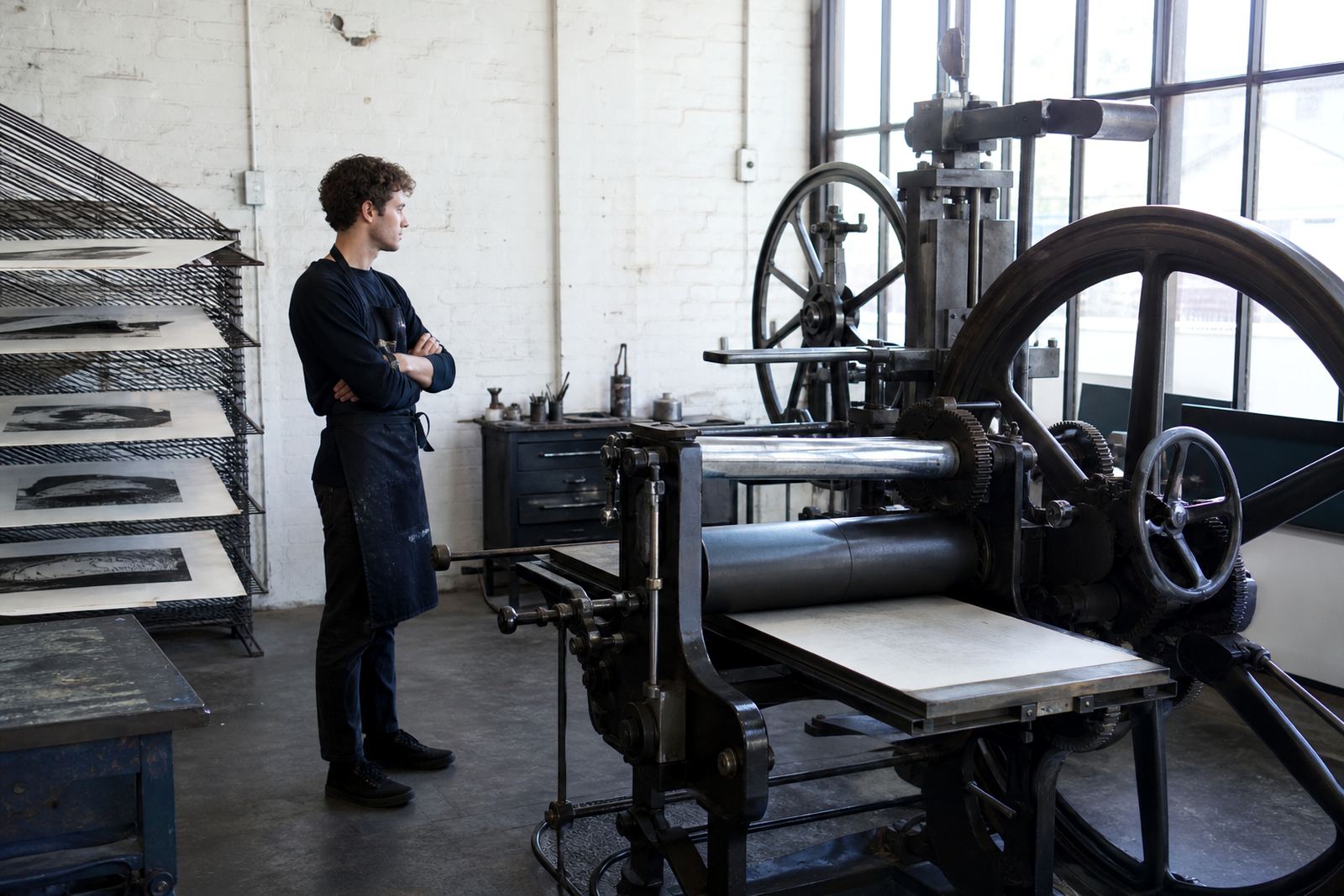
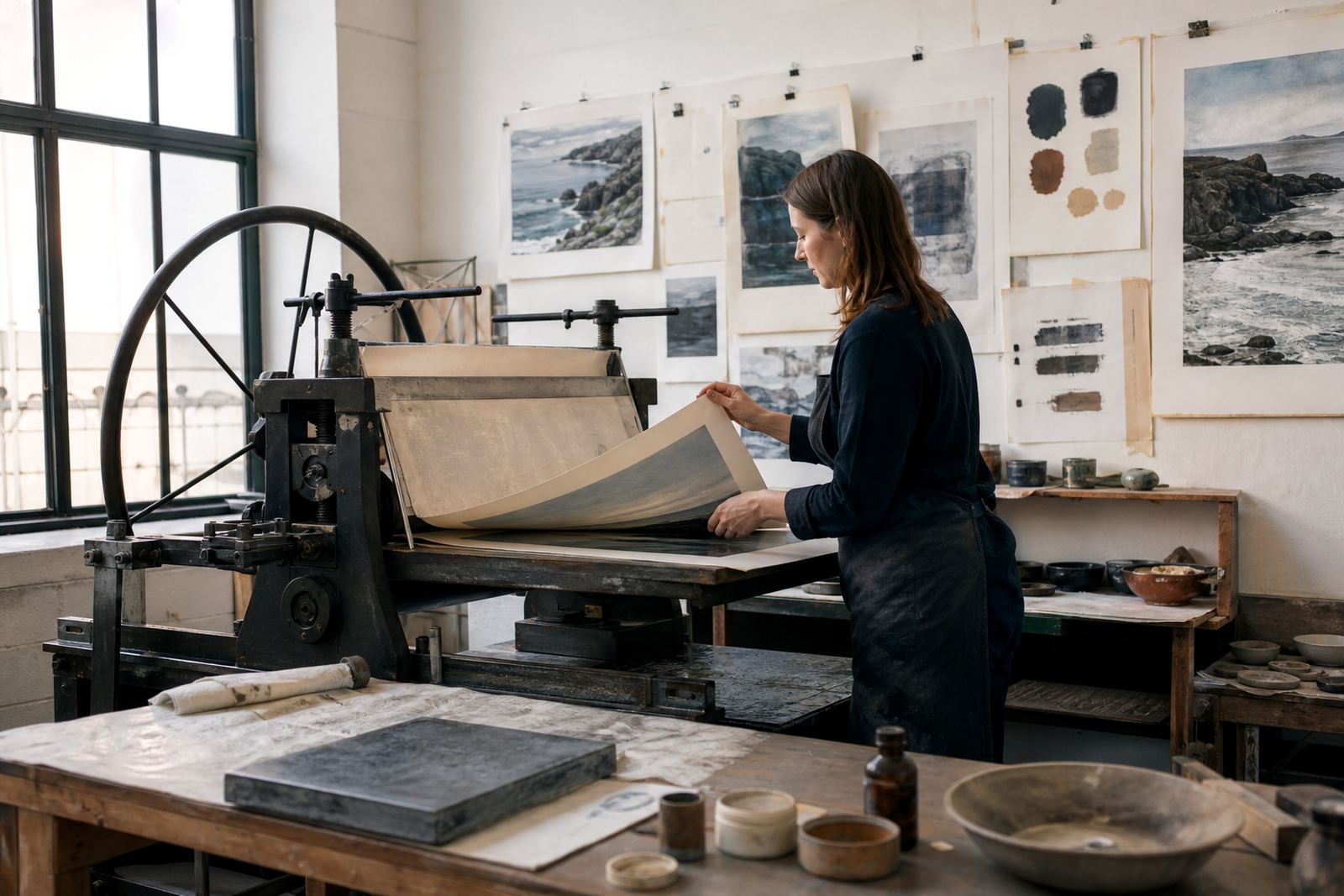
Each project starts with the image and the edition plan. Stone lithography is a hand-printing process that uses a limestone surface, grease-based drawing materials and careful chemical handling to carry the image to paper. It suits fine line work, tonal marks and layered colour, but it also asks for patience, because every stone responds a little differently during proofing and printing.
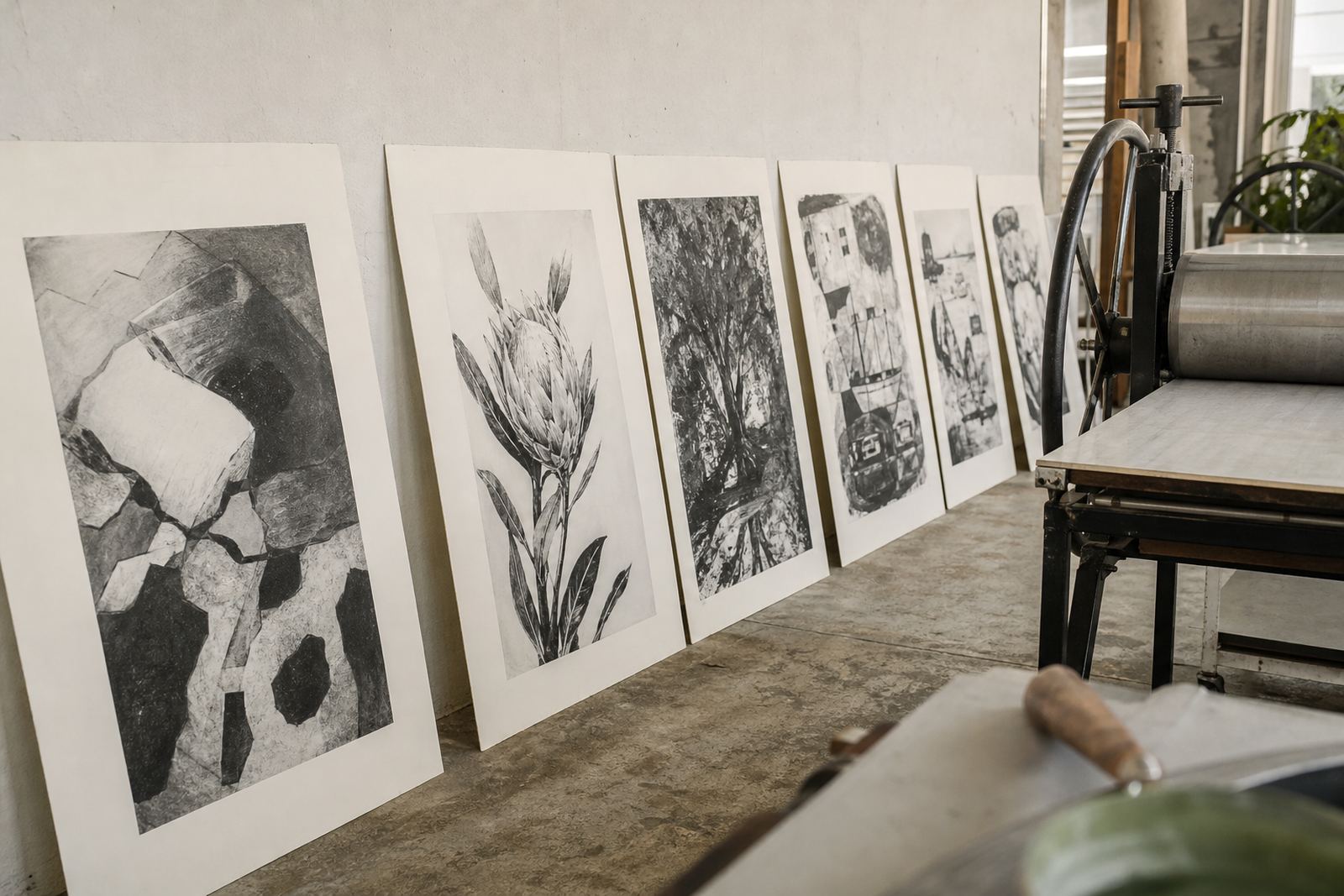
For artists, the value of a collaboration lies in turning an idea into a controlled edition. We help decide the edition size, the number of colours, the paper weight and the order of printing.
Projects For Artists In Cape Town And Beyond
Based in Woodstock, Cape Town, we work with artists from across South Africa, including Sea Point, Newlands, Stellenbosch, Johannesburg, Pretoria and Durban. Some come to the studio for hands-on proofing sessions, while others prefer to work closely from afar through image reviews and edition notes. Both approaches can suit a lithograph series, depending on how much involvement the artist wants at each stage.
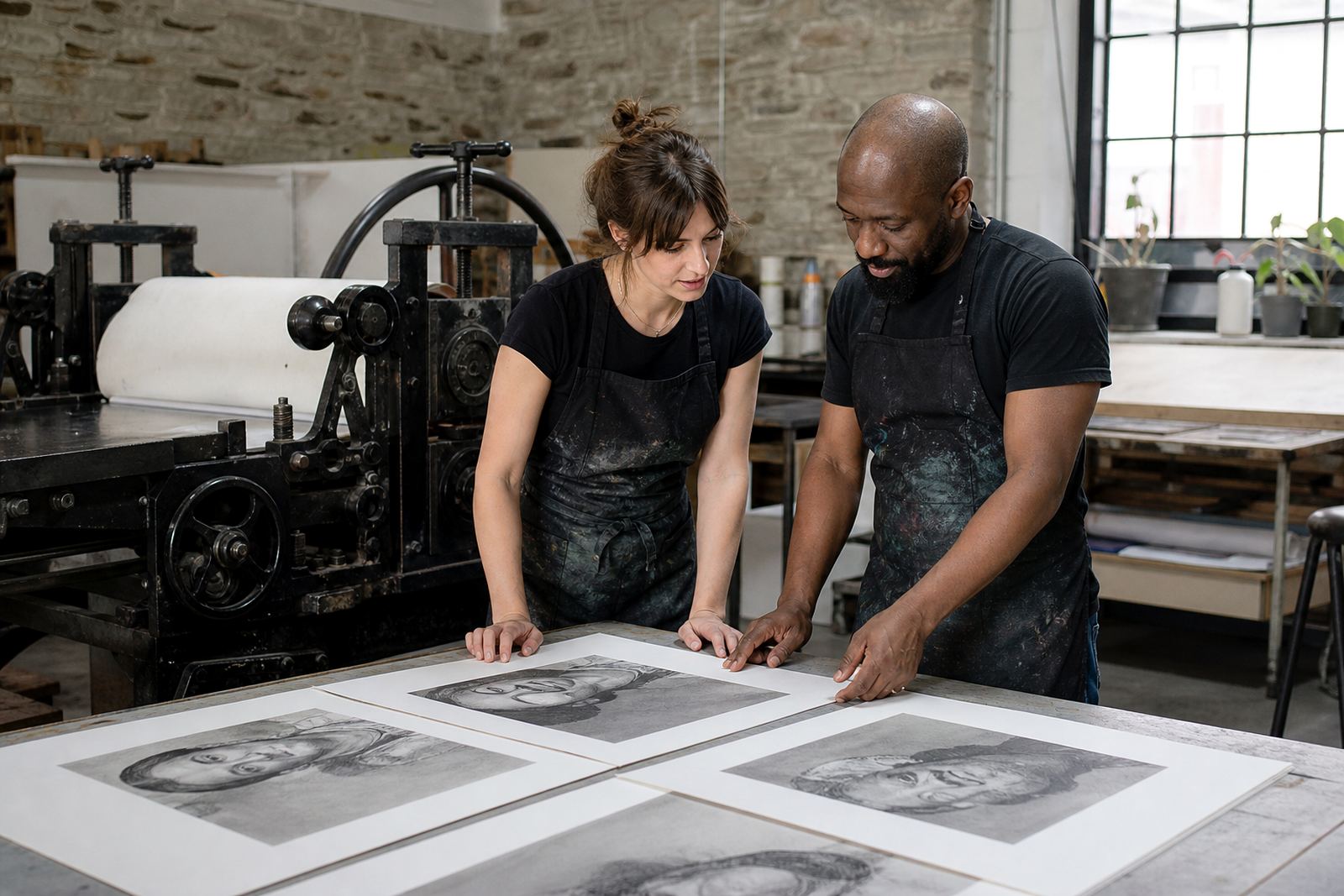
We also coordinate studio visits for artists who want to see the stone, the ink mix and the registration setup in person. For those outside Cape Town, clear communication is essential. We keep the proofing process orderly, with each adjustment recorded so the final edition stays consistent. It is steady work, but it lets the artist keep control over the finished print.
- Proofing sessions for image development and colour decisions
- Edition planning for short runs and larger collector editions
- Final printing with close attention to registration and tone
Collector-Focused Editions And Sale Ready Prints
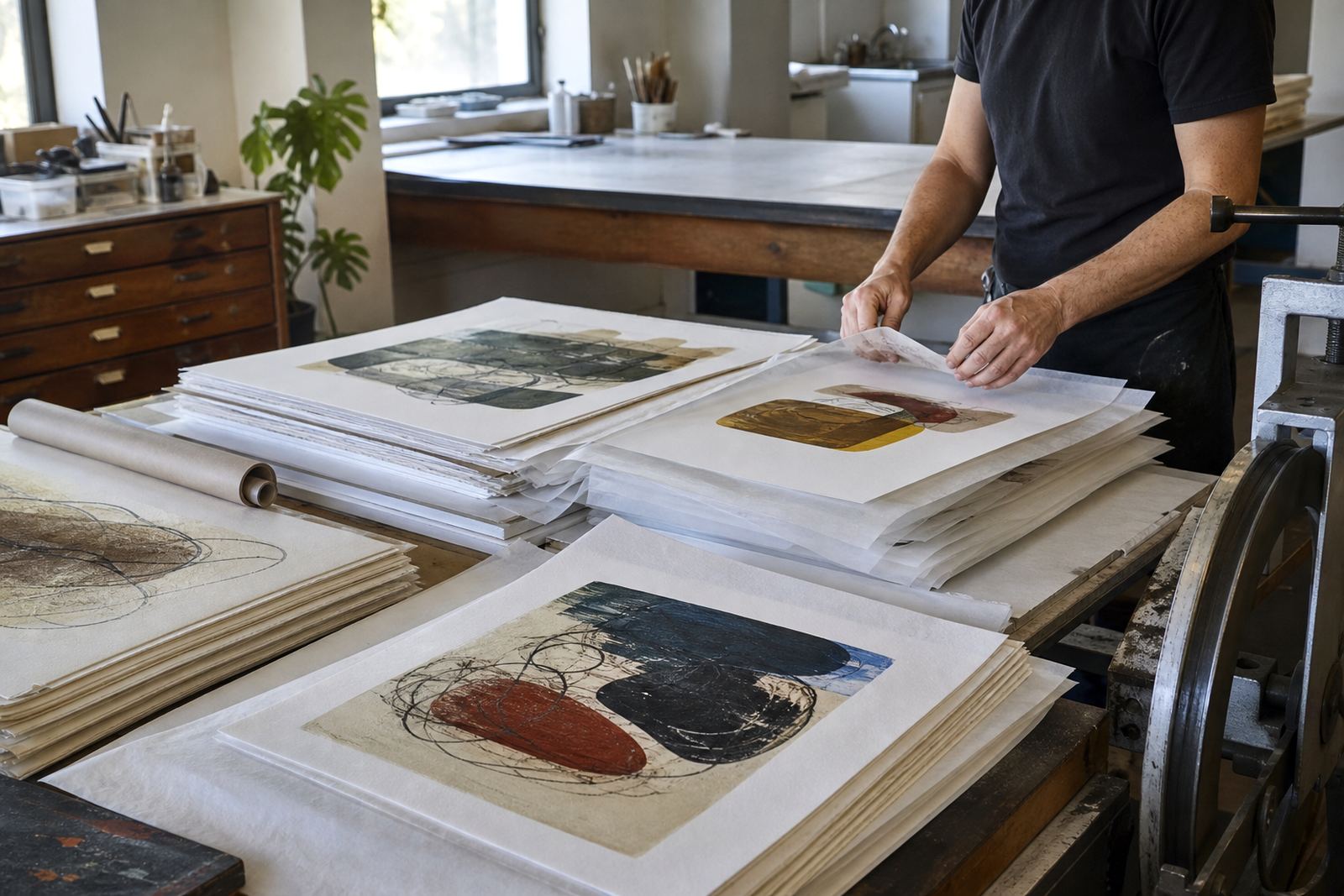
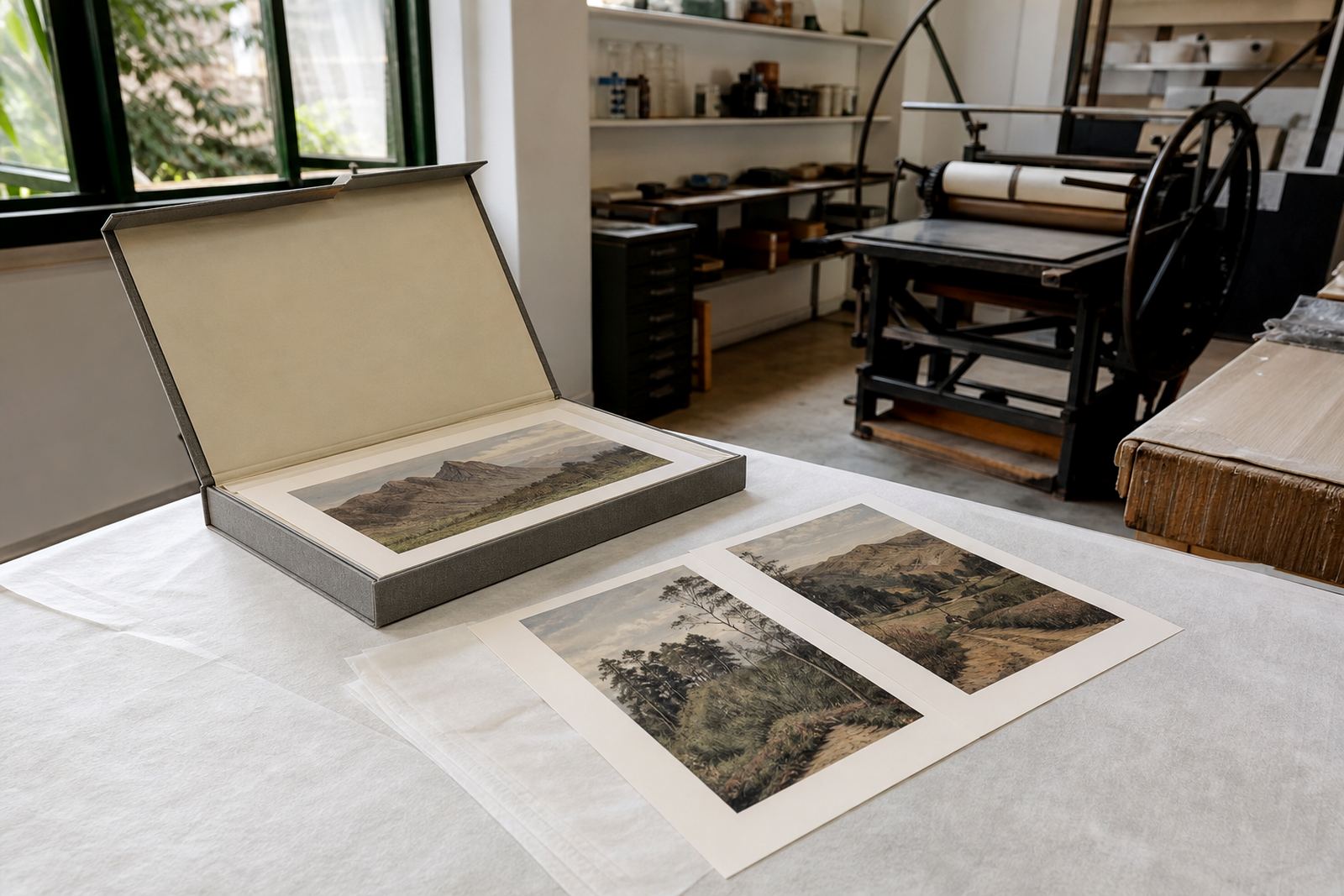
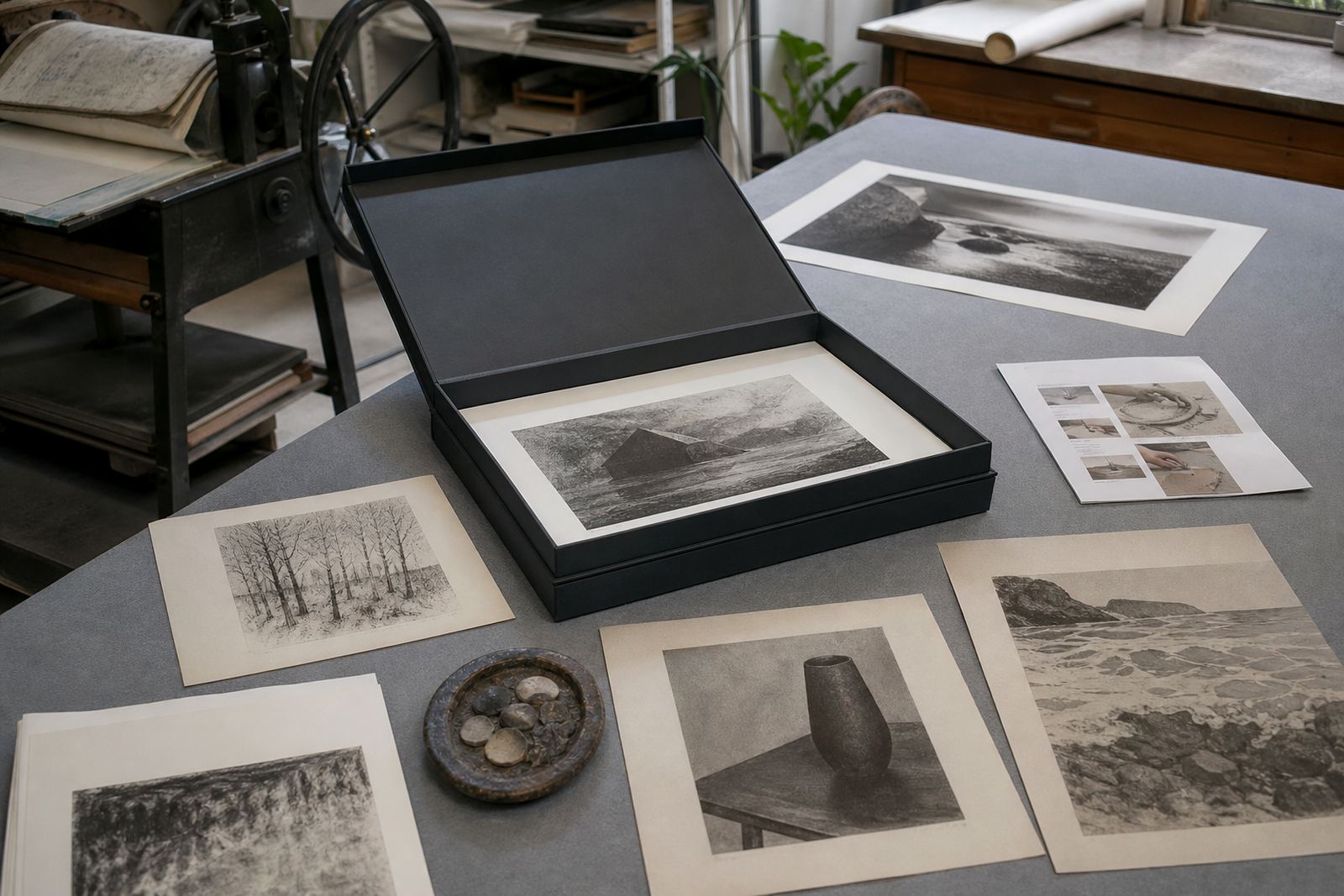
Some collaborations are made with collectors in mind from the start. In those cases we plan for signing, numbering and archival packing so the edition is ready for careful handling and long-term storage. Limited-edition stone lithographs are often chosen because they carry the character of the hand-made process while still allowing a clear edition structure that collectors can understand.
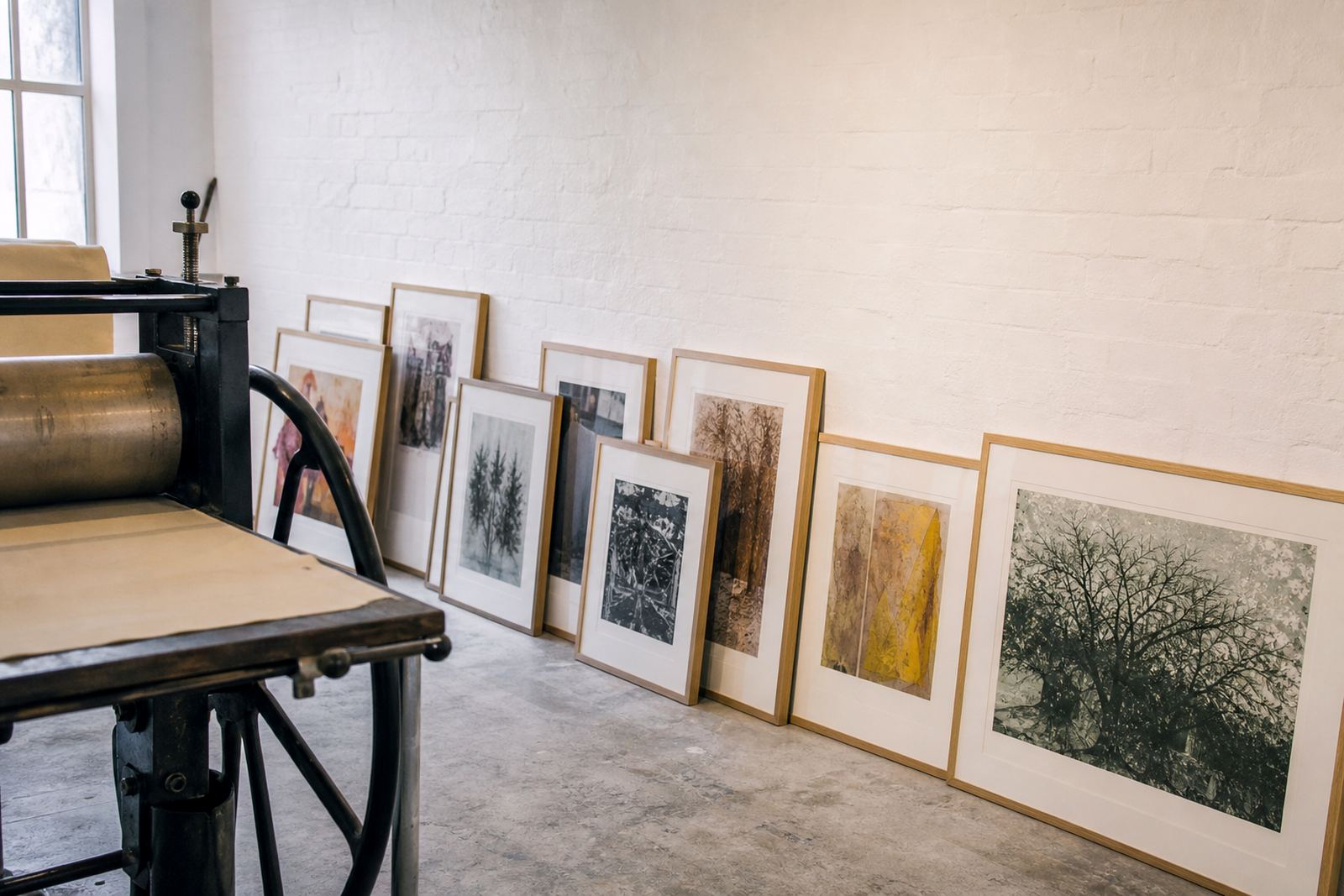
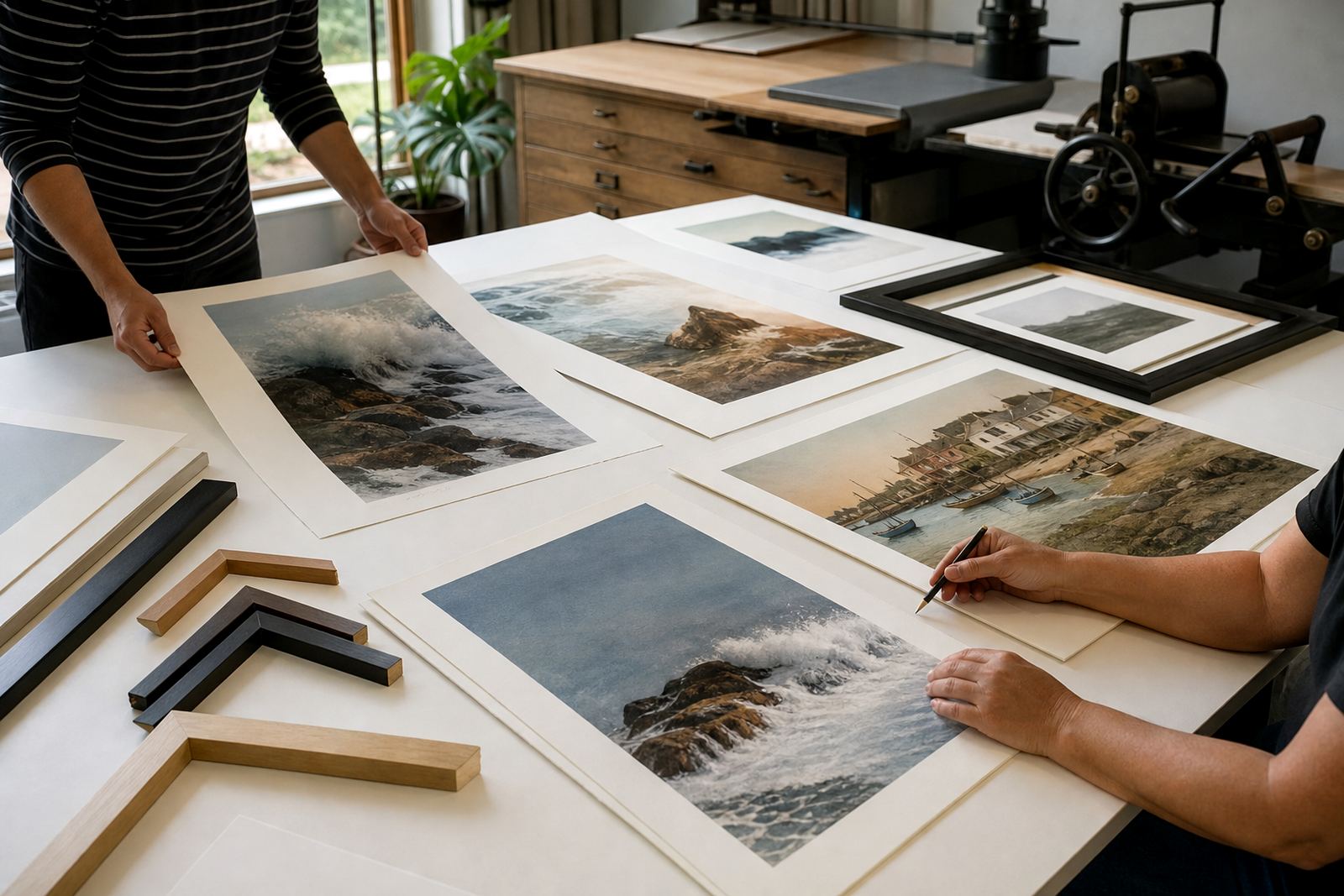
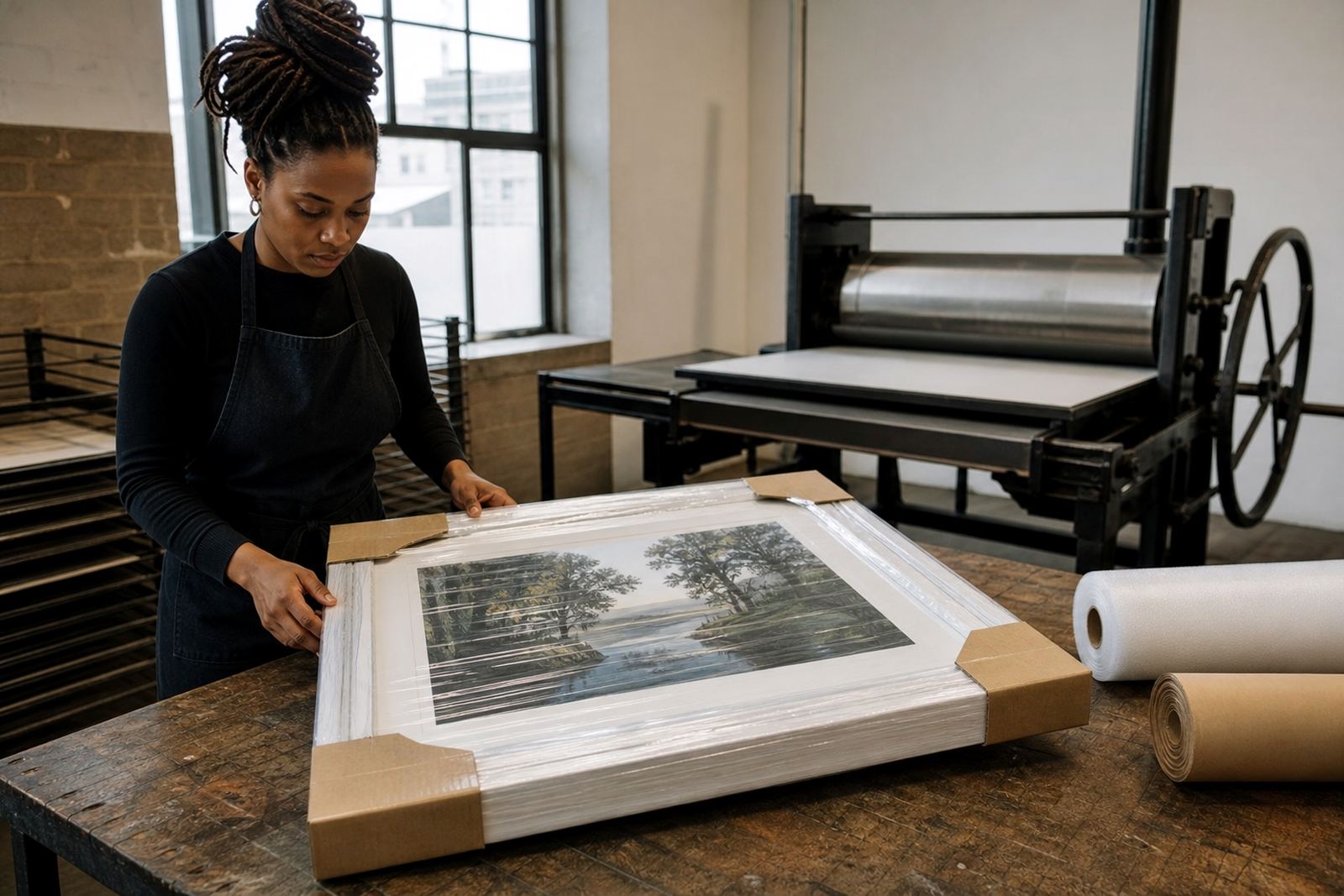
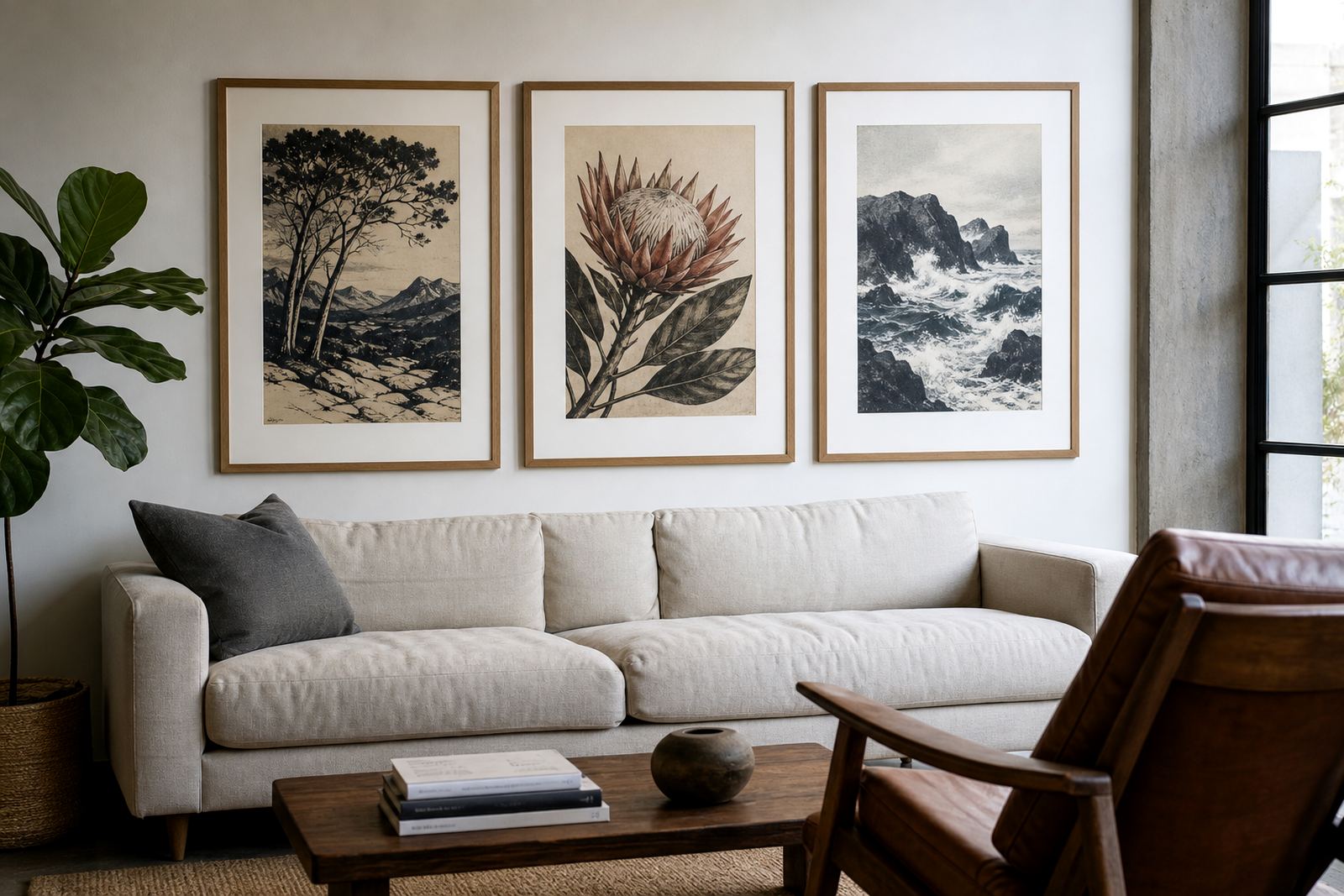
We advise on paper choice, margins and presentation so the work can be framed properly later. In coastal areas like Durban or Sea Point, for example, print care should take into account humidity and the risk of damp storage. Acid-free sleeves, flat storage and sensible framing materials all help preserve the work. A print should not be rolled and left that way for long, and it should never be exposed to direct sun for too long either.
Edition Planning, Numbering And Artist Sign-Off
Edition planning is one of the most important parts of the process, because it protects both the integrity of the image and the value of the print. We help establish how many sheets will be printed, how proof states will be marked, and when the edition is ready for signature. This is especially useful where a work involves several colours or repeat runs through the press.
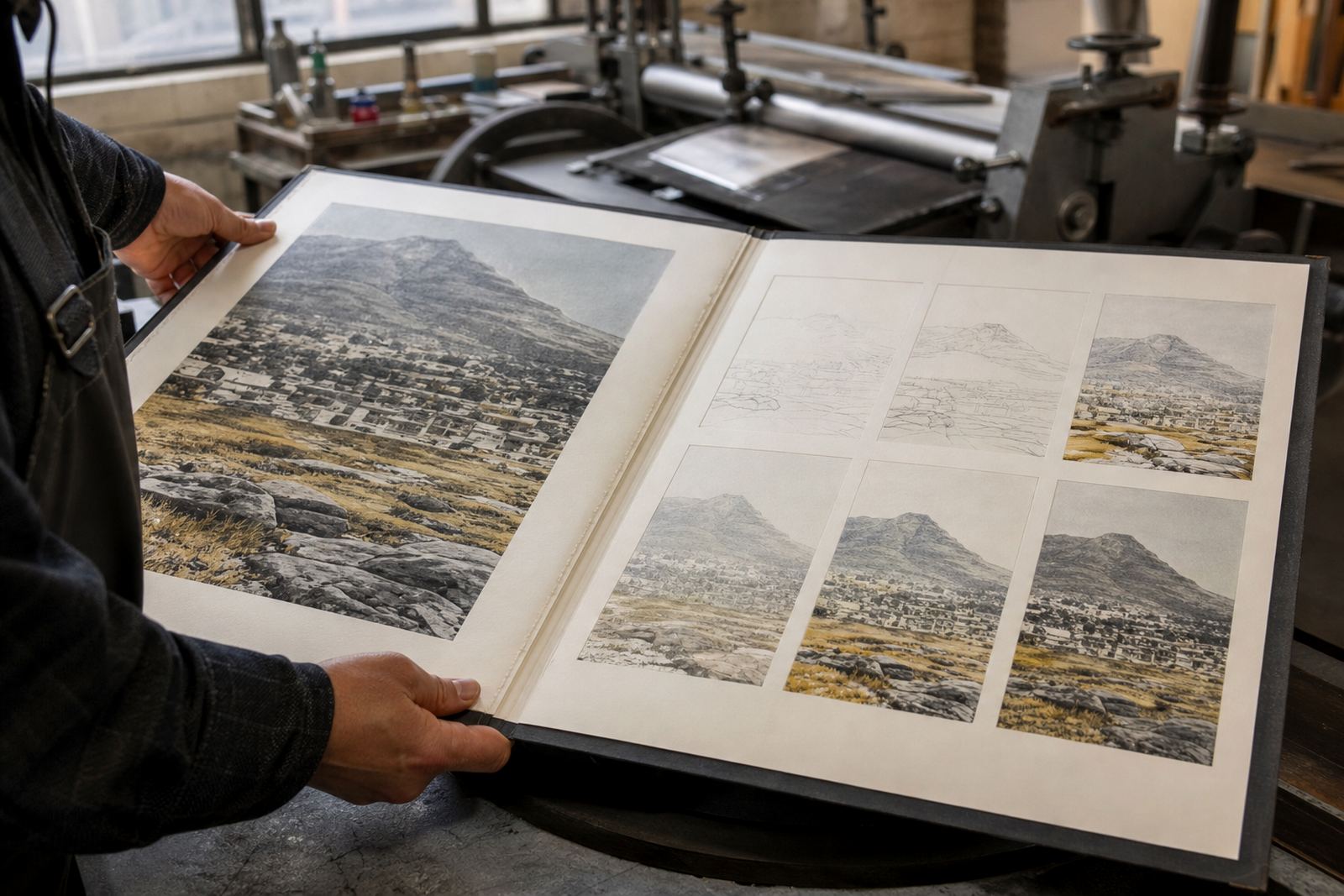
Final sign-off is only done once the artist is happy with the colour, balance and paper finish. If an image needs subtle changes, we return to the stone and adjust the drawing or the inking plan before the full run begins. That extra step can save time later and avoids wasting paper or materials. It is slower than digital reproduction, but that is the point of the process.
- Numbering and artist proof structure set before printing starts
- Changes documented during proofing so the edition remains consistent
- Final sheets packed flat with care instructions for storage and framing
Paper, Colour And Stone Preparation In Practice
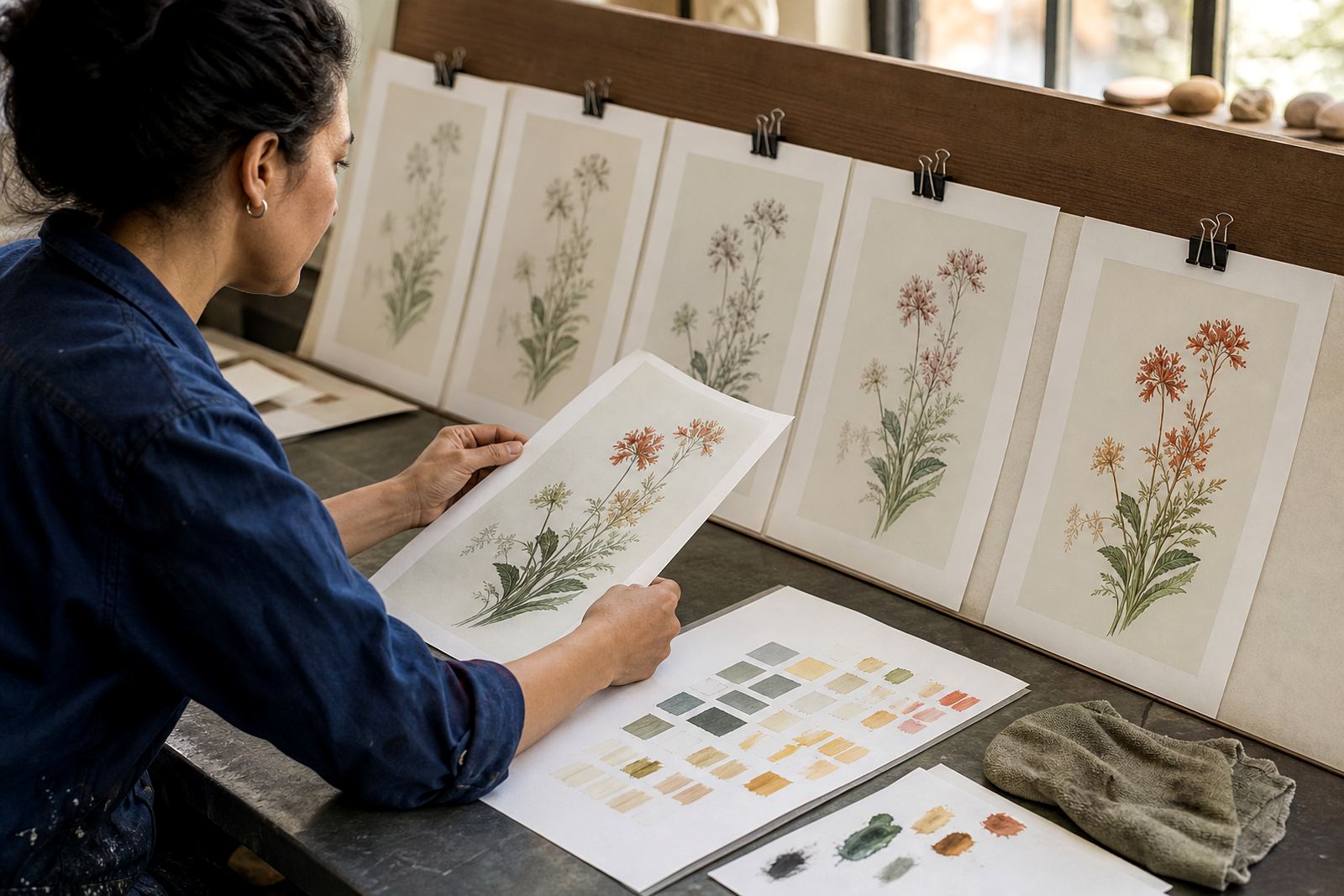
Paper choice affects the feel of the finished print as much as the ink does. Some artists prefer a smooth sheet for crisp detail, while others want a textured paper that takes a softer mark. We talk through those choices before printing begins, because the wrong paper can flatten the image or make layers harder to read. Colour work also needs testing, especially when one tone must sit cleanly over another.
Stone preparation is equally important. The limestone must be planed, grained and prepared with care before any drawing begins. If the stone is not even, the image will not print evenly, and the artist may lose subtle marks. In our studio, every stage is checked by hand, from the first sketch transfer to the final proof. That discipline keeps the edition true to the original intention.
Working With A Studio In Woodstock
Our base in Woodstock gives artists and collectors a practical place to work with a dedicated fine-art lithography team. The area suits studio visits and collection by arrangement, and it is easy for clients coming from central Cape Town, the southern suburbs or the Atlantic Seaboard. For those further afield, the enquiry form on our contact page is the best way to start a project discussion.
We support artists, collectors and galleries with a calm, organised process that covers the full edition from first proof to packed print. If you are planning a lithograph series, it helps to know what the work is for, how many sheets are needed and how the final prints will be presented. Once those points are clear, the collaboration can move forward in a practical way, without guesswork.