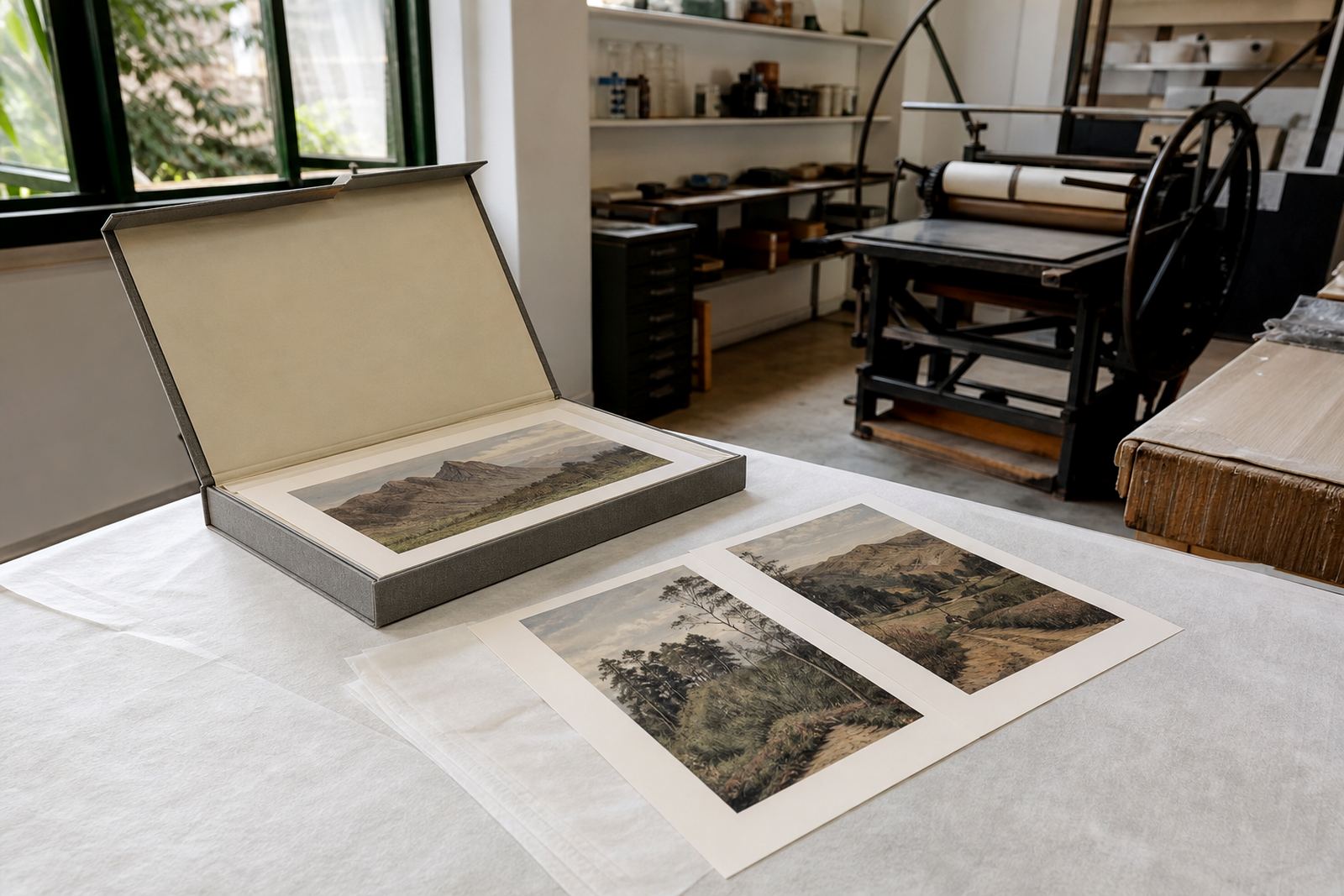
Private Collection Brief in Cape Town
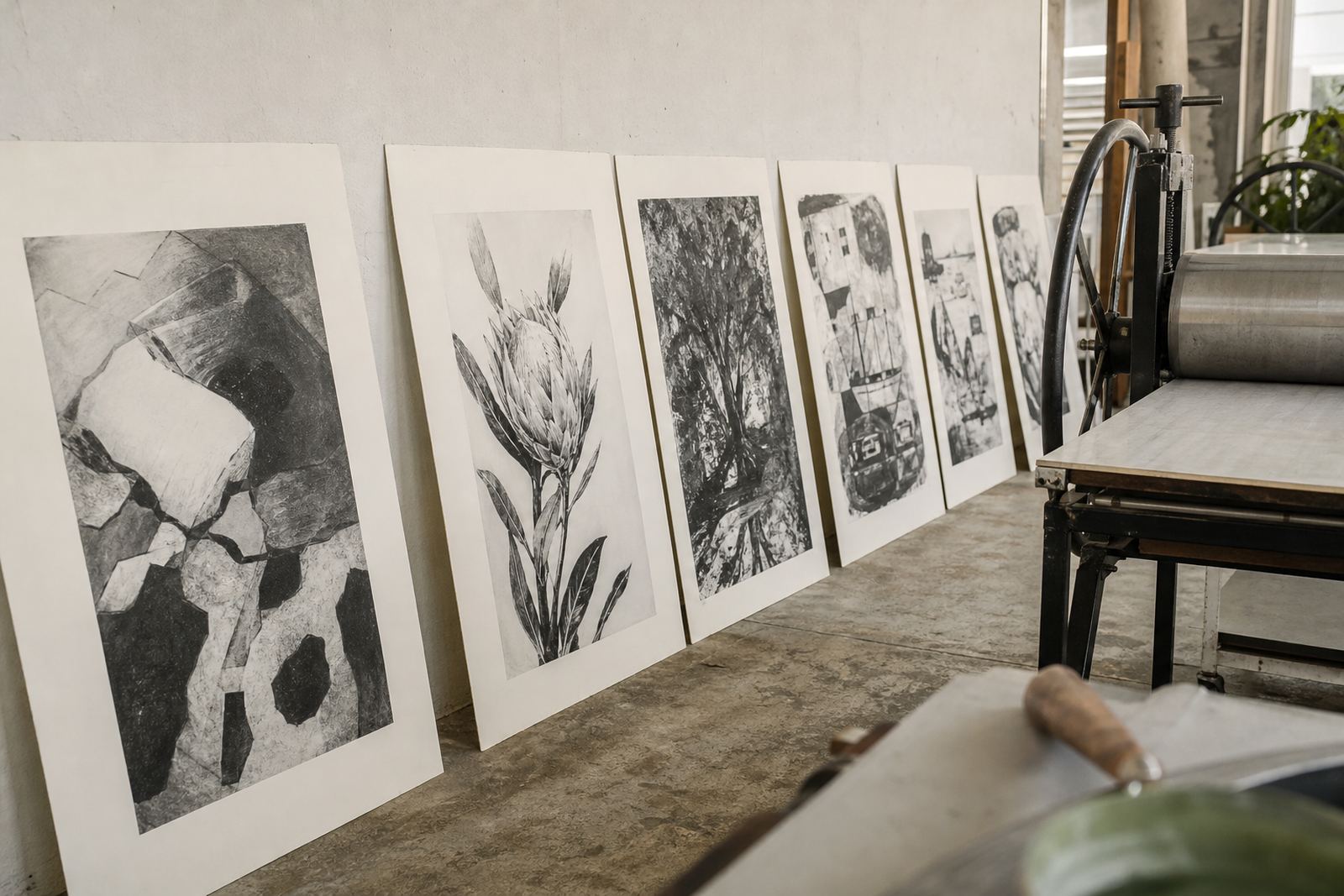
The brief came from a private client in Cape Town who wanted a group of landscape prints for a home collection, with enough unity to hang together but enough variation to keep each sheet distinct. The client was not looking for a single image repeated in different colours. They wanted a considered body of work that would sit comfortably in living spaces, passage areas and a study, with a restrained palette and strong drawing in the stone.
Because this was for a private home, the emphasis was on scale, tone and finish. We planned the edition so the prints would work as framed works on paper, not as oversized display pieces. That meant choosing paper sizes that could be handled easily, fit standard framing formats, and remain stable in Cape Town's coastal air. We also had to allow for a clean signing area and consistent margins across the full set.
How Stone Lithography Shaped the Work
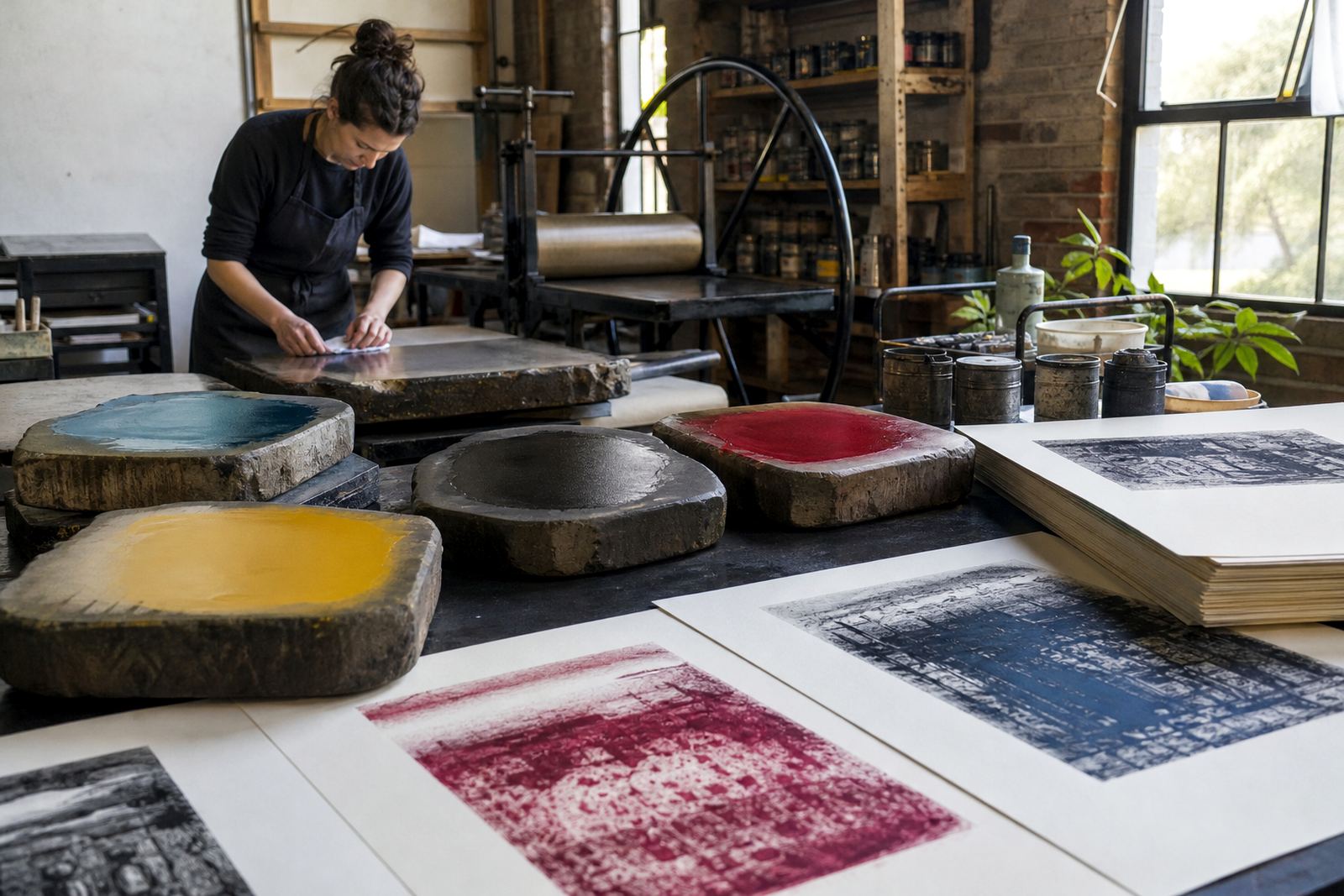
In stone lithography, the image is made on a porous limestone surface in a planographic process. The image is drawn on the stone with greasy material, then chemically treated so the drawn areas accept ink and the non image areas repel it. Each colour is printed in separate passes, with careful registration between stones when a work has more than one colour. The process is slow, but it gives a softness and depth that suits landscape subjects very well.
For this project, we used stone lithography to keep the tonal shifts natural and the mark making direct. The client wanted detail in the horizon lines, trees and foreground texture, but not an overly polished finish. Stone gave us the right balance. It also allowed us to control the edition properly, so every impression held together across the run and the final set remained visually consistent.
- Hand drawn image on limestone
- Separate stones used where colour layers were needed
- Edition printed under close press control
- Margins set for framing and signing
Edition Planning, Proofing and Colour Decisions
We began with proofing sessions to test image balance, paper response and colour density. The first proofs helped us refine the tonal range so the darker areas did not close up and the lighter washes stayed open. In stone lithography, small changes in dampening, ink load and pressure can alter the final print, so each proof was checked against the intended edition standard before we moved on.
The colour plan was kept discreet. Instead of bright, competing tones, we used a grounded palette that echoed the natural subject matter. The edition was planned as a limited run, with each sheet numbered and signed after drying. That kept the output controlled and appropriate for a collector focused project. For a home collection, that kind of discipline matters because the prints need to look cohesive when viewed as a group.
- Proofing was used to fix tonal balance before the edition run
- Colour separation was kept simple and landscape led
- Edition size was limited for collector value and consistency
- Each sheet was checked before signing and numbering
Paper, Packing and Home Friendly Handling
We supplied paper suited to fine art lithography, with enough surface strength to take the stone printed image cleanly and enough body to sit well in a frame. Paper choice matters in the Western Cape because humidity can affect handling, especially if work is moving between studio, framers and a private home. We handled each print with cotton gloves and allowed proper drying time before any packing or stacking.
The final set was packed for local collection and safe transport across Cape Town. We also prepared the prints with archival interleaving so the surfaces would not mark each other in transit. For the client, this made it easier to place the work directly with a framer or keep sheets safely stored until the home display was ready.
- Archival packing for short and longer storage
- Paper selected for fine art print stability
- Handling kept minimal after printing and drying
- Suitable for framing in standard home interiors
Timeline From First Proof to Final Sheets
The full project ran over six weeks. The first week was spent on image planning and stone preparation. Weeks two and three were used for proofing, colour adjustment and press testing. The edition run followed once the image had settled, and the final stage covered drying, signing, numbering and packing. That pace gave us enough time to keep the work accurate without rushing the surface or the registration.
Because the client was based in Cape Town, we could manage studio visits and review the work in person at key stages. That is often the best way to handle a private collection project. It gives the collector confidence, and it allows us to make a final adjustment if a margin, tone or colour needs attention.
Results for the Private Home Collection
The finished portfolio gave the client a carefully edited set of landscape lithographs that can be displayed together or individually. The prints have a calm visual rhythm, with enough variation in tone to keep the series interesting and enough consistency in scale and finish to make the grouping feel deliberate. The client wanted work that would hold up in a home setting over time, and that was achieved through careful paper choice, controlled editioning and clean packing.
What we would do again is keep the process tightly paced, with proofing early and signing only once the whole set has been checked. For private collectors, that saves time later and reduces the risk of mismatched sheets. We would also keep the edition notes clear from the start, so the client knows exactly how the series is structured, how it should be framed and how to store it if it is not being displayed straight away.
- Best suited to a home collection with a quiet, curated feel
- Works across framed wall groupings and single sheet display
- Suitable for collectors in Cape Town and other major South African cities
- Care notes supplied for storage, framing and handling
Edition details
| Project type | Private home collection of landscape lithographs |
|---|---|
| Location | Woodstock, Cape Town |
| Client area | Cape Town |
| Process | Stone lithography with proofing, editioning and signing |
| Timeline | 6 weeks from first proof to final packed sheets |
| Edition format | Limited edition, numbered and signed by hand |