Edition brief for a collector-facing portfolio
The brief came from a gallery client in Morningside, Johannesburg, with a clear aim: create a portfolio edition that could be shown to serious print buyers, artists and collectors without losing the hand-made character of stone lithography. The work needed to read well in a portfolio context, with controlled colour, clean registration and enough detail to hold up under close viewing.
We treated the project as a presentation edition rather than a loose studio proof run. That meant setting clear limits on the number of impressions, defining which sheets would form the final set, and agreeing on how each print would be signed, numbered and packed. The client wanted a result that felt considered and precise, not overworked.
- Client type: gallery and print presenter in Morningside, Johannesburg
- Goal: a limited portfolio edition for viewing and acquisition
- Focus: image clarity, colour accuracy and consistent sheet quality
- Delivery area: South Africa, with collector interest in Cape Town, Stellenbosch, Pretoria and Durban
Stone lithography process and what shaped the work
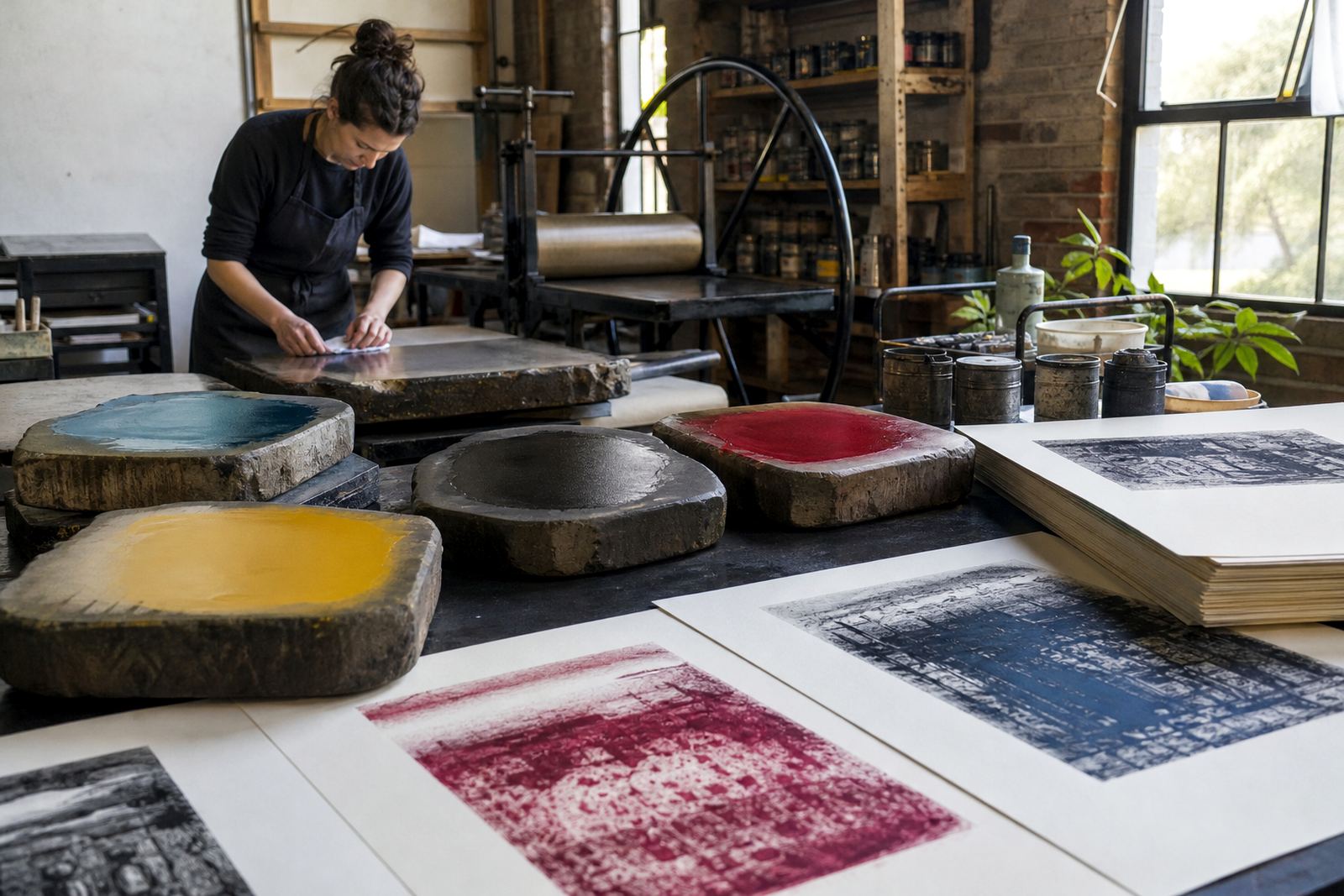
Here, the image is printed from a prepared limestone surface in a direct lithographic process. The artist or printer draws on the stone with greasy materials, then the stone is chemically processed so the image area accepts ink while the non-image areas repel it. It is a slow process, but it gives a quality of mark that is difficult to copy any other way.
For this edition, the main challenge was to keep the tonal range steady across the full run while preserving the softness and texture that make lithography appealing to print collectors. Because stone can carry fine drawing and subtle gradation, we paid close attention to dampening, ink balance and pressure on the press. Small shifts matter, especially when a portfolio edition needs to sit together as a coherent group.
- Method: hand-drawn stone lithography on prepared limestone
- Edition type: limited portfolio set
- Press requirements: consistent moisture, ink loading and pressure
- Working note: humidity and paper behaviour were monitored through the run
Planning, proofing and edition control
We began with edition planning and proofing sessions in the studio, using test impressions to settle the image and confirm the final look. That stage let us check density, edge sharpness and the way the colours sat on the paper. It also gave the client a clear basis for approving the final edition structure before full production started.
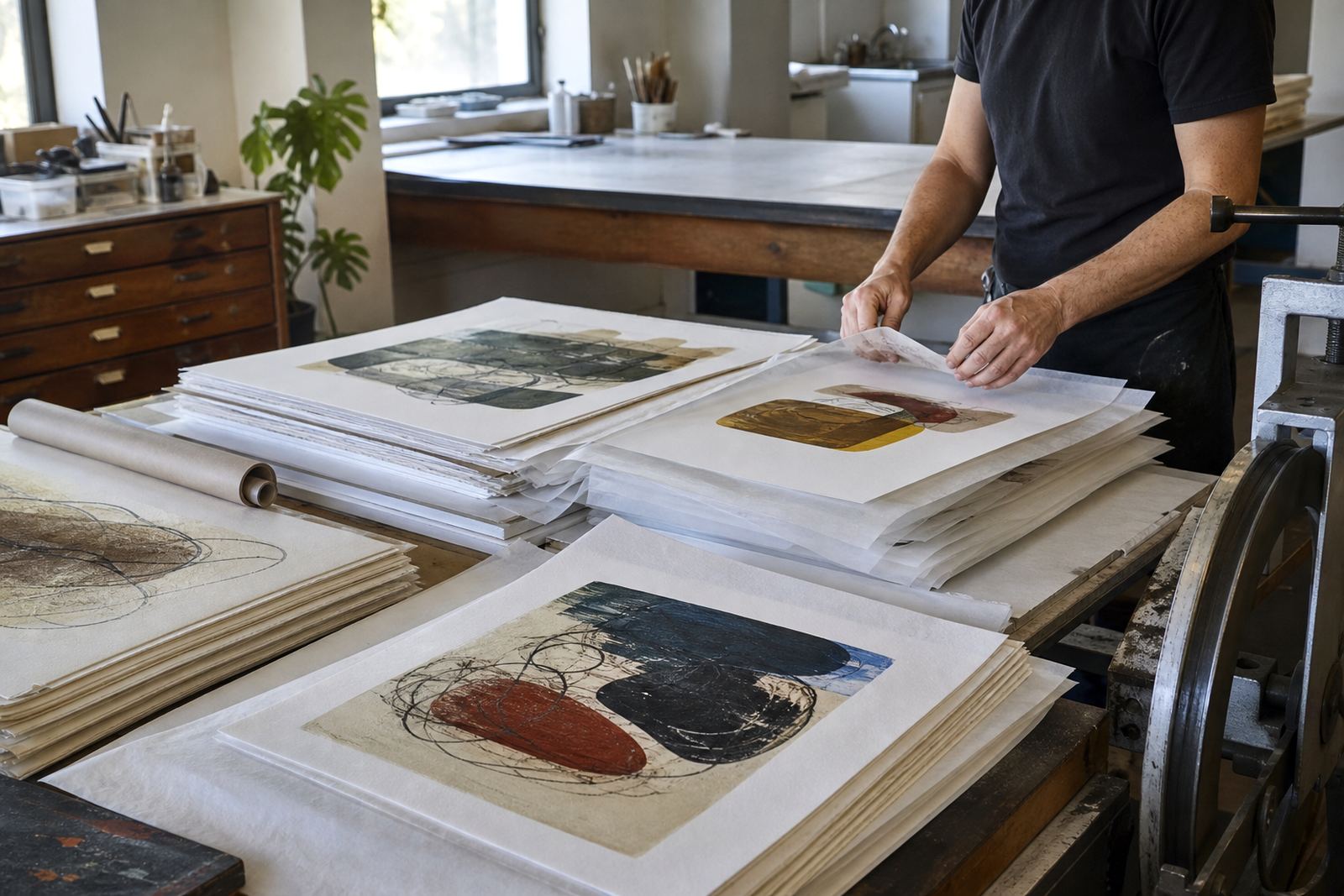
Because this was a presentation portfolio, the printing order and drying time had to be managed carefully. We spaced the run to allow the paper to relax between stages, which helped avoid cockling and handling marks. Each approved sheet was kept separate from working proofs, and the edition was handled with gloves and clean drying racks. That extra control matters when the final set will be viewed by collectors up close.
- Proofing sessions used to confirm image tone and colour separation
- Editioning plan set before full print run began
- Drying and resting time built into the schedule
- Sheets handled for clean edges and minimal surface disturbance
What we supplied from Woodstock
From our Woodstock studio, we supplied the full printmaking service around the edition. That included stone preparation, colour separation, paper consultation, printing, signing and numbering, then archival packing for safe movement. Where needed, we also coordinated framing guidance so the client could present the work in a way that suited the paper size and the edition style.
The project ran over 4 weeks from first proof to final packed sheets. The schedule allowed time for image testing, client feedback, print drying and final inspection. In Cape Town weather, especially in a coastal studio, paper needs proper handling. We kept the process steady so the sheets remained flat and the colour stayed consistent across the run.
- Stone preparation and image setting
- Colour separation and paper selection advice
- Editioning, signing and numbering
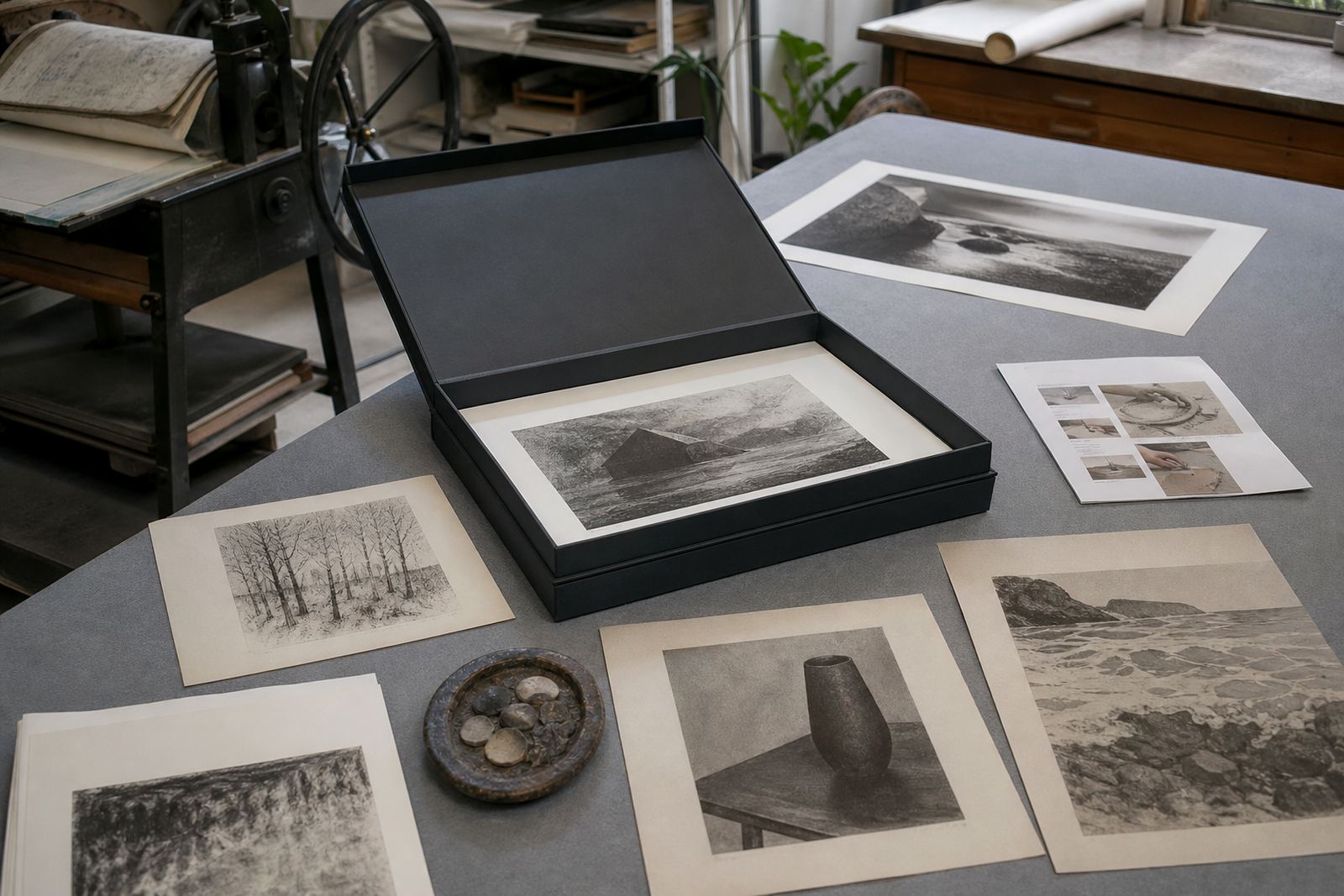
- Archival packing and framing coordination
Results for buyers, viewers and the client
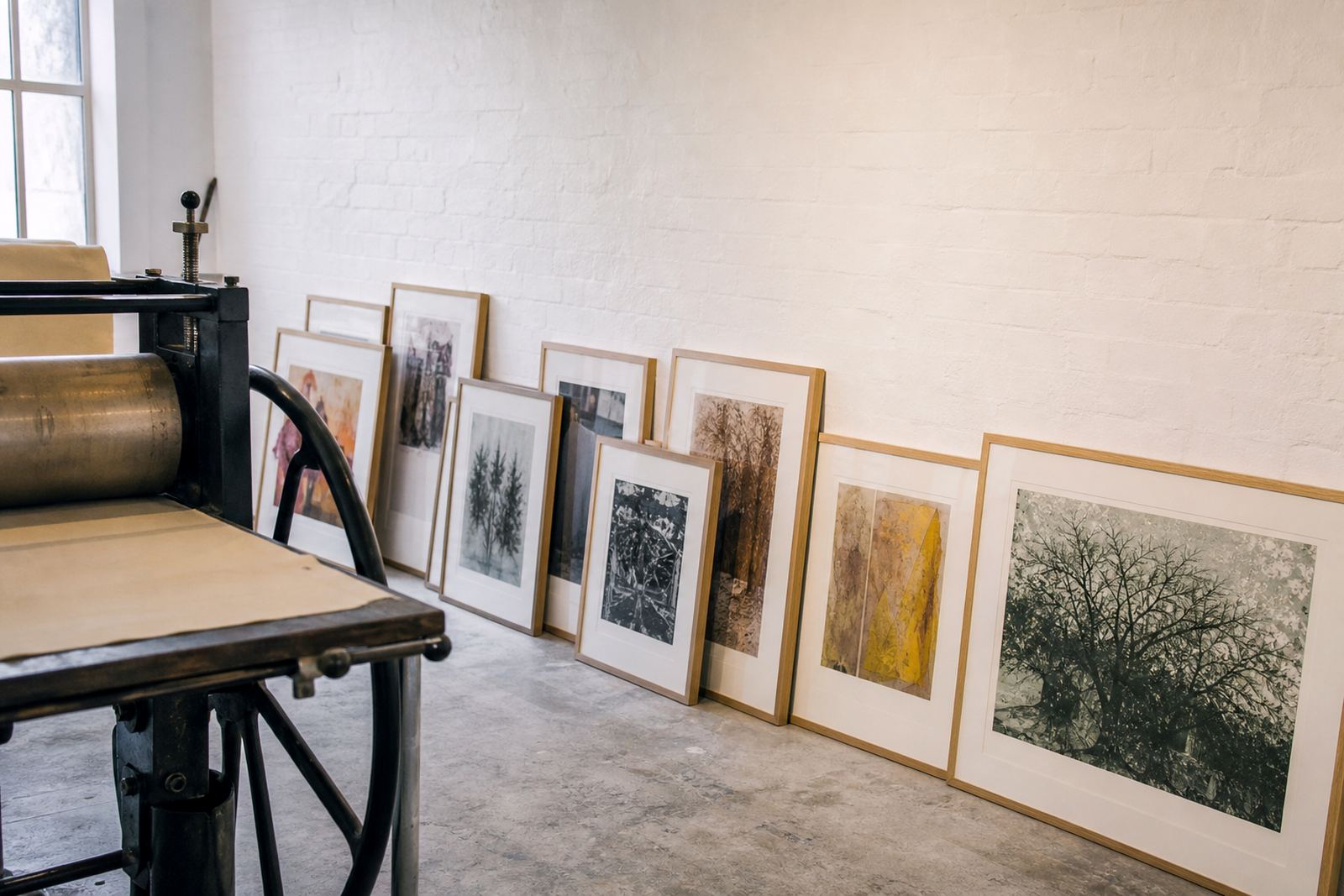
The finished portfolio was designed to present well in a gallery setting and to give collectors confidence in the edition as a whole. The prints held together visually, with enough variation in mark and tone to keep each sheet interesting while still reading as one body of work. That balance is often what buyers look for in a fine-art edition.
The client received a clean, well-organised set that could be shown, sold and stored properly. The portfolio format made it easier to explain the process behind the prints, which is useful when speaking to first-time collectors as well as long-term buyers. The edition also travelled well, which matters when work is moving between Cape Town, Johannesburg, Pretoria or Durban.
- Result: a coherent portfolio edition ready for presentation
- Value: strong visual consistency across the finished set
- Collector benefit: clear edition structure and proper packing
- Practical gain: easier display and handling for gallery use
Print care and what we would repeat
For collectors, good print care starts with storage. Keep lithographs flat, away from direct sun and damp walls, and use archival materials where possible. In coastal areas like Sea Point or Durban, humidity can affect paper over time, so framed work should have proper backing and not sit against a cold external wall. In the interior, heat and dust are the usual concerns.
If we were to repeat this project, we would keep the same slow proofing approach and the same edition controls. Those steps gave the client certainty and kept the prints honest to the process. We would also keep the same emphasis on paper choice, because the paper is not just a support, it affects how the ink lands and how the sheet ages. Small details make a real difference, and the work showed that clearly.
- Store flat in archival sleeves or boxes
- Keep away from direct sunlight and damp
- Use framing with proper spacing and backing
- Repeat: proof first, then print the edition with tight control
Edition details
| Project type | Portfolio edition for presentation and collector viewing |
|---|---|
| Client location | Morningside, Johannesburg |
| Studio base | Woodstock, Cape Town |
| Process | Stone lithography with proofing, editioning and archival packing |
| Timeline | 4 weeks from first proof to final packed sheets |
| Service scope | Edition planning, colour separation, paper consultation, signing and numbering |