A proofing brief built around line and texture
This project came from a local artist based in Claremont who needed a short run of artist proofs before the final edition was locked. The work depended on crisp linear marks, a fine grain in the stone and enough tonal range to hold the surface detail without losing the hand-drawn feel. The brief was straightforward on paper but exacting in the studio: keep the line clean, preserve the texture, and make sure the image translated well on paper with only small shifts in pressure and ink load.
Because the client was planning to show the proofs to collectors and later release a limited edition, we treated the early stages as part of the final work rather than as disposable tests. That meant planning the edition size, setting aside paper from the same batch, and keeping a consistent record of each adjustment. In stone lithography, the limestone itself carries the drawing after it has been chemically processed, so every proof needs close attention. Once the stone is prepared, the balance between water, gum, ink and pressure determines how much detail comes through. It is a process that rewards patience and punishes guesswork.
The job also had to suit a working artist with limited studio time, so we set the timeline at four weeks from first consultation to final proofs. That allowed enough room for stone preparation, two proofing sessions, colour checks and final signing. The artist visited our Woodstock studio for the main approvals, and we kept the rest of the workflow tight so the project could move along without losing its pace.
What we supplied in the studio
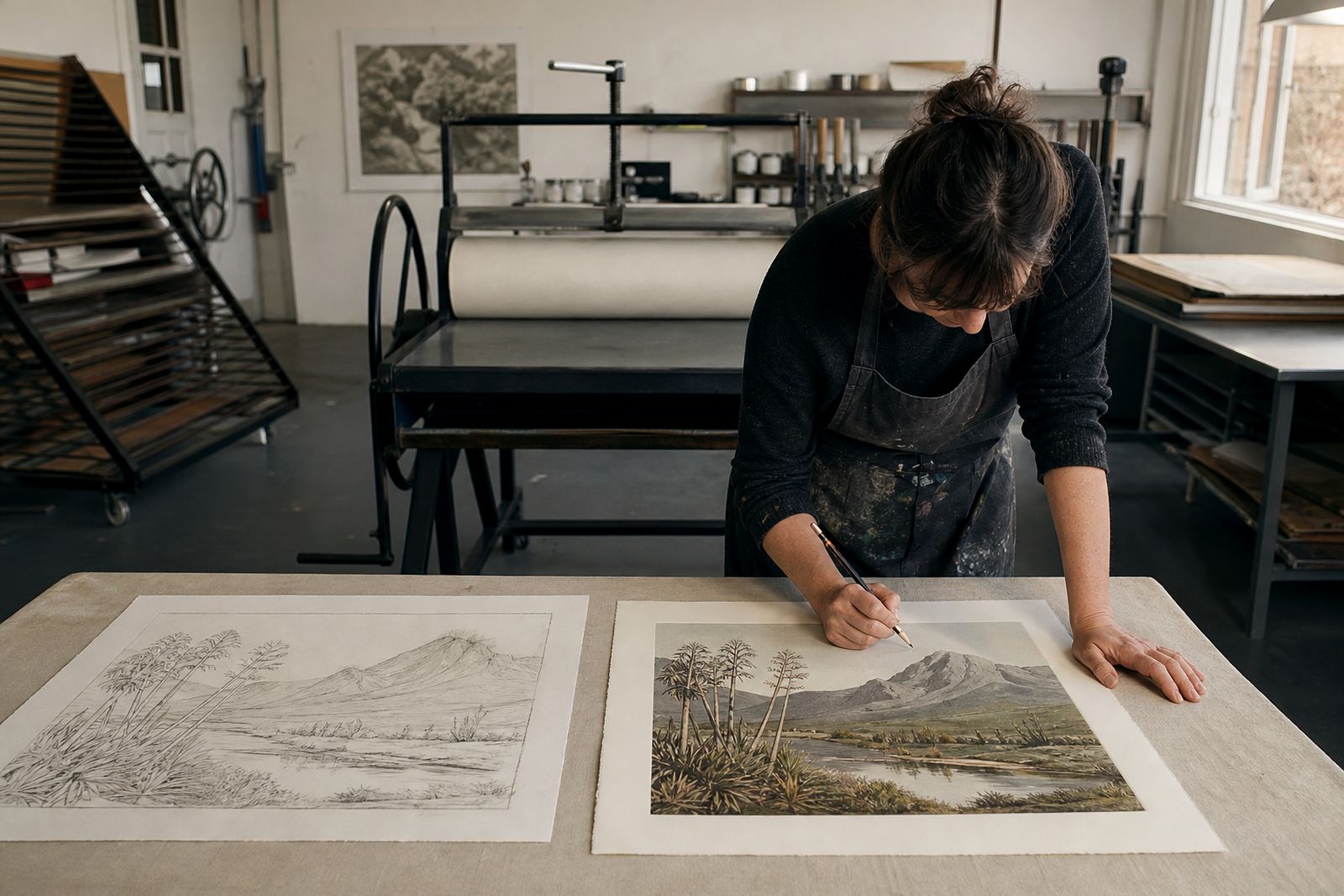
Our role was to manage the proofing sequence from the first drawn stone to the packed and signed sheets. We prepared the limestone, checked the drawing materials against the intended line quality, and set up the first proofs with paper chosen for its surface strength and even absorbency. For this sort of project, the paper matters as much as the stone. A sheet that is too soft can flatten the mark, while one that is too hard can resist the ink and leave the image looking thin.
We then worked through colour separation where needed, keeping the palette restrained so the surface texture remained visible. The client wanted the proofs to feel honest to the drawing, not overworked. That meant limiting unnecessary intervention, though there was still quite a bit of decision making around pressure, registration and the amount of ink on the stone. We also advised on proof state naming so the client could track each version clearly during review.
- Stone preparation and drawing support
- Proofing sessions with live review
- Colour separation and registration checks
- Paper consultation for edition and proof sheets
- Signing and numbering guidance for the final release
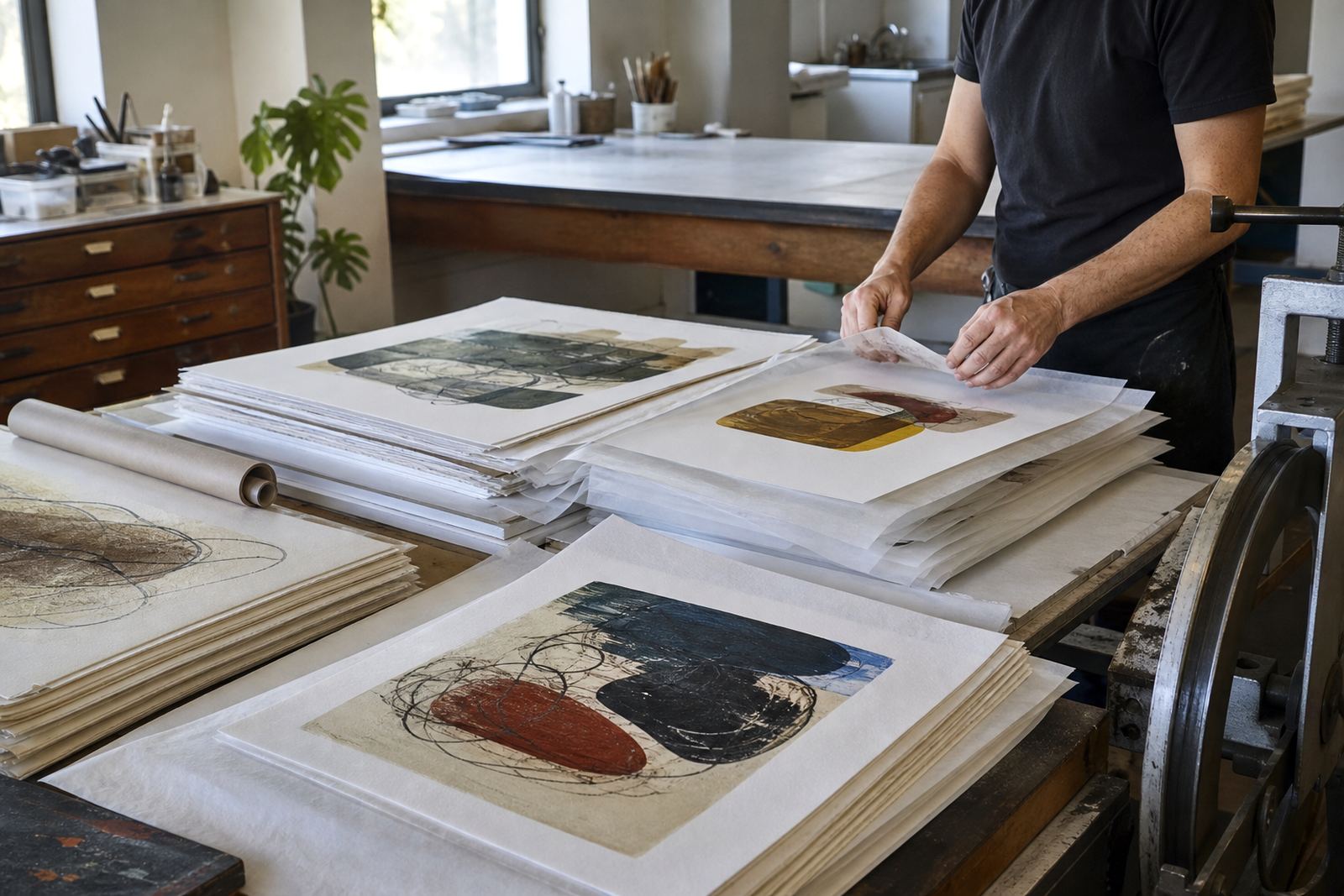
Once the proofs were approved, we moved into editioning and archival packing. Each sheet was handled with clean gloves, flattened correctly and checked for surface marks before it was signed. The client also asked for framing coordination, so we supplied simple handling notes that could be passed on to the framer without confusion. That keeps the work protected from the start, especially when it has to travel to Johannesburg or Durban in summer humidity.
Why the edition needed careful planning
Limited editions only work when the artist, printer and collector all know exactly what is being released. For this project, the edition size stayed small so the line work could be maintained consistently across the run. We discussed how many artist proofs should remain separate from the numbered edition, and we made sure the numbering system was clear before any final sheets were signed. That sort of planning saves time later, particularly when a collector asks for a matching pair or wants to know whether a proof belongs to the same image state.
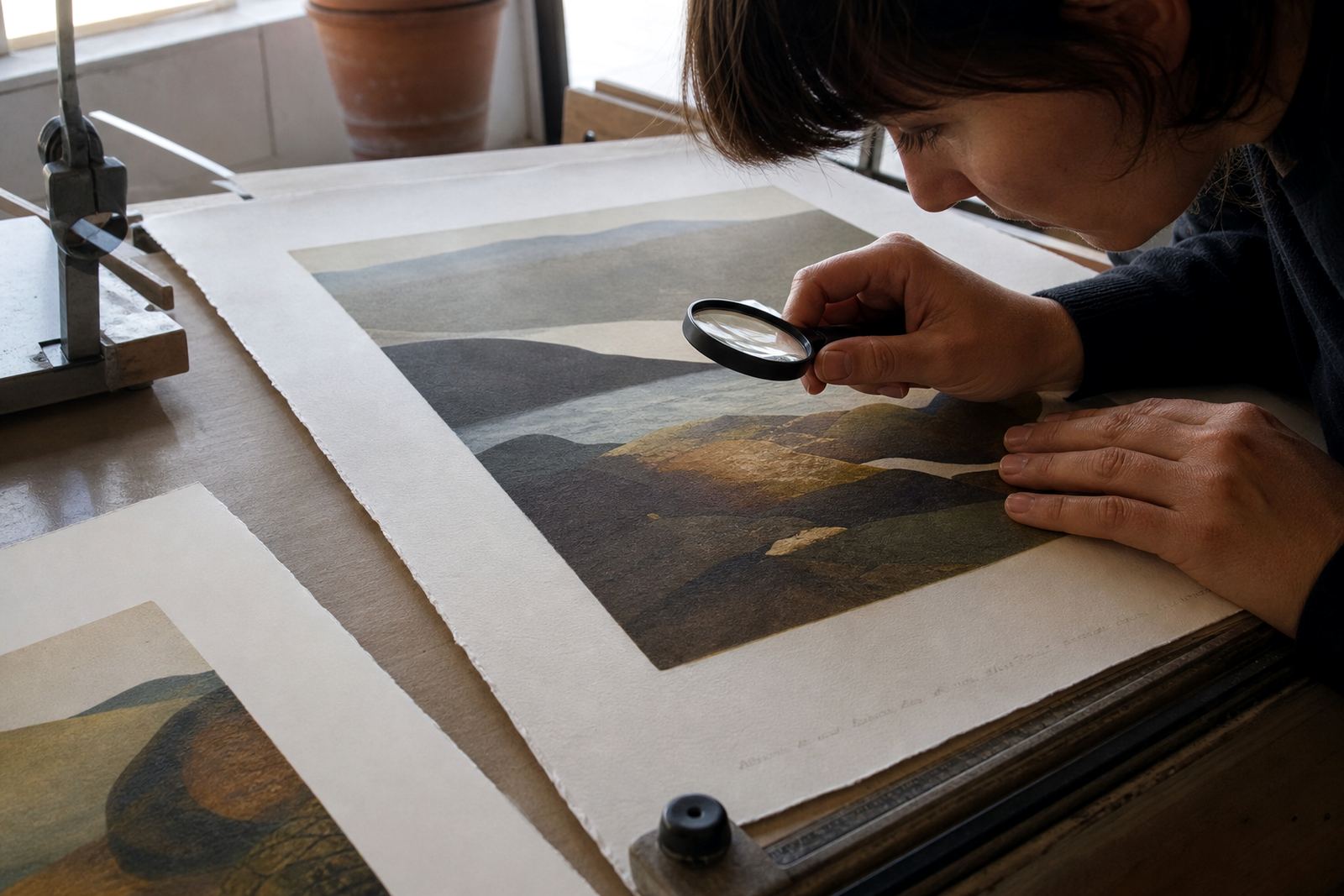
In lithography, an artist proof is not just a spare print. It is part of the working process and often carries subtle differences from the numbered edition. Those differences can come from ink density, wiping, dampness of the paper or a slight adjustment to the stone. For a project centred on line clarity, those changes matter a great deal. A tiny change in the wipe can either sharpen the image or soften it too much, so we kept notes at each stage and compared sheets under the same light.
- Edition size kept intentionally limited
- Artist proofs separated from the numbered edition
- Each state reviewed under consistent studio lighting
- Final sheets signed, numbered and dated by the artist
The result was a controlled edition with enough variation in the proofs to be useful, but not so much that the image lost its character. That balance is important for collectors in Cape Town as well as for clients further afield in Pretoria or Stellenbosch who may only see the work after it has been packed and delivered.
How the timeline unfolded over four weeks
The project ran over four weeks, which gave us enough time to work through the technical parts properly and still keep momentum. In week one we confirmed the brief, reviewed reference drawings and prepared the stone. Week two focused on the first proofs, which showed us where the line needed tightening and where the surface texture could be held more clearly. Week three was for revision, colour checks and a second proofing session with the artist in the studio. By week four the edition was ready for signing, numbering and packing.
This schedule worked well because it allowed the artist to respond to each proof rather than trying to make every decision in one sitting. It also gave us a chance to test how the image behaved under different conditions, including slightly heavier dampening and lighter ink loading. That is useful in Cape Town, where the air can shift quickly and coastal humidity can affect paper handling from one day to the next.
We also built in time for proper drying and rest between pulls. Stone lithography is not suited to rushing. If the sheet is handled too soon, surface marks can creep in and the edition starts to feel uneven. By pacing the work, we were able to deliver final proofs that held their line and kept the texture intact.
Results for the artist and collectors
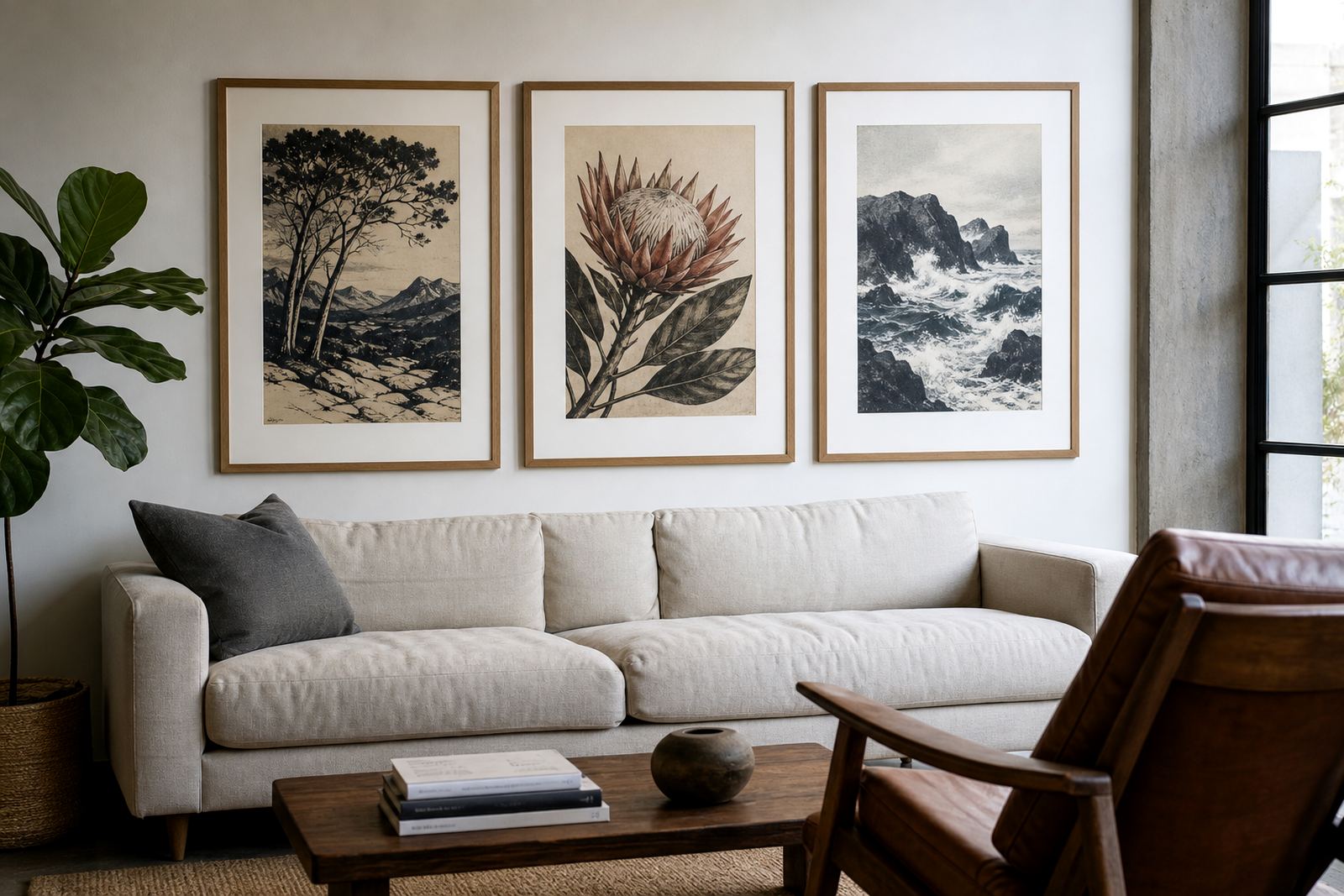
The final proofs kept the drawn line sharp and the stone texture visible, which was the main goal from the start. The artist was able to compare the proof states confidently and settle the final edition with fewer changes than expected. For collectors, that means the finished sheets carry the character of the original drawing and the confidence that comes from a properly managed edition. The work was packaged for local handover and for transport to other South African centres where careful handling matters just as much as the print itself.
We also provided print care guidance so the client could pass on clear instructions. Lithographs should be stored flat in a dry room, away from direct sun and out of damp areas like bathrooms or near open windows. If the work is framed, it helps to use archival backing and a mount that does not touch the image surface. For framed work in coastal suburbs like Sea Point, that extra care matters because salt air can creep into poor-quality materials and cause trouble over time.
- Store flat or framed with archival materials
- Keep out of direct sunlight and away from damp
- Handle by the edges with clean dry hands
- Avoid household sprays near the surface
The project gave the client a clear path from proof to edition, with enough technical support to keep the artistic intention intact. It was the kind of job where the studio work stayed invisible in the final image, and that is usually a good sign.
What we would do again for print collectors
We would handle this project the same way again: start with a tight brief, keep the edition small, and use the proofing stages to protect the line rather than push it too far. For line-led lithography, that approach gives the artist space to make decisions without losing the energy of the drawing. It also keeps the collector-facing side tidy, from signing and numbering through to packing and framing coordination.
In future we would keep the same four-week structure for projects with a similar level of detail, especially when the work needs to be judged under daylight and studio light before release. A slower proofing cycle may look simple from the outside, but it saves rework and helps the final edition feel considered. That is the standard we aim for in Woodstock, whether the client comes from Claremont, Newlands, or further afield in Johannesburg and Durban.
For artists who want exacting stone lithography, the lesson is simple. Good proofs are made with time, clear notes and steady handling. Once the stone is right, the rest follows.
Edition details
| Project | Claremont Artist Proofs |
|---|---|
| Client type | Independent artist based in Claremont |
| Studio base | Woodstock, Cape Town |
| Process | Stone lithography proofing, edition planning and signing |
| Timeline | 4 weeks |
| Deliverables | Artist proofs, numbered edition, archival packing and print care notes |