A family collecting plan for a Newlands home
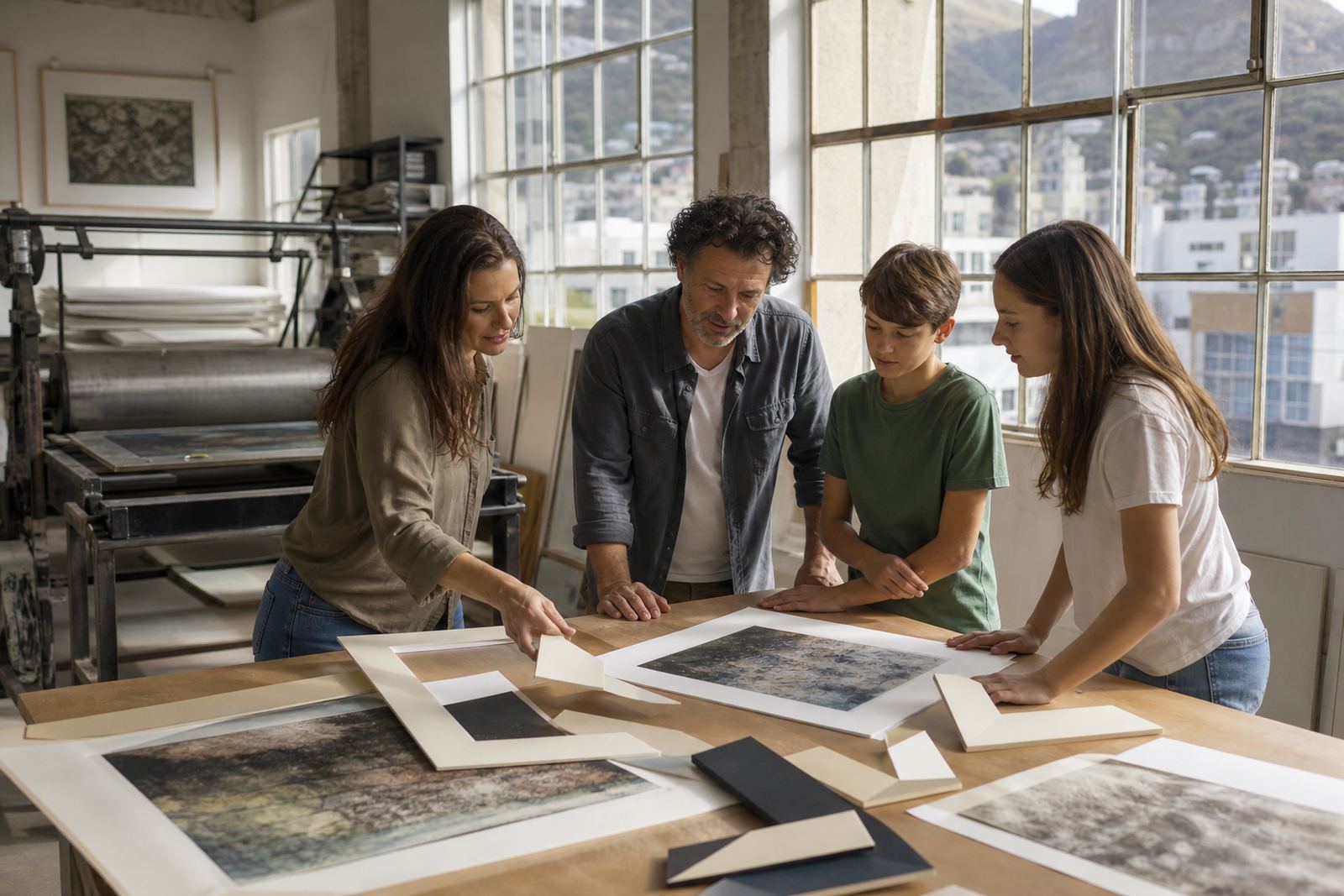
This was a family-led collecting project in Newlands, Cape Town, with input from three generations and a clear wish to buy carefully rather than in one large burst. The brief was to find lithographs that could work across several rooms over time, from quieter pieces for a passage and study to stronger colour works for the living area. They wanted prints that felt personal, but also coherent as a group.
We began with a conversation around how the home is used through the day, where natural light falls, and which walls could handle larger formats. In a family setting, that matters just as much as image subject. A lithograph can shift with the room, so we planned the collection with those changes in mind, especially for late afternoon sun and the softer light common in Cape Town homes near the coast.
Why stone lithography suited the brief
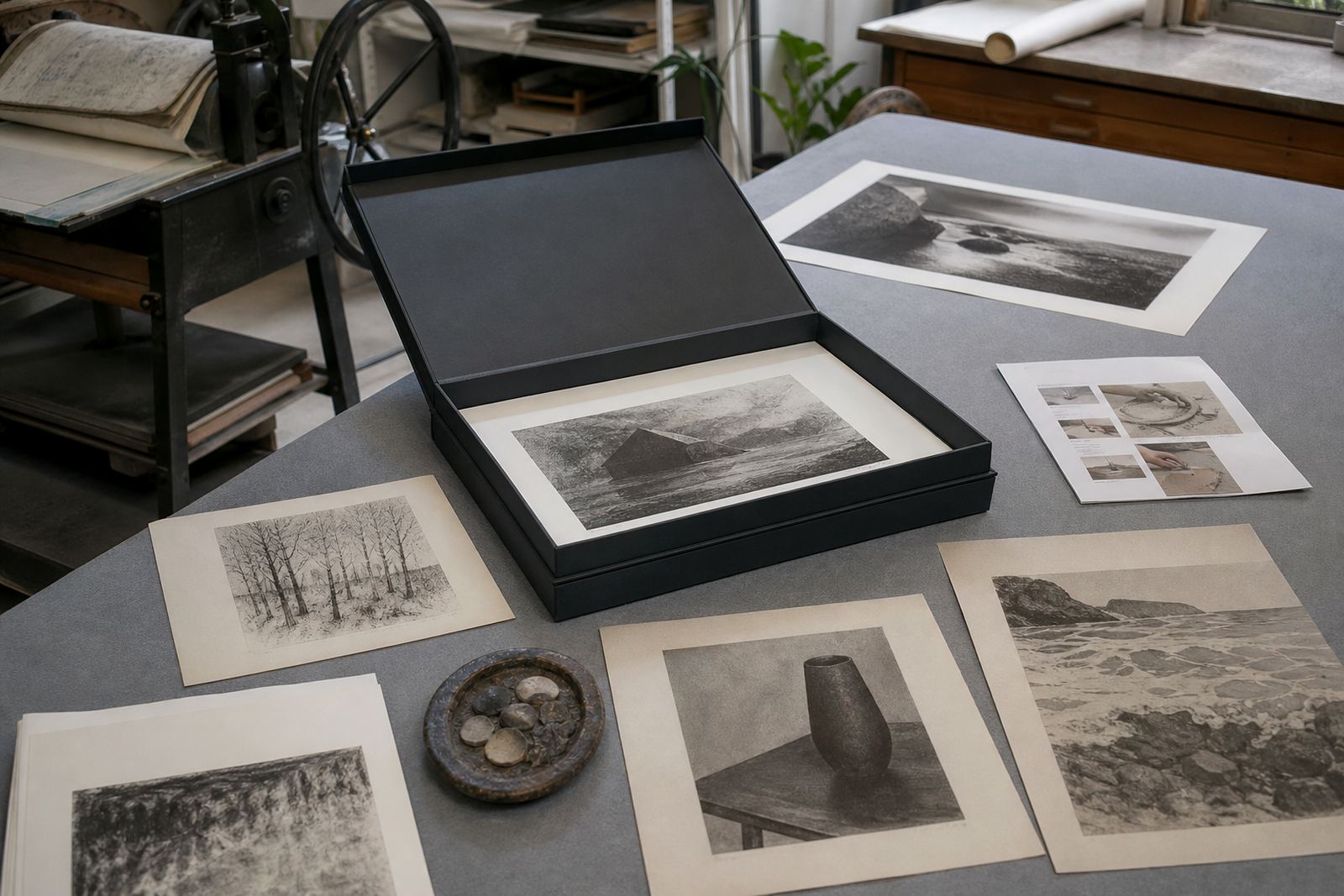
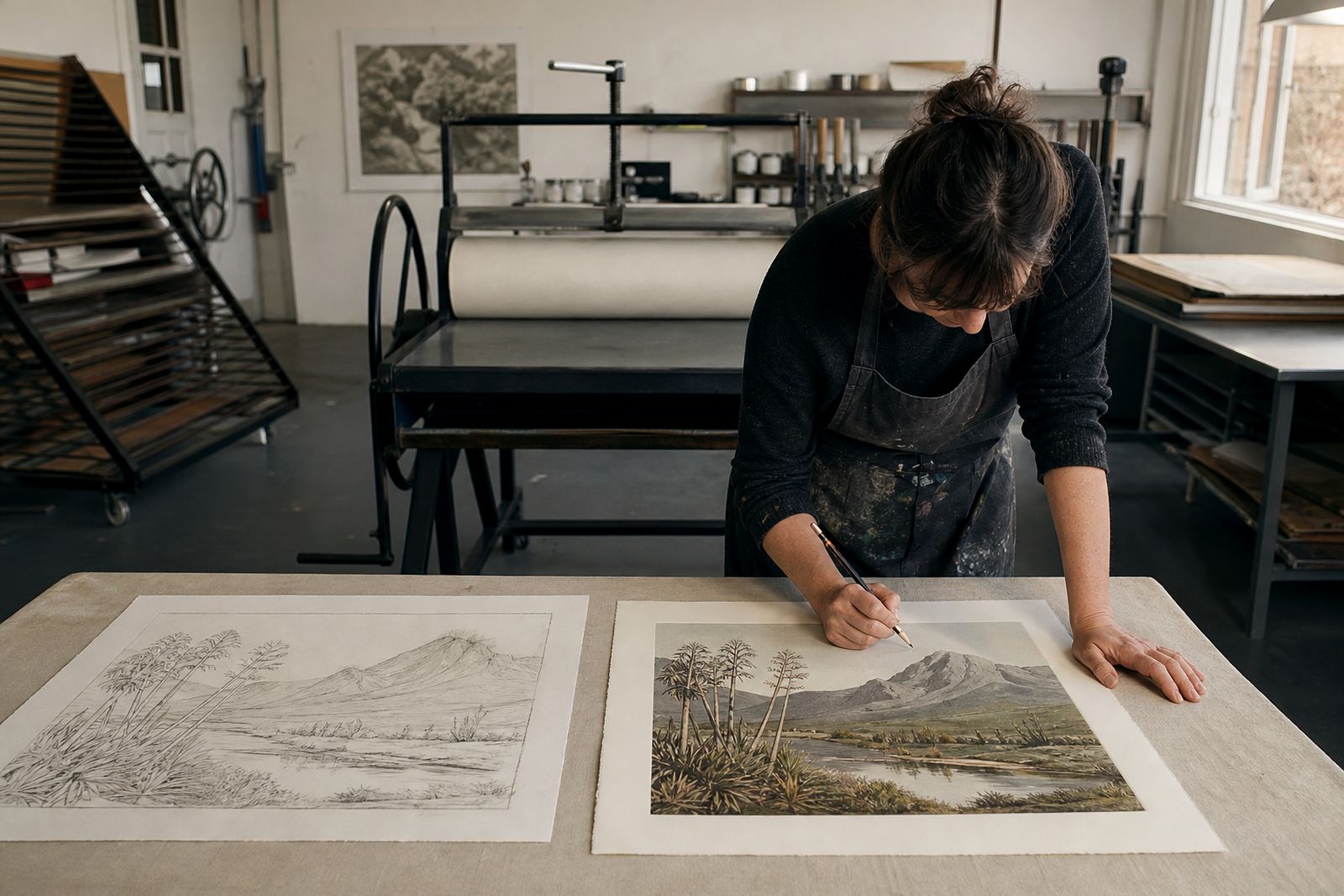
This hand-printing method relies on a limestone surface, greasy drawing materials, water and ink. The image is drawn directly on the stone, then treated so the drawn areas accept ink while the non-image areas hold water and stay clean. Each sheet is then printed by hand through the press. Because the image lives on the stone, the mark has a particular softness and depth that suits line, tone and subtle colour work.
For this project, that mattered. The family wanted prints with visible handwork and variation, not something that looked mechanically flat. Stone lithography gives you that richness, especially in layered colour. It also allows an edition to be consistent while still carrying the slight shifts that collectors look for in a hand-pulled print. In practical terms, it gives a family collection a strong visual identity without making every room feel identical.
- Hand-drawn on limestone
- Printed in limited editions
- Suitable for single-colour and multi-colour work
- Works well for subtle tonal shifts and fine line detail
Edition planning, proofing and colour control
The collection was developed over six weeks, with proofing sessions early on so the family could compare paper, colour and size before deciding on the final set. We handled edition planning from the start, which meant agreeing the edition size, the number of artist proofs, and how the numbering would be recorded. That sounds technical, but it is what keeps a print edition clear and properly documented.
Colour separation was particularly important on the stronger works. We broke the image into printable layers and checked how each colour behaved on the chosen paper. With lithography, one colour can influence the next, so proofing is not a formality. It is where you see whether a warm grey should lean slightly blue or whether a red needs more restraint in a bright room. We also discussed paper weight and surface, because a smoother sheet can give a different feel from a more open paper and the family wanted the prints to read well from a few steps back as well as up close.
- Project duration: 6 weeks
- Edition sizes agreed before final printing
- Proofs checked for registration, density and balance
- Paper selected for stable display in home conditions
What we supplied and how the works were finished
We supplied stone lithography printing, editioning, signing and numbering, archival packing and framing coordination for the full group of works. The family also wanted advice on how to arrange the collection across rooms, so we mapped out a simple hanging plan that could grow later if they added more prints. The result was not a single purchase but a collecting path, with pieces arriving in stages as each room was ready.
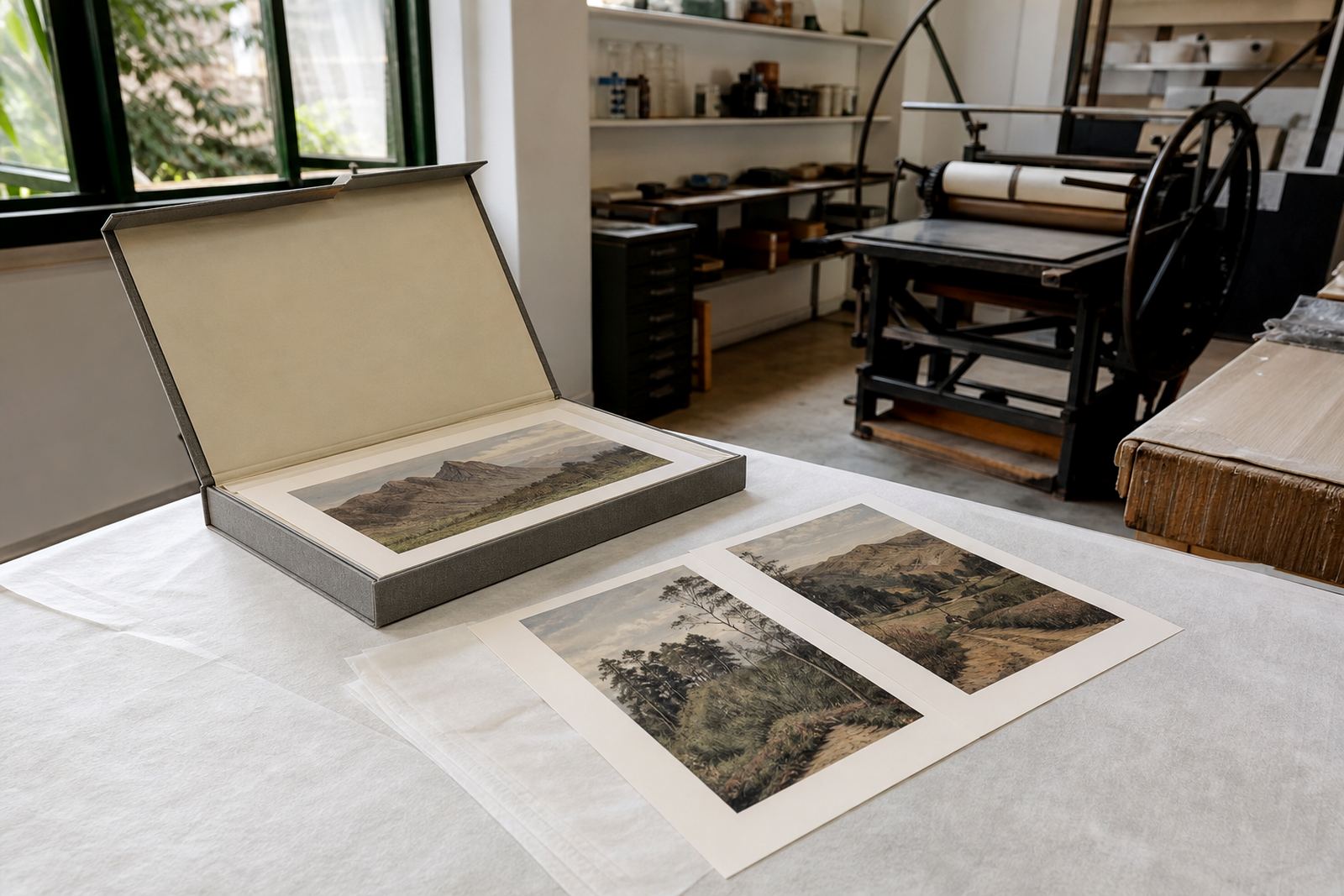
The finished works were handled with care from press to packing. Each print was dried fully before inspection, then checked for clean margins, accurate registration and consistent ink coverage. Once signed and numbered, the sheets were packed for safe transport and storage. For a family collection, that kind of finish matters because some prints may be framed straight away while others sit in storage for months before being placed. Archival packing helps keep that transition safe, especially in coastal humidity where paper can move if it is not handled properly.
- Stone lithography printing
- Editioning, signing and numbering
- Archival packing for short and longer term storage
- Framing coordination for rooms across the home
Results in the home and what changed over time
By the end of the project, the family had a set of prints that felt joined by tone and process, not by being too matchy. Some works carried more colour and energy for social spaces, while others were quieter and better suited to private rooms. That balance made the collection flexible, which was one of the main aims from the beginning.
We also found that the staged approach worked well for decision-making. Rather than forcing one large choice, the family could live with the first few prints, then decide what belonged next. That is often the best way to collect, especially when several people are involved. It gives room for opinion, but still keeps the overall direction clear. A few works were framed immediately, while others were kept flat in archival storage until the family was ready. The collection now sits as a group that can expand without losing its shape.
Print care and what we would repeat
For care, we advised the family to keep the prints out of direct sun, away from damp walls and clear of cooking steam or strong bathroom moisture. In Cape Town, that is worth saying plainly because light and humidity can change a print over time. Framing with conservation materials, keeping the glazing clean and checking that the hanging hardware is secure all make a real difference. If a print ever needs to be moved, it should be handled by the edges with clean hands or gloves.
- Keep out of direct sunlight
- Avoid damp or steamy rooms
- Use archival mats and backing boards
- Handle by the edges only
Edition details
| Project | Newlands Family Collection |
|---|---|
| Client type | Family-led private collectors |
| Town | Newlands, Cape Town |
| Timeline | 6 weeks |
| Process | Proofing, colour separation, editioning and archival finishing |
| Outcome | A staged limited-edition lithograph collection for several rooms |