

A letter from the press room
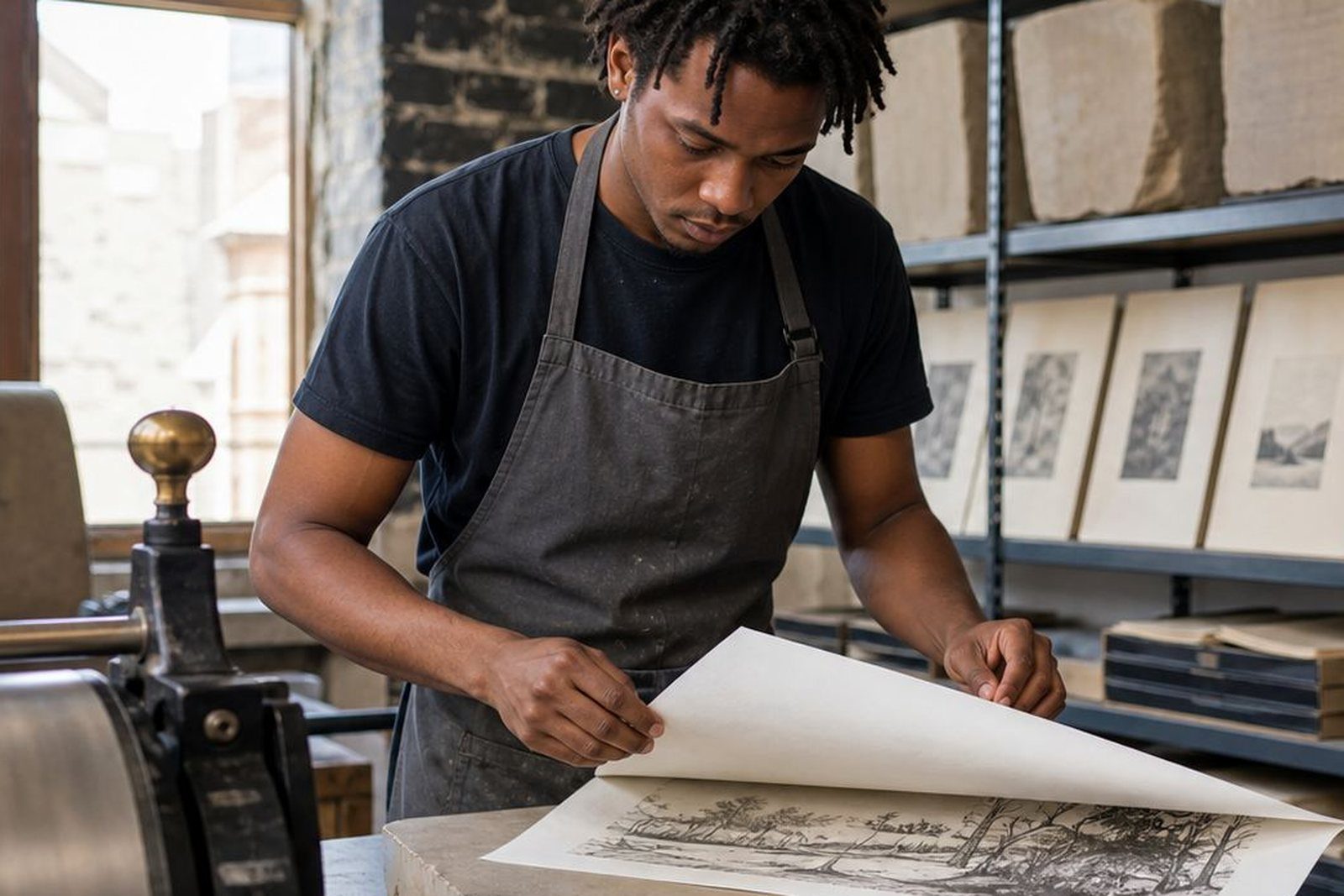
People ask why we still print from stone when plates are cheaper and faster. The answer is in the drawing. Crayon on limestone holds a softness that artists notice the moment they lift the first proof.
The first studio was a narrow room on Albert Road with a leaking skylight that we learnt to work around. Stones were graded by hand, sometimes for a whole morning, before an artist could start drawing. Early editions were small, often ten or twelve prints, and every sheet was checked against the bon à tirer before it left.
The stones we still use
Two of the original three limestones are still in the rack. One has carried more than four hundred images over the years and is now thin enough that we keep it for small work only. The third cracked in a cold July and sits in the front room as a reminder to warm the press room before winter sessions.
Artists who changed how we work
- A Stellenbosch painter who insisted on seven colour runs taught us registration discipline we had never needed before.
- A young printmaker from Khayelitsha brought charcoal drawings that pushed us to test new crayon grades.
- A collector who wanted archival records for every sheet led to the documentation that now ships with each edition.
The studio now
We print editions for artists, advise collectors on framing and storage, and run proofing sessions for people trying lithography for the first time. The skylight no longer leaks, though we still look up at it when the Woodstock rain arrives.