A matched set for a contemporary Umhlanga interior
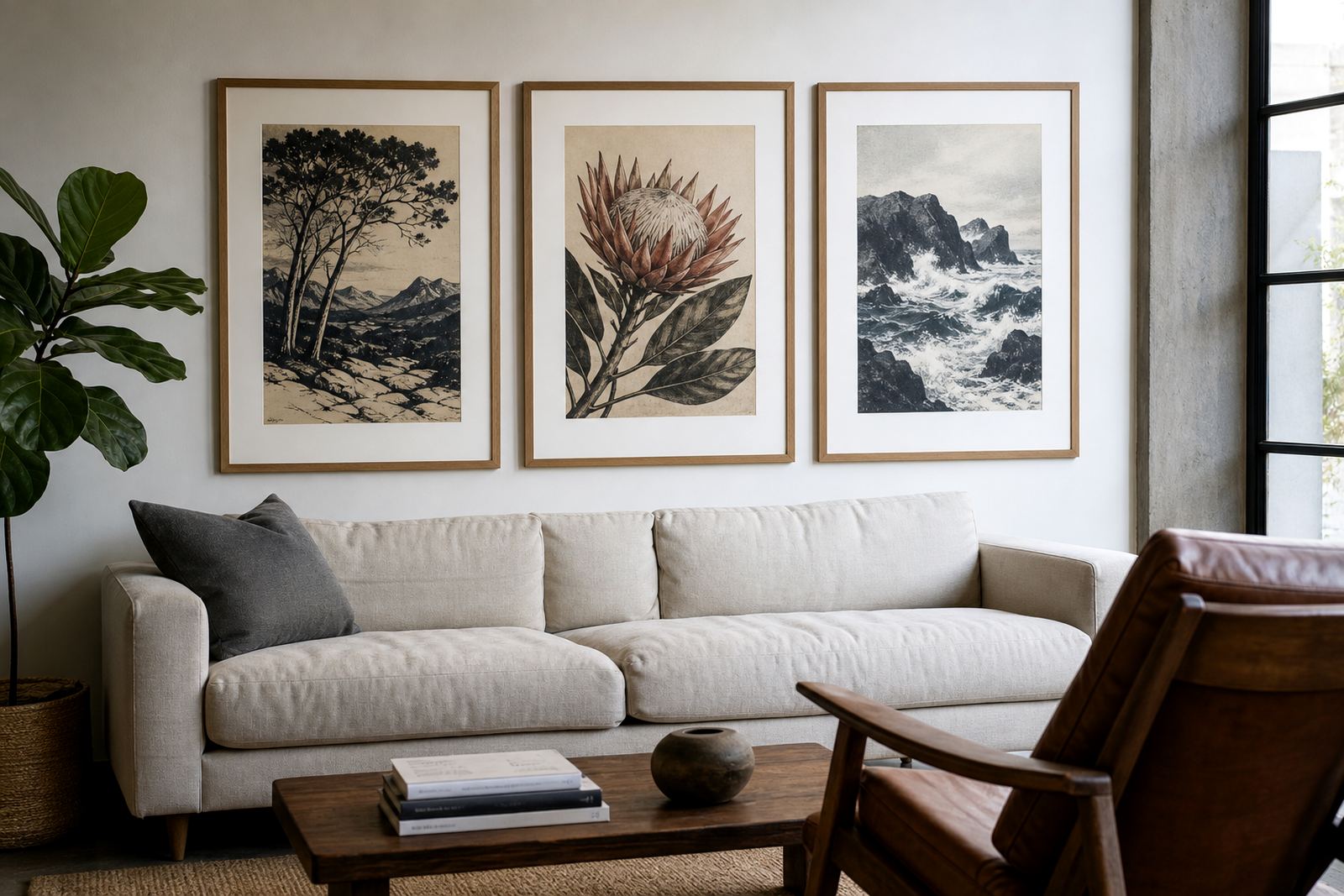
The client, a private collector in Umhlanga, wanted a set of lithographs that would sit comfortably in a modern interior without overpowering the room. The works needed to feel connected as a group, yet each print still had to hold its own when viewed up close. We planned the edition around those requirements and kept the visual language clean, with careful attention to tone, surface and spacing.
The setting mattered as much as the image. Umhlanga homes can face strong light and humidity, so we considered paper choice, drying time and packing from the start. The result was a refined set prepared for display in a coastal home, with the edition built to travel safely from our Woodstock studio to KwaZulu-Natal.
How stone lithography shaped the final print
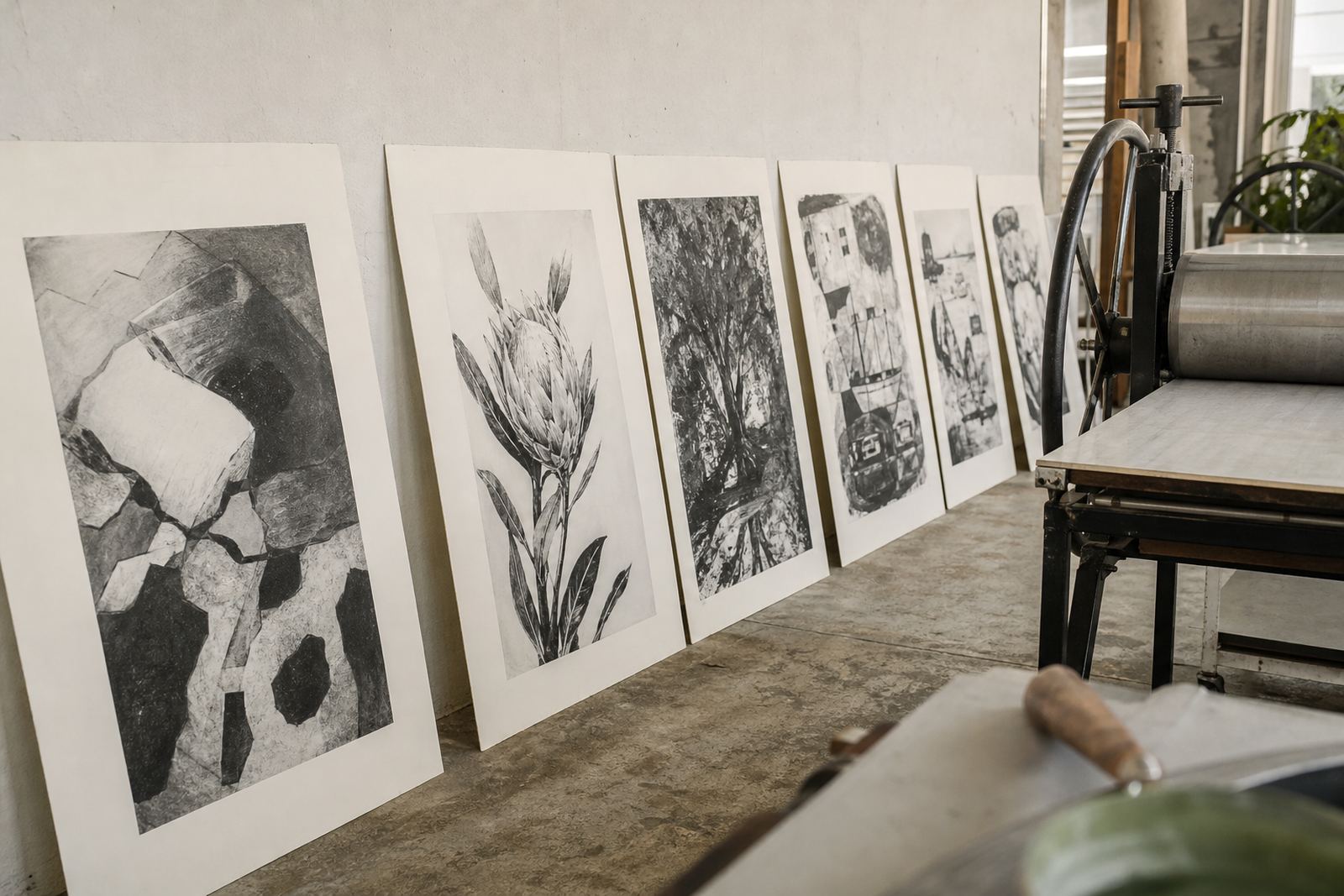
In this traditional planographic process, the image is worked on a prepared limestone surface. The artist draws or works onto the stone with greasy materials, then the stone is chemically processed so image and non-image areas behave differently. When ink is rolled onto the surface, it sticks only where it should, allowing a very direct mark with subtle texture and depth.
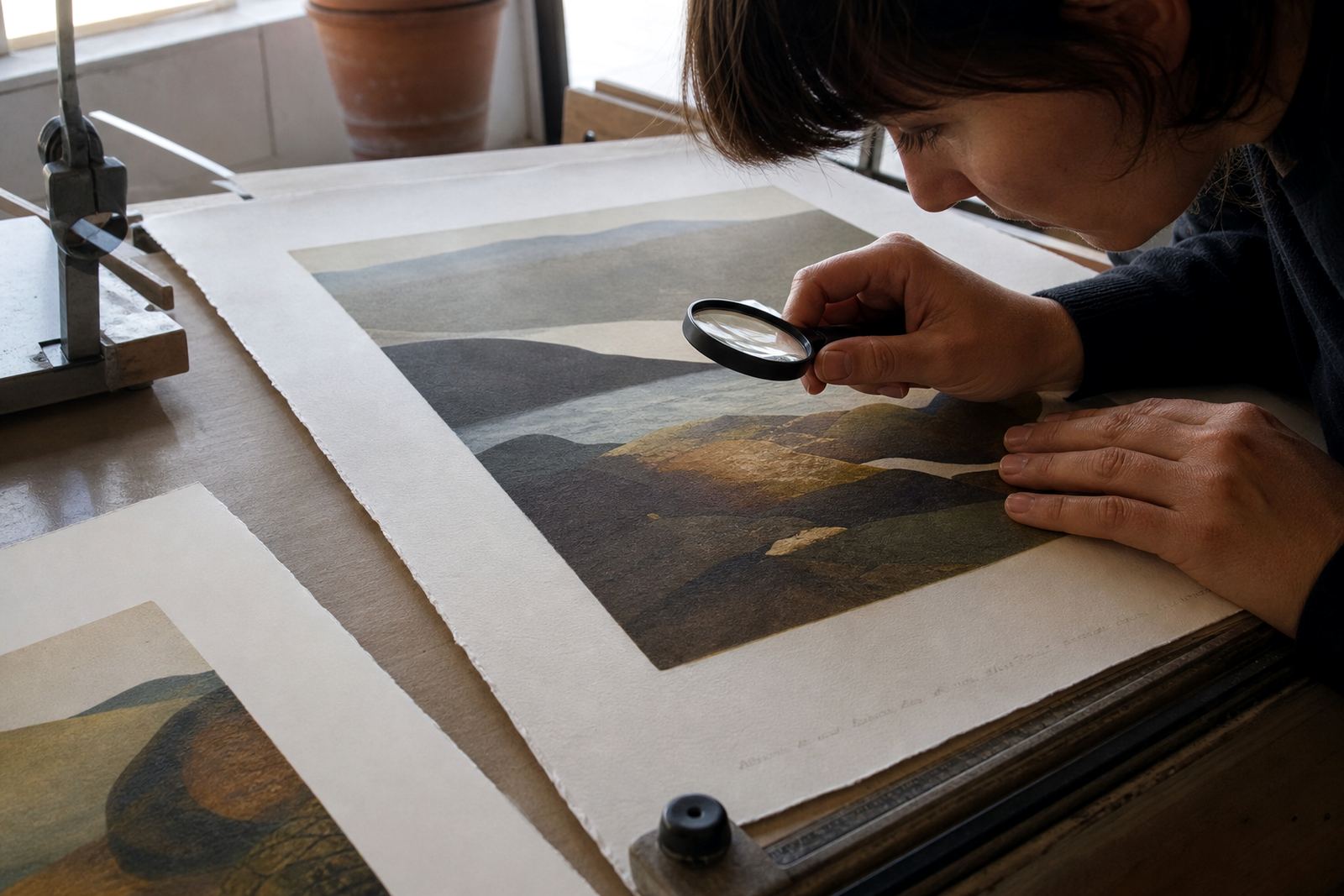
For this project, that process gave us the calm tonal shifts the client wanted. Stone lithography is well suited to layered colour because each colour requires its own printing pass and careful registration. That means the final print is not rushed through a machine line. It is built step by step, with each layer checked before the next one is added.
- Hand-prepared limestone stones for each colour layer
- Multiple proofing rounds to check tone, balance and registration
- Edition printing handled on press in controlled studio conditions
- Archival inks and paper selected for long-term stability
The brief, constraints and studio plan
The brief was straightforward in words, but exacting in practice. The client wanted a limited edition set that felt cohesive, with soft colour transitions and a finish that would work alongside contemporary furniture, timber floors and neutral walls. The works also had to be practical for framing and hanging in a home where the light changes through the day.
We planned for those constraints by locking in the edition structure early and allowing enough time for proofing before the final run. Because lithography depends on consistent pressure, dampening and registration, the studio schedule had to stay organised from the first proof to the last sheet. That is where edition planning makes all the difference, especially when a collector is expecting a matched set rather than a one-off print.
- Limited edition format agreed before final printing began
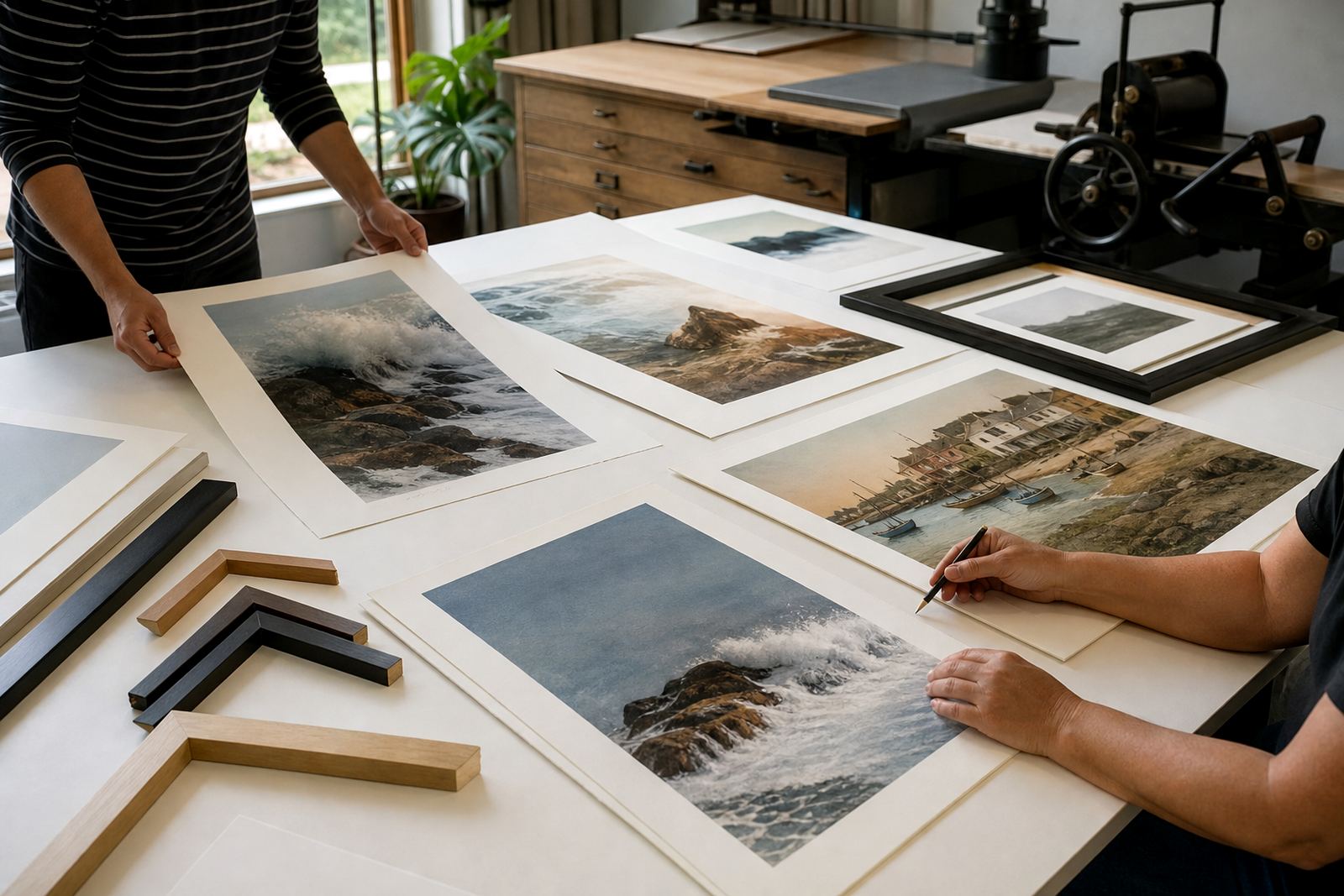
- Paper selected for handling, framing and coastal conditions
- Colour separation checked against the interior palette
- Printing sequence planned to keep the set visually consistent
What we supplied and completed in the edition
Our team handled the full editioning process in our Woodstock studio. Shailen Naicker oversaw the project, Nomvula Phalatse led the printing, and Stefan Hattingh managed stone preparation and press support. Rukshana Kamaar coordinated the set and final packing, while Bonga Mngadi assisted with editioning and numbering. Tegan Jacobs handled client updates and collection details.
The work included stone preparation, proofing sessions, colour separation, final printing, signing and numbering, and archival packing. We also coordinated framing guidance so the client could hand the works over to a framer with clear instructions. The set was issued as a matched edition, with each print checked for consistency before it left the studio.
- Stone lithography printing with controlled registration
- Editioning, signing and numbering by hand
- Archival packing for safe transport to Umhlanga
- Framing coordination and collector care notes supplied
Timeline and delivery from proof to packed set
The project ran over six weeks from first studio discussion to final collection. The early weeks were used for stone preparation, image transfer and proofing. Once the colour balance was approved, the edition was printed in sequence and allowed to dry properly before signing, numbering and packing. That pacing is important with stone lithography, because rushing the drying stage can mark the sheets or affect the final handling.
For a private client, timing also has to fit around travel, framing and install dates. We kept the process practical and regular, with updates after each stage so there were no surprises. The final set was packed for transport and left the studio ready for framing, with each sheet separated and protected for the move to the coast.
- Week 1 to 2: planning, stone prep and first proofs
- Week 3 to 4: colour separation and approval of final proofs
- Week 5: edition printing and drying
- Week 6: signing, numbering, packing and collection
Care for collectors and what we would repeat
For collectors, print care matters just as much as the edition itself. We recommend keeping lithographs out of direct sun, away from damp walls and away from air that carries salt or heavy cooking moisture. In coastal towns like Umhlanga and Durban, that means proper framing with conservation materials and a stable indoor environment. If a work is stored, it should lie flat in archival wrapping and not be pressed tightly against anything that could leave a mark.
For a private set like this, we would follow the same disciplined approach: early edition planning, careful proofing and clear communication throughout. That process suits private collectors who want something made properly, not hurried. It also suits a home where the work will be lived with every day, because a good lithograph should look settled in its space and still reveal detail when you stand close.
- Use conservation matting and glazing for display
- Keep prints away from direct coastal humidity and sunlight
- Store flat in archival materials if not framed
- Handle by the edges only, with clean dry hands or gloves
Edition details
| Project | Umhlanga Private Set |
|---|---|
| Client type | Private collector in Umhlanga |
| Edition type | Matched limited edition lithographs |
| Process | Stone lithography with proofing, colour separation and hand editioning |
| Studio base | Woodstock, Cape Town |
| Timeline | 6 weeks from first proof to packed delivery |