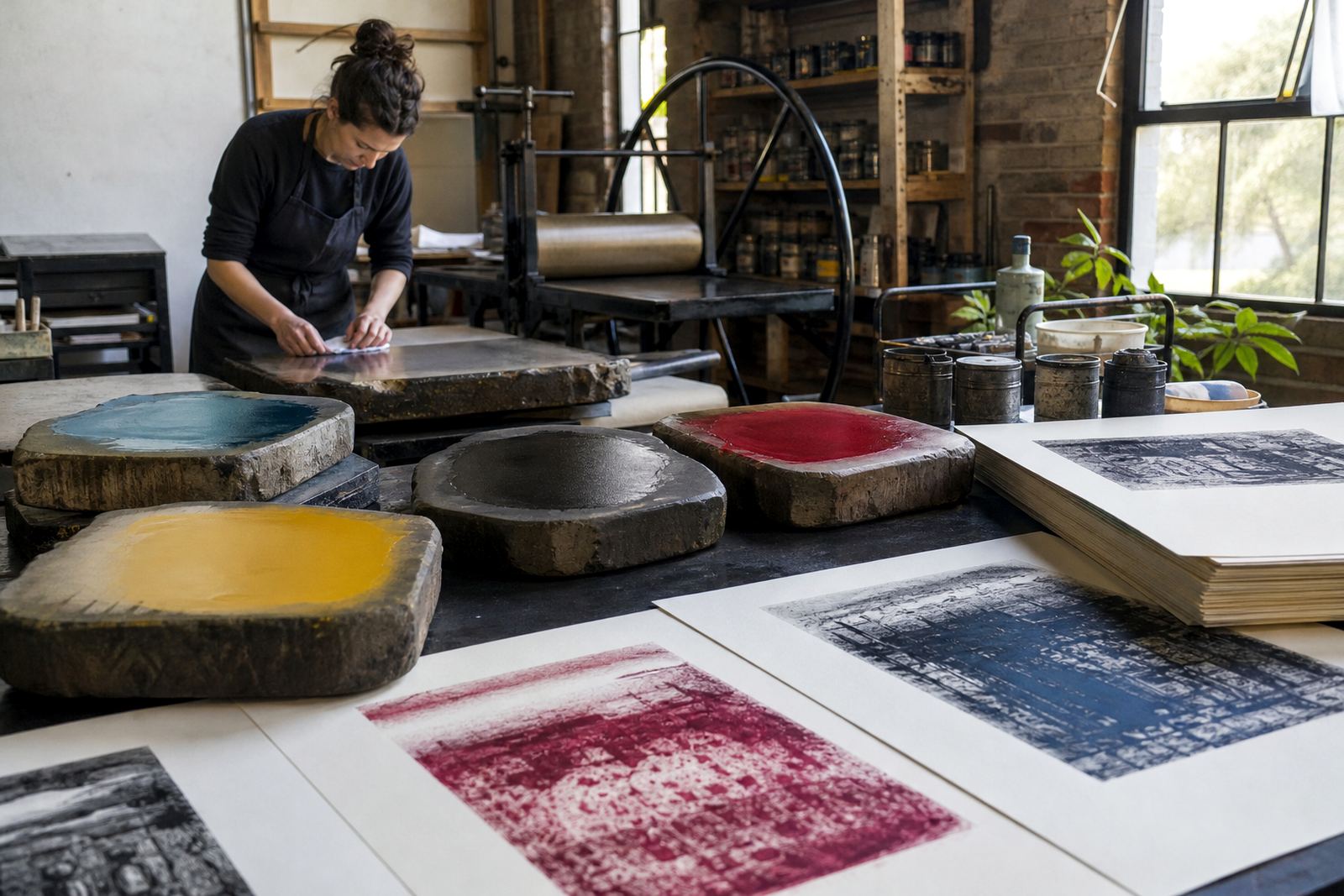
A Somerset West Brief Built Around Colour Depth
The client was a Somerset West artist preparing a mid-sized edition for collectors in the Western Cape and further afield. The brief was straightforward in wording but exacting in practice: the print needed to hold rich colour, keep the drawing character of the stones, and remain consistent across the full edition.
Because the image relied on layered colour rather than a single flat pass, we planned the edition around stone preparation, proofing, and sequence control from the outset. That helped avoid late surprises and kept the work practical for a studio run out of Woodstock, especially with the stop-start timing that can happen when drying and registration need to be respected.
- Client type: independent artist from Somerset West
- Project: limited fine-art stone lithography edition
- Main aim: depth, clarity, and repeatable colour registration
- Working method: stone-by-stone planning before full editioning
How We Set Up The Stones And Colour Plan
Stone lithography depends on the balance between drawing, chemistry and pressure. We started with stone preparation so each surface would accept the image cleanly and print evenly. After that, the artwork was built in stages, with colour separation mapped so each layer could sit in the right place without muddying the final image.
For an edition like this, the early proofing matters as much as the final run. We pulled test impressions to check line strength, tonal range and how the paper took up each colour. If one stone held too much ink or one layer shifted even slightly, it would show in the finished sheet. The team adjusted in small steps, not in broad strokes, which is usually the safest way to keep a fine-art edition steady.
- Stone cleaning and re-preparation before printing
- Colour separation mapped to the image structure
- Proofing sessions used to check pressure and alignment
- Paper tests carried out to assess absorption and surface feel
Editioning Work That Kept The Run Consistent
Once the proof was approved, we moved into editioning. This stage is where the discipline of the studio matters most, because every sheet needs the same pressure, the same ink handling and the same placement. The stone lithography process rewards patience, but it will also expose shortcuts. We kept the run tight and checked each pass before moving on to the next sheet.
Editioning also meant watching for small changes that can happen during a long session. Paper can behave differently on a damp morning than on a dry afternoon, and coastal conditions in Cape Town can shift the feel of the sheet more than people expect. We adjusted the workflow accordingly, keeping the stones and paper in stable condition so the printed result stayed even. There was a bit of back and forth on the final colour balance, but it paid off in the end.
- Signing and numbering carried out after drying and inspection
- Each sheet checked for registration, edge quality and surface consistency
- Final sets separated for collector delivery and studio records
- Edition handled in a controlled sequence to protect consistency
Paper, Packing And Collector Finish
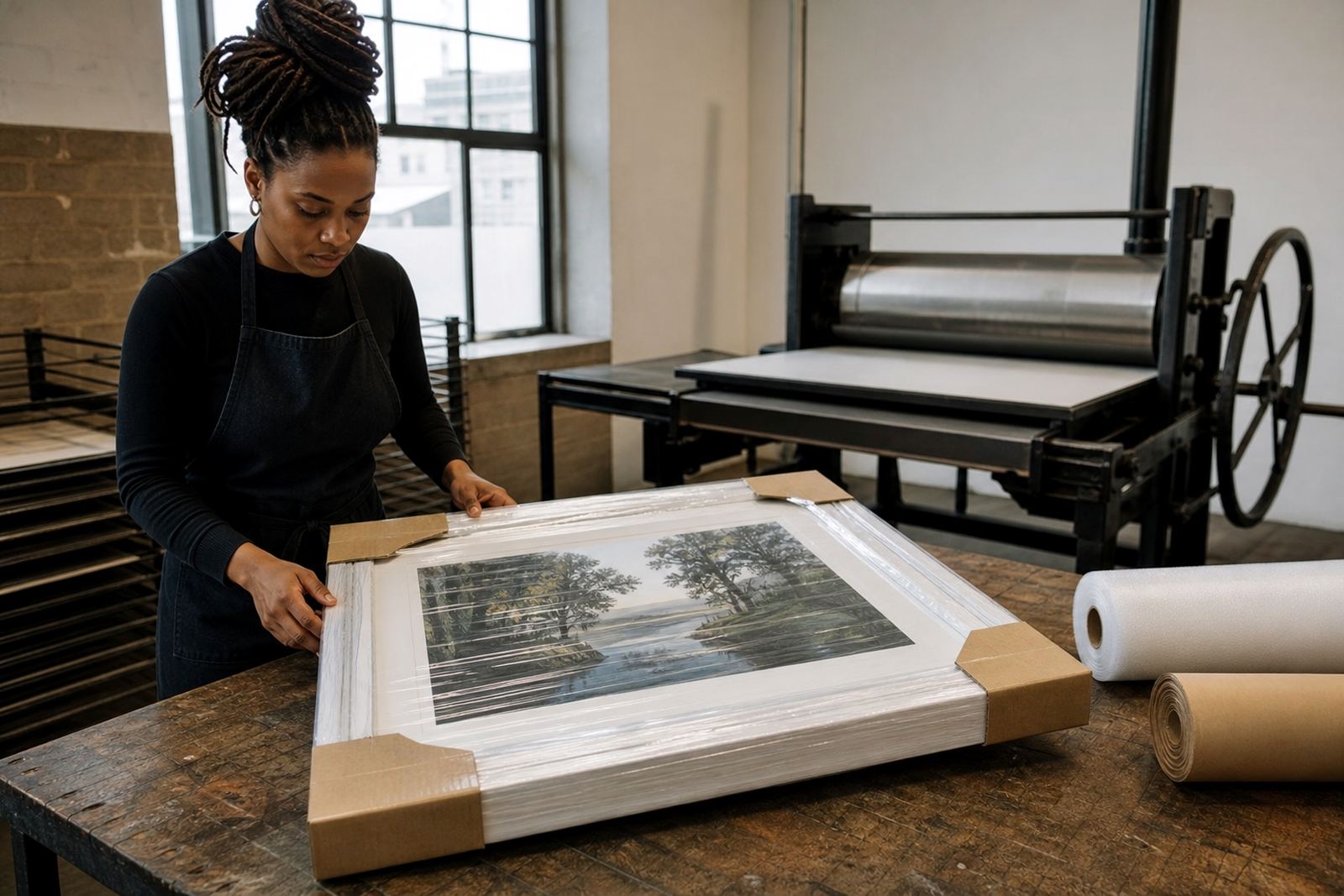
The paper choice was important because this edition needed a surface that would carry layered colour without losing detail. We advised on a sheet with enough strength for printing and enough texture to let the stone marks breathe. After printing, each work was dried fully before handling, then prepared for archival packing.
For collectors, presentation is part of the work. We coordinated the packing so the prints could travel safely from Woodstock to Somerset West and then on to buyers in Cape Town, Stellenbosch, Johannesburg, Pretoria and Durban. In a coastal city, humidity and storage conditions can affect fine paper, so we pack with those realities in mind rather than treating the work as if it will always sit in ideal conditions.
- Archival packing to reduce risk from moisture and handling
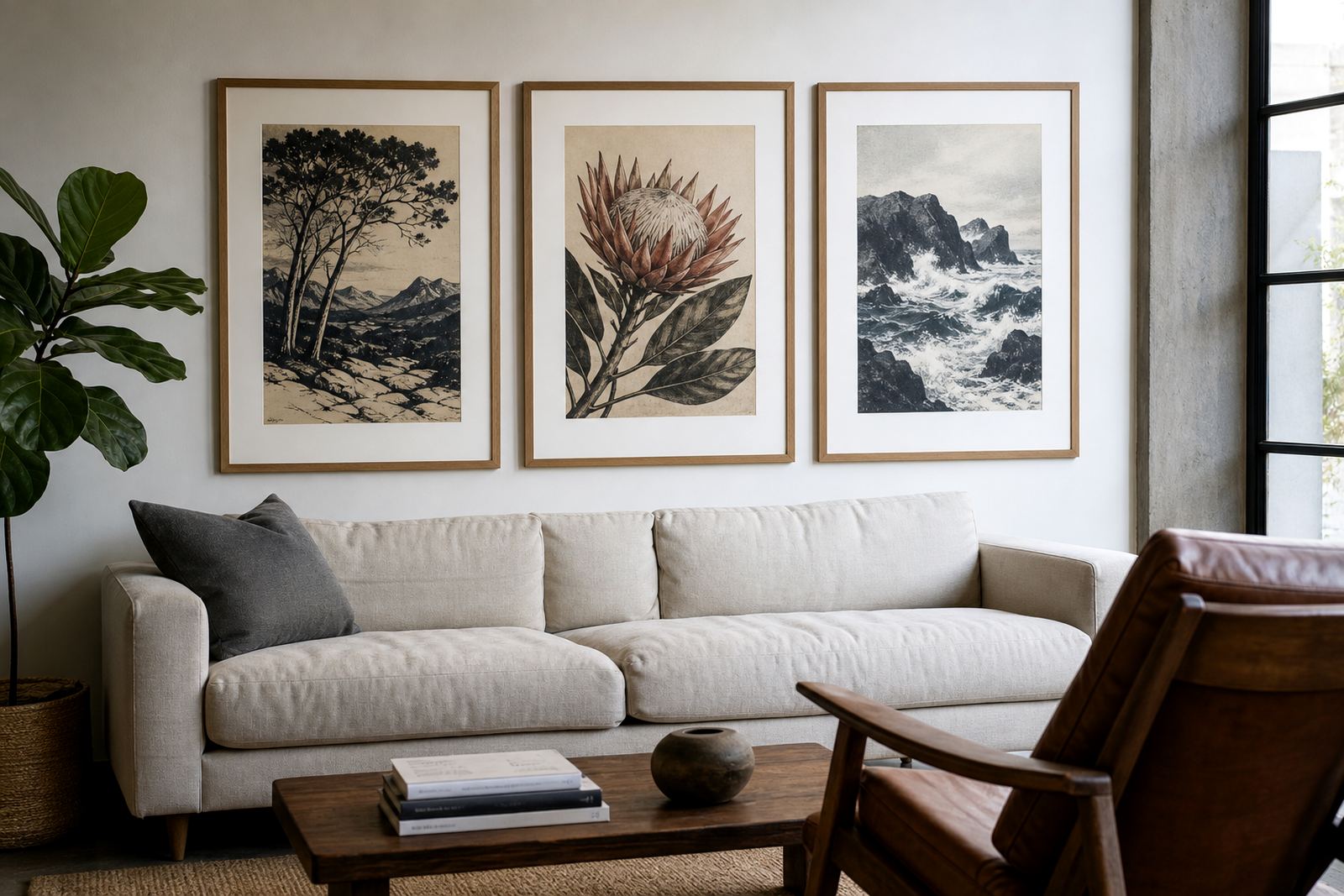
- Framing coordination available where the client wanted finished presentation
- Collector advice provided on storage away from direct sun and damp walls
- Delivery-ready finish checked before release
Timeline, Constraints And Studio Communication
The full project ran over six weeks from first discussion to completed edition. That included planning, proofing, colour adjustment, printing, drying, signing and packing. The biggest constraints were maintaining the depth of colour while keeping registration precise, and balancing studio time with the drying rhythm required by the paper and inks.
We kept communication clear through the enquiry process and studio check-ins, which made decisions easier when a proof needed a small correction. The client wanted a print that felt handmade and exact at the same time, so every change had to be measured carefully. That is often the difference between a good print and one that feels truly resolved.
- Timeline: 6 weeks
- Main constraint: layered colour without loss of detail
- Practical constraint: drying time and registration control
- Communication handled through studio updates and proof approval
What The Somerset West Edition Achieved
The final edition delivered the colour depth the client had asked for, with layered passages that held together cleanly across the run. The stone texture remained visible where it needed to, while the stronger colour areas gave the image weight and presence. In the finished sheets, the print read as a proper lithograph rather than something flattened by overwork.
If we were to approach a similar project again, we would use the same early emphasis on proofing and paper choice. That proved to be the right call here. For a Somerset West project with collector reach, the safest route is usually the careful one: plan the stones, test the colour, then print with discipline. It may sound simple, but that is where the quality sits.
- Result: strong colour depth with clean stone character
- Edition retained consistency from first proof to final sheet
- Suitable for collector release and careful long-term storage
- Approach worth repeating: proof early, then lock the edition plan
Edition details
| Project type | Limited stone lithography edition |
|---|---|
| Client location | Somerset West |
| Studio base | Woodstock, Cape Town |
| Process | Layered stone printing with proofing and registration control |
| Finish | Signed, numbered and archival packed |
| Timeline | 6 weeks from brief to completed edition |