Brief from a Pretoria collector
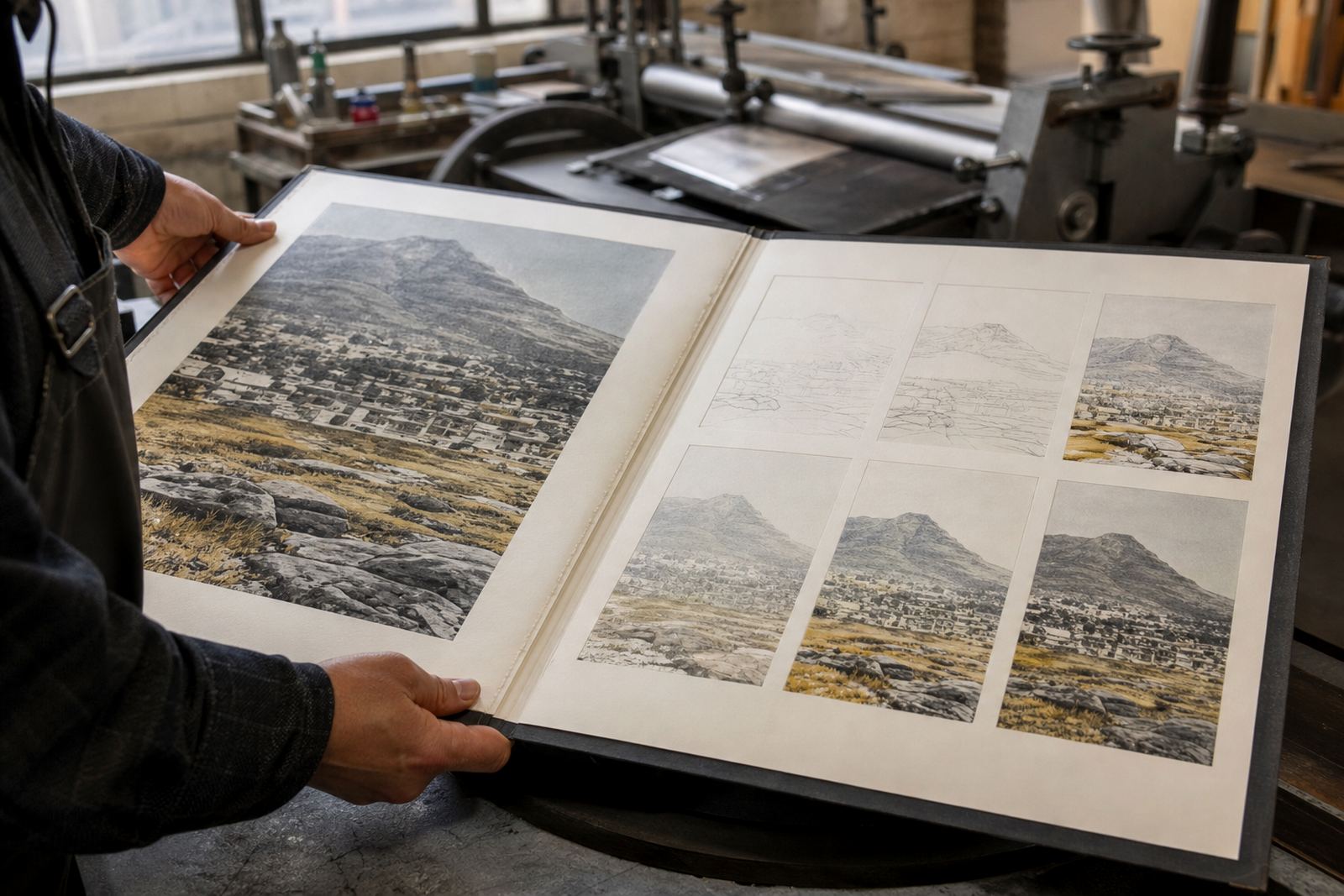
The commission came from a private collector in Pretoria who wanted a folio that could hold the story of the work as much as the finished impressions. The brief was straightforward: include selected trial proofs, the approved final prints, and written notes on handling, storage and care. The folio needed to travel well, sit neatly on a shelf, and make sense to someone who may revisit the prints years later.
The collector was interested in the process behind stone lithography, not only the end result. That shaped the whole approach. We planned the order of the contents so the early proof stages could be read beside the final edition, with enough context for paper choice, colour decisions and signing. It had to feel practical, not overdone, and it had to suit a climate where dry inland air and strong summer sun can affect paper if it is not kept properly. The brief also called for clean labelling, which saves a lot of time later.
How the folio was planned and editioned
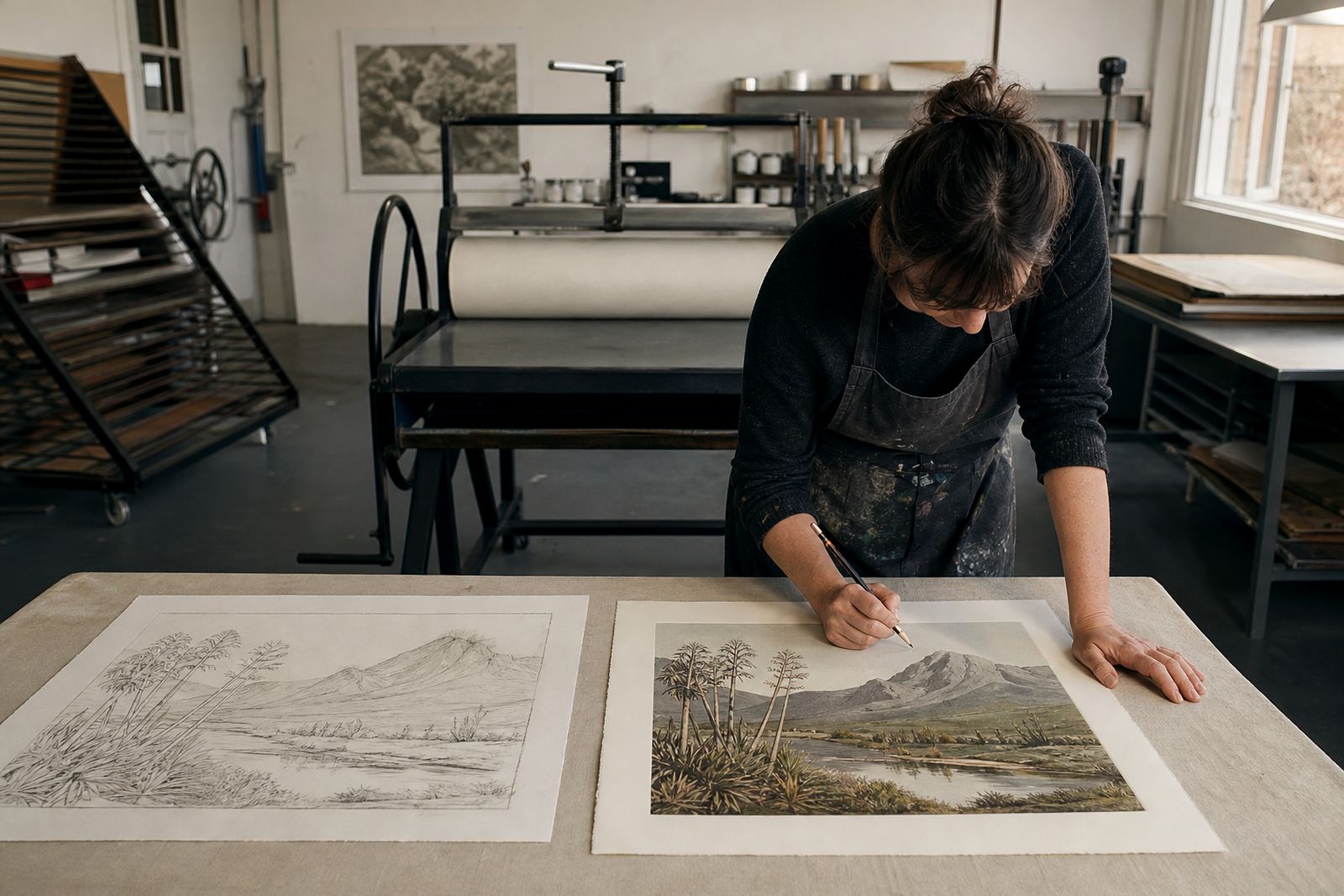
We started with edition planning and proofing sessions in the Woodstock studio. The artist and printer checked the image in stages, looking at tonal balance, registration and the way each colour sat on the stone. In stone lithography, the image is drawn or prepared on limestone with greasy materials, then treated so the stone accepts ink in the drawn areas and repels it elsewhere. That balance is what gives the print its character and depth.
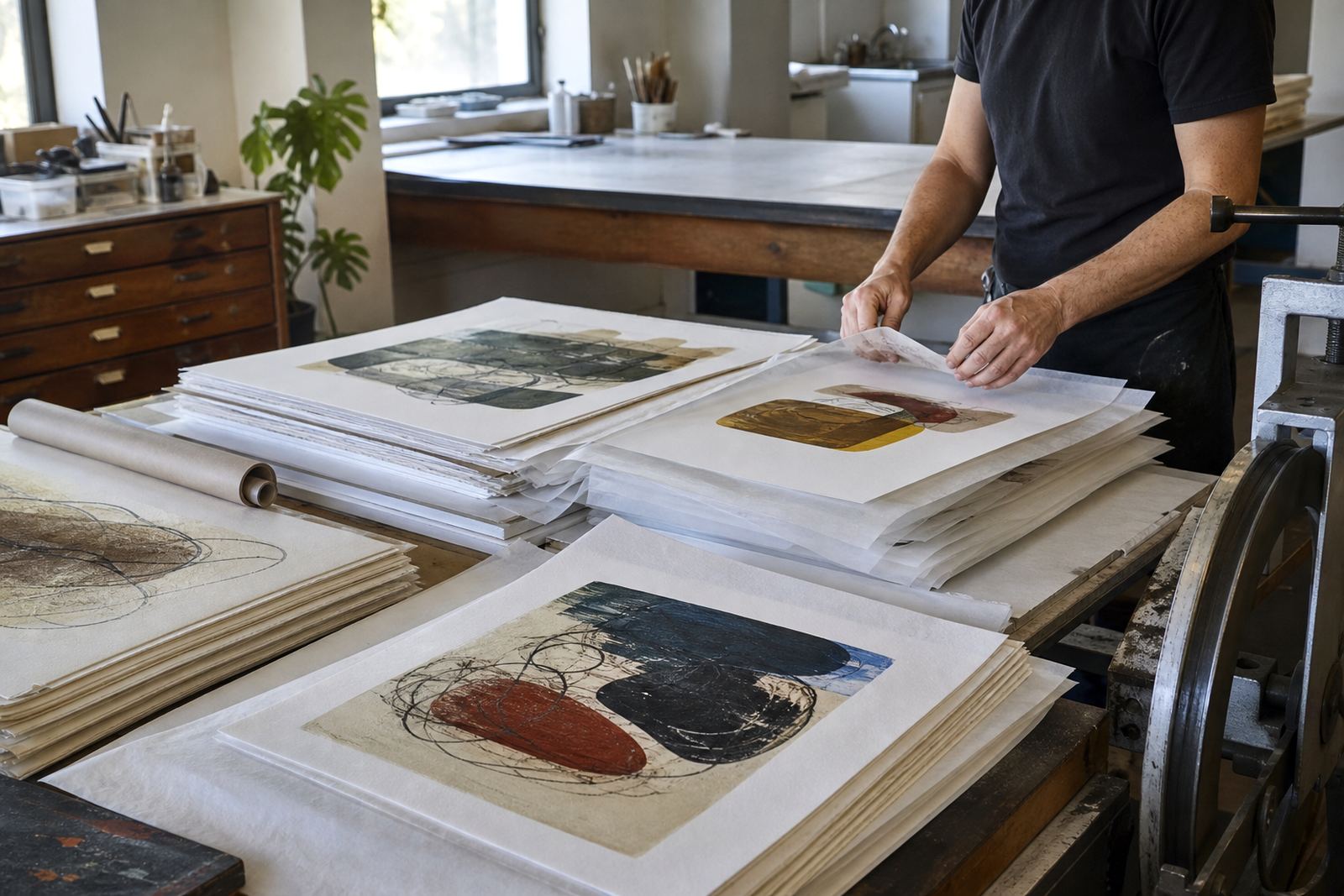
For this folio, the edition structure was kept tight and easy to follow. Trial proofs were pulled first, then the final prints once the colour decisions were settled. Each sheet was checked for even pressure, clean edges and consistent ink roll-up. We also kept a separate set of notes on the edition so the collector could see which impressions were proofs, which were final, and how many were retained for the folio. That sort of record is useful if the work is sold, framed or stored long term. It prevents confusion later on and helps protect the value of the set.
- Stone lithography proofing for image balance and registration
- Final edition prints pulled after approval of colour and tone
- Written edition notes for proof state, final state and handling
- Clear labelling for each item in the folio
Materials, paper and packing choices
Paper selection mattered a great deal here. We guided the collector on a paper that would take fine detail well and hold the surface of the print without looking too heavy. For a folio kept in Pretoria, we also considered handling and storage. Paper that is too soft can mark easily when moved in and out of a folder, while paper that is too stiff can crack if packed badly. Finding the right feel is part of the job.
The folio itself was packed as an archival set with interleaving and protective wrapping. We supplied handling notes that covered clean hands, flat storage, light exposure and framing advice. South African collectors often move works between cities, so we think about transport too. If a print is going from Cape Town to Johannesburg or Durban, it should be packed to cope with vibration, heat and occasional delays. A well packed folio reduces the chance of corner dents or scuffing. It sounds simple, but it saves the work from unnecessary wear.
- Archival packing with interleaving between sheets
- Paper advice based on edition use and storage conditions
- Handling notes for flat storage, framing and light exposure
- Transport friendly presentation for intercity delivery
Studio work carried out in Woodstock
The studio team handled the whole folio from proof to packing. Nomvula Phalatse led the printing process, Stefan Hattingh managed the stone preparation and press setup, and Bonga Mngadi assisted with editioning and sheet control. Rukshana Kamaar coordinated the folio contents and labelling, while Tegan Jacobs kept the client informed during the process. Shailen Naicker oversaw the job and checked the final presentation before release.
What we supplied was more than a bundle of prints. We prepared the stones, printed the proof stages, signed and numbered the final impressions, and assembled the notes into a clear sequence. The collector wanted the folio to read like a working record, and that meant every piece had to be in the right order and in good condition. We also checked each sheet for marks from handling and made sure the prints were allowed to dry fully before packing. In printmaking, rushing the drying stage can cause real trouble later on, so we never cut that corner.
Timeline and practical constraints
There were a few practical constraints. The folio had to be compact enough for easy storage, but not so compressed that the prints would be awkward to handle. It also needed a finish that could tolerate regular viewing without becoming fragile. We also watched humidity in the Cape Town studio, especially on days when the coastal air shifts quickly. That can affect paper movement a little, so the sheets were allowed the time they needed. No guesswork, no shortcuts.
- Completed across 5 weeks
- Edition planning, proofing and final printing handled in stages
- Packed for storage, handling and intercity movement
What the collector received
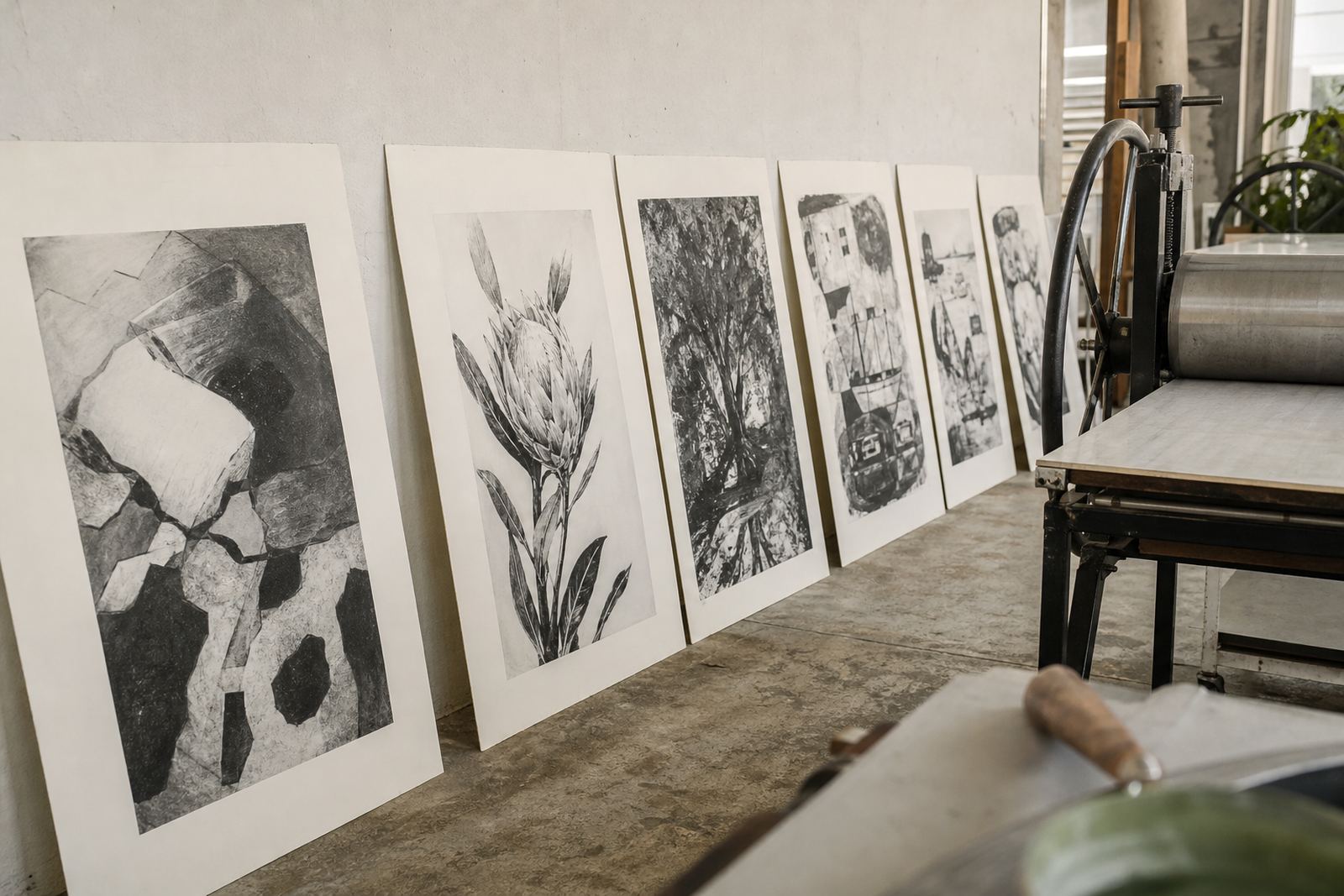
The finished folio gave the collector a complete view of the project. It included the selected trial proofs, the approved final prints and a set of handling notes written in plain language. The final result was orderly and easy to navigate, which is exactly what a collector needs when a work is going to be revisited, shown to guests or kept with other important prints.
The result also confirmed why editioning matters. When a lithograph is properly planned, each impression keeps its place in the whole set and the collector can see the development clearly. That makes the folio useful as both a presentation piece and a record of process. It also means the work can be framed later with more confidence, because the storage and care steps are already understood. We were pleased with how clean the set read as a group, and it matched the brief without feeling overworked.
What we would do again for a similar folio
We would follow the same structure again for a Pretoria collector or for any client elsewhere in South Africa who wants the process preserved properly. Start with a clear edition plan, agree the paper early, keep the proof notes tidy, and pack everything as though it will be handled many times. That order makes the final folio easier to live with and easier to value.
For similar jobs, we would again recommend a short studio visit or proof review if the client can manage it. Seeing the stone, the proofs and the final prints side by side helps people understand what they are buying. It also gives room for small adjustments before the edition is closed. In lithography, those details matter. A well kept folio does not only show prints, it shows the care behind them.
Edition details
| Project type | Collector folio with trial proofs, final prints and handling notes |
|---|---|
| Client location | Pretoria |
| Studio location | Woodstock, Cape Town |
| Process | Stone lithography with proofing, editioning and signing |
| Timeline | 5 weeks from brief to handover |
| Contents | Selected proofs, final edition prints, archival packing and care notes |