A private brief from Paarl, shaped for print
The client was a private collector based in Paarl who wanted a print edition that carried the character of the original artwork without losing the hand-made feel of stone lithography. The brief was clear from the start: keep the image faithful to the source, retain rich colour, and produce a finished edition that could be signed and numbered for a small circle of collectors.
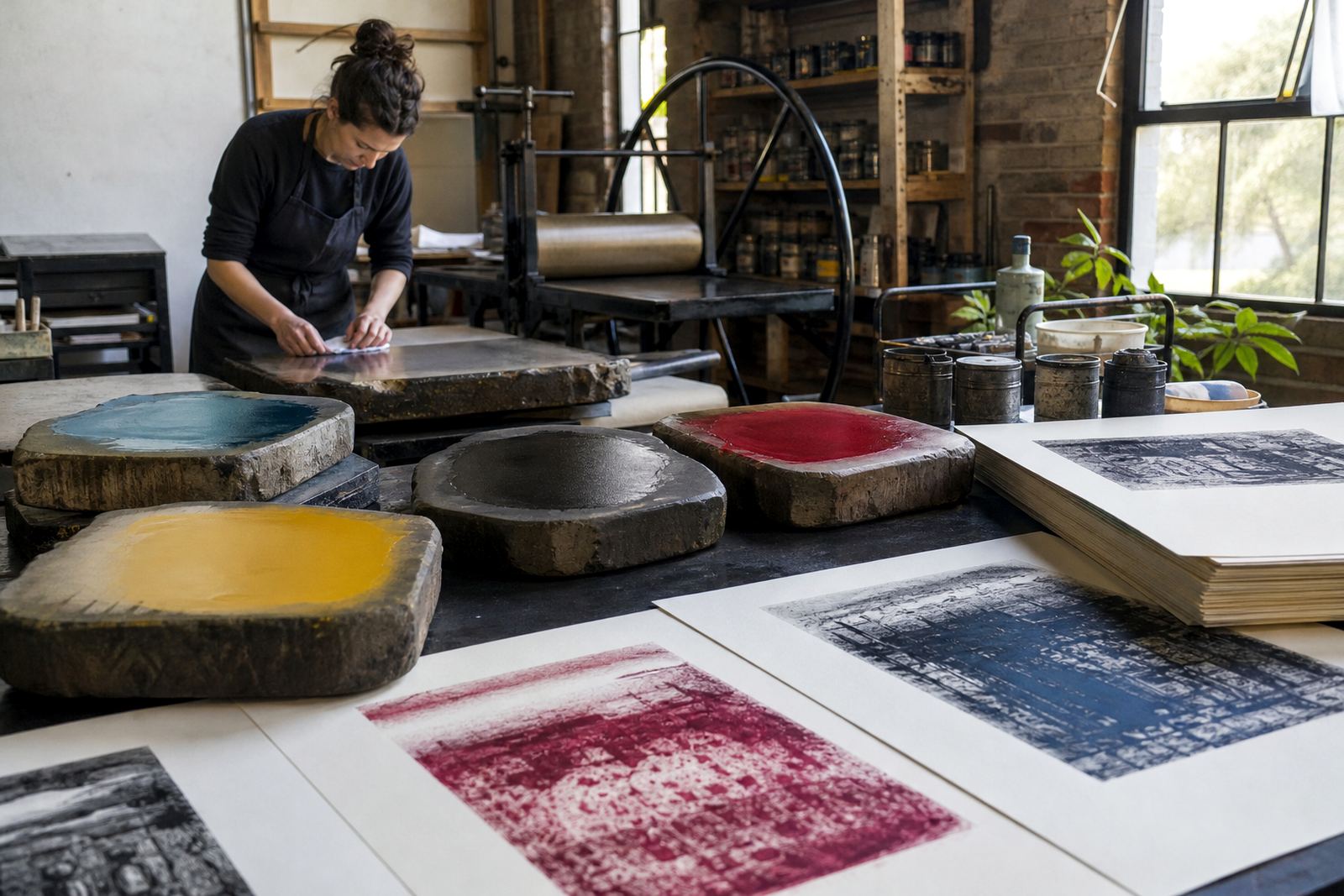
In simple terms, stone lithography is a planographic printing method. The image is drawn or transferred onto a prepared limestone surface, then treated so the ink accepts only the drawn areas and repels the non-image areas with water. It is a slow process, but that is part of the appeal. Each colour is handled with care, and the final print keeps the subtle marks, tonal shifts and texture that collectors expect from fine-art lithography.
What the commission needed to solve
This project had a few practical constraints. The source artwork had to be translated into a printable form that held detail at close range, while also working as a limited edition rather than a one-off proof. The client also wanted a clean signing format, so the edition needed to be consistent from first sheet to last and suitable for careful archiving and framing.
- Translate the image into a print-ready stone lithography format
- Manage colour separation so the final print kept depth without muddy overlays
- Plan the edition so the sheet size and image placement stayed consistent
- Prepare a signing space that suited the artist and the collector
- Pack the finished edition for safe travel and long-term storage
That meant planning each stage carefully so the edition could move forward without avoidable delays.
Our studio process in Woodstock
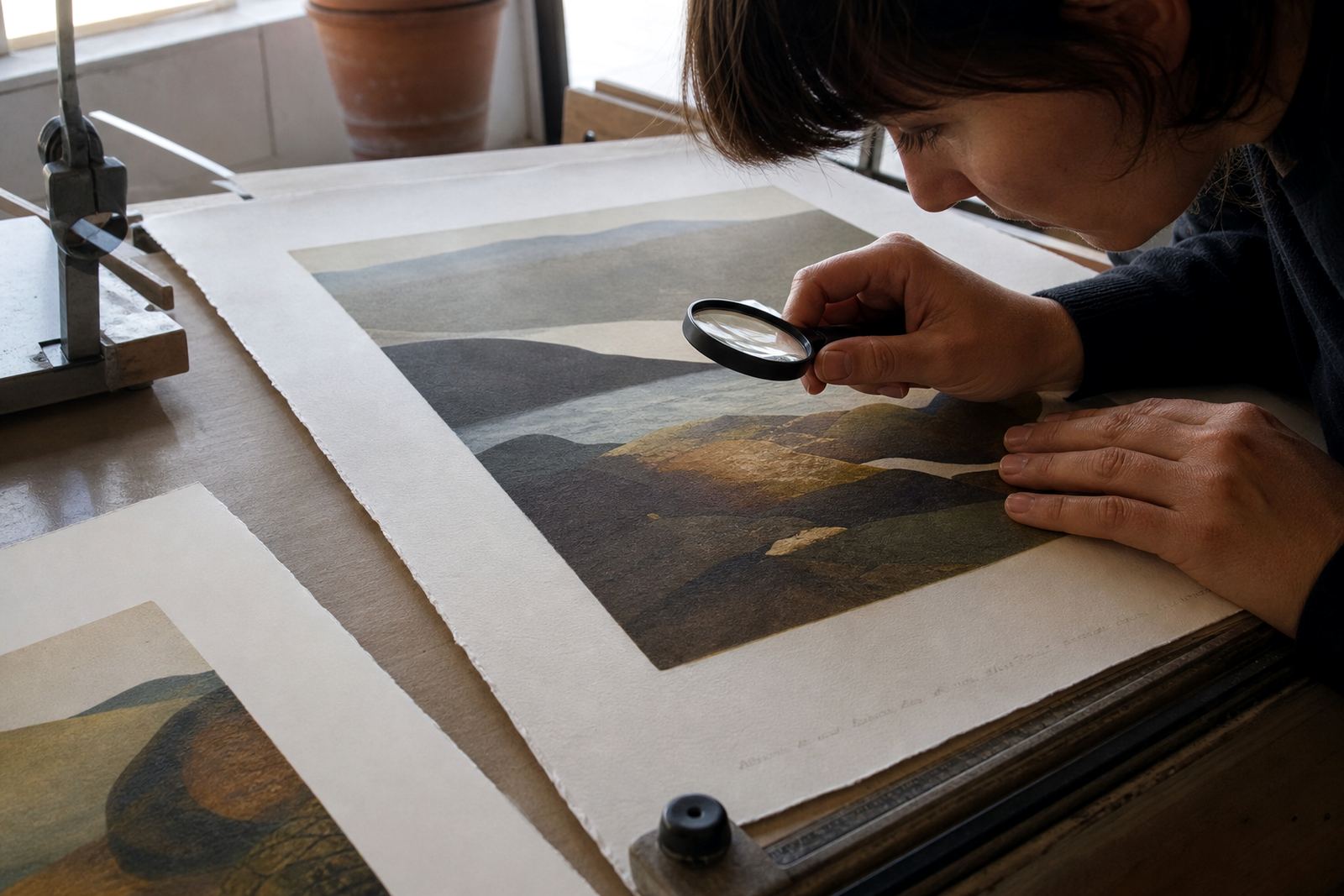
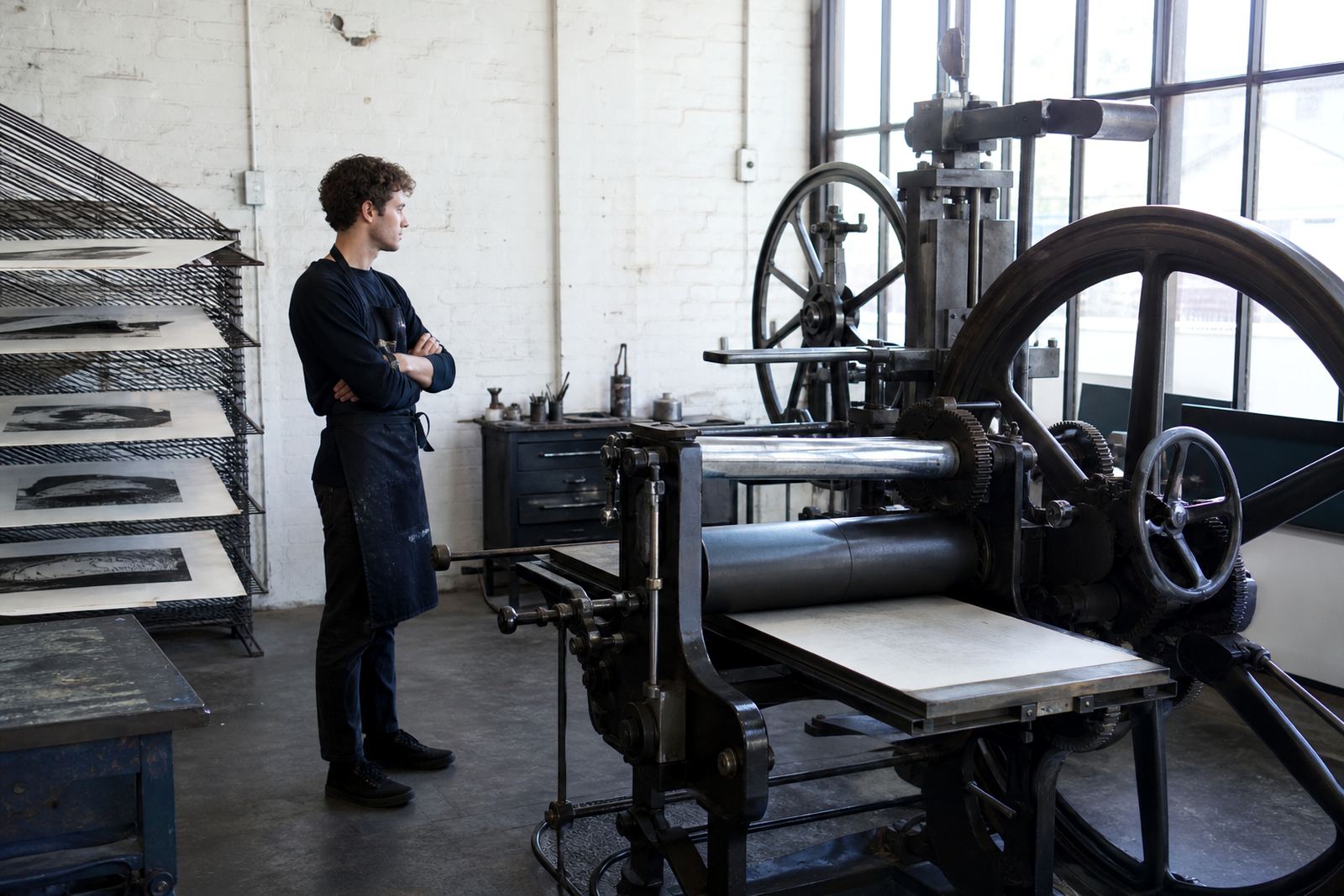
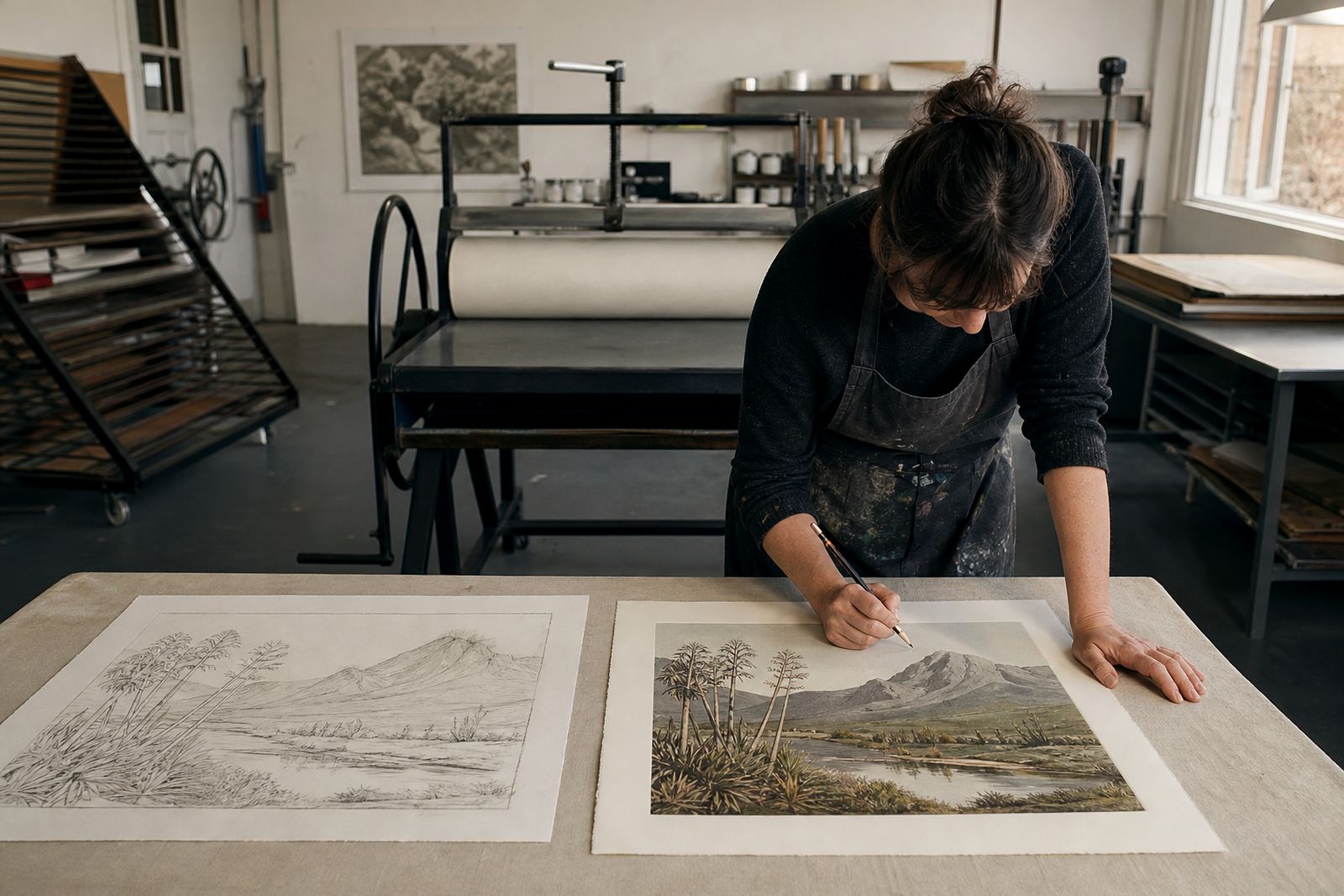
Work began in our Woodstock studio with stone preparation, image planning and a series of proofs. The first proofs showed where colour needed tightening and where the drawing could be adjusted for better contrast. From there we refined the registration and checked the balance between line, tone and background areas. Small changes made a big difference, especially where the image relied on layered colour rather than heavy outlines.
The edition was then printed through a controlled sequence, with drying time allowed between stages. Because stone lithography rewards patience, we did not rush the process. We kept the workflow practical and exact, which is what a private commission of this kind needs.
- Stone preparation and image transfer
- Proofing sessions with the client’s feedback
- Colour separation and registration checks
- Edition printing, signing and numbering support
- Archival packing for collector delivery
Editioning, signing and collector presentation
Once the final proofs were approved, we moved into editioning and signing support. The artist signed and numbered the sheets in a controlled sequence so the edition remained consistent and easy to document. We also provided collector advice on how to store and frame the work, especially for homes near the coast where salt air can affect paper, mounts and framing materials over time.
For presentation, we recommended archival packing and framing coordination rather than rushed display. Good print care starts from the studio. A lithograph should be handled with clean hands or cotton gloves, kept flat, and stored away from direct sunlight, damp walls and rooms with large temperature swings. If framed, the print should use acid-free materials and proper spacing so the paper does not sit against the glazing.
That practical advice matters in places like Cape Town, Durban and other coastal towns where humidity can creep into a room and damage paper over time. Even inland in Johannesburg and Pretoria, dust and dry air can still affect how a print is kept over the years.
Timeline and results
The full commission ran over several weeks from the first proof to the final packed edition. That allowed enough time for the image to settle, the colours to be tuned and the signing process to be handled properly. The result was a limited lithograph edition that stayed close to the original artwork while giving collectors a work that felt deliberate, tactile and properly finished.
The client wanted a print that did not look factory-made, and that was achieved. The stone lithography process gave the edition visible depth, fine tonal variation and a natural sense of craft. It also meant the final sheets carried the marks of hand printing, which is exactly what many collectors look for when they commission a fine-art edition.
- Faithful translation from source artwork to lithograph
- Careful colour handling for consistent sheets
- Signed and numbered edition support
- Archival packing for transport and storage
What we would do again on a similar commission
If we were repeating this type of project, we would keep the same proof-led approach. A private commission works best when the artist, printer and collector all agree on the final direction early, then leave room for the natural adjustments that come with stone lithography. The process rewards clear decisions and steady handling, not shortcuts.
We would also keep the same focus on packing and collector guidance. A limited edition only stays valuable if it is well made and well cared for. For collectors in South Africa, especially around the Western Cape, that means using proper framing and keeping the print away from moisture, strong sun and poor-quality materials. It is simple advice, but it protects the work for years.
For private commissions in Paarl, Stellenbosch, Sea Point, Newlands, Johannesburg, Pretoria or Durban, we approach the same way every time: practical planning, close proofing and careful editioning from start to finish.
Edition details
| Project type | Private commission translated into a limited lithograph edition |
|---|---|
| Location | Paarl, with studio production in Woodstock, Cape Town |
| Process | Stone lithography with proofing, colour separation and editioning |
| Support provided | Signing, numbering, archival packing and collector advice |
| Timeline | Completed over several weeks |
| Outcome | A hand-printed edition with consistent colour and clean presentation |