Inspect the print package on delivery
Stone lithography prints are handled with care from the studio, but transit can still cause damage if a parcel is crushed, bent or exposed to moisture. Please open the package soon after delivery and check the outer carton, wrapping, corners and the print itself before you frame or store it.
If you are in Cape Town, Stellenbosch, Johannesburg, Pretoria, Durban, Sea Point or Newlands and the parcel shows signs of impact, keep every part of the packaging. That includes the carton, tape, tissue, board, corner protection and any labels. These details help us assess what happened in transit and decide the next step.
- Look for bends, creases, scuffs, moisture marks or torn paper
- Do not trim, flatten or re-roll the print before speaking to us
- Keep the original packaging in a dry place
How to report a transit problem
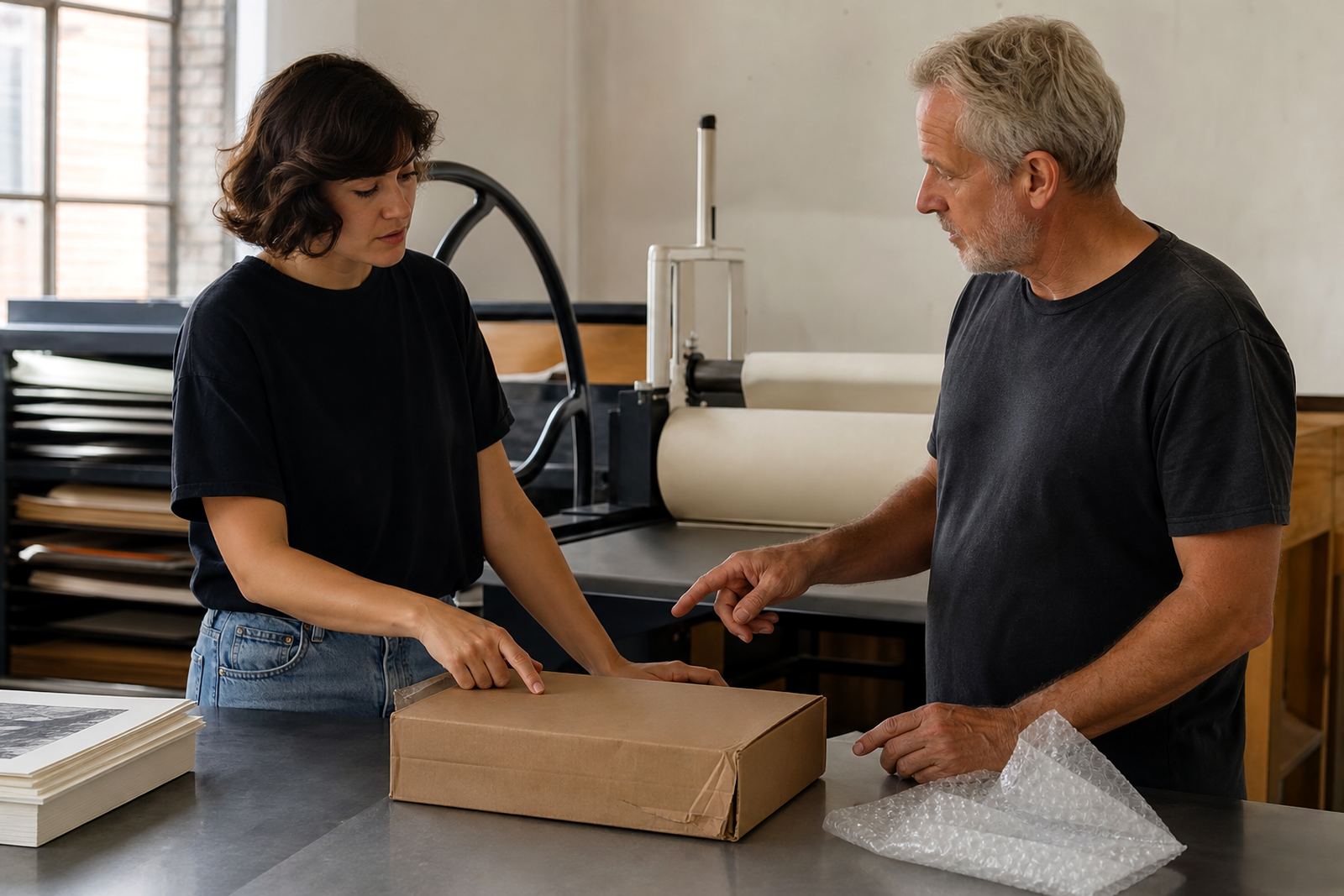
Use the enquiry form on our contact page and include clear photos of the parcel and the print. Please send images of the outer box, the label, the inside packing and the affected area of the print. If the work is framed, include photos of the frame front and back as well.
When you contact us, please include your name, delivery town, the title of the print if known, and a short note on what you noticed. If the parcel was left in rain, heat or direct sun, mention that too.
- Report visible damage as soon as possible after delivery
- Include photographs taken in good natural light
- Do not return anything before we have replied
What we may ask for before we advise next steps
Each case is different because editioned prints are made on paper, hand printed on stone and often signed and numbered. A crease, a tear or a dent near the image area may need a different response from minor edge wear on the margin. We will look at the condition of the print, the packaging and the delivery details before suggesting any action.
In some cases we may ask you to keep the print untouched while we review the images. In other cases we may recommend returning it for inspection or arranging a replacement if the issue is clearly linked to transport and the edition still allows for it. We will always discuss the available options with you first.
- Condition of the paper surface and image area
- Condition of the packaging and outer carton
- Whether the edition, proof or signed print is affected
Stone lithography prints and editioned work
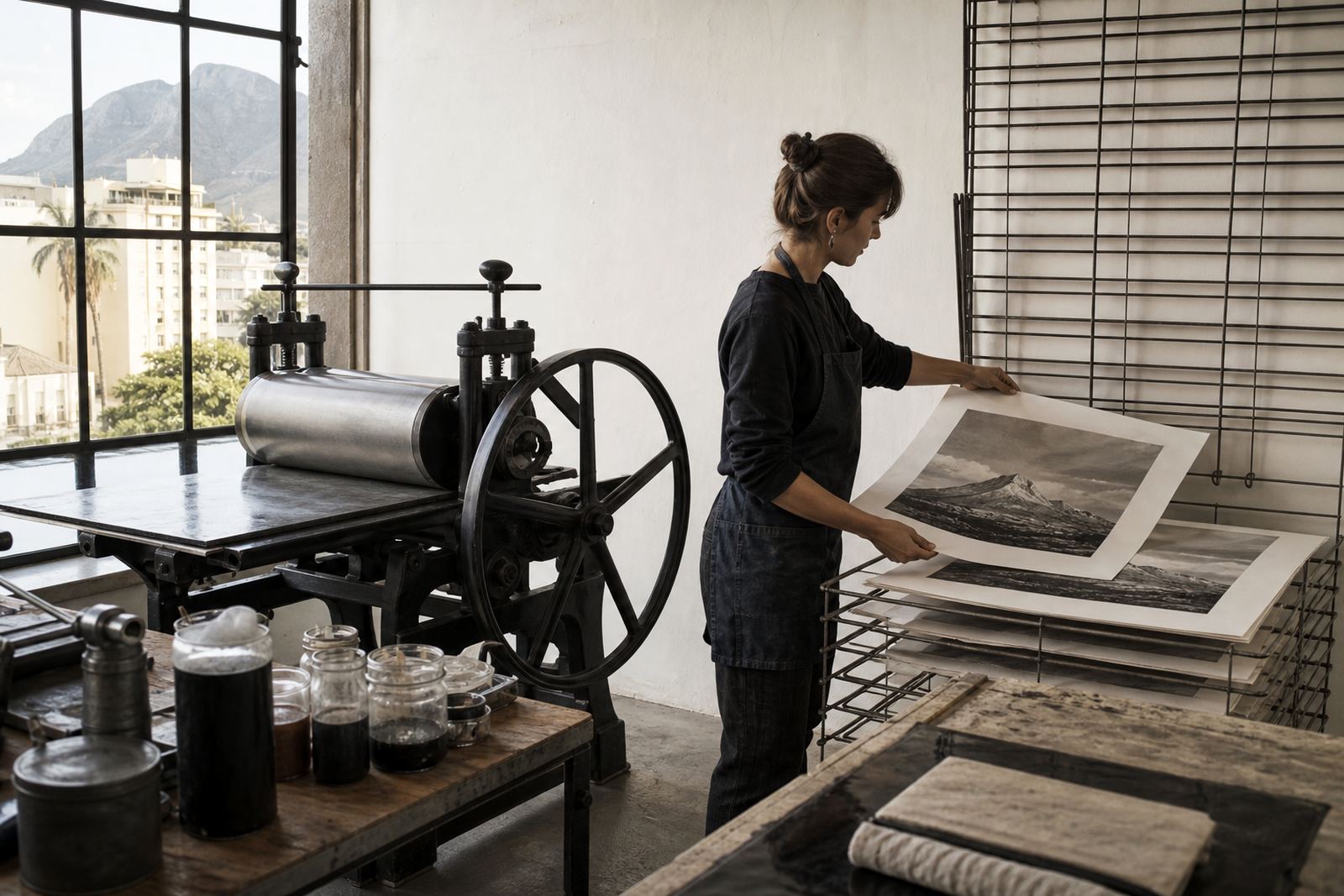
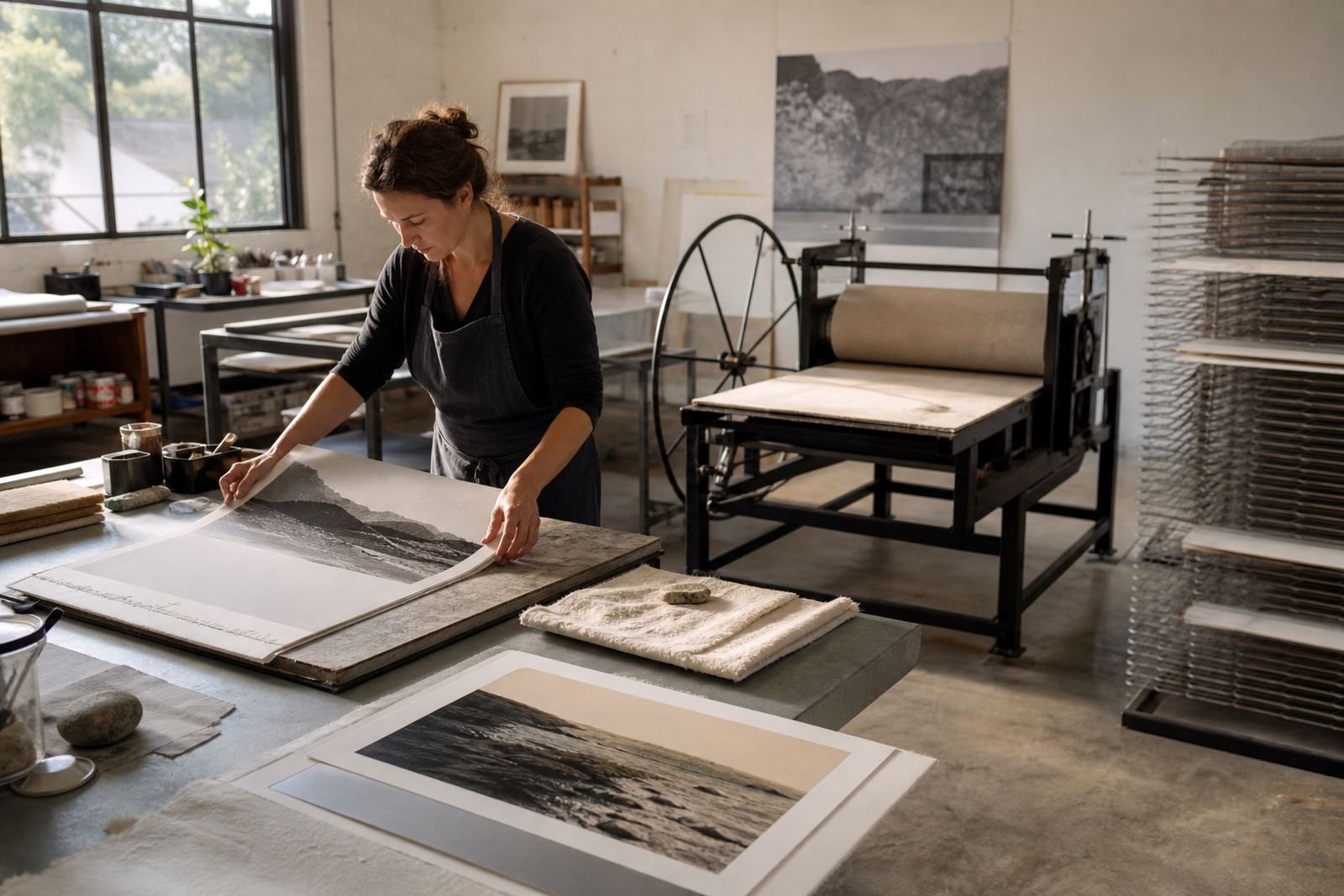
In this traditional printmaking process, the image is drawn on stone with greasy materials, then treated so the ink adheres only to the drawn marks. Because each impression is pulled by hand, paper choice, pressure and ink balance matter. Small variations are part of the process, but damage from transit is not.
Limited editions are numbered and signed according to the edition plan agreed with the artist. Once a print has been issued, any return or replacement must be handled carefully so the edition record stays accurate. For collectors, that means a clean paper trail and clear communication are important.
Packing, insurance and local delivery realities
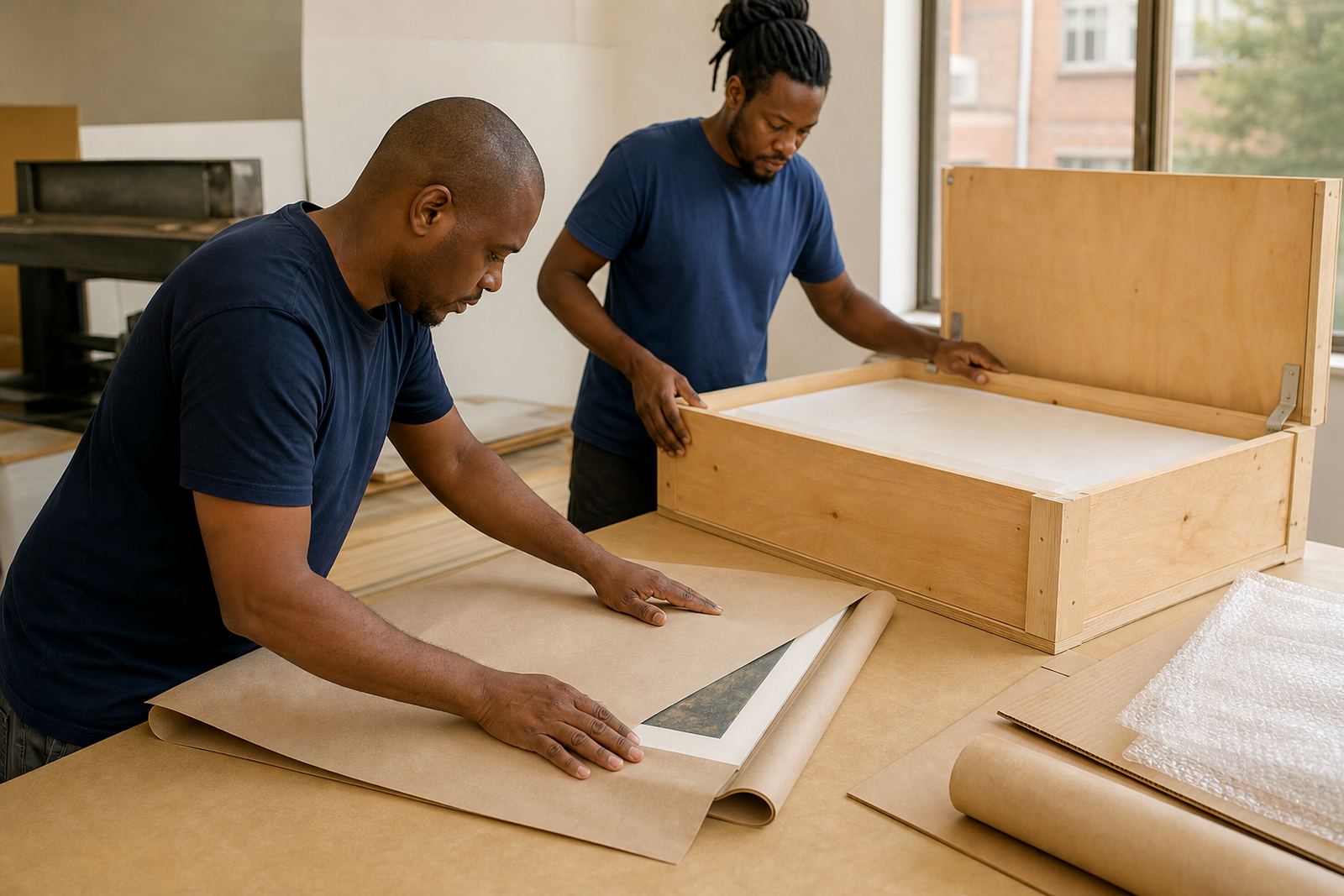
South African deliveries can involve long road trips, sorting hubs and weather changes between the coast and the interior. We pack prints for these conditions with protective layers and rigid support, but rough handling can still happen. If a parcel has been exposed to rain, damp air in coastal areas, or prolonged heat in a vehicle, tell us straight away.
If you are collecting in Woodstock or arranging a handover in Cape Town, we can discuss suitable packing for the journey home. For collectors in Johannesburg, Pretoria or Durban, we pay close attention to flat support, edge protection and moisture control so the print is less likely to shift in transit.
- Keep prints away from direct sun and damp walls
- Store flat in a clean, dry space until framing
- Do not tape directly onto the image area or the margins
Care after delivery and before framing
If your print has arrived safely, please handle it with clean hands and support it fully from underneath. Lithographs on paper should be left flat for a while before framing if they were rolled for transport. Avoid folding, pressing or clipping the sheet, and keep it away from kitchens, bathrooms and other humid rooms.
For framing, use acid-free materials and a framer who understands editioned prints. We can discuss framing coordination if you want guidance on mounts, glazing and backing. Good care helps preserve the paper, the colour and the value of the work over time.