How stone lithography works in the studio
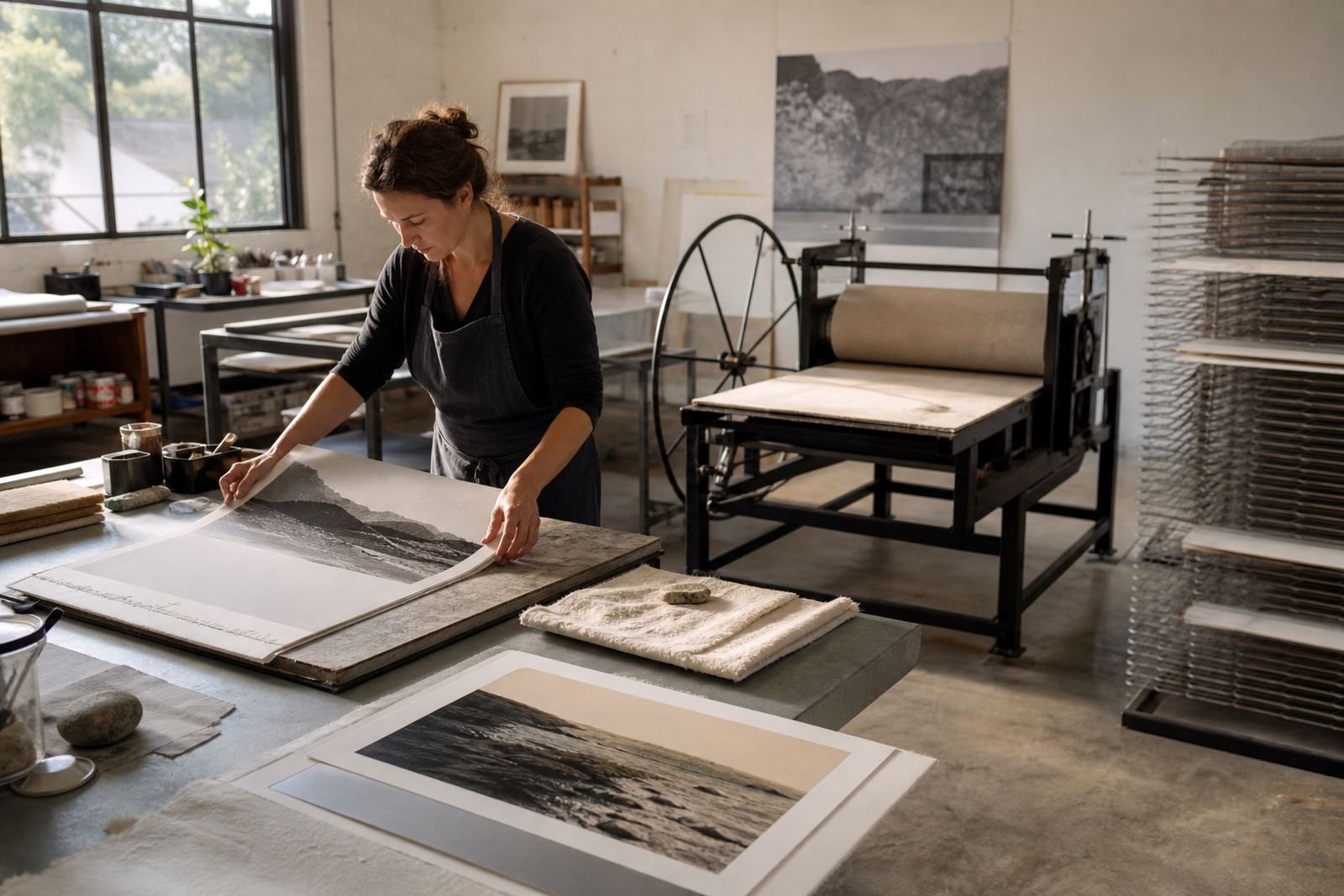
A prepared limestone stone forms the printing surface in this planographic process. The image is drawn or transferred onto the stone with greasy materials, then the surface is treated so that the image areas accept ink and the non-image areas repel it. Each colour must be printed separately, which is why the process takes time and close attention.
In practical terms, the stone is dampened, rolled with ink and printed onto paper under pressure. Because the image sits on the surface rather than being cut in, lithography can hold fine marks, soft tonal changes and a painterly feel that many collectors value. It is suited to limited editions and artist-led projects where the making of the print is part of the final work.
- Each colour is printed as a separate layer.
- Registration is checked carefully so the colours align.
- Paper choice affects tone, texture and how the ink sits.
What an edition means for collectors
An edition is the agreed number of prints made from one image. Once the edition is complete, the stone is usually cancelled or set aside so no further prints are taken from that version. This helps protect the value and clarity of the edition for collectors.
Editioning also includes proofing, signing and numbering. Proofs are used to refine the image before the final edition is printed. The final prints are then signed and numbered in pencil, usually along the lower margin. Some editions may also include artist proofs, trial proofs or printer proofs, depending on the project brief.
- Proofs help test colour, pressure and paper.
- Numbering shows the place of a print within the edition.
- Consistency matters, but slight hand-printed variation is normal.
What happens during proofing and edition planning
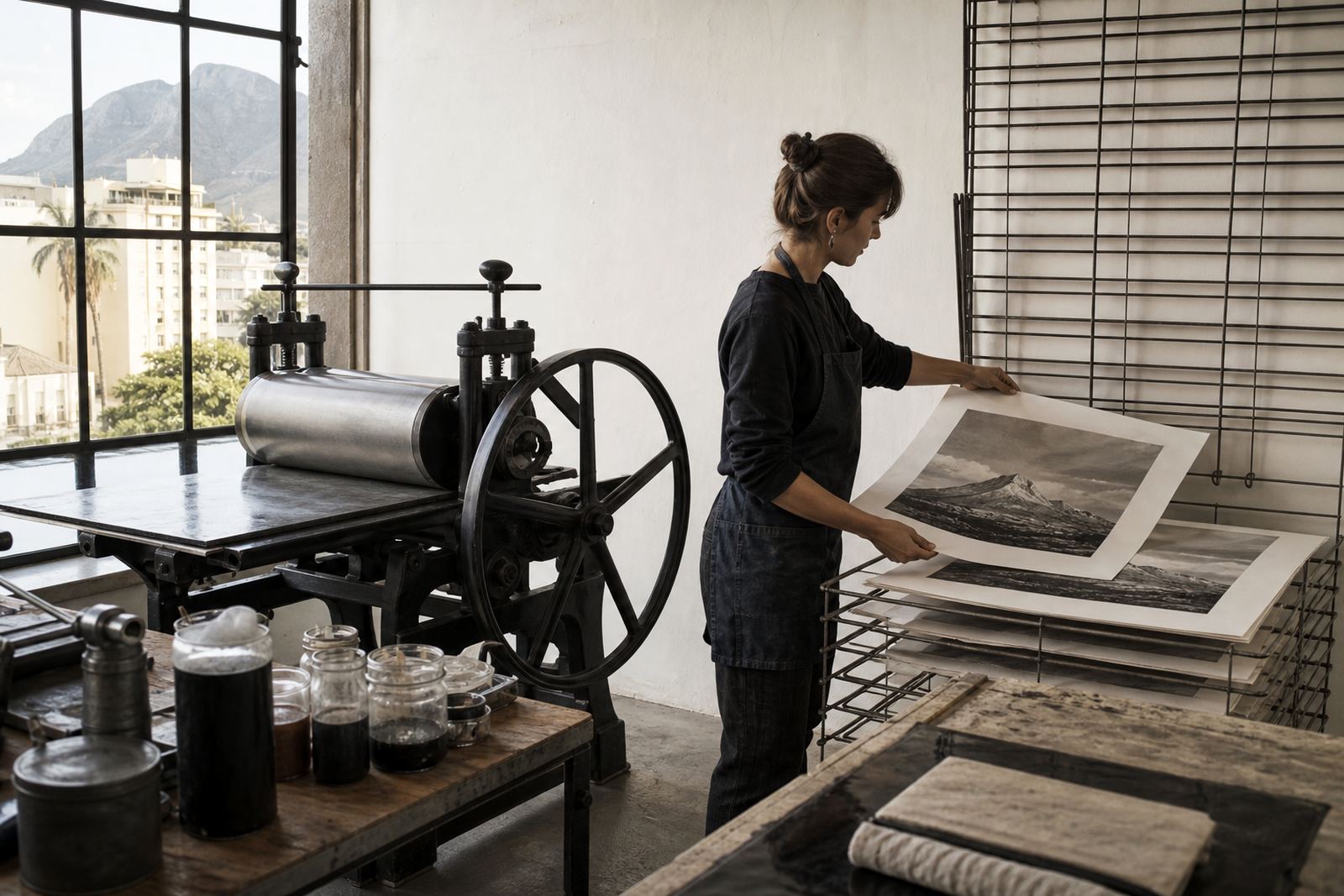
Proofing sessions are where decisions get made before the main edition starts. We look at colour, contrast, paper absorbency, margins and the final scale of the print. If a work uses more than one stone, we also check each layer against the others so the finished print reads cleanly.
Artists and collectors who visit the studio in Woodstock often want to see how the image changes from one proof to the next. That is part of the value of stone lithography. It lets the maker adjust small details with care, rather than rushing the process. For clients outside Cape Town, we can discuss edition planning and updates through the enquiry form on our contact page.
- Confirm size, paper and edition count early.
- Allow time for colour adjustments and drying.
- Keep records of the approved proof for reference.
How we pack and deliver prints across South Africa
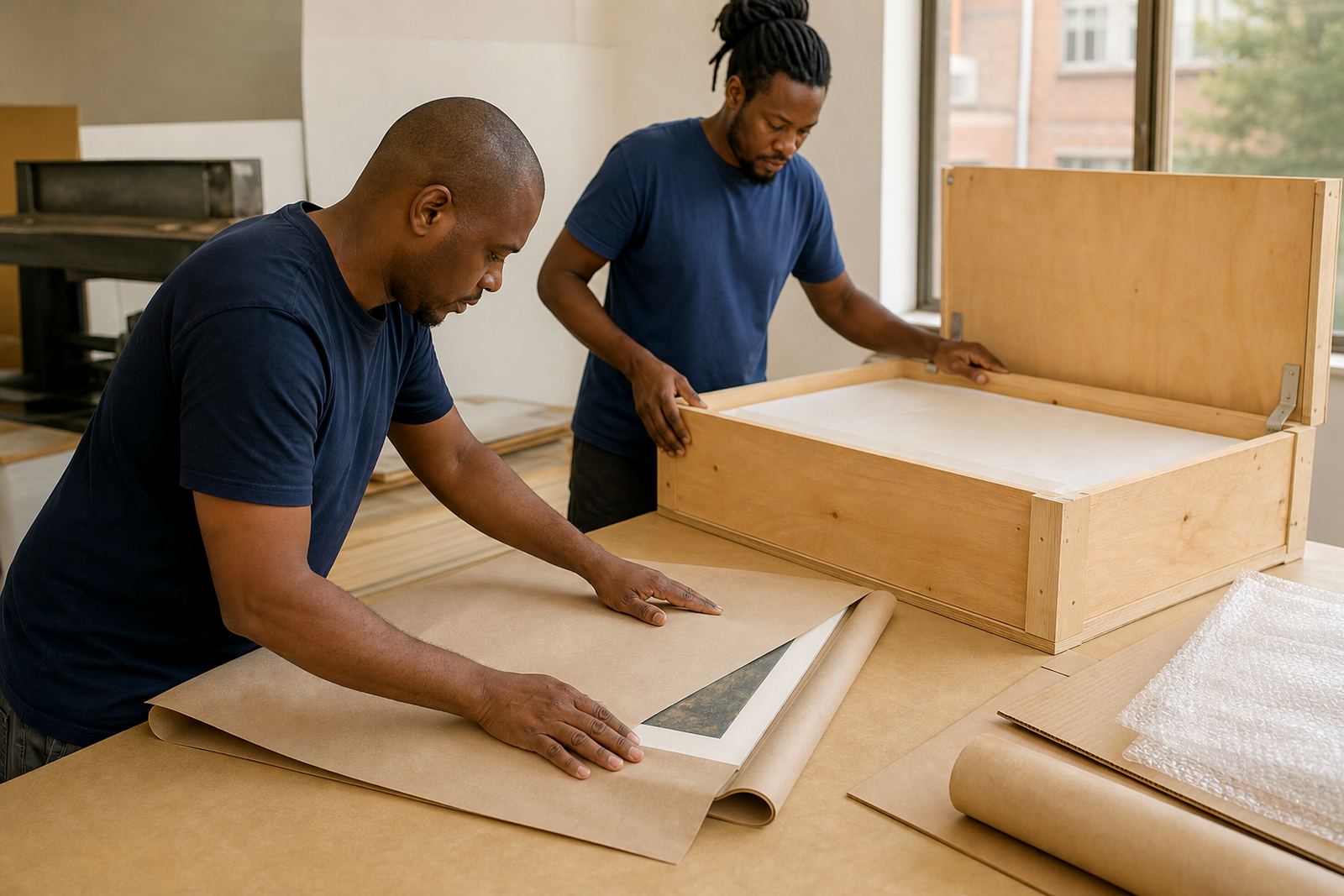
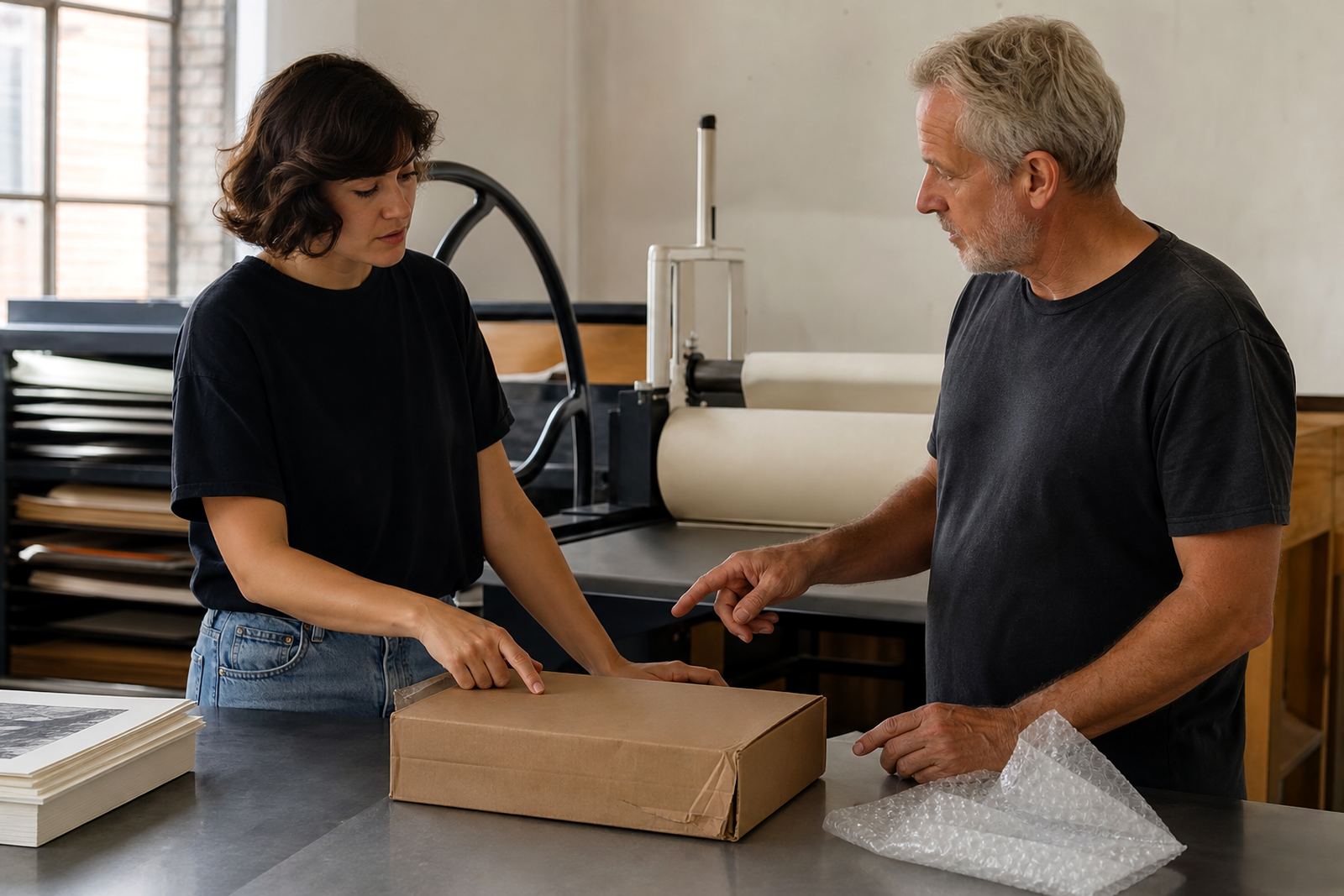
Printed work needs proper handling from the press to the frame. Fresh prints must dry fully before they are packed, and the paper should be protected from moisture, bending and surface marks. This matters in coastal areas such as Sea Point and Durban, where humidity can affect unframed work if it is left open for too long.
We arrange archival packing for collectors in Cape Town, Stellenbosch, Johannesburg, Pretoria and Durban. Prints are normally wrapped flat, supported with rigid backing and kept away from direct heat. If a collector wants framing, we can coordinate that too, so the print stays protected from the start.
- Do not roll a print unless it has been prepared for that.
- Keep the package flat and out of direct sun.
- Let framed work hang away from kitchens and bathrooms.
How to care for a lithograph at home
Once a print is framed or stored correctly, care is simple. Avoid touching the image area with bare fingers, since skin oils can mark the paper over time. If the work is unframed, store it flat in an acid-free folder or between clean sheets of archival tissue.
For framed prints, use UV-filtering glass or acrylic where possible, and hang the work away from strong sunlight, steam and sudden temperature changes. Dust the frame only, not the print surface. If a collector in Newlands or Pretoria notices waviness, spotting or fading, the print should be checked by a framer or paper conservator sooner rather than later. Small problems are easier to manage before they settle in.
- Handle by the edges only.
- Store flat in a dry, clean space.
- Avoid tape, glue and household sprays near the paper.
Studio visits, collector advice and getting in touch
Studio visits are useful if you want to understand the process before commissioning or buying. They give you a chance to see stones, ink, paper and proofs up close, and to ask about edition size, colour choices or framing coordination. Our team in Woodstock works with artists and collectors across South Africa, from Sea Point to Johannesburg, and we keep the process practical and clear.
If you have a question that is not covered here, use the enquiry form on our contact page. That is the best way to ask about current editions, packing, or whether a specific work suits your wall space and light conditions. We can also advise on care for older prints, especially if they have been moved between humid and dry regions.