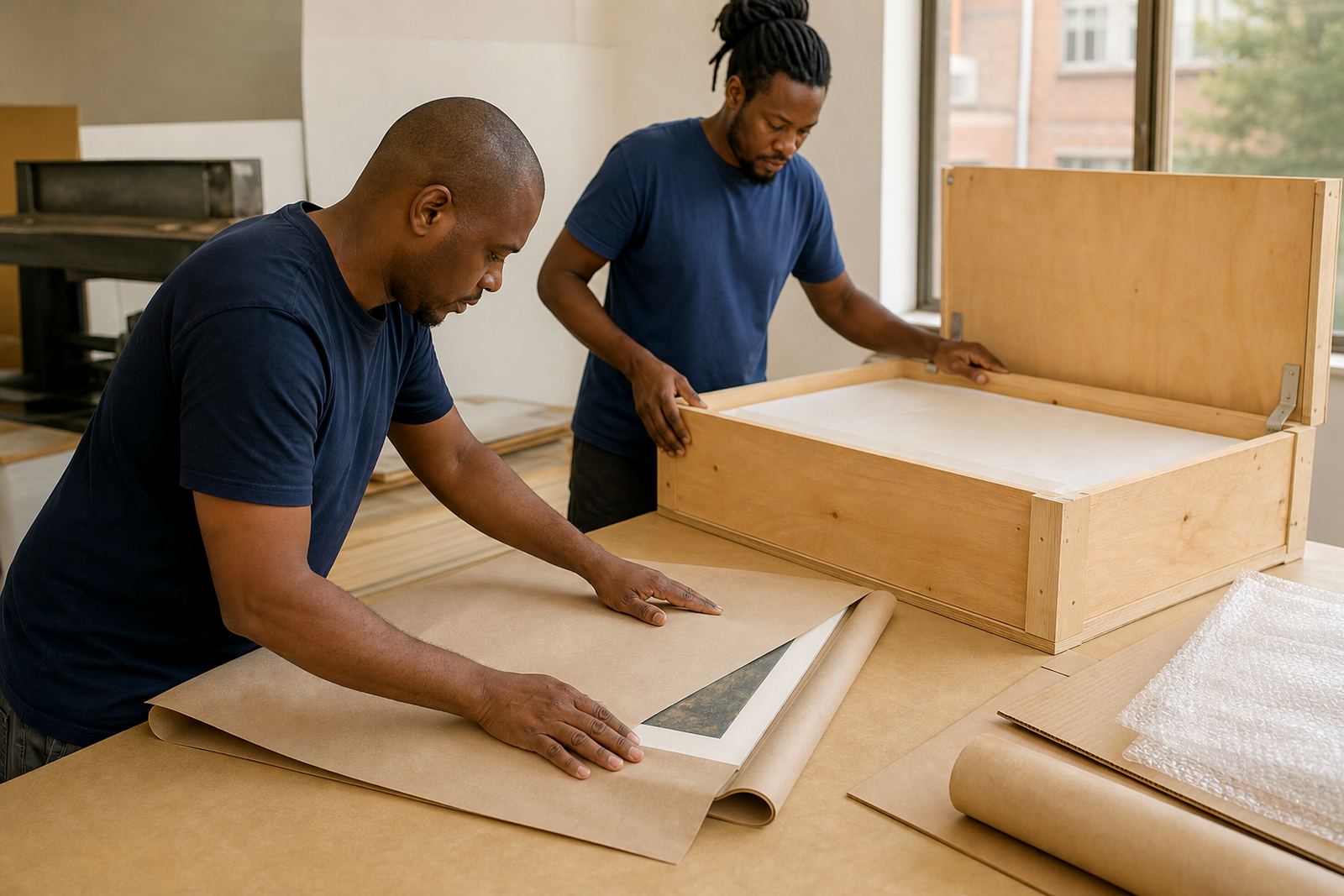
How your lithograph leaves the studio
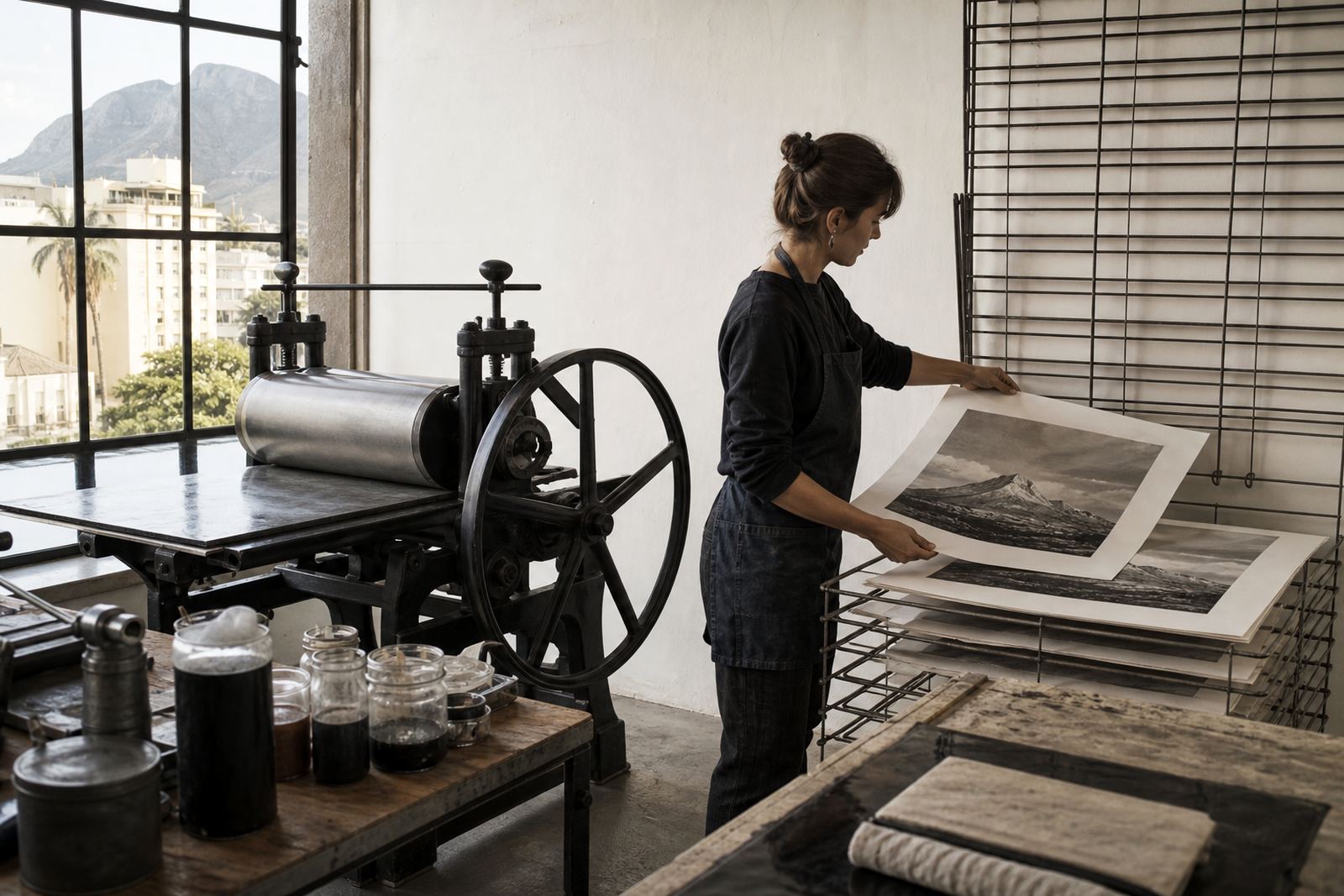
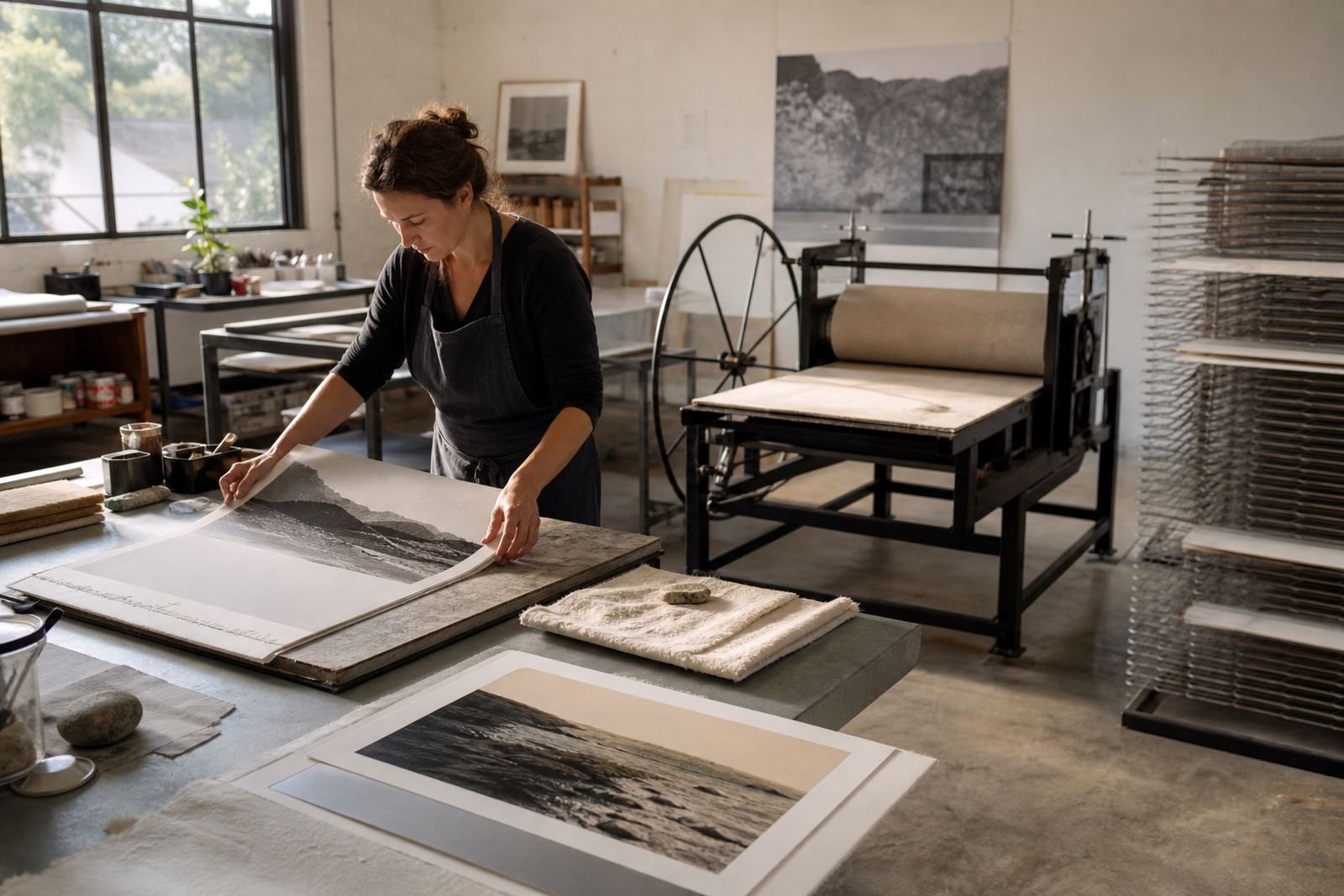
Each print is checked, signed and numbered before it leaves our Woodstock studio. We work with limited editions, so every sheet is handled as part of a carefully recorded run and packed only after the ink has fully settled and the paper has been inspected for marks or scuffs.
Because stone lithography uses a drawn image on limestone and printmaking inks pressed into fine art paper, the surface can be sensitive to pressure and moisture. That is why we never fold prints or send them loose. We prepare each order for the size of the sheet and the route it needs to take, whether it is going to Sea Point, Newlands, Stellenbosch or further inland.
Packing methods for collectors and artists
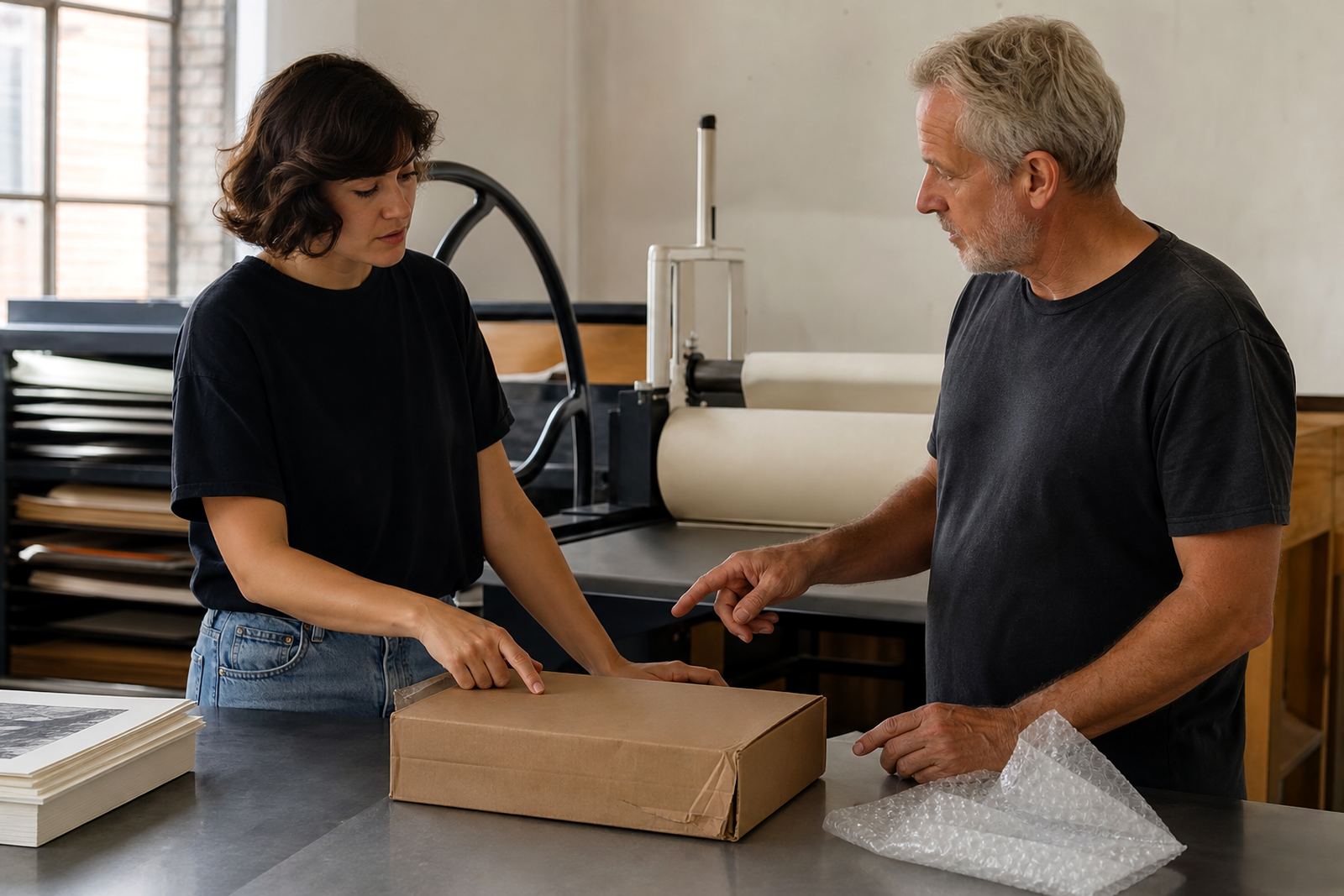
Good packing starts with clean hands, dry surfaces and the right support materials. Large prints are slipped into archival sleeves, then placed between rigid boards so they keep their shape during transit. Smaller works are still protected the same way, because even a short journey in a vehicle can leave a corner dent if a sheet is left unsecured.
- Archival tissue or glassine to protect the printed surface
- Sturdy backing board to keep the sheet flat
- Corner protection for unframed works
- Outer wrap to keep out dust and light moisture
- Clear labelling for edition details and handling notes
For Cape Town and nearby suburbs, the goal is to keep the print stable in the car and out of direct sun. For Durban, we pay extra attention to humidity and use packing that helps reduce moisture exposure during the longer route.
Delivery to Cape Town, Stellenbosch and the southern suburbs
Local deliveries are arranged for collectors in Cape Town, Sea Point, Newlands and Stellenbosch, with care taken around access, parking and building rules. If your address is in a block of flats, gallery office or security estate, it helps to share any receiving instructions in advance so the package reaches the right person without delay.
For framed works we suggest that the recipient is available to inspect the parcel on arrival. Framed lithographs can be heavier and more fragile than unframed sheets, so a quick check at handover is useful. If you are collecting from our Woodstock studio, we can also advise on the best way to transport the work home safely.
Sending prints to Johannesburg, Pretoria and Durban
Longer-distance deliveries need a little more planning. For Johannesburg and Pretoria, the main concern is avoiding bending during handover and transport, especially if the parcel travels between depots. For Durban, moisture is the main issue, so we use a packing method that keeps the work dry and separated from any damp outer layers.
Before dispatch, we confirm the sheet size, whether it is framed or unframed, and if any special handling is needed for oversize editions. We also recommend that collectors in high-rise buildings or office parks check receiving hours, because some sites only accept parcels during certain times. A missed delivery can mean extra handling, and extra handling is never ideal for fine art.
What to expect after dispatch
Once your print is on its way, you will receive the delivery details through our contact process. We keep the packing notes with the edition record so there is a clear trail from the final proof to the delivered artwork. That helps if the print is being sent to a collector, a framer or an interior project team.
- Check the parcel before opening if the outer wrap looks damaged
- Open on a clean table with dry hands
- Keep the print flat until framing
- Do not leave it in a hot car or near a wet wall
If anything looks unusual on arrival, let us know straight away through the enquiry form on our contact page. Early notice makes it easier to sort out any transport issue before the work is handled further.
Caring for the print once it arrives
Unframed lithographs should be stored flat, away from direct sun, damp walls and strong airflow from open windows. In coastal areas like Cape Town and Durban, humidity can affect paper over time, so framed works should be mounted with proper spacers and archival backing. In inland homes, dust and heat are the main concerns, especially in rooms that get strong afternoon sun.
If you are planning to frame the work, use materials that are acid free and ask for UV protective glazing where suitable. That helps preserve the image and the paper tone. With proper care, a stone lithograph can remain in excellent condition for many years, which is why editioning, packing and framing all matter as part of the same process.