What a stone lithograph edition means
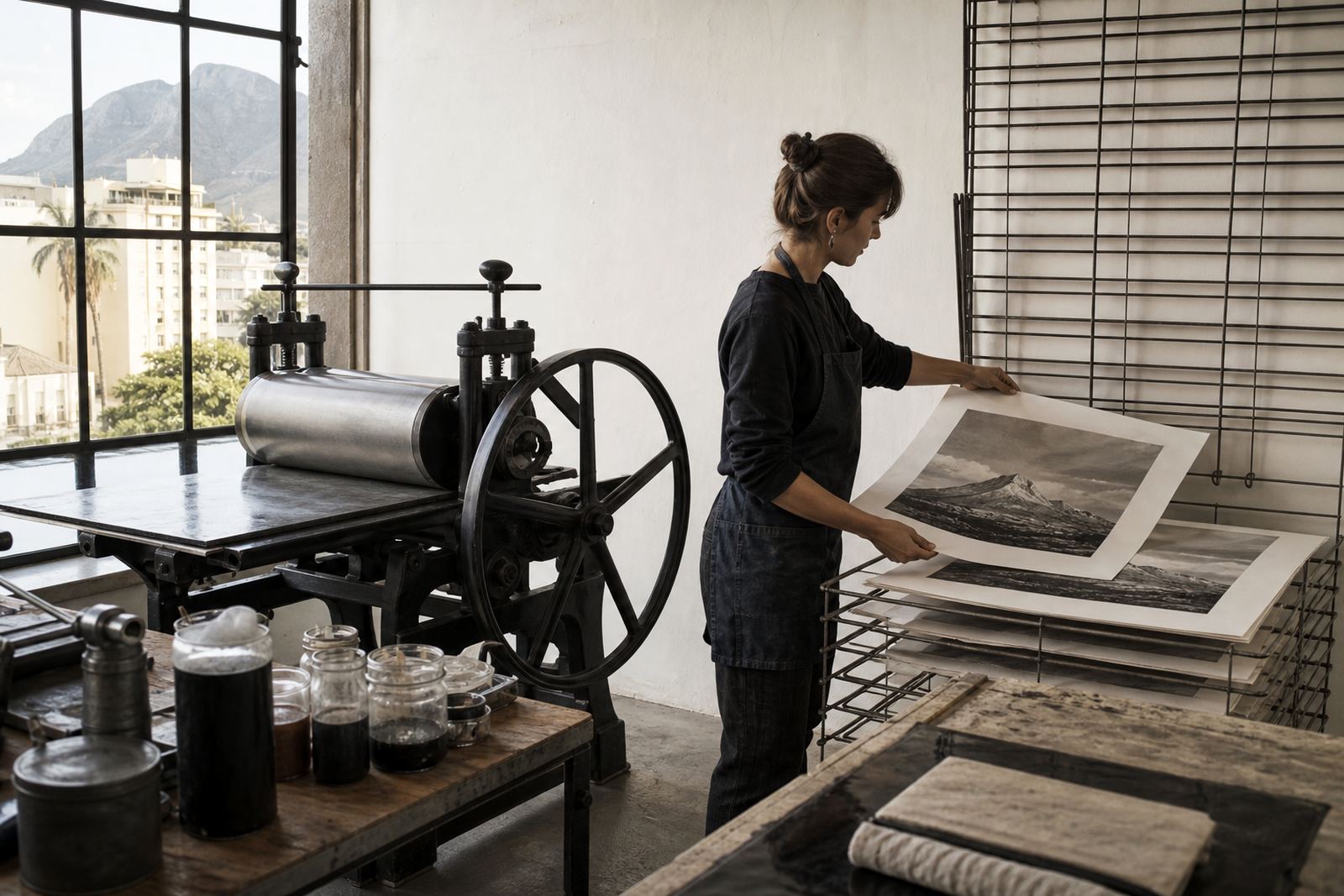
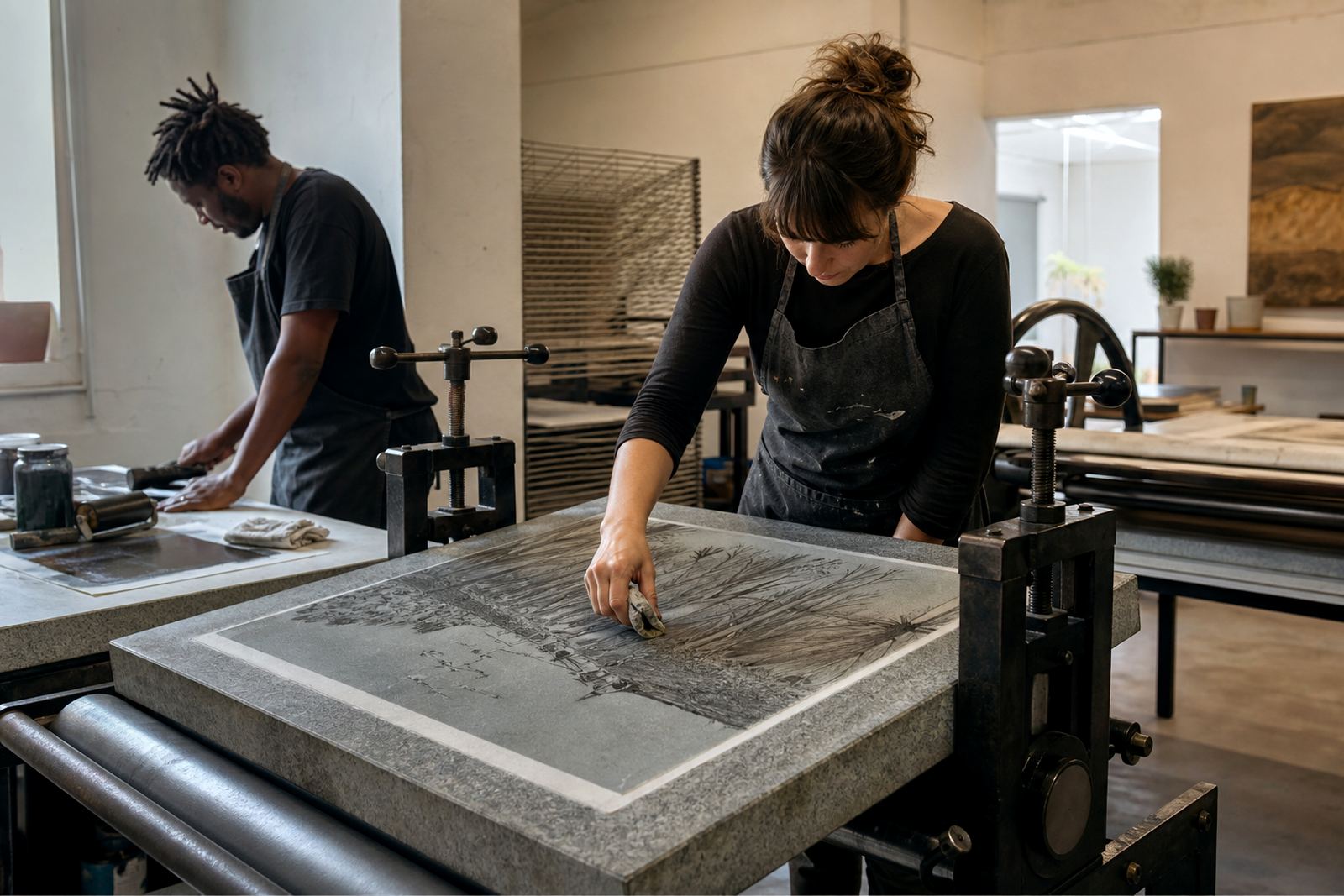
A stone lithograph edition is a planned group of prints made from the same drawing on stone. In our studio, the artist and printer agree the size of the edition before printing begins, so every sheet belongs to one clearly defined body of work. Once the edition is complete, the stone is usually retired or marked so that no further prints are pulled from it in that edition state.
Editioning matters because it gives collectors confidence about how many impressions exist. It also helps the artist keep control of the work’s availability. Some editions are small, some are larger, but the key point is that the number is fixed. For collectors in Cape Town, Stellenbosch, Johannesburg or Durban, the edition number tells you where that sheet sits within the full run.
- The edition is the total number of approved prints from one image.
- Each sheet is numbered in sequence, such as 3/20 or 14/25.
- If a print is outside the agreed run, it should be clearly identified as such.
How proof prints differ from the main edition
Proofs are prints made during the making and checking process, before the final edition is completed. They let the artist and printer test the image, adjust colour, check registration and fine-tune the stone surface. Proofs are often marked with letters that show their stage in the process, such as trial proofs or artist proofs.
In practical terms, a proof is part of the working process rather than the standard numbered run. Some proofs are kept for reference, some are approved and some are not. When a collector asks about proofs, the main question is whether the proof was part of the final approval process and how it differs from the numbered edition. That detail should be explained clearly, especially when a print will travel from Woodstock to another city and need to be documented properly.
- Proofs are used to check the image before final printing.
- They may show slight colour or tonal differences from the edition.
- They should be described honestly, with their role in the process.
Reading edition numbers and letter marks
Edition numbers are usually written as two numbers separated by a slash. The first number tells you which print it is in the run, and the second number tells you the total edition size. So 1/12 means the first print in a run of twelve, while 12/12 is the last one. This does not mean one sheet is better than another. It simply identifies where the print sits in the sequence.
Letter marks can appear alongside or instead of numbers when a print is not part of the main edition. Common examples include artist proofs, printer’s proofs or trial proofs. There may also be notes about colour states or working proofs if the image changed during the process. If a collector is comparing two sheets, these marks help explain why they are not identical. It is always worth asking for the exact wording written on the margin, because small details matter.
- 3/20 means the third print from an edition of twenty.
- AP usually means artist proof.
- PP usually means printer’s proof.
- TP usually means trial proof.
Signatures, margins and where the marks belong
Most stone lithographs are signed in pencil below the image, often in the bottom margin. The signature should be clear and consistent with the edition information. Some artists also add the date, title or a short note. In a hand-printed work, the blank paper around the image is part of the print’s presentation, so the margins should remain clean and untrimmed unless the work was intended otherwise.
The margin area is where edition marks, proof notes and signatures usually live. Keeping these marks in pencil matters because it shows they were added by hand and can remain legible over time. When framing for homes in Sea Point, Newlands or Pretoria, ask the framer to avoid covering these details. A mat opening that hides the edition number can make the work harder to identify later on.
- Signatures are usually written in pencil below the image.
- Edition numbers are normally placed on the left.
- The title may be centred, with the signature on the right.
- Never trim the margins without first checking the intended format.
Why some prints show variation within the same edition
Even within one edition, a stone lithograph can show slight variation from sheet to sheet. That is part of the character of the process. Pressure on the press, ink handling, paper absorption and hand inking decisions can create subtle differences. In colour work, these shifts may be more visible because one tone can sit a little warmer or cooler from one impression to the next.
This does not mean the edition is inconsistent. It means the print was made by hand and each sheet passed through the press with care. That said, the studio still aims for strong consistency across the run. For collectors, it helps to understand that minor variation is normal, while major differences should be explained as a proofing step or a new state. We keep clear records so the history of the print stays traceable, even years later.
Care, storage and what to ask before framing
Edition terms are easier to understand when you also know how to care for the print. Stone lithographs should be handled with clean, dry hands or cotton gloves if the sheet is unframed. Keep the work out of direct sun, away from damp walls and away from kitchens or bathrooms where humidity can creep in. In coastal areas like Cape Town and Durban, moisture can affect paper over time if it is stored badly.
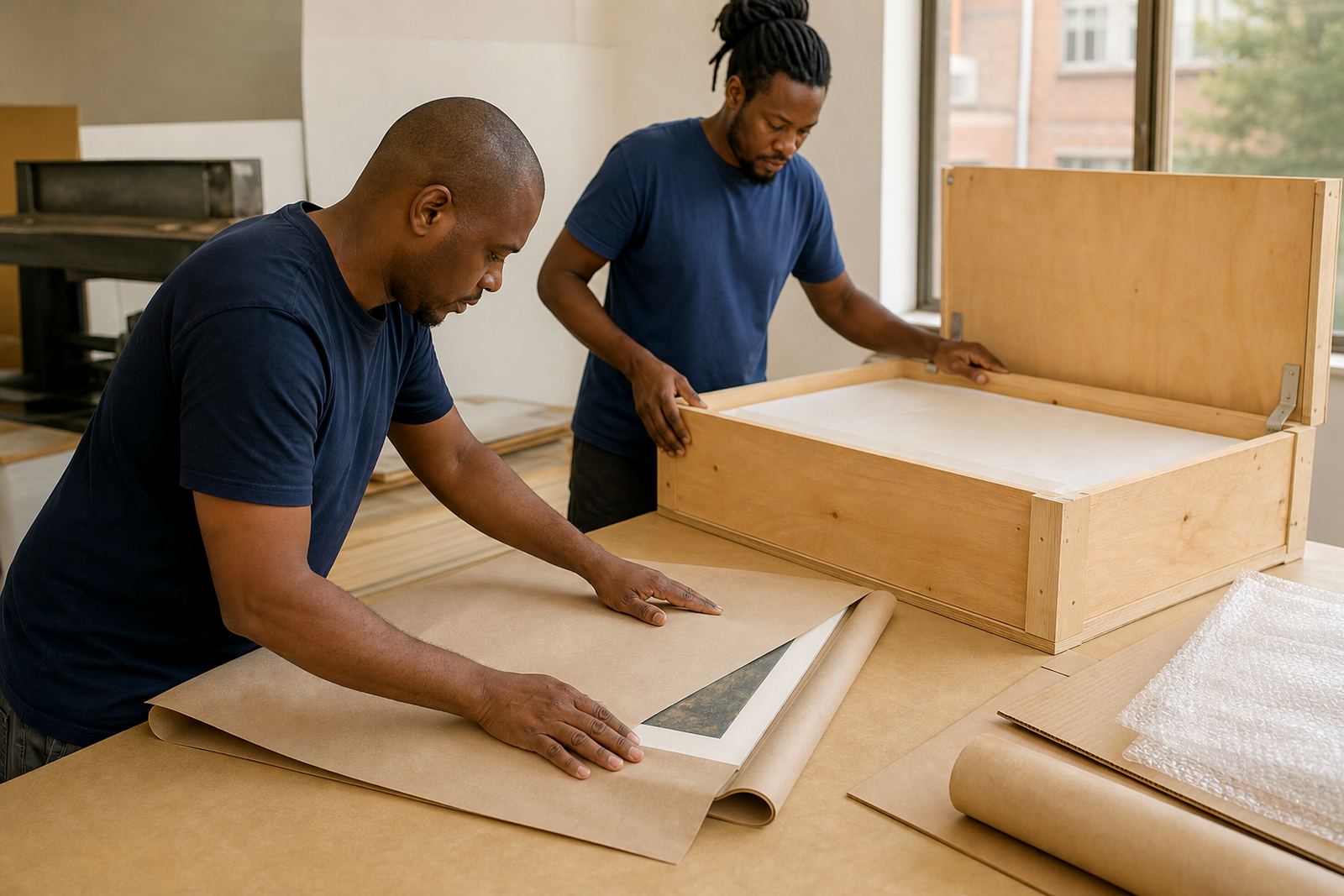
If the print is travelling to Johannesburg or Pretoria, let it rest flat before framing so the paper can settle. Ask for archival framing materials, which help protect the sheet from acid migration and dust. For collectors and artists alike, these are the practical questions worth asking:
- Was this print part of the main edition or a proof?
- What paper was used and how should it be stored?
- Was the sheet signed and numbered in pencil?
- Does the image have any special handling notes?
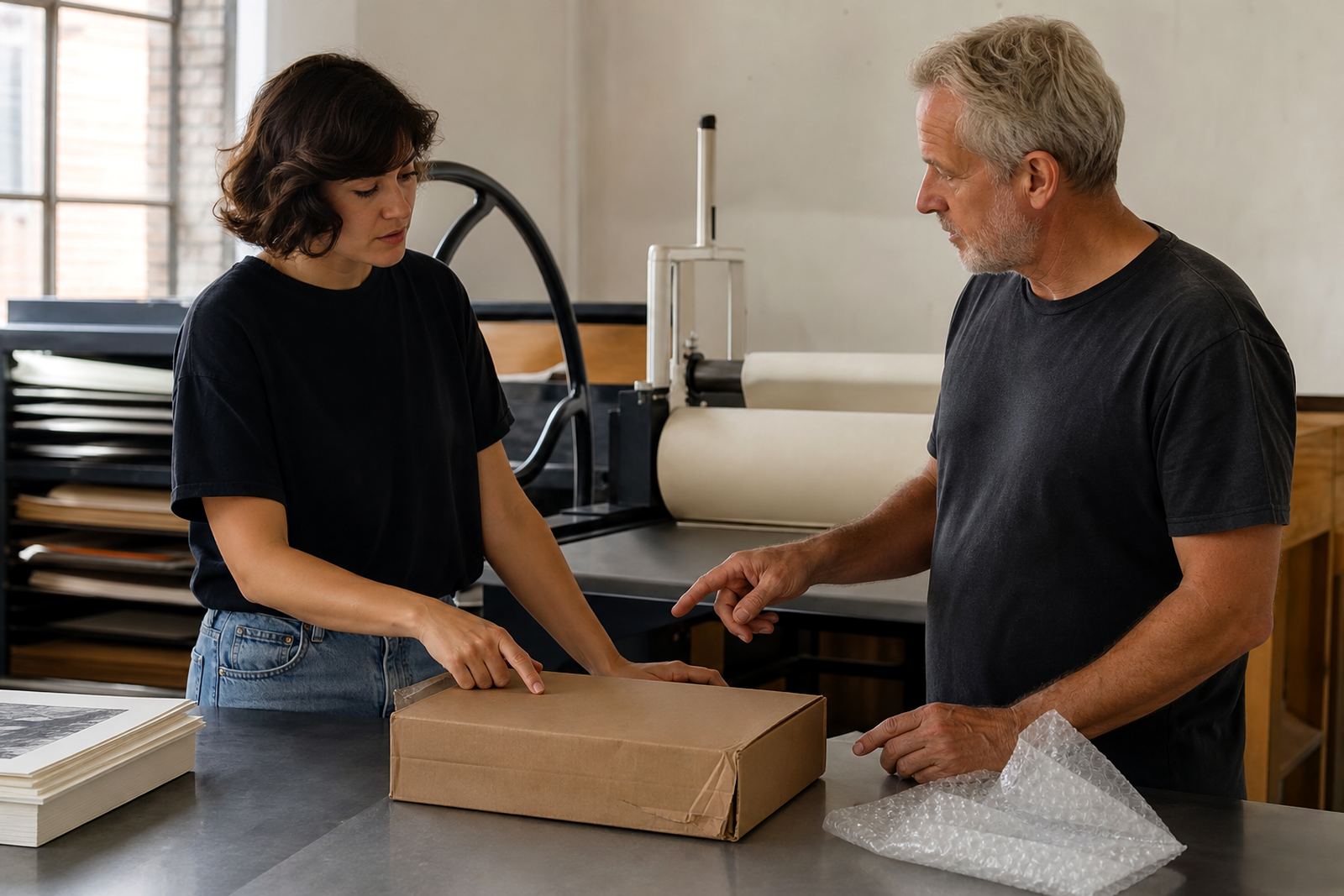
If you are ever unsure, contact us through the enquiry form and we can help read the marks on the sheet. A careful answer now can prevent confusion later, and it keeps the record of the work tidy for everyone involved.