What Stone Lithography Printing Includes
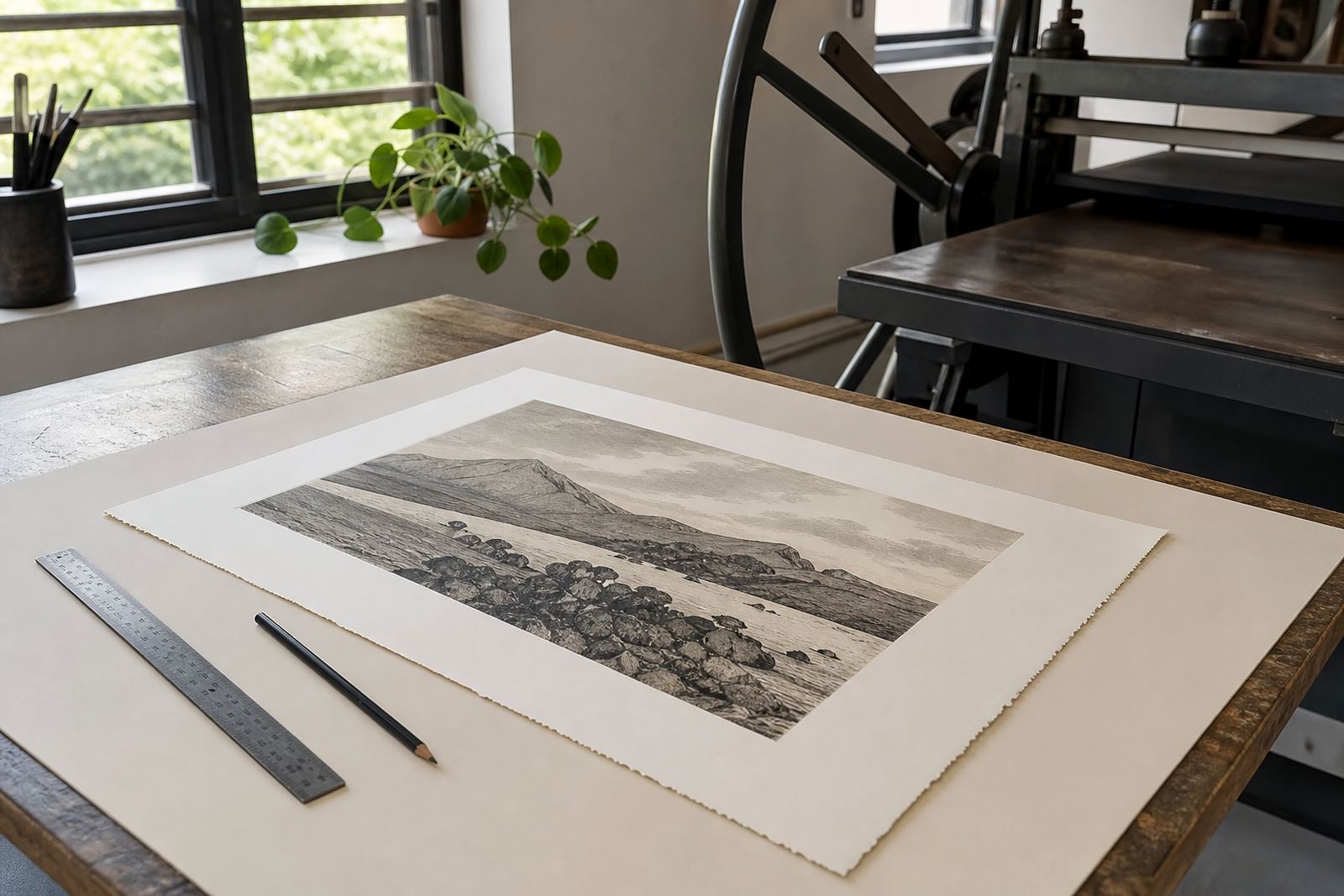
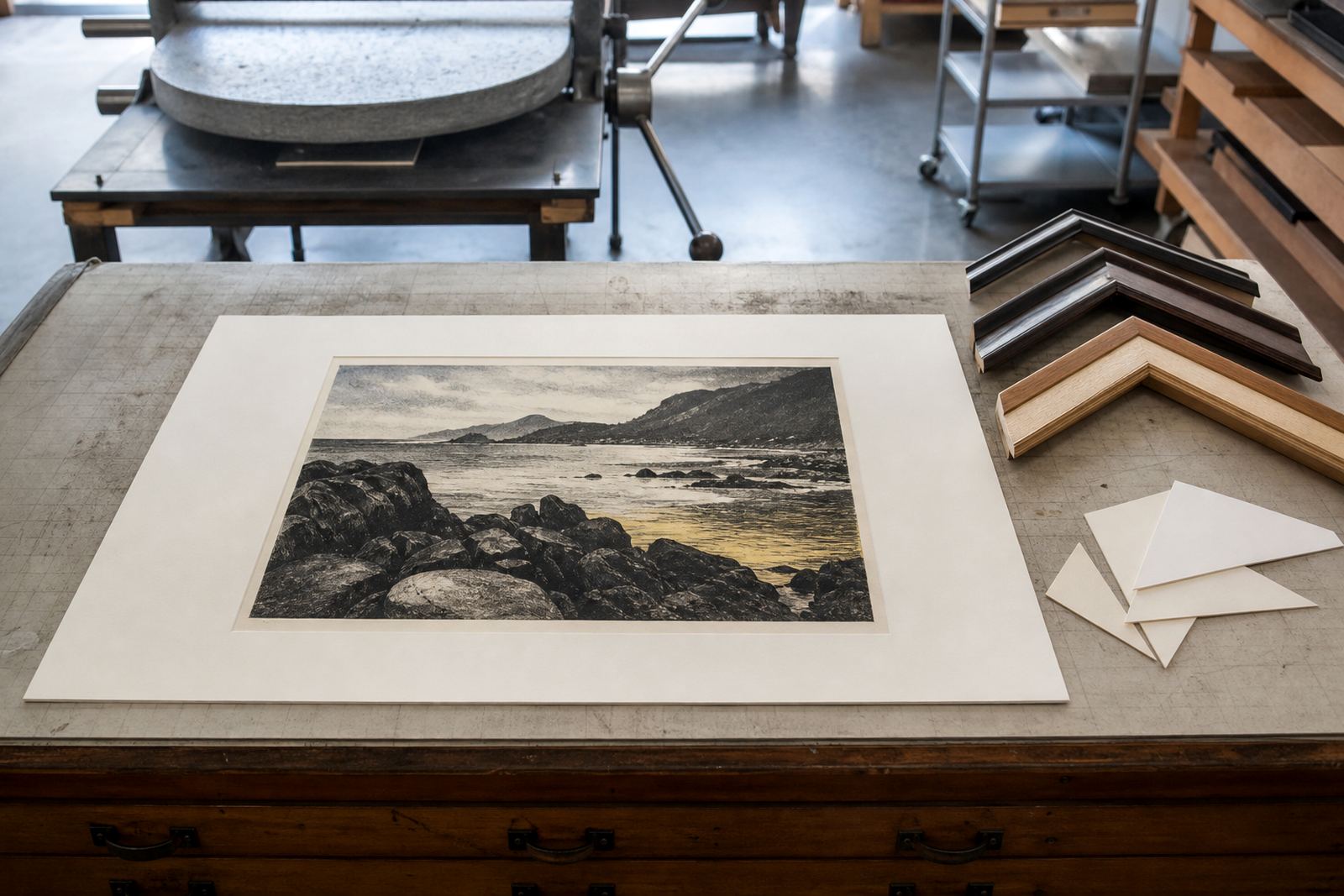
Our stone lithography printing service covers the full journey from stone preparation to signed, numbered prints ready for collection or delivery. We work with artist-approved imagery, confirm edition details before printing begins and keep the process controlled at every stage so the final print matches the intended mark, tone and colour. Each stone is prepared by hand, then drawn with grease-based materials before processing, dampening and inking under the press.
This service suits artists producing limited editions, collectors commissioning a carefully managed print run, and studios that want a precise hand-made result rather than a digital reproduction. The work can be done as single-colour prints, layered colour editions or multi-stone prints, depending on the image and the edition plan. We also assist with paper selection, proof review and edition organisation, so the project stays clear from first proof to final sheet.
- Prepared limestone stone or stones for each image
- Artist-approved proofing before edition printing
- Colour separation planning for multi-colour work
- Signing, numbering and dating of finished sheets
- Archival packing for local handover or courier dispatch
How the Printing Process Works in Studio
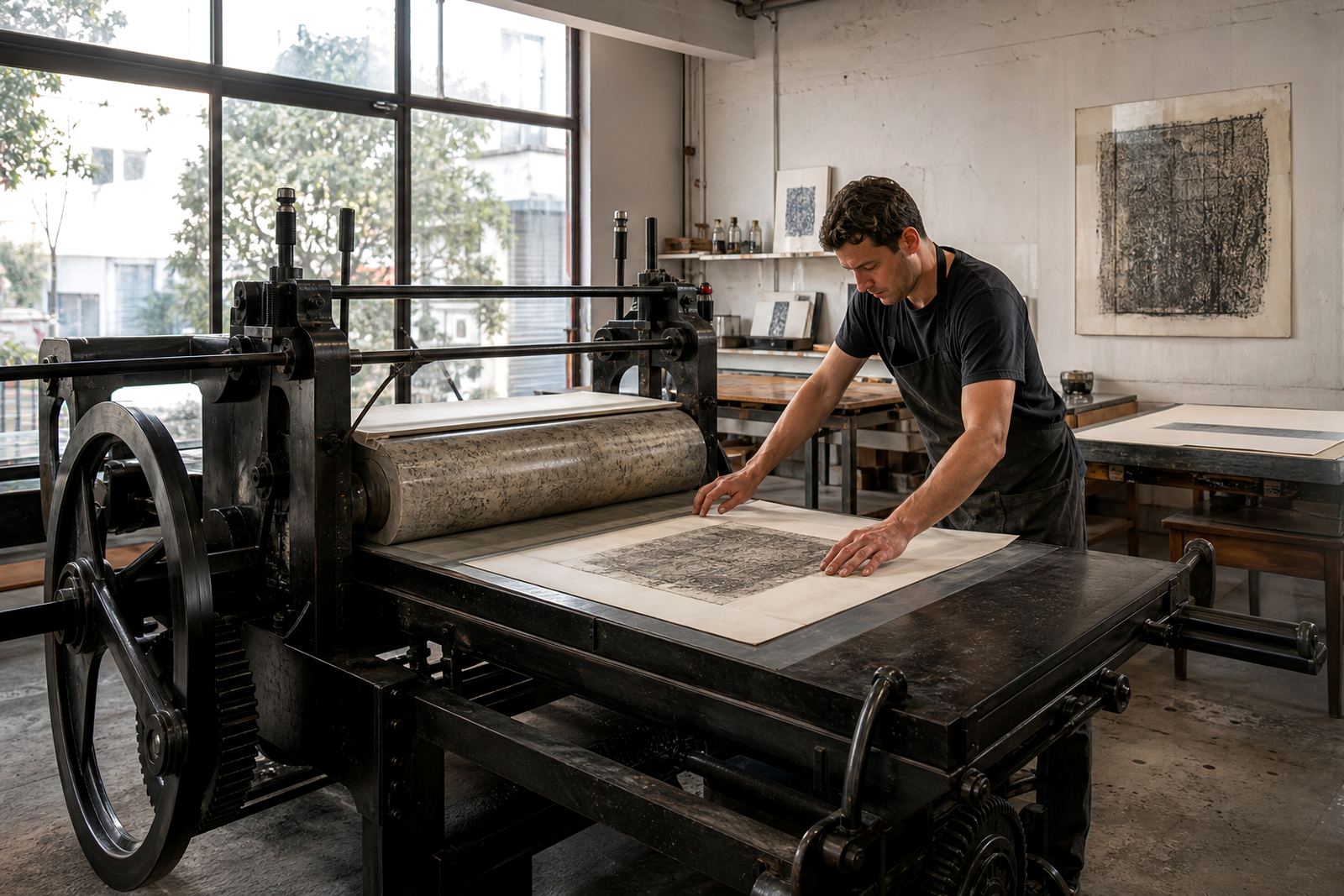
Stone lithography relies on the natural relationship between grease and water. After the drawing is made on the stone, the surface is chemically processed so the drawn areas accept ink while the non-image areas hold water and stay clean. Each print is pulled by hand through the press, which gives the printer close control over pressure, inking and registration. That control matters when an edition includes fine linework, subtle tonal shifts or several layers of colour.
We usually begin with a proofing session, where the image is tested and adjusted before the full run. If the work calls for colour, we prepare separate stones or passes for each layer and keep careful notes on alignment. Editioning then follows once the artist signs off. In a coastal city like Cape Town, paper handling also needs attention because humidity can affect sizing and sheet movement, especially in summer.
- Image review and edition planning
- Stone drawing and surface preparation
- Proof prints and corrections
- Colour separation where required
- Final edition printing, signing and numbering
Paper, Inks and Edition Specifications
Paper choice is a major part of the result. We advise on sheet weight, surface texture and sizing depending on the image, edition size and how the print will be displayed. Most fine-art sheets for stone lithography sit in the heavier range, because the paper needs to take repeated dampening and pressure without buckling. Inks are selected for strong colour, clean transfer and good lightfast performance. Where a collector needs a framed result, we can also coordinate with framers on mount boards, glazing and backing materials that suit archival work.
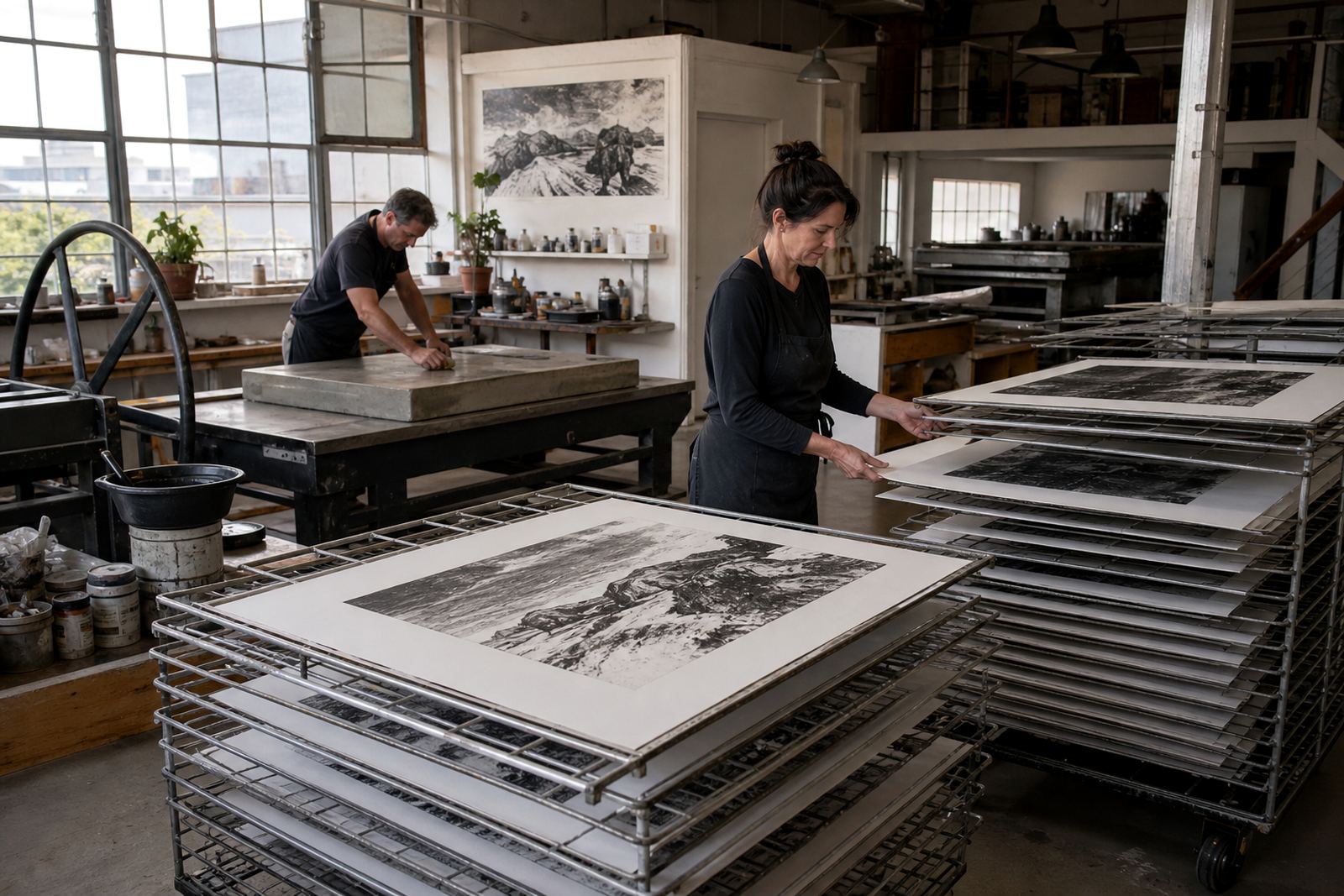
For printing specifications, the studio can handle small intimate editions or larger runs where consistency must stay high from first sheet to last. We maintain registration marks, ink notes and edition records for each job. If the work is destined for Johannesburg, Pretoria, Durban or nearby suburbs such as Sea Point and Newlands, we pack the sheets flat and dry with protective interleaving so they travel safely in our climate and through courier handling.
- Paper weights commonly used for edition work: 250 gsm to 320 gsm
- Sheet sizes available from small formats to large exhibition sizes
- Single-colour, two-colour and multi-stone colour editions
- Archival interleaving and flat packing for transport
- Registration and edition records kept for each job
Turnaround Times and Scheduling
Turnaround depends on the image, the number of stones, the complexity of colour and how many proofs are needed before final approval. A simple single-colour edition can move faster than a multi-layer colour work, while a large run with hand corrections will need a longer studio schedule. We always build in time for drying between stages and for proof review, because stone lithography is not a rushed process if quality matters.
For artists and collectors in Cape Town and Stellenbosch, studio visits can be arranged by appointment. For clients in other cities, we manage the work through clear image notes, proof images and collection or courier planning. If the edition has a deadline linked to a show, sale or private unveiling, please raise that early so we can advise whether the schedule is practical.
- Simple editions can be completed more quickly
- Complex colour work needs extra proofing and press time
- Drying intervals are built into every schedule
- Rush deadlines depend on image complexity and press availability
Pricing Approach and What Affects Cost
Stone lithography pricing is based on the actual studio time and materials involved, not a one-size-fits-all rate. The main factors are the number of stones, the amount of proofing, the edition size, paper choice and whether the work needs colour separation or special packing. A single proofing session with one stone is very different from a multi-colour edition that needs several passes through the press and careful alignment. We quote once the scope is clear, so the artist knows what is included before the run starts.
Our pricing approach is straightforward. You receive a studio quotation that reflects preparation, printing, editioning and packing requirements. Where needed, we can separate the work into stages such as proofing first, then edition printing once the final image is approved. This helps artists manage budgets without losing control of the process. If framing coordination is required, that can be quoted separately after the edition is complete.
- Cost depends on stones, colours and edition size
- Proofing and corrections are factored into the quote
- Paper selection can shift the final cost
- Packing and framing coordination are optional additions
Care, Storage and Maintenance Between Editions
Printed sheets should be handled with clean dry hands or cotton gloves, then stored flat in a cool, dry place away from direct sun and damp walls. In Cape Town, winter humidity can creep into storage cupboards and leave paper feeling soft, so it helps to keep editions off the floor and away from exterior walls. If the print will be framed, use conservation framing methods and avoid acidic backing materials that can mark the sheet over time.
The stones themselves need maintenance between printing sessions too. After use, we clean, store and protect them so the image remains stable for later pulls if the edition requires a reprint or a related proof. We also advise on when a print should be rechecked after framing, transport or long-term storage. If a collector in Durban or Pretoria is receiving work by courier, allow the sheet to settle flat in its wrapper before opening it, especially after a warm delivery route.
- Store prints flat, dry and out of direct sunlight
- Use conservation-grade framing materials where possible
- Keep editions away from damp walls and heat sources
- Allow couriered prints to acclimatise before unwrapping
- Stone care is maintained between print sessions
Edition details
| Process | Hand-pulled stone lithography from prepared limestone stones |
|---|---|
| Edition types | Single colour, multi-colour and limited edition print runs |
| Paper range | Fine-art sheets typically from 250 gsm to 320 gsm |
| Service area | Woodstock, Cape Town and clients across South Africa |
| Typical deliverables | Proofs, signed sheets, numbered editions and archival packing |
| Studio appointment | By enquiry form for artists, collectors and commissioned projects |