What editioning means in stone lithography
Editioning is the controlled printing of the agreed number of final impressions after the image has been approved. In stone lithography, the image sits on a prepared limestone surface and the print is pulled from that stone by hand on a press, one sheet at a time. That gives the process its character, but it also means the printer must keep pressure, moisture, ink load and registration steady from the first sheet to the last.
For limited editions, consistency matters. Collectors expect each print in the edition to follow the same standard, with clear colour, clean margins and the correct numbering and signature format. We work with artists to make sure the edition stays faithful to the approved proof, whether the final work is a single-colour image or a more complex multi-stone print with careful colour separation.
Editioning also includes the practical side of printmaking: deciding the edition size, setting aside artist proofs where required, checking paper stock, and confirming how each print will be signed and numbered. The result is an edition that is orderly, traceable and ready for collectors in Cape Town, Stellenbosch, Johannesburg, Pretoria and Durban.
What is included in our editioning service
Our editioning service covers the full production run after proof approval. We print in sequence, inspect each impression, and keep detailed notes so the edition stays consistent from sheet to sheet. If a print falls outside the approved standard, it is set aside and not counted as part of the edition.
- Printing the agreed edition size on prepared stone
- Ongoing press checks for pressure, alignment and colour balance
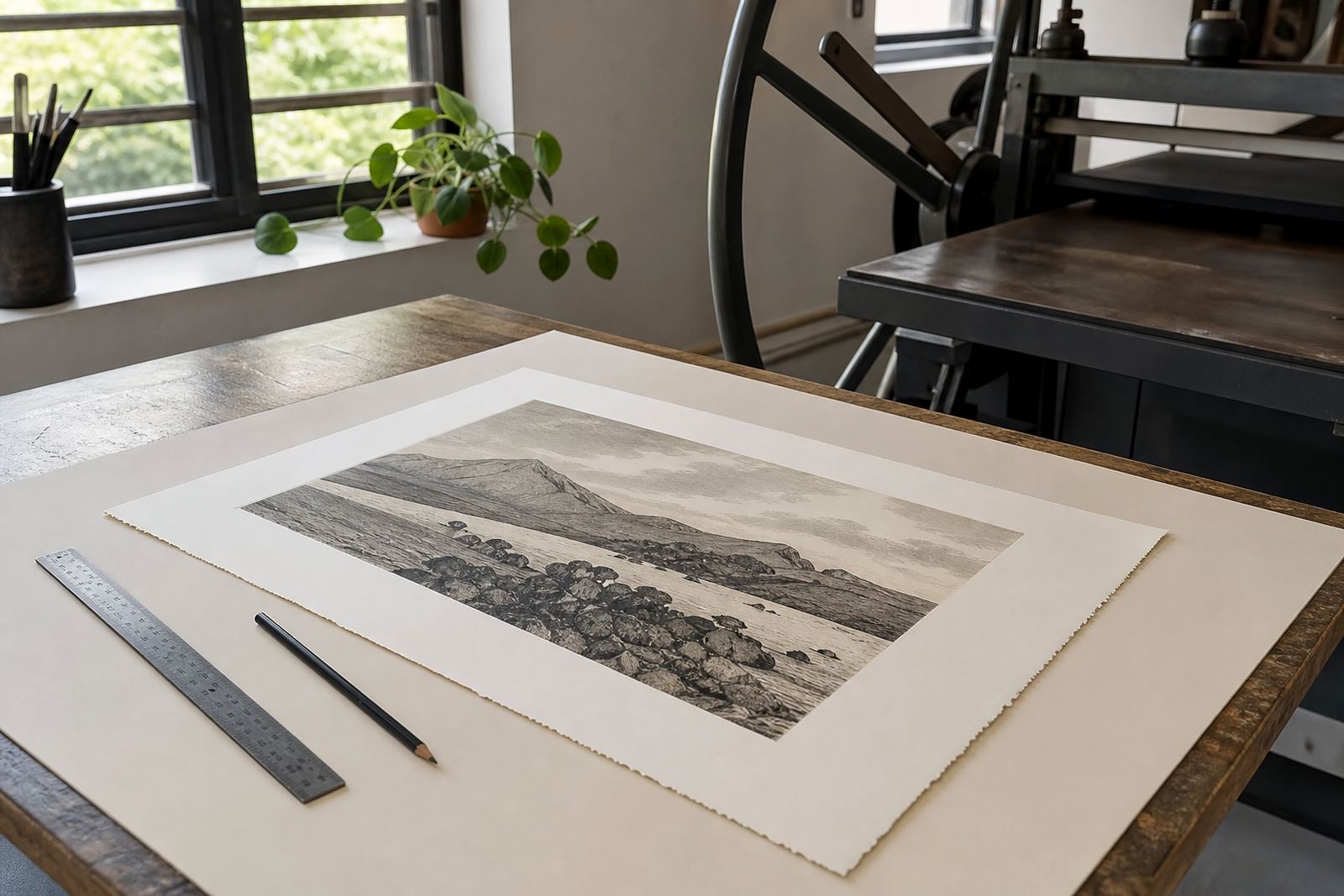
- Signing and numbering support, including artist proofs where agreed
- Paper handling and drying control suited to the paper weight and humidity
- Archival packing for safe local collection or courier dispatch
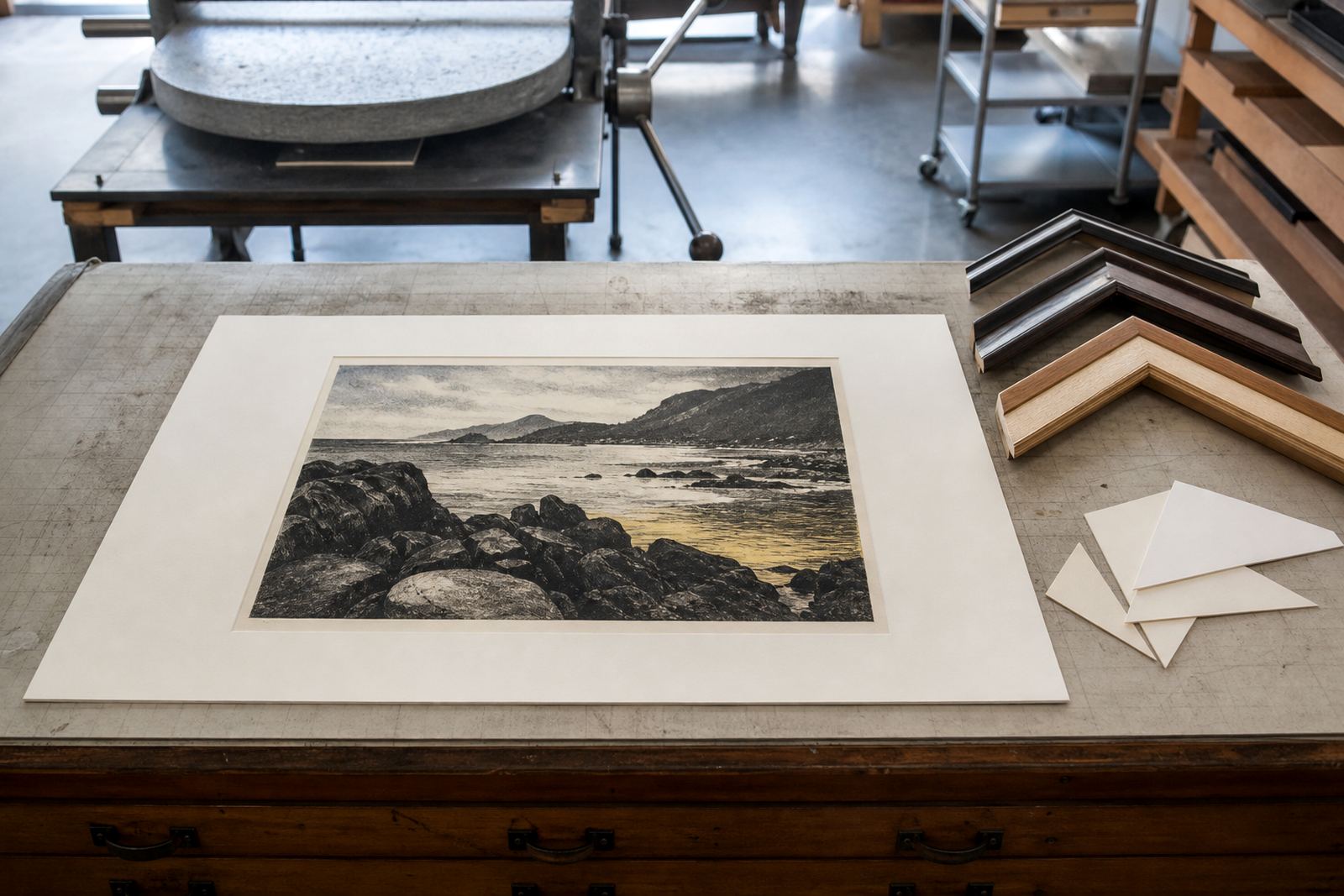
- Framing coordination for collectors who need display-ready work
We also assist with practical decisions before the first edition sheet is printed. That includes whether the image should run as a smaller edition for greater scarcity, how many proofs should be retained, and whether the paper needs extra time to settle before signing. In Cape Town’s changing coastal conditions, those small details make a real difference.
How the editioning process works in our Woodstock studio
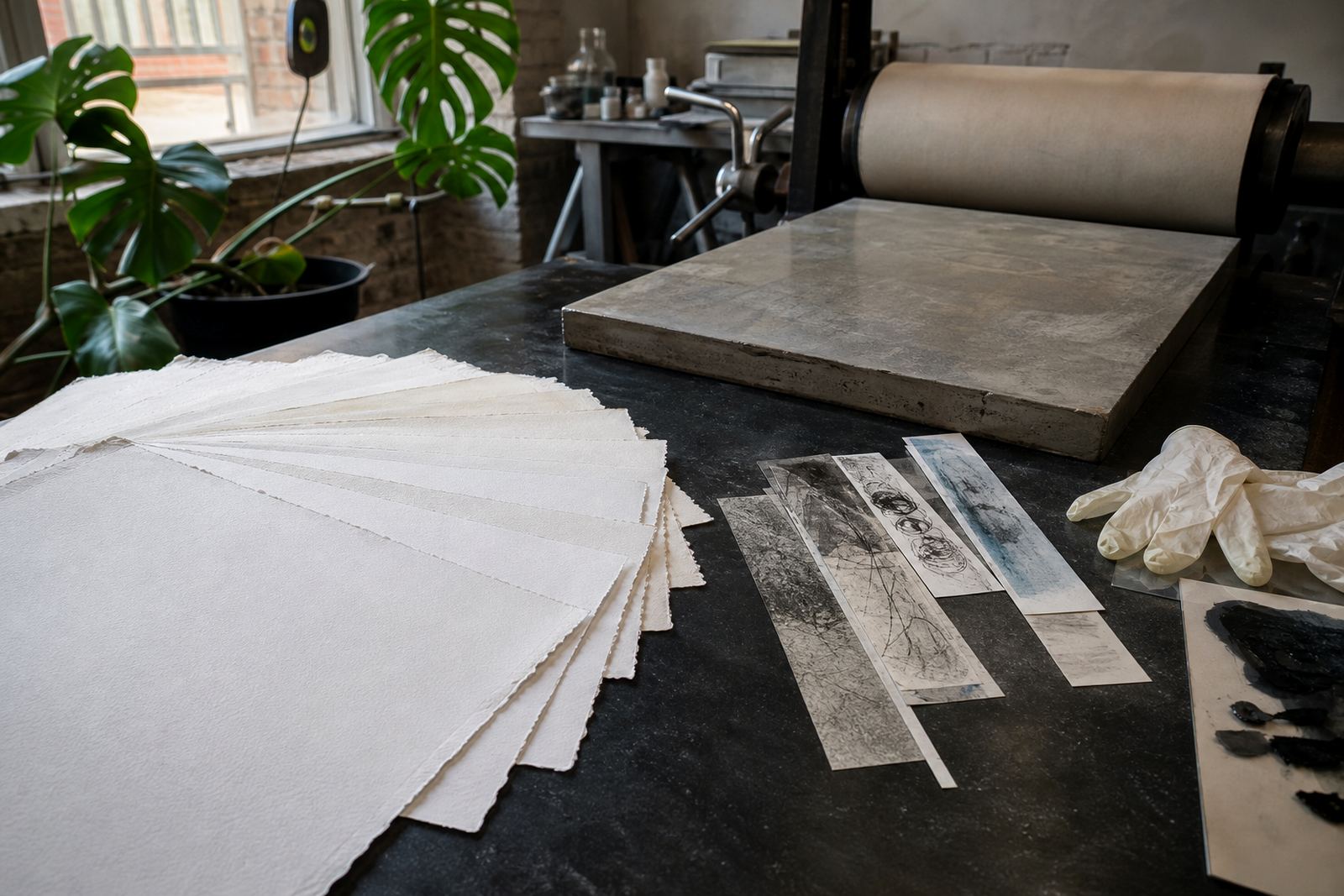
The process starts with the approved proof. From there we confirm edition details, paper format, margin allowance and the final numbering plan. The stone is then cleaned, reworked if needed and prepared for the edition run. If the image uses multiple colours, each layer is registered carefully so the finished print lines up as intended.
During printing, we monitor the stone, rollers, dampening and sheet placement throughout the run. This is not a set-and-forget task. Each pull has to be checked for colour density, image clarity and registration. Where an image requires subtle variation, such as a warm grey or a second colour pass, we keep a close eye on ink strength so the edition stays even.
- Edition planning and sheet count confirmed first
- Stone prepared and tested against the approved proof
- Press run completed in controlled batches
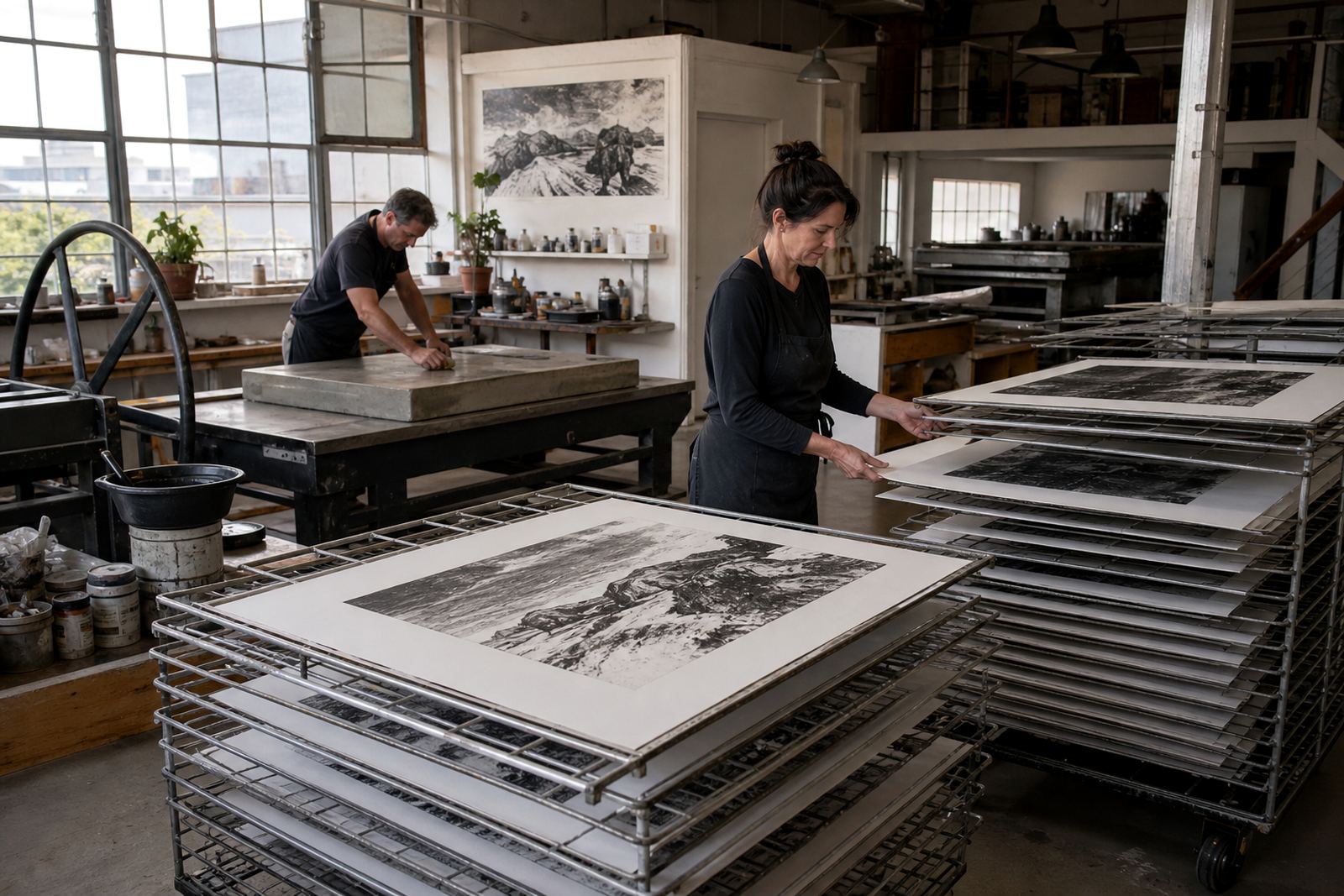
- Each print dried, inspected and recorded
- Final signing, numbering and packing completed once the edition is approved
Clients are welcome to visit the studio by arrangement. Some artists prefer to see the edition in progress, while collectors often want to understand how stone lithography produces its soft tonal range and rich mark-making. We find that a short studio visit answers most questions.
Turnaround times and scheduling
Turnaround depends on the complexity of the image, the number of colours, the size of the edition and the drying time needed between stages. A single-colour run is usually faster than a multi-stone edition that needs several passes and careful alignment. We give time estimates once the proof and edition plan are confirmed.
For planning purposes, it is best to allow for studio drying time, especially in humid weather near the coast or when papers need to settle before signing and packing. That helps avoid rushed finishing and protects the quality of the edition.
For larger or more detailed works, we may split production into stages rather than trying to complete everything in one stretch. This keeps the pressure, ink and registration consistent, and allows for a proper quality check between batches. If your edition is tied to an exhibition deadline, let us know early so we can plan the schedule with care.
Pricing approach for editioning projects
Editioning costs are shaped by the number of sheets, the size of the image, the number of colours, the paper choice and the amount of press time required. A small edition on one stone has a different cost profile to a large, multi-colour edition with repeated colour checks and longer drying periods. We price accordingly, so the quote reflects the actual studio time and materials involved.
We do not use a one size fits all approach. Some projects need more proofing before the final run, while others require paper testing or stone reworking after the first proof. Where a collector or artist wants archival packing or framing coordination, those services are quoted separately. The aim is straightforward costing with no guesswork.
- Edition size and sheet count
- Number of colours or stones used
- Paper format and weight
- Proofing requirement before final run
- Finishing needs such as signing, numbering or archival packing
If you are comparing options, it helps to think beyond the print day itself. Good editioning protects the value of the work by keeping the whole run steady, and that consistency matters to collectors in Johannesburg, Pretoria, Durban and the Cape.
Caring for stones between editions
Stone lithography depends on surfaces that stay clean, balanced and readable. During an edition, the stone may need light re-gumming, selective cleaning or minor corrections to maintain the approved image. Between runs, the stone is stored and protected so it remains ready for future work if the edition plan allows for it.
Press maintenance is just as important. Rollers, blankets, blankets tension and bed alignment are checked regularly, because even a small shift can affect registration or pressure. We also inspect the paper path, packing and moisture control, particularly during warmer months or when the studio is working through a long print run. A well-kept press produces more dependable results and reduces waste.
For collectors, maintenance continues after the print leaves the studio. Keep the work flat, away from direct sun and high moisture, and handle it with clean dry hands or cotton gloves if possible. If the print is framed, use archival materials and avoid hanging it where condensation can build up, such as near bathrooms or unshaded coastal walls. A little care helps the paper and image stay in good condition for years.
Editioning for artists and collectors
Editioning is where a lithograph becomes a complete body of work rather than a single proof. Artists rely on it because the final edition has to stay true to the approved image, and collectors rely on it because a limited run should feel orderly, well made and properly documented. We work in a practical way, with clear communication and steady studio standards from start to finish.
At Lithography Art, we support editioning for artists working in Cape Town and across South Africa, including clients who collect from Sea Point, Newlands and surrounding areas. Whether the edition is small and intimate or larger and more detailed, the aim is the same: consistent prints, careful handling and a finished edition that is ready to live with.
Edition details
| Studio base | Woodstock, Cape Town |
|---|---|
| Service area | Cape Town, Stellenbosch, Johannesburg, Pretoria, Durban |
| Print method | Hand-pulled stone lithography editioning |
| Edition support | Signing, numbering, proofs, packing and collector guidance |
| Typical inputs | Paper choice, image size, colour count, edition size |
| Client contact | Enquiry form on the contact page |