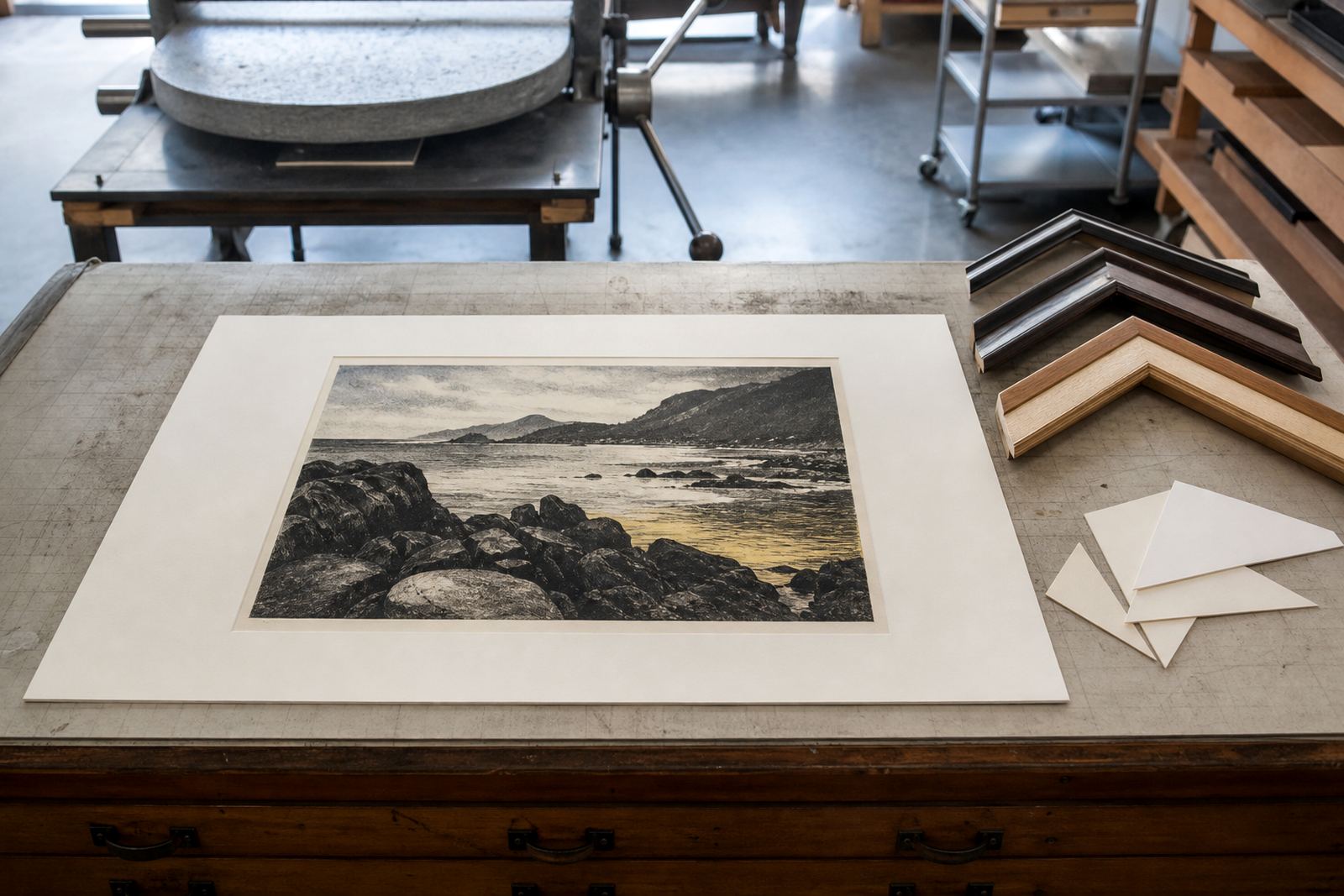
What Framing Coordination Covers
Framing coordination at Lithography Art is about making sure a print is handled and presented in a way that respects the paper, the edition and the image. We do not force a single look on every piece, because a hand-printed lithograph on fine paper needs a different approach from a poster or reproduction.
We coordinate the practical side of framing for collectors in Woodstock, Cape Town and further afield in Stellenbosch, Johannesburg, Pretoria and Durban. That includes deciding on frame depth, mount size, glazing choice, paper clearance and how the work should be packed for delivery or collection. Where a print is being sold as part of an edition, we also make sure the framed result supports the numbering and signature area without covering important details.
- Size checks against the sheet and image area
- Advice on acid-free mount boards and backing
- Glazing options for UV protection and glare control
- Spacing for deckled edges, signatures and edition marks
- Collection or delivery packing for framed works
How We Plan the Frame Around the Print
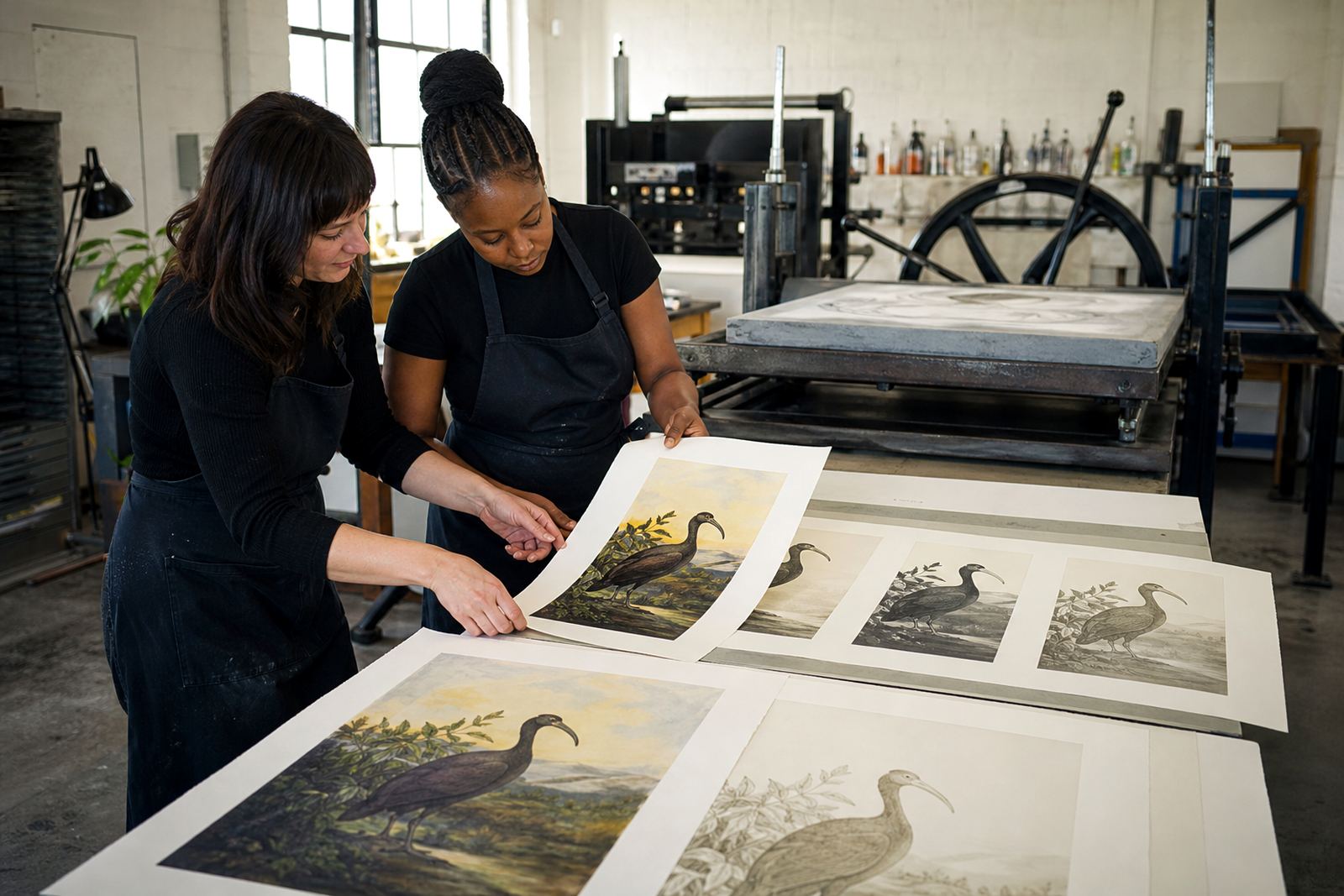
We begin with the actual print, because stone lithography can vary slightly from sheet to sheet. The paper size, margins, image placement and edition notes all need to be measured before a frame is chosen. If a work has generous margins, we may recommend a float-style presentation. If the sheet is smaller or the image runs close to the edge, a more traditional mount can suit it better.
For Cape Town homes close to the coast, we often factor in humidity and salt air, and in inland cities we think about dust, sunlight and seasonal dryness. A collector in Sea Point will often need a different glazing and sealing discussion from someone hanging work in Newlands or Pretoria. If the room gets strong afternoon sun, UV-filter glazing becomes more important. If the space is near a kitchen or open windows, we look more closely at dust protection and sealing.
- Measurement of image, sheet and margin widths
- Check of paper texture, deckle edges and signature position
- Frame depth suitable for mounts and spacers
- Glazing choice based on light exposure and glare
- Advice for rooms with high humidity or direct sun
Materials We Recommend For Archival Presentation
Good framing for a lithograph starts with materials that will not yellow, warp or stain the paper. We advise acid-free mounts, stable backing boards and spacers where needed so the print is not pressed directly against the glass. This matters for editions on handmade or cotton-based paper, which should stay flat and breathe a little inside the frame.
When collectors ask for a premium presentation, we discuss timber or metal frames, conservation board, clear backing if the reverse side matters, and glazing that balances clarity with protection. If a work is being framed for a special room, such as a foyer or study, we can also coordinate with the framer on profile width and colour so the finished piece suits the interior without taking attention away from the print.
- Acid-free mount board and backing board
- Spacer strips or fillets to keep glazing off the sheet
- UV-filter glazing for brighter rooms
- Dust-sealed backing for better long-term protection
- Optional reversible mounting methods where suitable
Our Step By Step Coordination Process
The process is straightforward. First, we receive the print details and dimensions through the enquiry form on our contact page. If the work is still in the studio, we can coordinate framing after signing, numbering and packing. If it is already with a collector, we guide the measurements and ask for clear photographs so we can confirm the best setup.
Next, we specify the presentation requirements and discuss budget range, location and timing. After that, we liaise with the chosen framer or with the collector’s preferred supplier. We keep the instructions practical and specific, including frame allowance, mount reveal, glazing type and whether the work should be dry-mounted or float-mounted. The aim is to avoid guesswork and prevent avoidable damage during framing.
- Step 1: Submit print details and dimensions through the enquiry form
- Step 2: Confirm sheet size, margins and image placement
- Step 3: Set the framing brief and material requirements
- Step 4: Coordinate with the framer on fit and finish
- Step 5: Approve packing or collection instructions
Turnaround, Lead Times And What Affects Them
Turnaround depends on whether the framing is needed for a fresh edition release, a private collection or a delivery to another city. For a simple framing brief, coordination can move quickly once the measurements are confirmed. If custom mounts, special glazing or a large format frame is needed, the lead time is longer because the parts have to be ordered and checked before assembly.
A framed lithograph heading to Johannesburg or Durban needs better packing than a print collected locally. If a work must travel, we recommend leaving enough time for inspection, wrapping and secure crating or carton packing. Last-minute framing is possible in some cases, but it is always better to allow time for proper dry fit checks, more so for editions on delicate paper.
- Simple coordination once specs are confirmed
- Custom framing briefs: allow extra time for materials and approval
- Framed intercity dispatch: allow for packing and transport planning
- Large or oversized works: allow more time for handling and support
Pricing Approach For Collectors
Our pricing approach is based on the amount of coordination required, not on one fixed formula. A straightforward frame brief for a standard sheet will cost less to manage than a large edition with special mounts, multiple approval rounds or out-of-town packing. We discuss the scope first so collectors know what is included before any work begins.
Where framing is being arranged alongside a print purchase or studio delivery, we can separate the costs clearly between coordination, materials and any packing support. This helps collectors compare options without confusion. We do not pad the brief with extras that are not needed. If a work will hang in a shaded room, for example, we may not recommend premium glazing. If it is headed for a bright lounge in Durban, we may suggest stronger light protection instead.
- Quoted according to print size, framing complexity and location
- Separate cost lines for materials, labour and packing where needed
- Advice based on the room, not on unnecessary add-ons
- Clear approval before coordination moves ahead
Ongoing Care After Framing
Once a lithograph is framed, care does not stop. We suggest checking the condition of framed prints every 12 to 18 months, or sooner if the work hangs in a coastal or very sunny room. Look for condensation, dust build-up, warping, loose fittings or fading around the image area. If the work is near a bathroom, kitchen or air-conditioner vent, a closer check is wise.
To clean the frame, use a soft dry cloth on the outer surface only and avoid spraying cleaner near the glazing edges. Never hang a framed print in direct sunlight for long periods, and do not lean it against a damp wall or a freshly painted surface. If you move house, especially across provinces, ask for the frame to be rechecked before rehanging. A little care goes a long way, and it keeps the edition in good condition for years.
- Inspect every 12 to 18 months
- Watch for humidity, fading and dust at the edges
- Avoid direct sun and damp walls
- Recheck fittings after any move or transport
Edition details
| Service area | Woodstock, Cape Town plus collectors in Stellenbosch, Johannesburg, Pretoria, Durban, Sea Point and Newlands |
|---|---|
| Print types | Stone lithographs on fine-art paper, including limited editions and signed sheets |
| Common frame allowances | 3 mm to 10 mm spacer allowance depending on paper and glazing |
| Glazing options | Standard clear glazing or UV-filter glazing, selected to suit light levels |
| Mounting approach | Acid-free mount boards, backing boards and reversible methods where suitable |
| Care schedule | Inspection every 12 to 18 months, sooner in coastal or high-sun rooms |