What a proofing session covers
A proofing session is the working stage where we test the image before editioning starts in earnest. For stone lithography, this means checking how the drawing prints from the stone, how each colour sits on the paper, and whether the registration holds cleanly from pass to pass. The aim is to find the most truthful print outcome before the edition is committed.
We look at tone, line strength, grain, overprinting, margins and paper response. If the artwork carries several colours, we check their balance under studio lighting and again after drying, because lithographic inks can settle slightly as they cure. The proofing stage is where small changes make a major difference to the final edition.
How we run the session in the studio
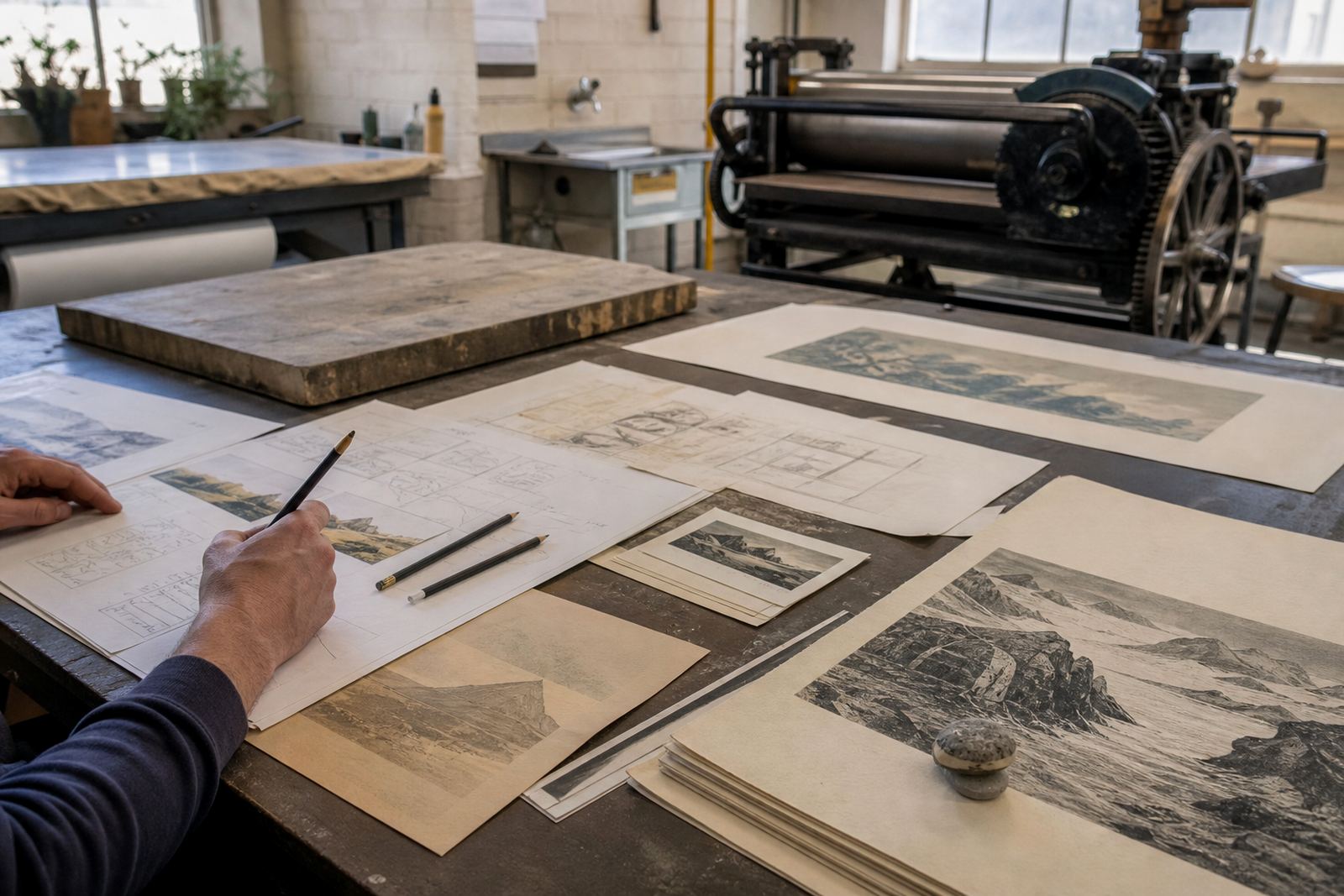
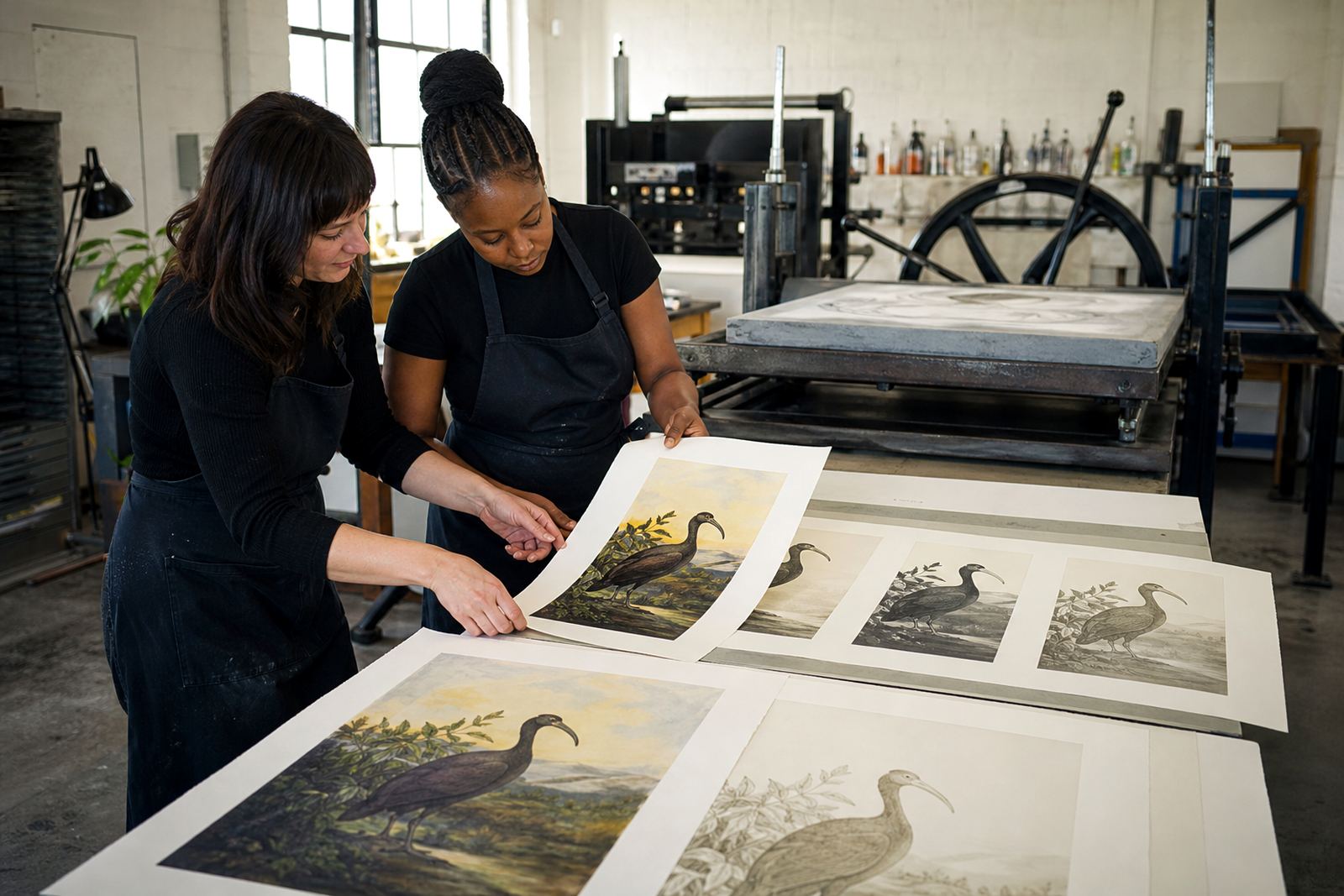
Proofing is handled in a measured sequence so the artist can see each decision clearly. We normally begin with a keyed proof from the stone or stones, then move through adjustments to inking, dampening, pressure and registration. If the image needs colour separation, we check each layer on its own and then together.
- Initial proof pull from the prepared stone
- Review of tone, detail and image edges
- Registration check for multi-colour work
- Colour adjustment where needed
- Artist review and notes before the next pull
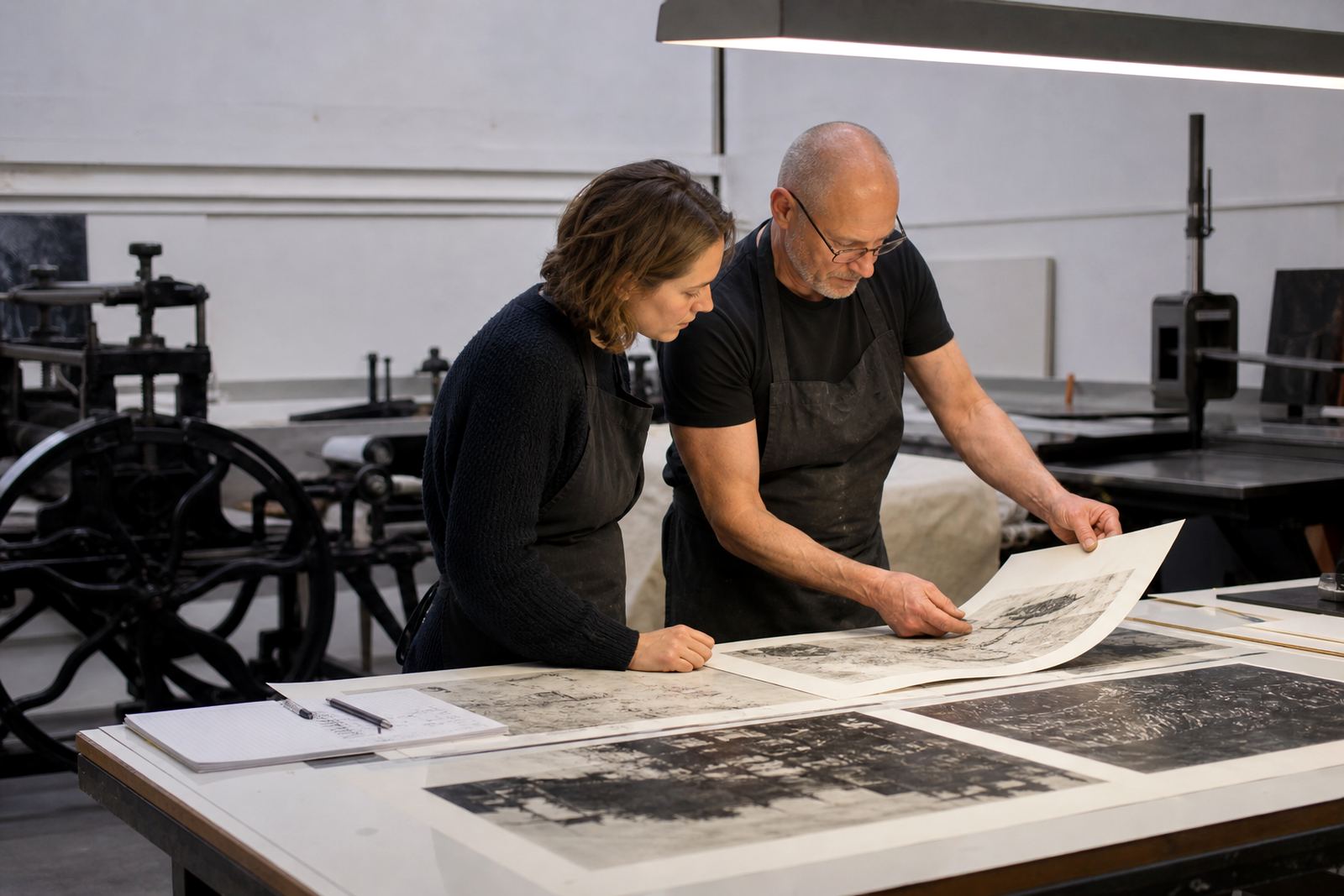
In a good session, the conversation stays practical. We talk through what the proof shows, what can be corrected on stone, and what should be left alone. That keeps the edition consistent and avoids unnecessary reworking.
What artists and collectors can expect
Artists use proofing to fine tune the image before signing off on the edition. Collectors benefit because the final print run has been resolved properly, with fewer surprises in colour or alignment. For limited editions, that matters because the same print standard must be carried across every sheet.
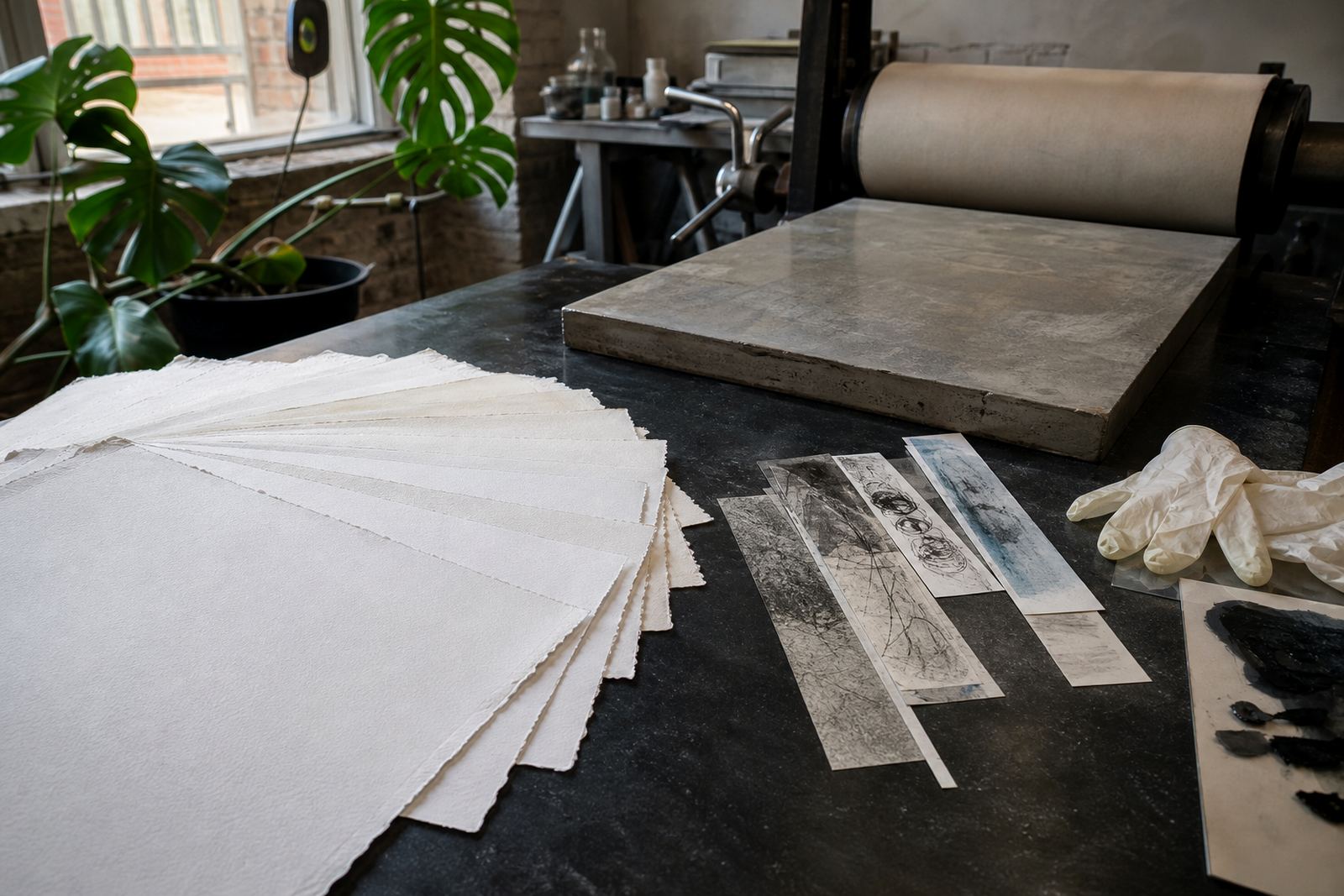
We also use proofing to confirm paper choice. Some papers hold a strong relief and crisp line, while others give a softer surface and more visible grain. In Cape Town, humidity can affect paper handling, so we allow for time to condition sheets correctly before printing. If the work is being packed or transported later, we also note how the paper behaves when dry and flat.
- Clear feedback on colour balance and tonal depth
- Better control of edition consistency
- Reduced risk of registration errors in the final run
- Paper choice matched to the image and edition size
Edition planning before the first full run
Proofing is closely tied to edition planning. Before the final edition begins, we confirm the edition size, the number of colour passes, any artist proofs, and how the signing and numbering will be handled. This avoids confusion later and keeps the record of the work clean.
For stone lithography, each colour may require its own stone or its own prepared surface, depending on the image. More colours means more time, more drying between passes, and tighter registration control. We explain these steps at the outset so the artist knows what the edition will demand in the studio and on the paper table.
Turnaround, pricing and studio intervals
Turnaround depends on the complexity of the image, the number of colours, and how many proofs are needed before the edition is approved. A single-image proof can often be handled quickly, while a multi-stone work may need several sessions with drying time between each stage. We build the schedule around the work itself rather than forcing it into a fixed pace.
Pricing is based on studio time, proof pulls, stone preparation, materials and any extra colour corrections. We quote after looking at the artwork and discussing the intended edition. That way the cost reflects the actual work involved, not a generic rate that ignores the image.
Time to clean and reset the press between sessions is part of the process too. Stones are checked and cleaned during proofing so the surface remains receptive and consistent. If the job runs over several days, we may schedule short intervals for dampening, drying, or stone rest. On longer projects, particularly in warmer months, those intervals help preserve accuracy and keep the paper in good condition.
Working methods that protect the final edition
Our studio treats proofing as protection for the edition, not just a trial run. Every proof is reviewed for print clarity, edge quality, inking consistency and whether the image is reading as intended from a distance and up close. If a correction is needed, we address it before the edition begins so the final set is cleaner and more unified.
We also advise on storage and handling after proofing. Prints should be kept flat, away from damp walls and direct sun, with clean interleaving paper if they are waiting to be framed. For clients in coastal areas such as Sea Point or Durban, this is especially important because moisture can affect paper over time. Good care starts in the studio and continues after the sheets leave it.
If you want a measured, collaborative proofing process for a stone lithograph, we can guide the work from first pull to approved edition with attention to detail at every stage.
Edition details
| Studio base | Woodstock, Cape Town |
|---|---|
| Service type | Collaborative proofing for stone lithography editions |
| Typical checks | Tone, colour balance, registration, paper response |
| Edition use | Before final editioning and signing |
| Turnaround | Depends on image complexity and number of proof pulls |
| Pricing approach | Quoted from artwork, materials and studio time |