How stone colour separation works
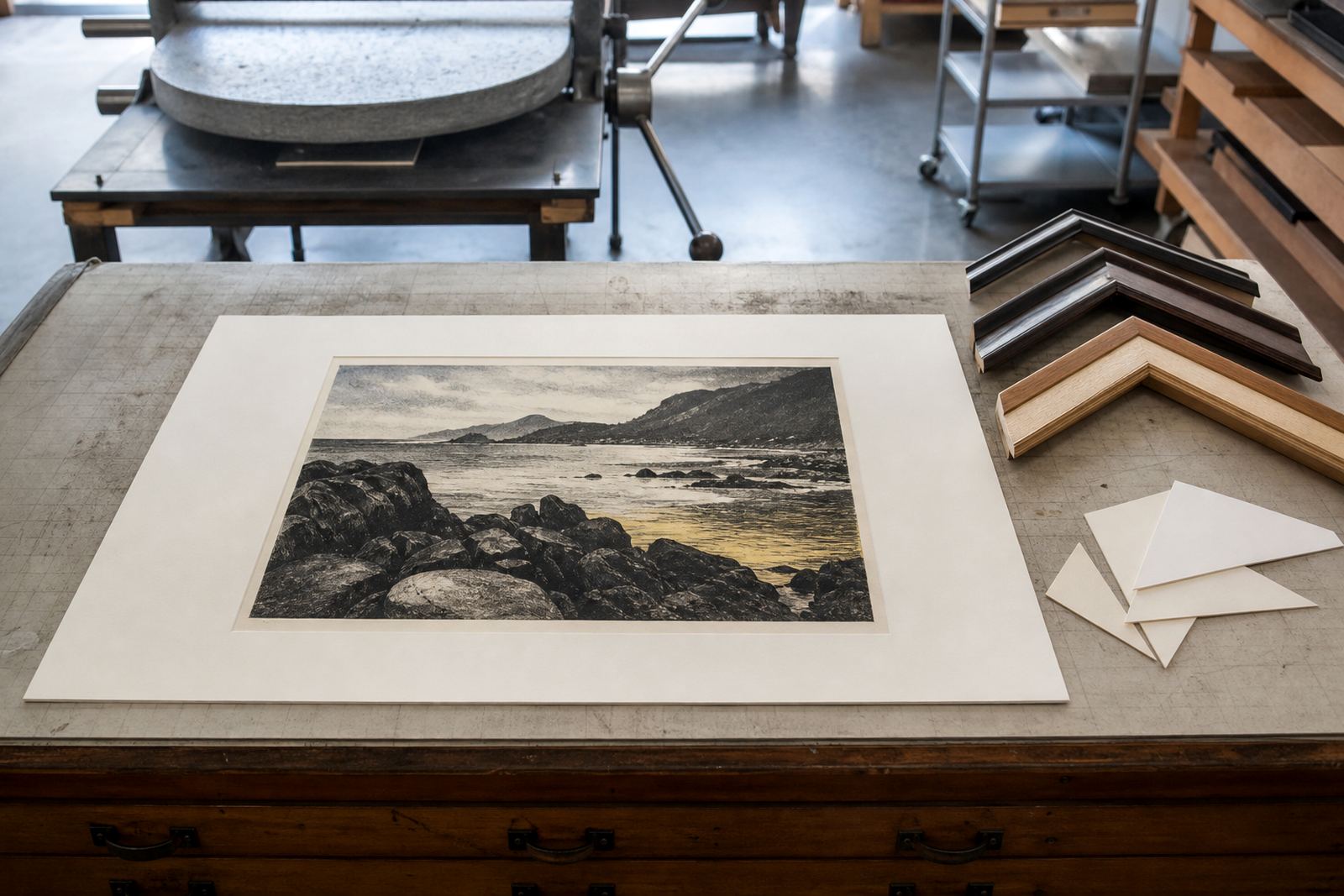
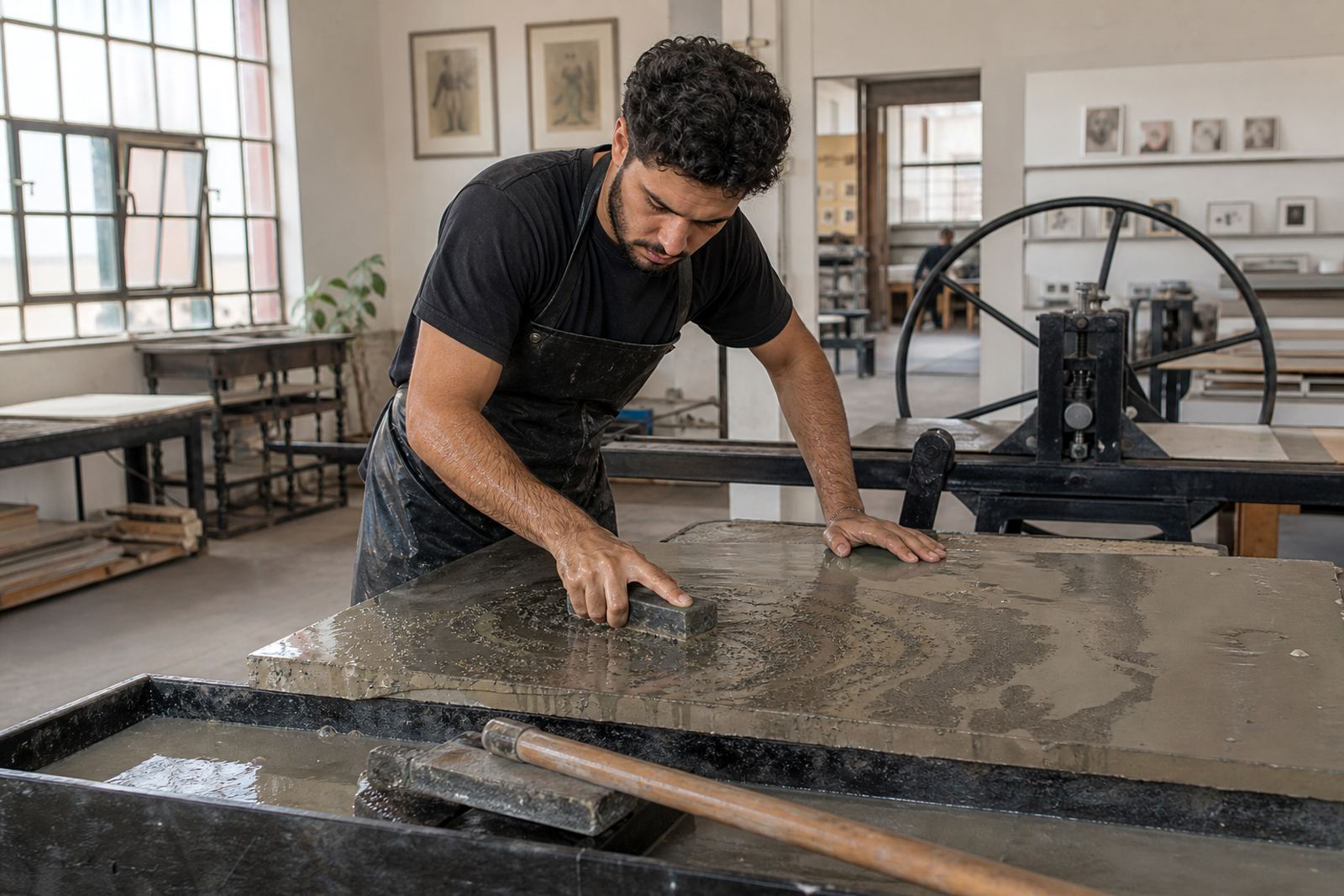
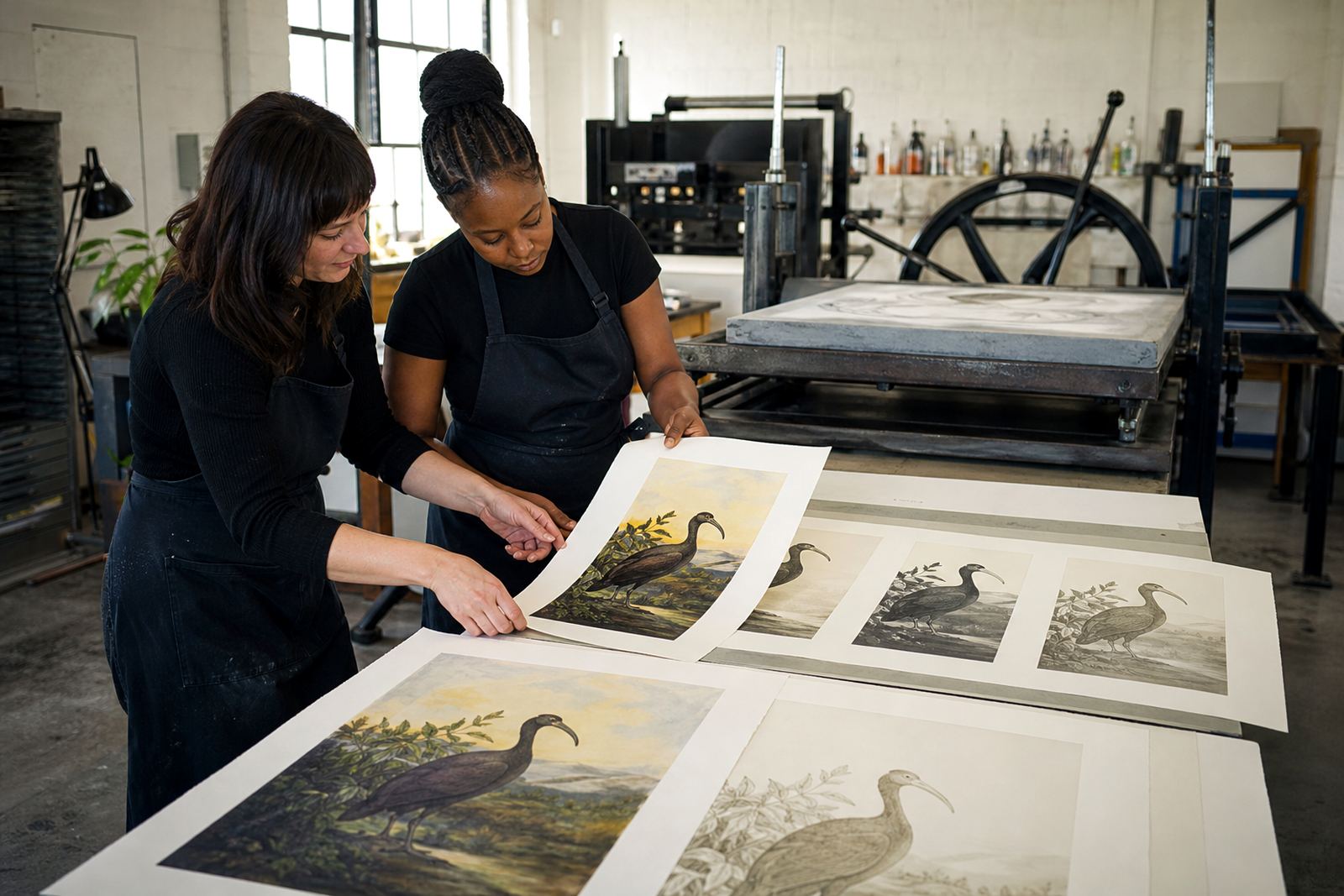
Stone lithography uses the natural grain and absorbency of limestone to hold an image on the stone surface. For colour work, each colour is separated into its own drawing or transfer layer so it can be printed in sequence on the same sheet. This is what allows a complex image to build tone, depth and colour relationships without losing the hand-made character of the print.
Our team prepares colour separations for limited editions, artist proofs and one-off multi-stone works. We look at the image structure, the paper choice, the number of stones needed and the order of printing. That planning matters because even a small shift in register can affect the whole edition. In Cape Town humidity and changing workshop conditions can also affect drying times, so we account for that in the setup.
What is included in the service for print collectors
Colour Separation at Lithography Art covers the practical work needed before edition printing starts. Shailen Naicker oversees the studio direction, while Nomvula Phalatse leads the printing decisions and Stefan Hattingh handles stone preparation and workshop support. The aim is to get the image ready for press with clear layer control and a workable edition plan.
- Image review and edition planning
- Assessment of how many stones or layers are needed
- Colour breakdown for layered printing
- Proofing sessions to check tone and alignment
- Paper consultation for surface, weight and absorbency
- Signing and numbering guidance for the final edition
- Archival packing advice for finished prints
Where a project needs framing coordination or collector advice, Rukshana Kamaar can assist with the handover details. For larger editions, Bonga Mngadi keeps the editioning notes in order so the sequence remains consistent from sheet to sheet.
Our working process from first proof to final layer
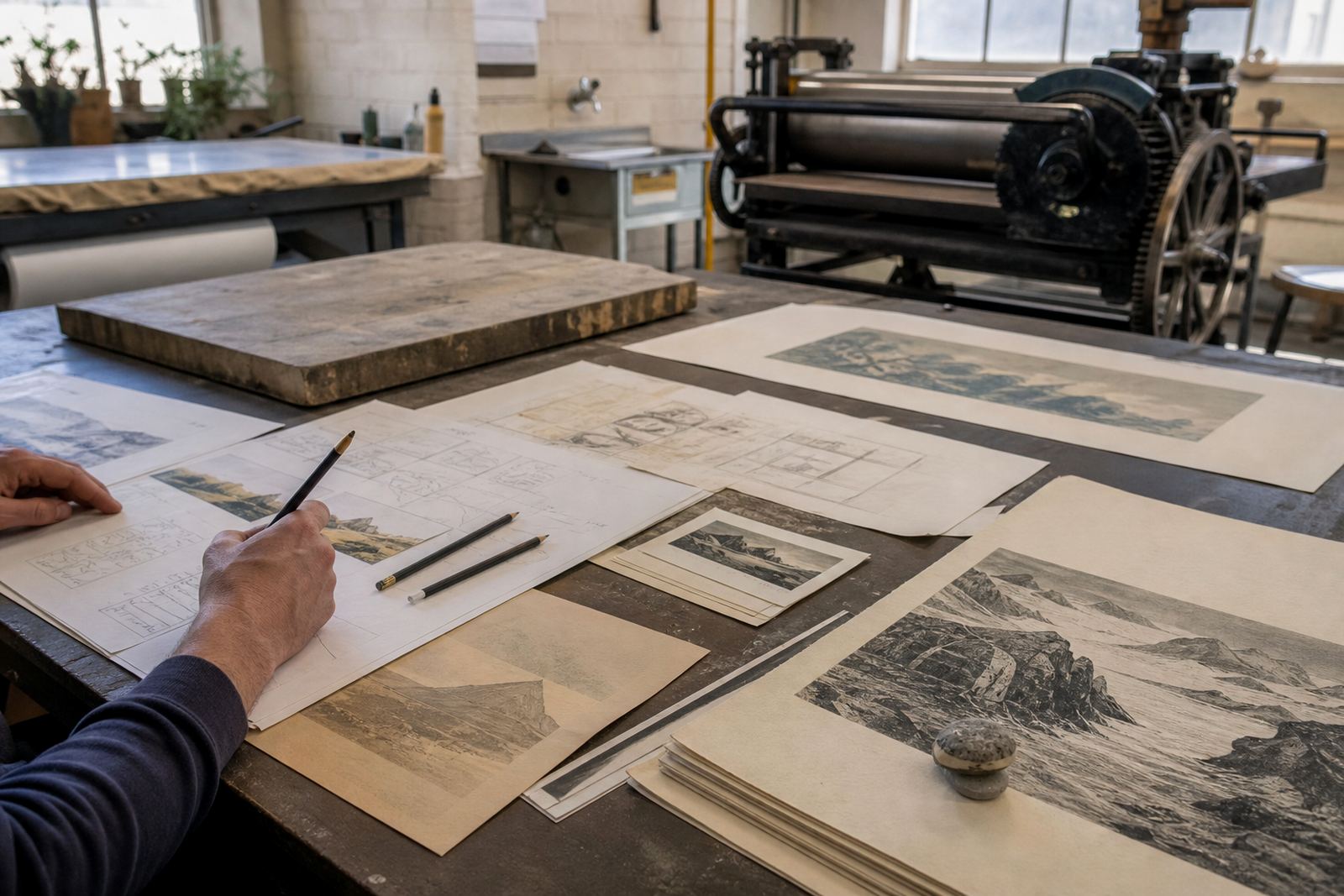
We usually begin with the source image, sketch or transfer material. From there we decide how the image should be split across tones and colour areas. Some works need a simple two-stone split, while others need several stones to build subtle colour shifts. The process is practical and measured, because each layer has to print cleanly on the next one.
- Initial consultation and image review
- Separation plan with layer count and printing order
- Stone preparation and image transfer
- Test proofing to check colour balance and register
- Adjustments to each stone before edition printing
- Final edition printing, drying and inspection
We also advise on how the print will behave under South African conditions. Coastal collectors in Sea Point or Durban often need extra care with storage, while inland clients in Johannesburg and Pretoria usually need protection from direct sunlight and dry air. That advice is part of the service, not an afterthought.
Edition planning for artists and collectors
Colour separation is closely tied to edition planning. A limited edition should be consistent, repeatable and properly documented, especially when the same image is being printed across multiple stones. We help artists decide whether a small edition, artist proof set or open working proofs is the right route for the image and intended audience.
Collectors in Stellenbosch, Cape Town and across South Africa often ask how to read a lithographic edition. A properly editioned print should show the edition number, the total edition size and the artist signature where agreed. If a print includes multiple colour passes, we keep clear notes on the print sequence and any variation between proofs and final sheets. This makes the work easier to understand and easier to care for over time.
Turnaround, scheduling and studio maintenance
Turnaround depends on the complexity of the separation, the number of stones, drying time between passes and how many proofing rounds are needed. A simple colour split can move faster than a complex layered image, but all stone lithography needs proper drying and inspection between stages. In practice, we schedule work in blocks so the stones are not rushed and the edition stays controlled.
For maintenance, stones are checked before and after each printing run. If a project is paused, the stones are stored and serviced at intervals to keep the surface stable and ready for the next session. That can include cleaning, re-graining if required and re-checking the image area before printing resumes.
Pricing approach and what affects cost
We quote colour separation based on the actual studio work involved rather than a standard flat rate. The main factors are the number of colours, the number of stones, the amount of proofing needed, paper selection and whether the project needs edition management from start to finish. If a print requires more detailed registration or multiple revisions, that changes the schedule and the cost.
Because every image is different, we prefer to discuss the work first through the enquiry form on our contact page. That lets us assess the image properly and propose a sensible plan for artists, collectors or institutions. If the work is part of a larger edition, we can also coordinate signing, numbering and archival packing so the final prints leave the studio in proper order.
Edition details
| Service type | Fine-art stone lithography colour separation |
|---|---|
| Studio base | Woodstock, Cape Town |
| Edition format | Limited editions, proofs and artist sets |
| Printing method | Multi-stone layered lithography |
| Typical support | Proofing, paper consultation, editioning and packing |
| Areas served | Cape Town, Stellenbosch, Johannesburg, Pretoria, Durban, Sea Point and Newlands |