Why edition planning matters before the first pull
Stone lithography asks for careful preparation because each image lives on the stone in layers of drawing, processing and printing. If the edition size is not decided early, it becomes harder to control colour, sequence and consistency. We help set a clear plan before printing begins, so the studio, the artist and the collector all know what is being made and how it will be recorded.
Good planning also protects the integrity of the final edition. It keeps the proof trail clean, avoids confusion around artist's proofs and trial colours, and helps with paper ordering, drying space and packing. In Cape Town, where humidity can change from week to week, this planning also helps us manage drying times and storage more accurately.
What we cover in an edition plan
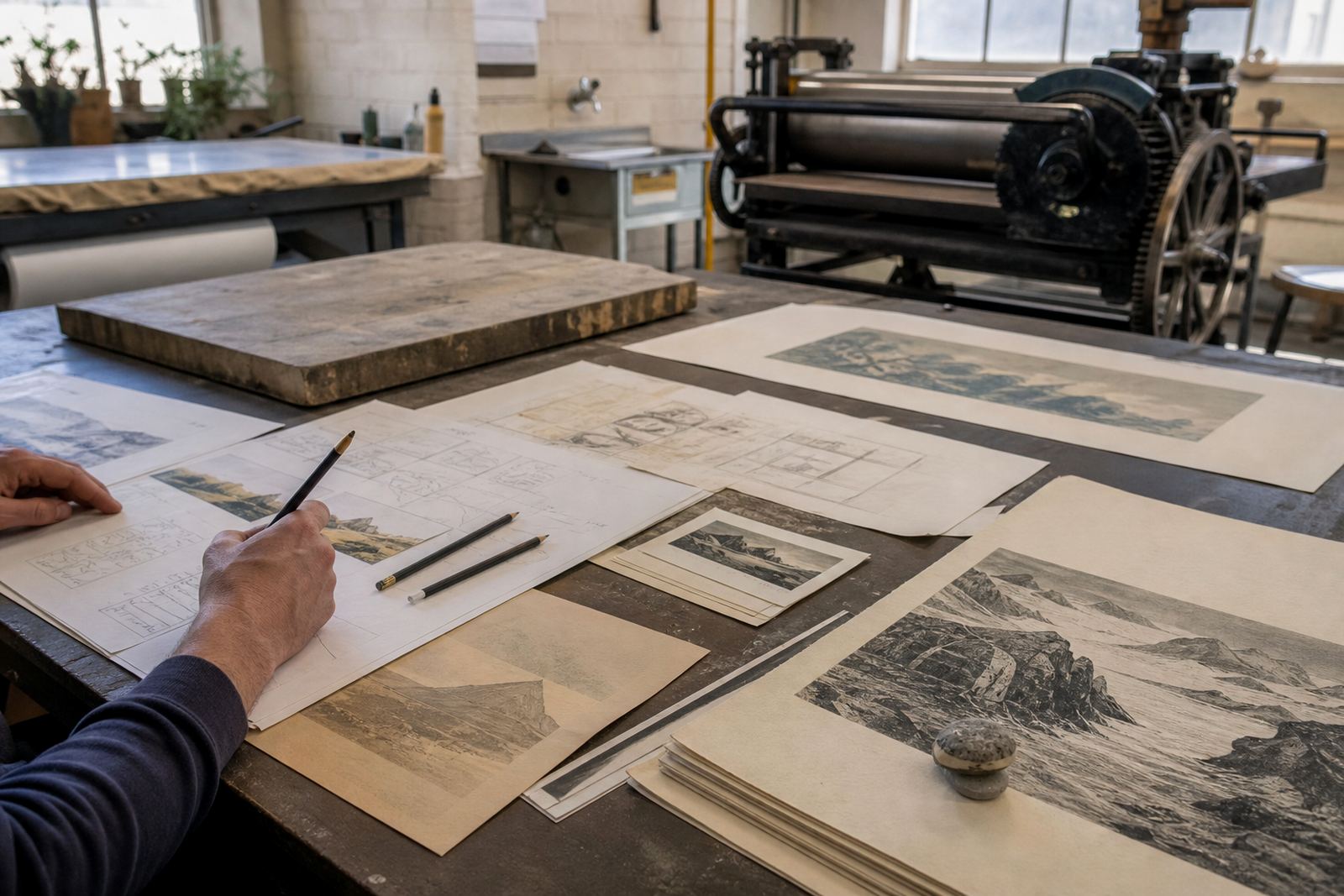
Our edition planning service looks at the work from a practical studio point of view. We review the image, the number of colours, the size of the stone, the paper choice and the intended finish. From there, we set out a working sequence that suits the artwork and the printing schedule.
- Edition size guidance based on image complexity and paper availability
- Proof stages, including working proofs and colour test pulls
- Recommended print sequence for single stone or multiple stone work
- Documentation for edition numbers, artist's proofs and printer's proofs
- Notes on registration, drying, signing and numbering order
- Archival packing needs for local and national delivery
We also discuss how the final edition should be described in studio records. That includes the title format, paper details, image dimensions and any special notes about hand colouring or variable elements. Clear records help collectors and artists keep track of each impression over time.
How the planning process works in the studio
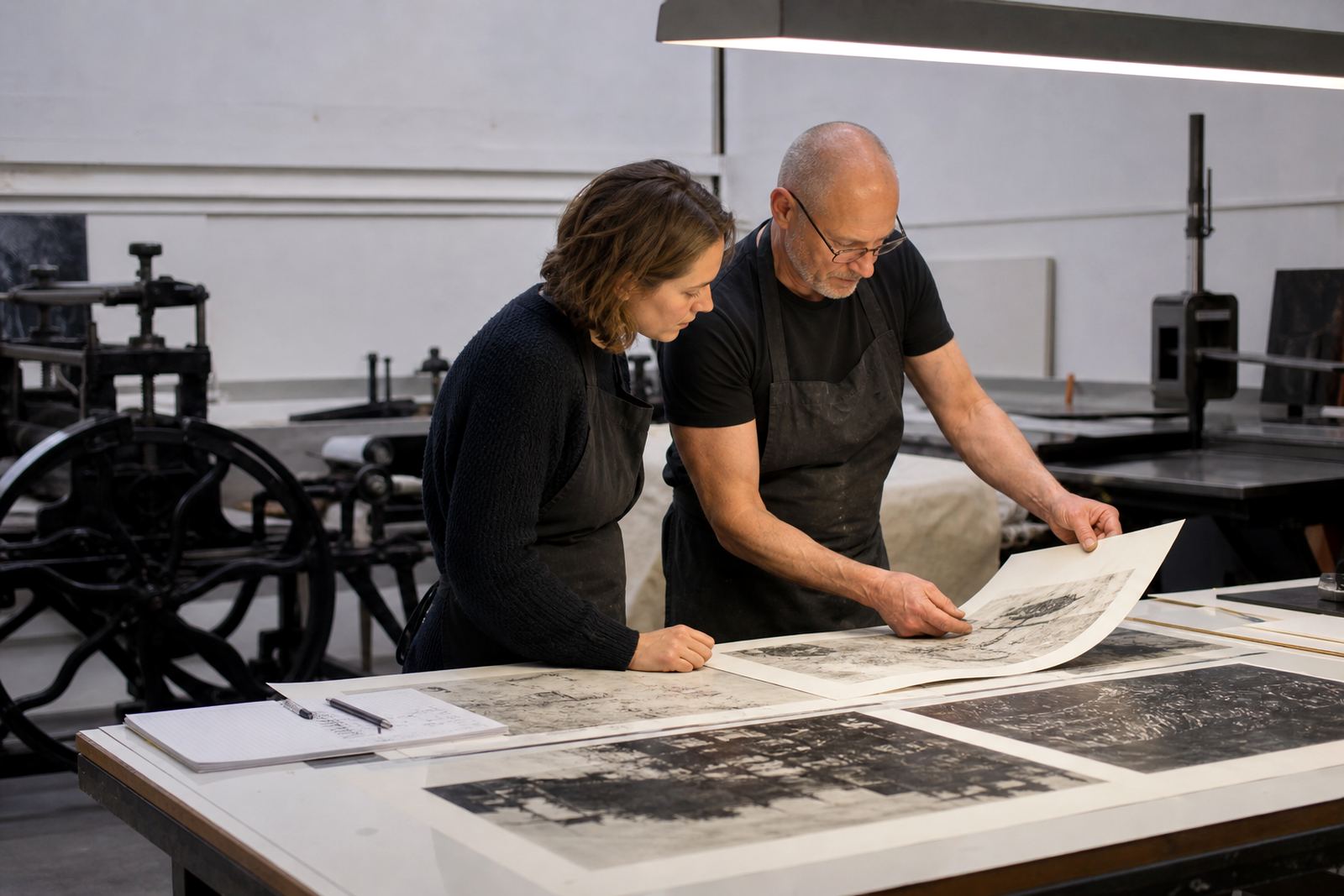
The process usually begins with an in studio discussion or a review of supplied artwork. We then look at technical factors such as stone grain, tonal range, image scale and whether the edition will need colour separation. If the work is large or complex, we may suggest an initial proof schedule that allows for adjustments before the final run.
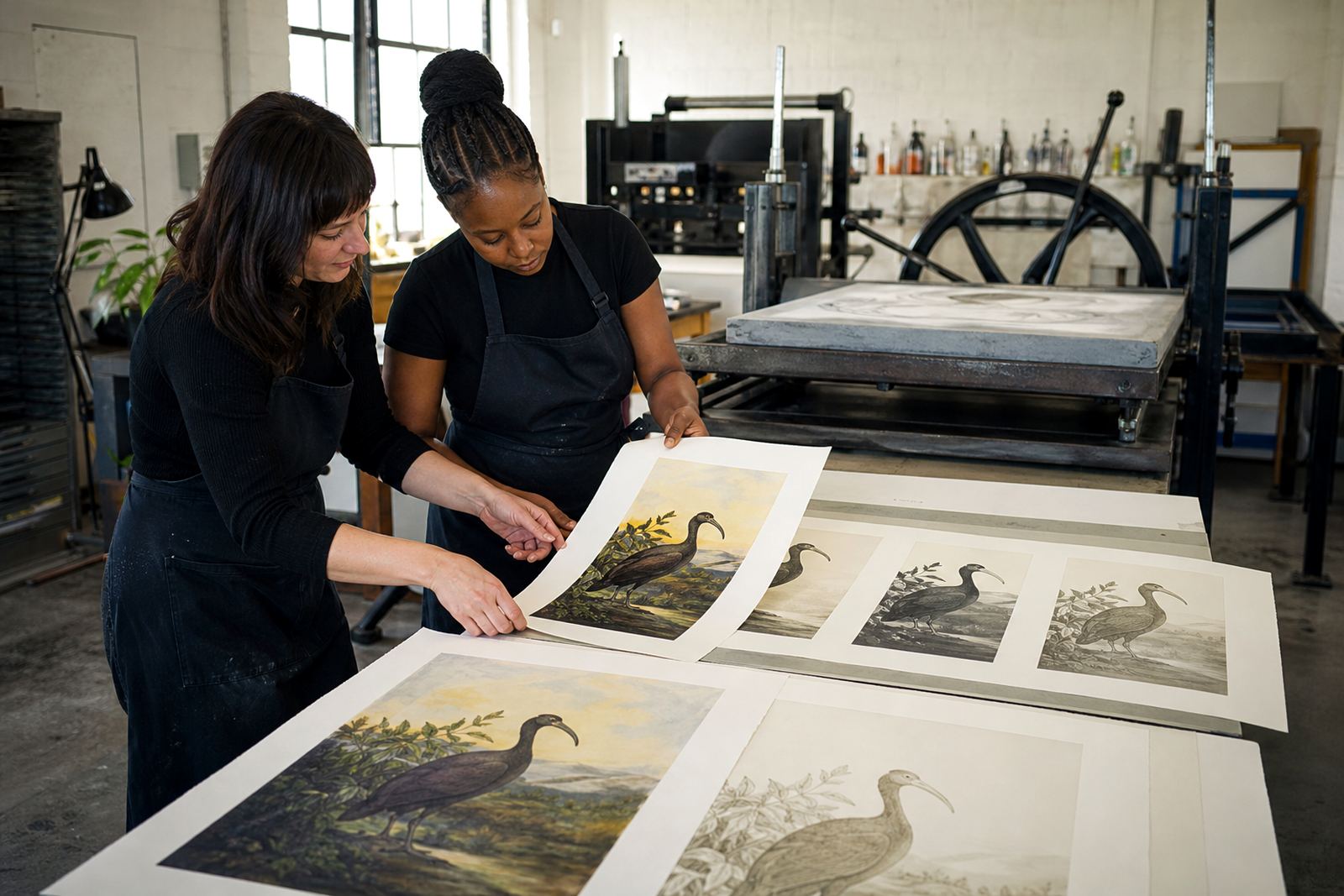
After that, we agree on the edition structure and a working timeline. This can include proof 1, proof 2, colour state proofs and the final edition run. For artists working from Johannesburg, Pretoria, Durban or Stellenbosch, we can coordinate planning remotely and then schedule the press time once the key decisions are confirmed.
- Initial review of the image and intended edition size
- Discussion of proof count and approval points
- Paper selection and drying allowances
- Final production schedule and signing order
Once the plan is set, the studio can move into stone preparation and proofing with fewer interruptions. That keeps the work organised and gives everyone a clear reference throughout the edition.
Turnaround times and studio scheduling
Turnaround depends on the scale of the edition, the number of colours and how many proof stages are needed. Simple black and white editions may move through the studio faster than multi colour works, while large stones or intricate layering take more time. We always allow for drying between pulls, as rushing this stage can affect surface quality and registration.
For planning purposes, we build in time for consultation, paper handling, proof review and final packing. If a work is being prepared for a collector in Sea Point or Newlands, or for transport to Durban or Pretoria, we also factor in packing and courier lead times. During busy periods, especially before month end or holiday season, booking ahead helps keep the schedule steady.
We will always be upfront if a project needs extra studio time. That is normal in lithography because each stage responds to the stone and the press, not just a calendar slot.
Pricing approach for edition planning
Edition planning is priced according to the amount of studio time involved and the complexity of the job. A straightforward plan for a single-colour edition will differ from a project that needs several proofs, colour separation and detailed documentation. We quote according to the work required, not a fixed one size fits all rate.
The main factors are the number of meetings or review sessions, the level of proof preparation, the edition size, and whether the plan includes packing notes, framing coordination or collector advice. If the artist is still shaping the final image, we may suggest starting with a planning session before committing to the full print run. That can save time and help prevent costly changes later.
Where possible, we keep the process transparent so artists know what is included and what will be charged separately. This matters for local artists in Woodstock and Cape Town as well as clients managing work from other cities.
Edition care, maintenance and record keeping
After the plan is in place, we keep an eye on the condition of the stone, the paper stock and the print records. Stone surfaces can shift if they are not maintained properly, so maintenance is part of responsible editioning. We check the stone between sessions, clean it correctly and make sure registration marks and notes stay readable. In a coastal studio, that care is especially important because humidity can affect paper and drying times.
For long-running projects we recommend regular check-ins on the proofs during the edition rather than waiting until the end. That might include checking the stone before each proof session, reviewing paper storage and confirming the print log after every stage. This keeps the edition clean and easier to archive.
- Stone inspection before and after proofing sessions
- Paper storage in a dry, stable environment
- Updated edition log after each approved stage
- Archival packing for finished prints and proofs
Proper records also support future collector enquiries. When a print is numbered, signed and documented correctly, it is easier to trace its place within the edition and keep the work properly described for years to come.
Who edition planning suits
Edition planning suits artists who want to produce a controlled body of work, collectors who need clarity on print states, and anyone preparing a lithograph for sale or archive. It is especially useful when an edition includes multiple colours, several proof stages or work intended for shipping across South Africa. Clear planning reduces uncertainty and keeps the studio process practical from start to finish.
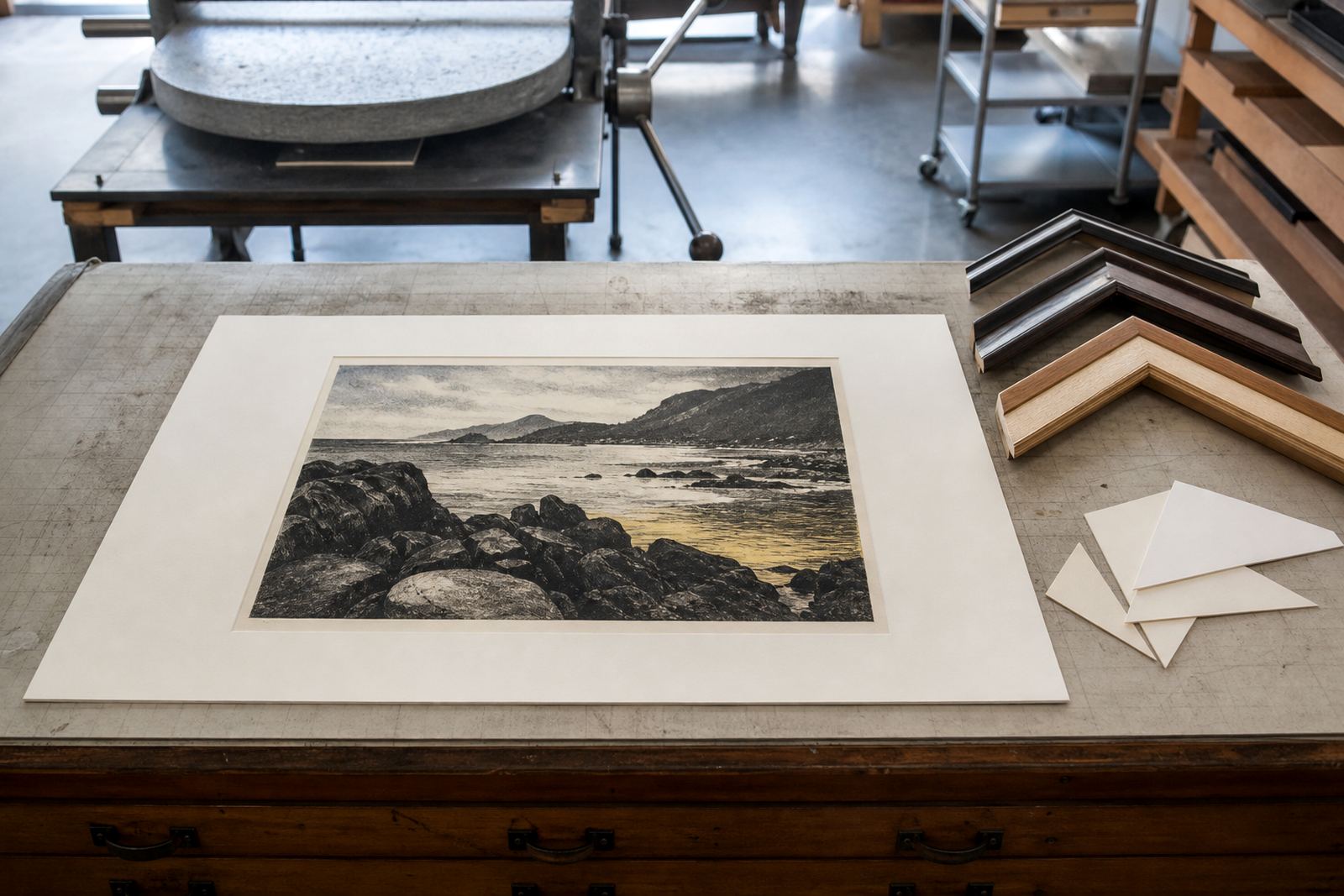
At Lithography Art, we work with artists and collectors who value careful print making. Our role is to map the edition before presswork begins so the final prints are consistent, well documented and ready for the next stage, whether that is signing, numbering, framing coordination or packed delivery.
Edition details
| Service area | Woodstock, Cape Town, with clients in Stellenbosch, Johannesburg, Pretoria, Durban, Sea Point and Newlands |
|---|---|
| Studio base | Fine-art stone lithography studio |
| Edition support | Edition size guidance, proof stages, sequencing and documentation |
| Typical inputs | Artwork review, paper choice, colour count, image size and proof requirements |
| Turnaround | Depends on edition complexity, drying time and proof approval stages |
| Care schedule | Checked during each proof stage and reviewed through the full edition run |