Why the paper matters in stone lithography
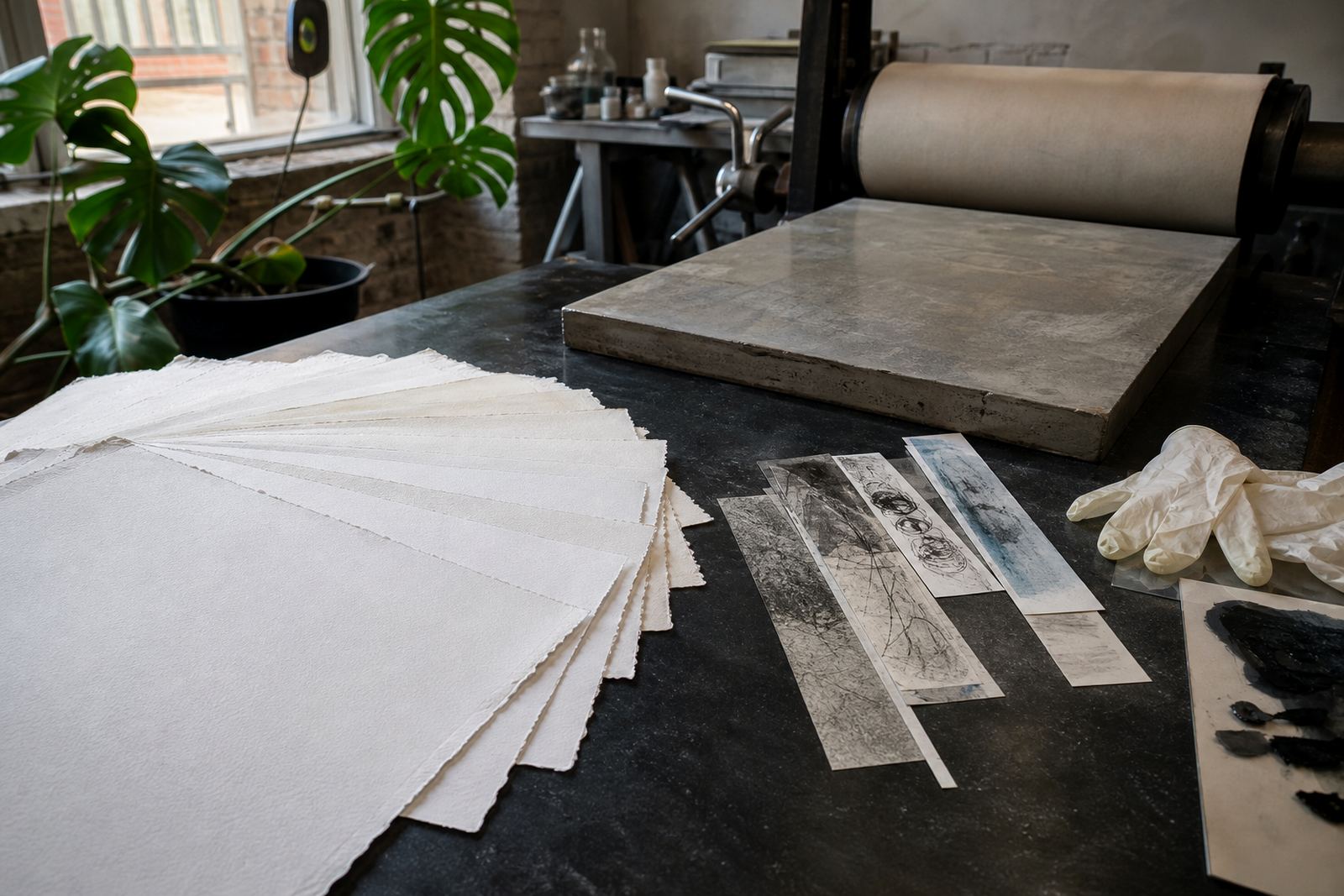
We look at each image in context. A heavy, absorbent sheet can support richer blacks and layered colour, while a smoother sheet can suit precise line work and flatter tonal areas. For collectors in coastal areas such as Cape Town and Durban, we also consider how a paper will respond to humidity, framing conditions and long-term storage in local homes and studios.
What our paper consultation includes
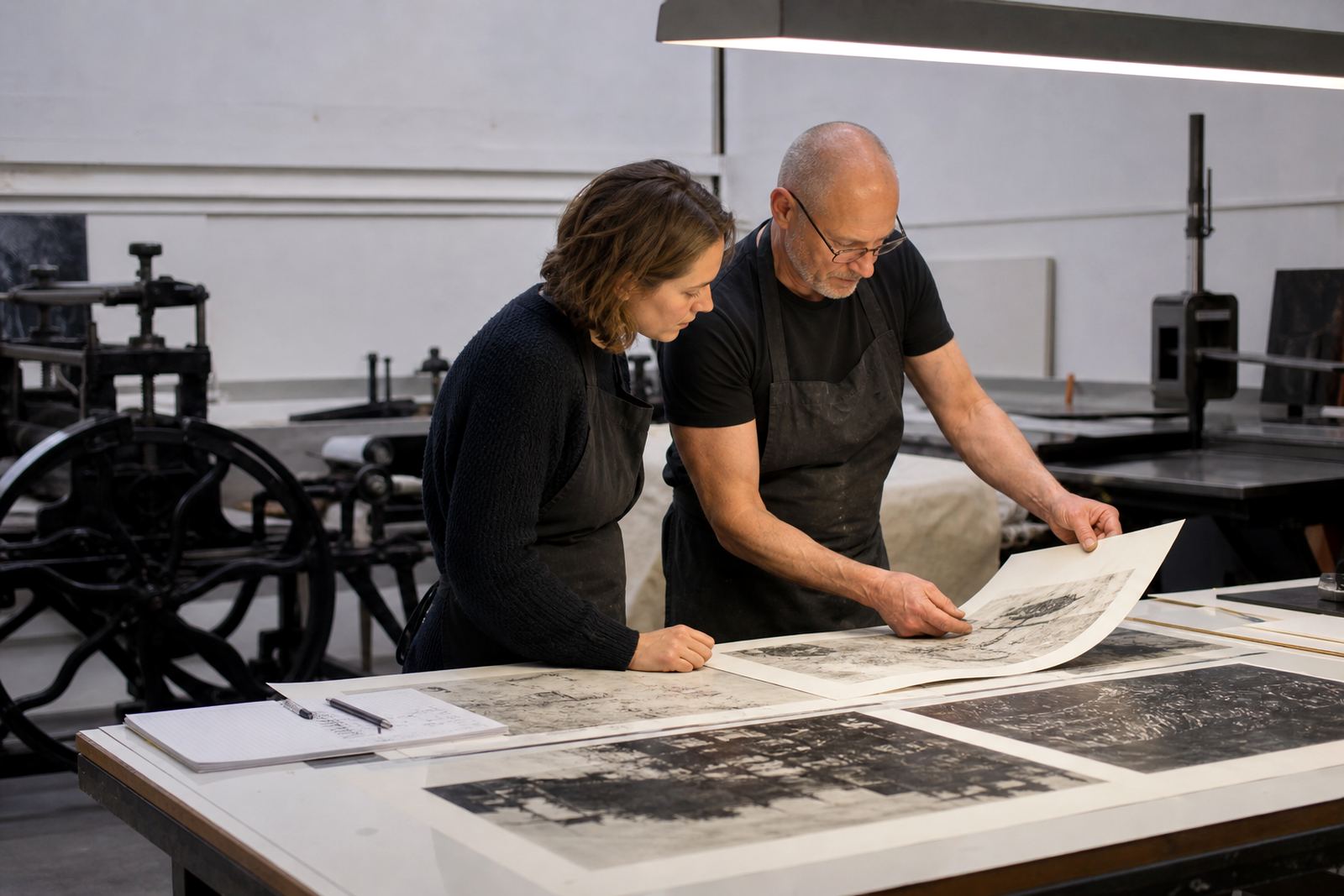
Our paper consultation is a practical working session, usually tied to a specific print project or edition plan. We review the image intent, edition size, colour palette and final presentation before recommending one or more paper options. Where needed, we compare sheets by weight, surface, tone and fibre content so the artist can choose with confidence.
- Discussion of image character, intended mood and edition requirements
- Review of paper weight, surface texture, tone and absorbency
- Advice on sizing, sheet dimensions and margins for editioning
- Guidance on how the paper will fold, float, frame and age
- Practical notes on handling during printing, drying and packing
We also flag any concerns early, such as papers that may cockle more readily, lift under heavy layering, or need extra care during drying in warmer weather.
Paper options we commonly discuss
Stone lithography can be printed on a range of fine-art papers, but not every sheet behaves the same. We usually talk through papers with enough strength to handle multiple passes through the press, a stable surface for registration, and a finish that suits the work. The choice often comes down to the balance between softness, surface texture and the amount of ink the paper will take.
- Hot-pressed papers for a smoother surface and fine detail
- Cold-pressed papers for a little more tooth and a softer image feel
- Heavier sheets for layered colour, deep blacks and edition durability
- Lighter sheets where a more delicate presence is needed
- Warm white or natural white tones depending on the colour response desired
For collectors, we often consider how the paper colour changes the impression of the print in a room. A warmer sheet can soften a strong black image, while a bright white paper can make colour sit more sharply on the page. In both cases, the paper should be chosen for the artwork, not just for appearance on the day.
How the consultation process works
We keep the process straightforward. First, we look at the artwork and the edition goals. Then we narrow the paper field to suitable options and test the likely behaviour in printing and drying. If the artist is working from a proof or a first image, we can discuss how paper changes the tonal response before the edition is committed.
Typical steps include:
- Initial discussion of the image, edition size and handling needs
- Paper selection based on surface, weight and tonal response
- Test proofs or sample comparisons where needed
- Confirmation of sheet size, margins and trimming allowance
- Planning for drying, flattening and final storage
For artists in Johannesburg, Pretoria, Stellenbosch and Durban, this planning helps avoid costly surprises once printing begins. A paper that seems suitable on paper may behave differently in the press or under local conditions, especially if the studio or home environment has fluctuating temperature and humidity.
Turnaround, pricing and what affects the cost
Turnaround depends on whether the consultation is for a single edition, a new image or a broader body of work. A straightforward paper recommendation can be turned around quickly, while a more involved project that needs sample comparisons or proofing takes longer. We schedule around the printing calendar so the paper choice supports the edition rather than slowing it down.
Pricing is quoted according to the level of involvement. Factors include the number of paper options reviewed, whether sample tests are required, the edition size, and whether the project needs coordination with proofing or signing. We keep the pricing approach clear so artists know whether they need a simple recommendation or a more detailed working session.
For collectors commissioning special presentation or archival packing, the paper choice can also affect final handling costs. A heavier sheet, for example, may need more careful drying and flattening before framing or storage. That extra care is usually worth it when the print is meant to stay in good condition for years.
Care, storage and maintenance after printing
Paper care starts the moment the print leaves the press. We advise on drying time, flattening, protective interleaving and how to handle prints before framing. Fine-art paper should always be kept clean, supported at the edges and stored away from direct sunlight, damp walls and areas with strong temperature swings.
- Allow prints to dry fully before stacking or framing
- Store flat in archival folders or boxes with clean interleaving
- Keep away from coastal damp, kitchen steam and direct sun
- Use gloves or clean hands when handling unframed prints
- Check framed work periodically for dust, humidity marks or edge lift
As a simple care routine, we suggest a quick visual check every six months and a more careful review once a year, especially for collectors in humid areas such as Sea Point, Newlands and Durban. If a print has been in storage, it should be inspected before framing and after any long period in transport. Small issues caught early are easier to manage, and the paper will thank you for it.
Edition details
| Service area | Woodstock, Cape Town and across South Africa |
|---|---|
| Format | One-to-one consultation for artists, collectors and edition planning |
| Paper factors | Weight, surface, tone, absorbency and fibre content |
| Typical support | Sample comparison, proof review, sheet sizing and storage advice |
| Turnaround | Depends on project scope, sample testing and studio schedule |
| Care schedule | Visual check every 6 months, full review once a year |