What archival packing covers for stone lithographs
Archival packing is the final protection layer before a print leaves the studio. For stone lithography, that matters because the paper can be highly receptive, the surface may still carry delicate pigment or plate marks, and a finished sheet can mark easily if it is handled carelessly. We pack for handover, storage or courier transport, with methods chosen for the size, paper weight and condition of each work.
Our approach suits collectors, artists and galleries in Woodstock, Sea Point, Newlands, Stellenbosch, Johannesburg, Pretoria and Durban. In Cape Town, we also factor in coastal humidity, because paper can shift if it is packed too tightly or stored in a damp room. The aim is simple: keep the edition clean, flat and ready for framing or long-term keeping, with no unnecessary movement inside the package.
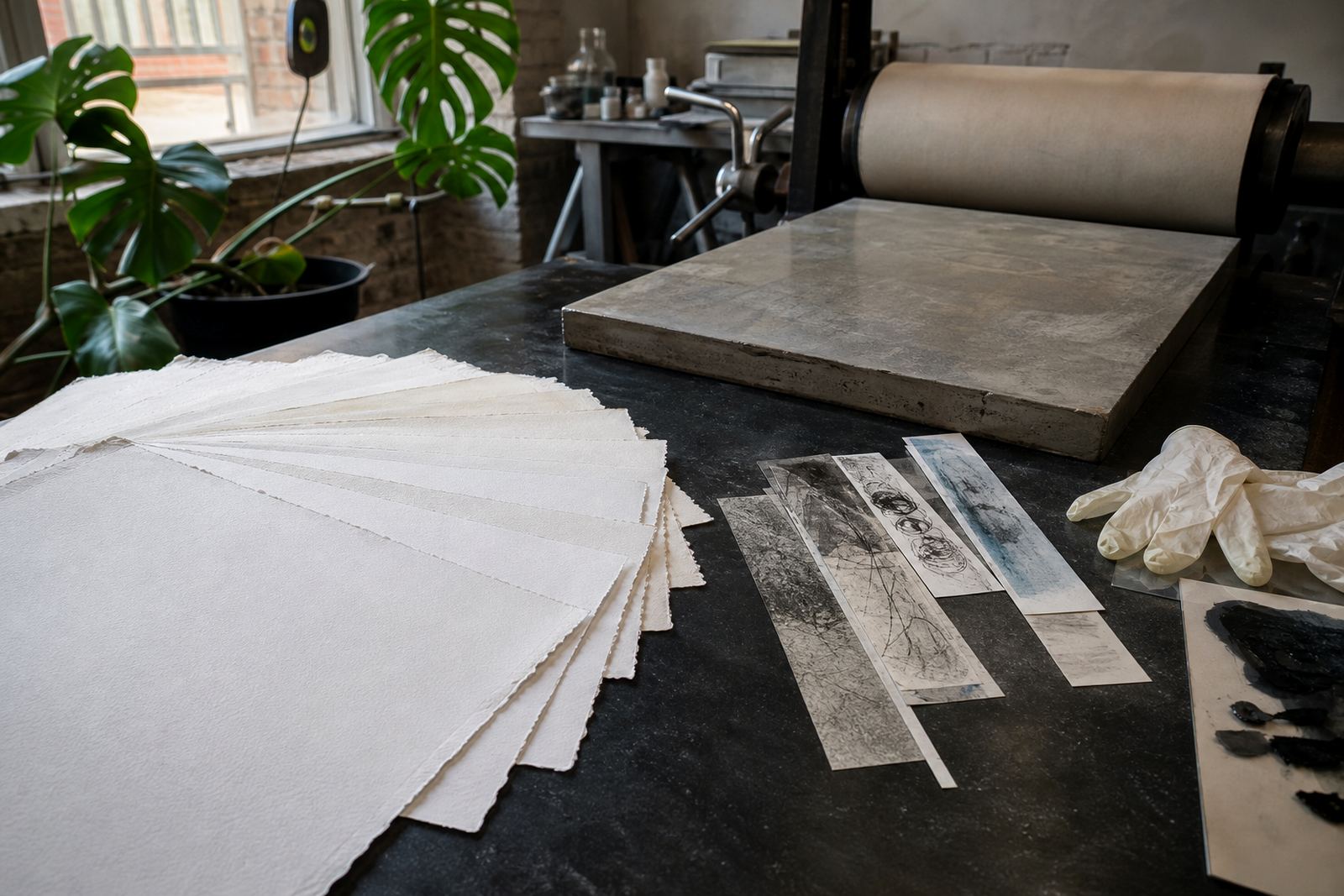
We work with limited editions, open edition prints and single impressions. If a print has been signed and numbered, or if it is part of a larger folio, we protect each sheet so the set stays together and the margins remain crisp. A little care here saves trouble later, especially when a work is travelling by courier and may pass through more than one depot.
Materials we use to protect the print surface
We choose materials that suit conservation-minded handling and avoid anything that can stain, imprint or trap moisture. The packing method depends on whether the work is to be carried by hand, kept in studio storage, or sent to another town by road courier.
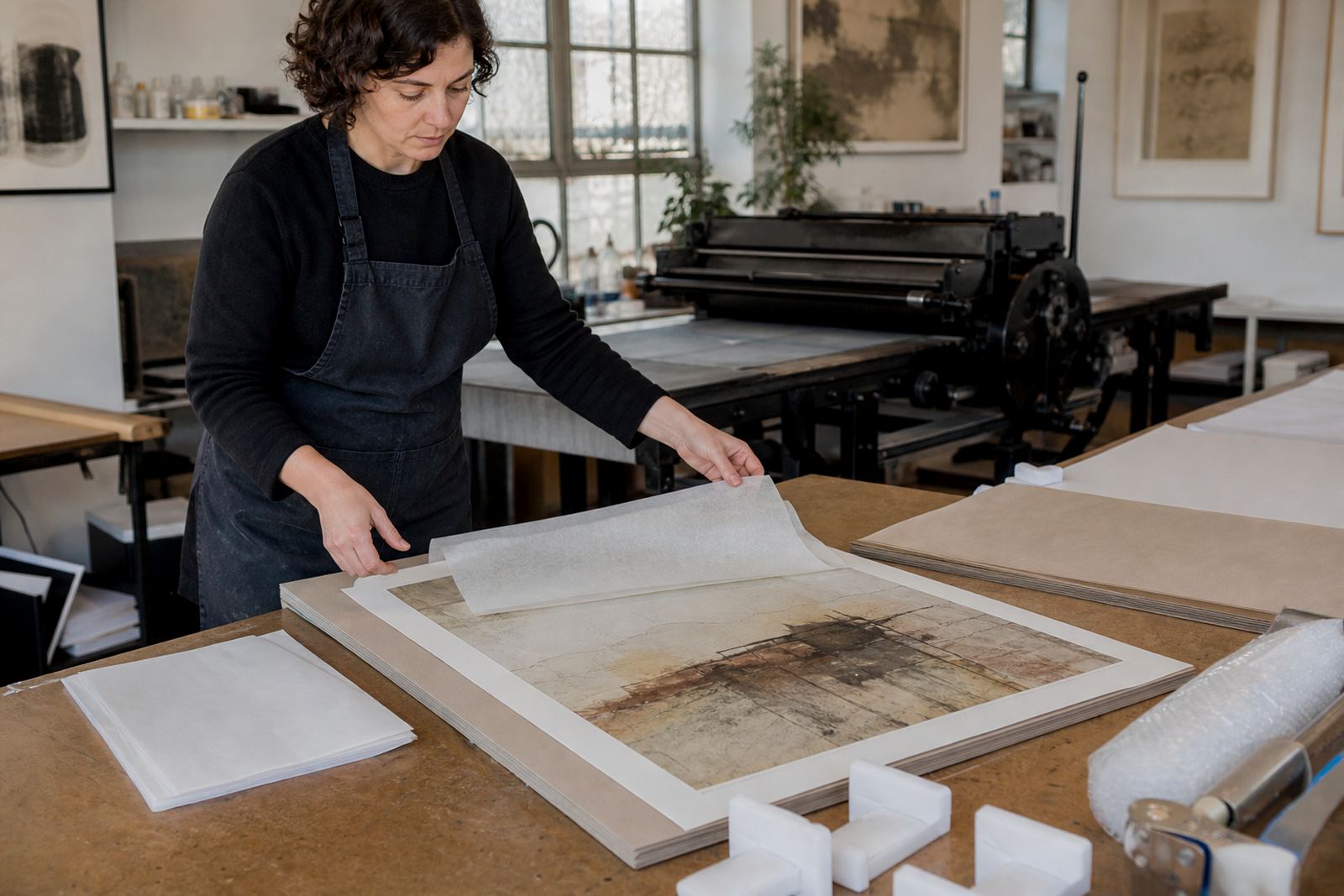
- Acid-free tissue for the first wrap layer
- Glassine or interleaving paper where a barrier is needed between prints
- Rigid boards or flat carriers for support
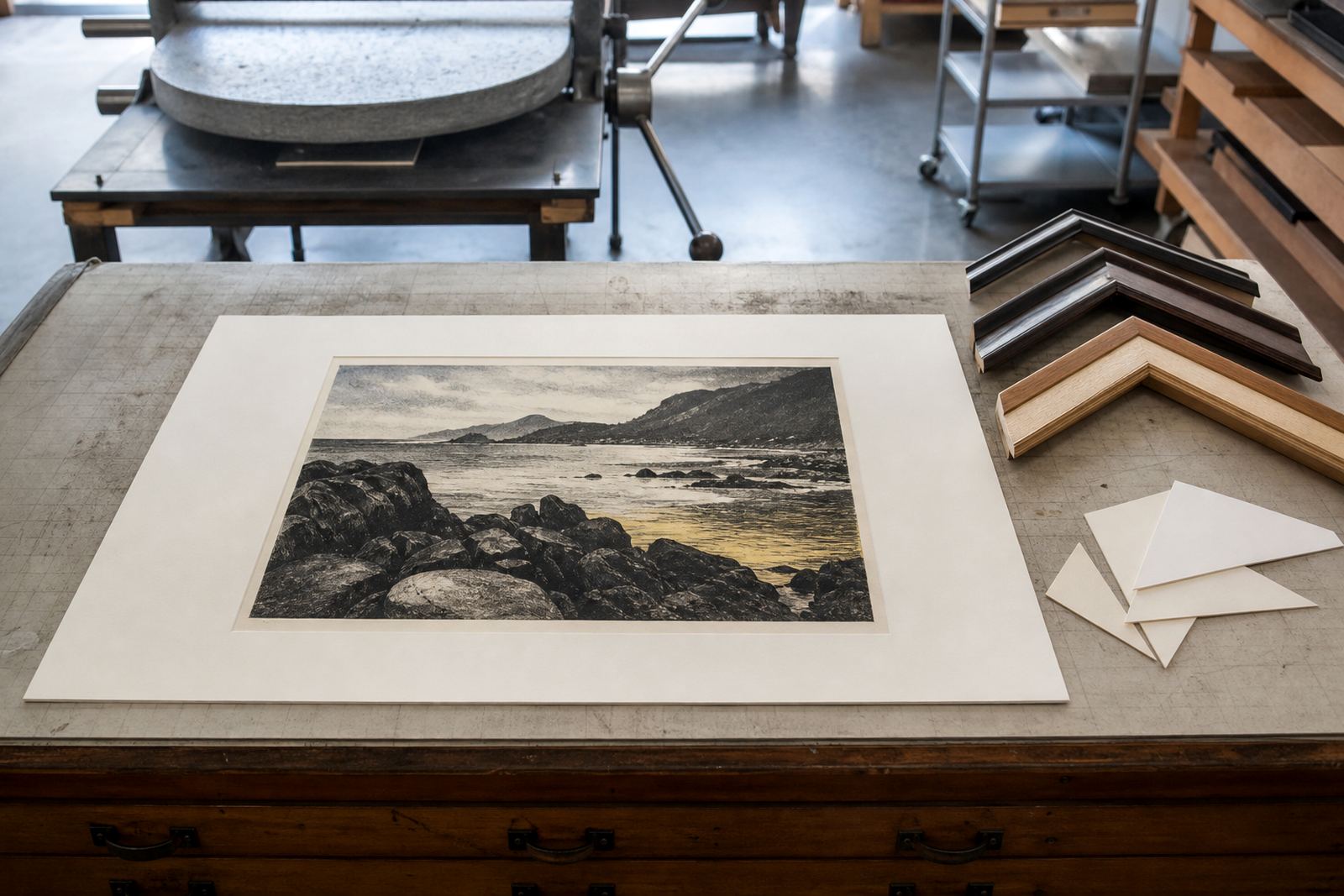
- Corner protection for framed or mounted works
- Moisture-resistant outer wrap for courier movements
- Labels placed so they do not touch the image area
We do not use loose plastic directly against fresh or sensitive surfaces unless the work has been fully assessed and it is appropriate to do so. For works moving through humid coastal conditions or longer inland routes, we may add an extra moisture buffer. That is especially useful for large sheets or works printed on heavier rag paper, where a crease can be difficult to remove later.
How the packing process works in the studio
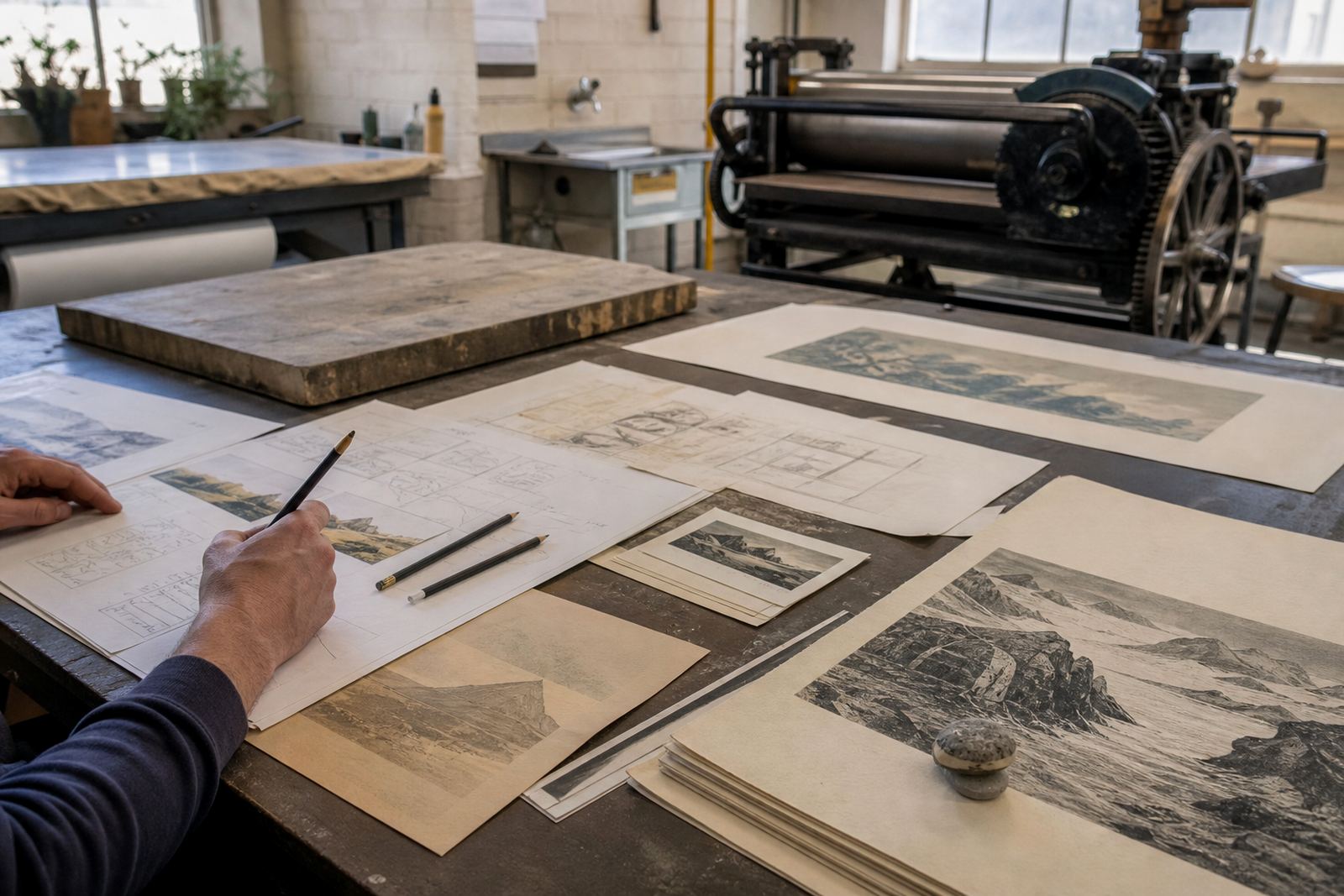
Each packing job starts with a visual check. We confirm whether the print is dry, fully signed, numbered or labelled, and whether it needs flat packing, rolled packing or framed protection. For archival packing of lithographs, flat packing is usually preferred because it gives the paper the best support and avoids tight curl.
- Inspect the print for surface dryness, handling marks and size
- Select the right interleaving and support board
- Wrap the work with clean, archival layers
- Secure the pack so it cannot shift during movement
- Mark the outer package for upright or flat handling where needed
- Prepare it for collection, storage or courier handover
If the edition includes multiple sheets, we separate each print carefully and keep the sequence clear. That helps when a collector wants to store the full edition together, or when a gallery needs the work unpacked in the same order it was packed. We also note any special handling instructions, such as do not stack, keep dry, or allow room temperature acclimatisation before opening.
For larger works, we may recommend a rigid flat pack rather than a soft parcel. It is a practical choice for lithographs that need edge support and a stable surface. In our experience, a small amount of planning at this stage prevents bent corners and unnecessary touch-ups later on.
Turnaround times and when packing should be booked
Turnaround depends on the number of prints, the size of the edition and whether the works are already dry and signed. Simple single-sheet packing can often be completed quickly, while full edition packing, especially for several sizes or mixed formats, takes longer. We plan the work around the press schedule and collection dates so the packing does not interrupt the printmaking process.
For artists based in Cape Town or nearby areas such as Woodstock, Sea Point, Newlands and Stellenbosch, we can usually coordinate packing close to collection. For Johannesburg, Pretoria and Durban deliveries, we recommend allowing extra time so the package can be prepared, checked and sealed properly before transit. If a courier is collecting on a specific day, let us know in advance so the package is ready and the labels are clear.
Booking early is best if the edition is large or if framing coordination is also required. That gives us time to confirm sizes, paper direction and any storage needs. It also helps when a collector wants the work held flat for a short period before framing, which is common in homes where humidity or air conditioning changes from room to room.
Pricing approach for archival packing
We price archival packing according to the actual work involved, not a one-size-fits-all rate. The main factors are sheet size, edition quantity, type of support needed, whether the works are loose or framed, and whether the packing is for local collection or longer courier transport. A single small print requires less material and labour than a full suite of large sheets, so the cost is usually different.
Where possible, we quote after seeing the work or after confirming the dimensions and packing purpose. That gives a more accurate figure and avoids surprises. For collectors, we can also advise on whether flat packing or framed packing is the better spend, depending on when the work will be framed and where it will be stored in the meantime.
We keep the pricing practical. If a work only needs protective wrapping and a rigid carrier, we will not add extras that are not necessary. If a print needs specialist support because it is on a large paper or has a delicate surface, we explain why and what the extra materials are for. This keeps the process clear, especially when the piece is travelling between towns or being stored for a longer period.
Storage, care and maintenance after packing
Archival packing is only part of the story. Once the print reaches its destination, the storage conditions matter just as much. Fine-art paper should be kept flat, away from direct sun, heat sources and damp walls. In South African homes, especially near the coast, it is wise to avoid leaving packed prints in cars, garages or enclosed loft spaces for long periods.
- Store flat in a cool, dry room
- Keep away from direct sunlight and high humidity
- Do not stack heavy objects on packed prints
- Allow the work to acclimatise before opening if it has travelled far
- Inspect the outer pack every few months if the print remains stored
For works held in storage for more than a short period, we recommend checking the packing condition at regular intervals, usually every six to 12 months depending on the environment. If the outer wrap shows wear, or if the storage room becomes damp, we can repack the work. That is often a sensible step for collectors in coastal areas or for editions kept in offices where air conditioning runs only part of the week, which can shift the paper slightly.
Who uses this service and how to arrange it
Artists use archival packing when an edition is complete and needs to move safely to a collector or gallery. Collectors use it when they are taking a work home, storing it before framing, or sending it to another province. We also handle packing for studio visits, where a work may need to be handed over in a form that is clean, secure and ready for transport.
If you need archival packing for a lithograph, send the details through our enquiry form on the contact page. Include the sheet size, whether the work is signed and numbered, and where it needs to go. We will advise on the right packing method and the practical steps from there. For larger edition runs, it helps to let us know in advance so the packing materials can be prepared and the pieces can move through the studio without delay.
The right pack should do one job well: protect the print without putting pressure on it. That is how we pack lithographs leaving our Woodstock studio.
Edition details
| Service area | Woodstock, Cape Town, Stellenbosch, Johannesburg, Pretoria, Durban, Sea Point, Newlands |
|---|---|
| Packing formats | Flat packing, rigid carrier packing, framed protection, moisture-aware courier packing |
| Typical materials | Acid-free tissue, glassine, support board, corner protection, moisture-resistant outer wrap |
| Best for | Limited editions, single lithographs, collector transfers, storage and courier delivery |
| Booking method | Enquiry form on the contact page |
| Care schedule | Inspect stored works every 6 to 12 months |