What registration means on a lithography stone
Registration is the system that keeps each printed colour in the correct position from one pass to the next. In stone lithography, an image may be built on one stone or across several stones, with each stone carrying a different colour or tonal layer. If those layers do not meet properly, the image can look blurred, uneven or shifted, even when the drawing itself is strong.
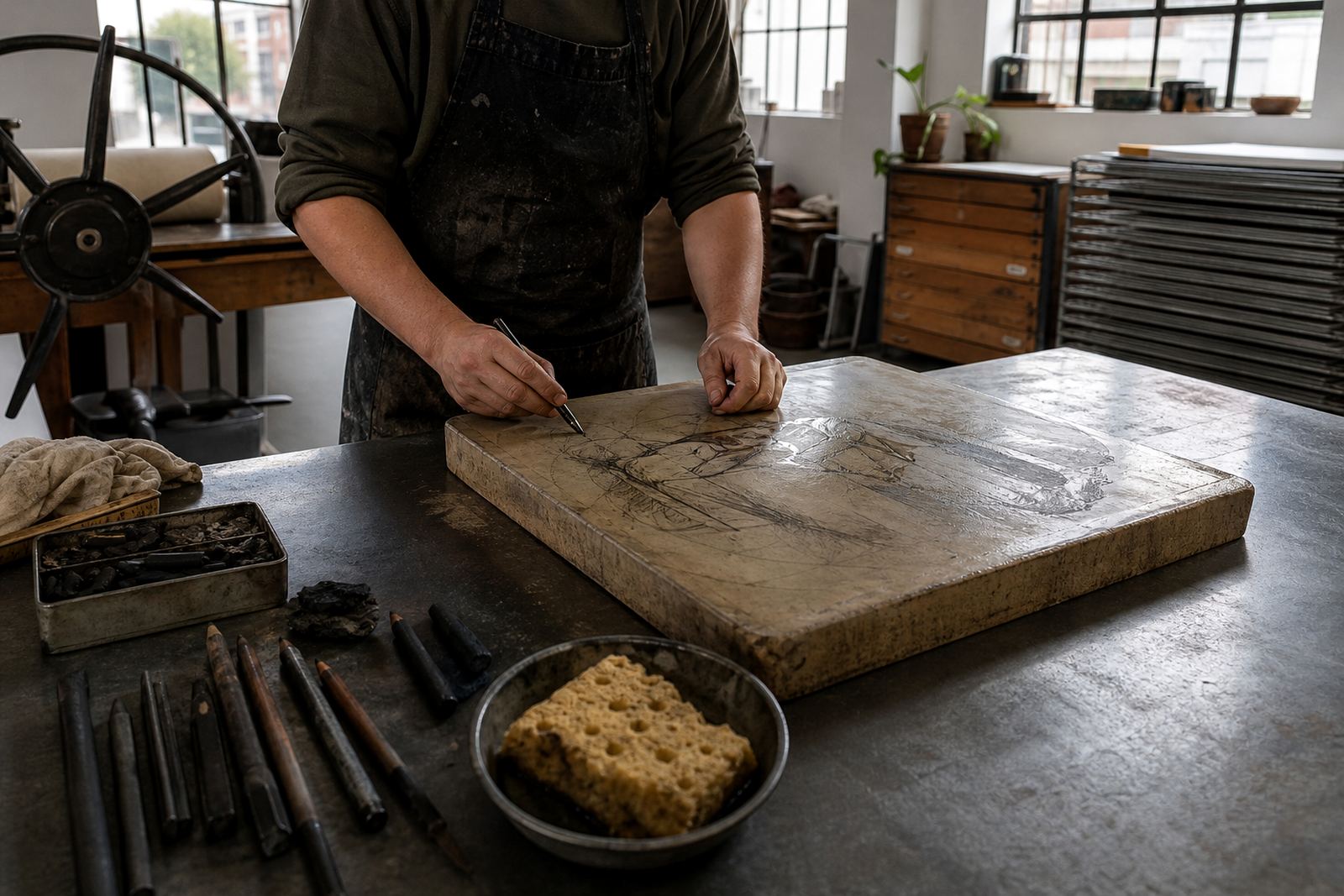
On a practical level, registration starts long before the press is run. The stone must be prepared evenly, the paper needs to sit in the same place each time, and the artist and printer must agree on the exact placement of the image, margins and crop marks. Good registration is not dramatic, but it is what gives a print its order and clarity.
Why layered colour prints depend on accuracy
Layered colour printmaking is unforgiving of small errors. A line out by even a millimetre can change the edge of a face, the shape of a letter, or the overlap between two transparent colours. In fine-art lithography, those slight shifts matter because the print is built by hand and each pass adds another chance for movement.
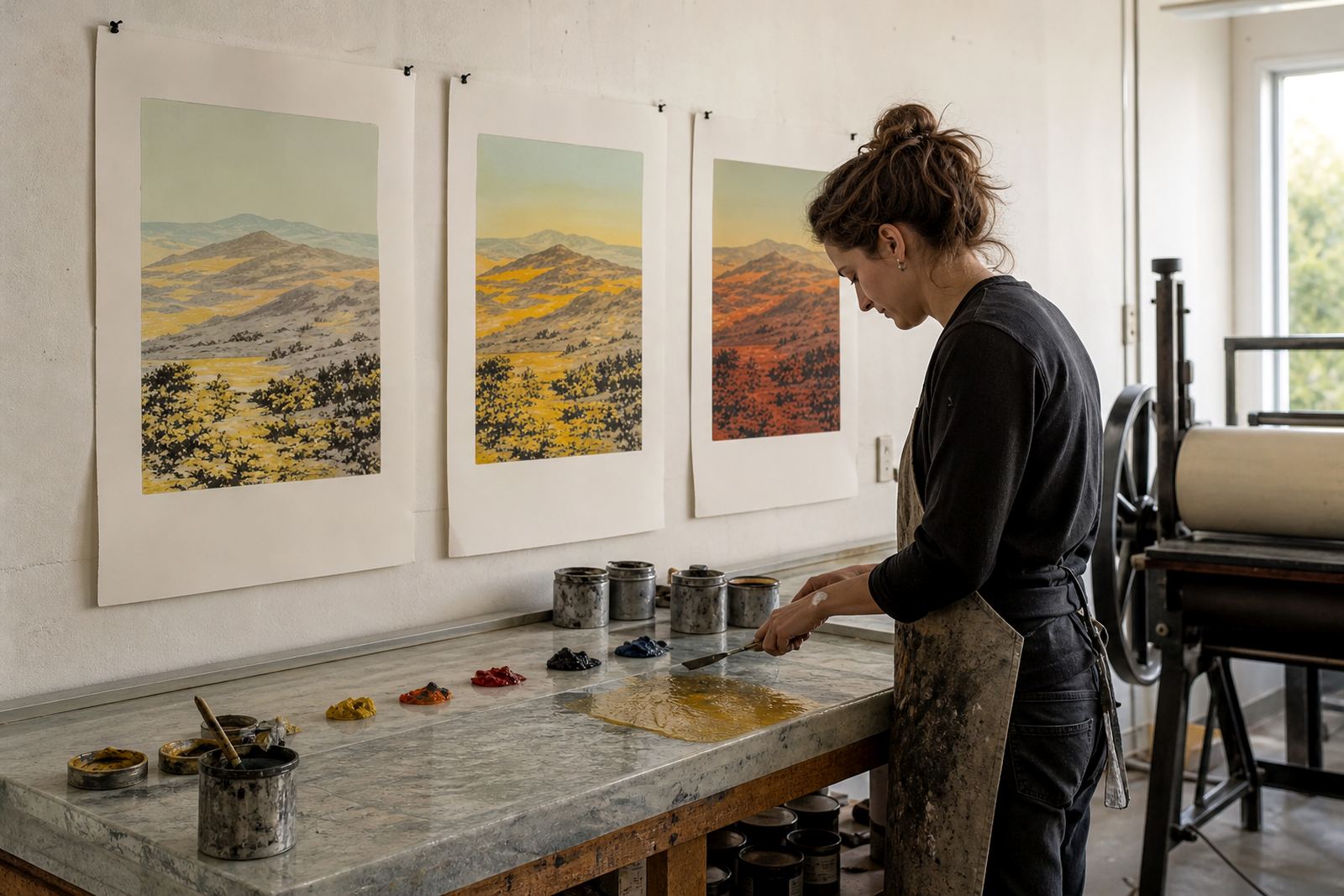
When registration is right, colour can do quiet work. A warm tone can sit under a cooler one, a dark key layer can sharpen detail, and transparent inks can create depth without muddying the image. When registration is poor, the same print can look tired or unfinished. That is why experienced printers treat alignment as part of the image, not just a technical step.
- Small shifts can change line quality and reduce detail.
- Misalignment often shows most clearly at the edges of text, faces and fine marks.
- Consistent registration supports a cleaner limited edition.
How a studio keeps each colour in place
There is no single trick that solves registration. It is usually a combination of careful stone preparation, reliable paper handling and steady press work. In a working studio, that can mean using registration pins, measuring the image area from the same edge, marking the gripper or guide position, and checking every proof before the next layer is printed.
Stone lithography asks for patience because the stone itself has weight, texture and slight variations. If the paper is too damp, too dry, or sits differently from one impression to the next, the result can move. A good printer watches these changes closely and adjusts the workflow before a run gets away from hand. That attention is what keeps the edition honest.
- Stone edges, press blankets and paper moisture all affect placement.
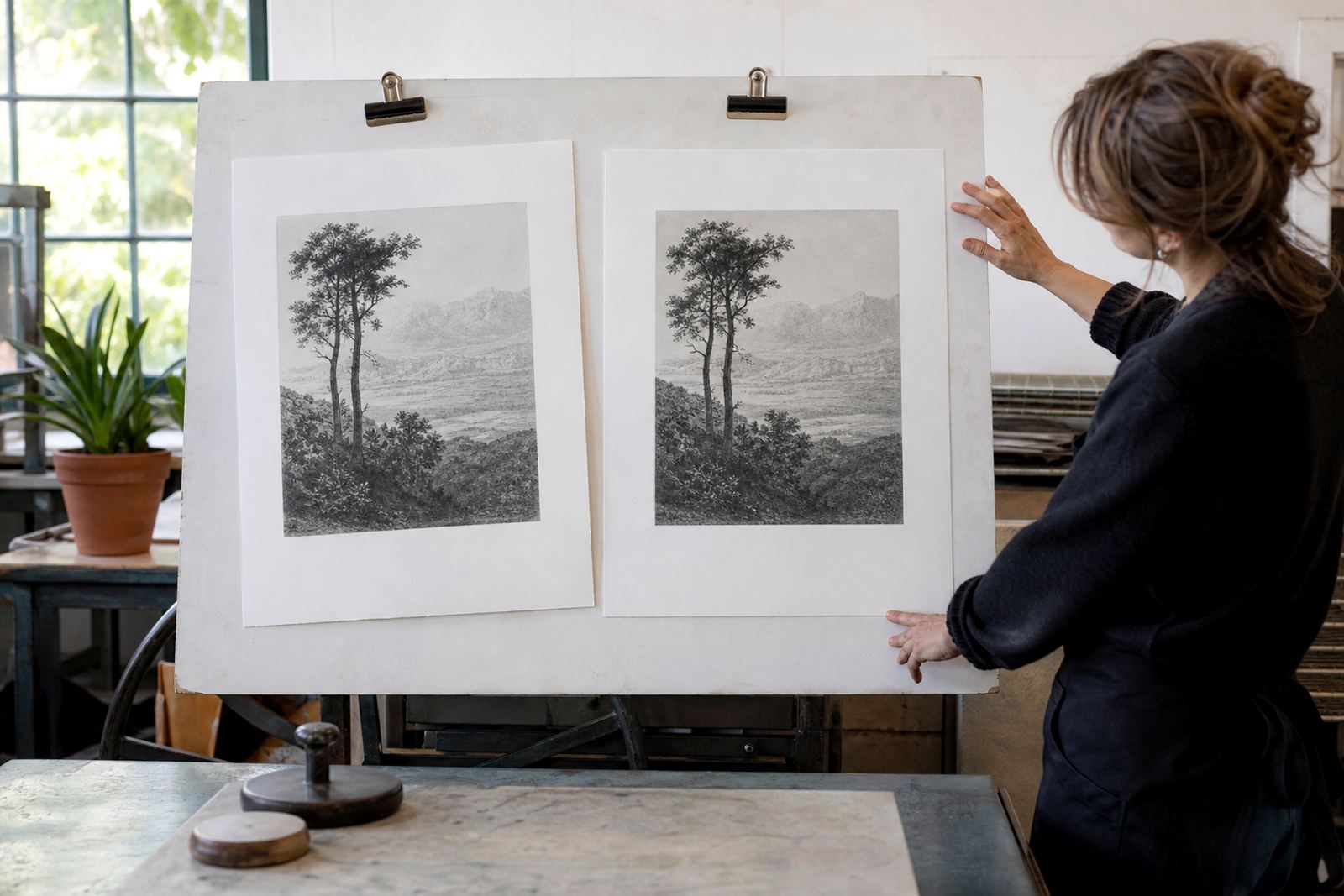
- Proofs are checked against earlier pulls before the full edition continues.
- Registration marks and crop references help the team repeat the same position.
What artists should discuss before a colour edition begins
Registration is easier when it is planned with the artist from the start. A layered print should not begin with guesswork. The printer needs to know how many colours are intended, whether the image includes transparent layers, whether there are hard edges or soft overlaps, and how much paper margin is required for the final presentation.
For artists working from Johannesburg, Pretoria or Durban, a clear edition plan can save time and courier costs later. If a proof needs to be approved before the next colour is drawn, that decision should be made early. It also helps to agree on edition size, signing order and the level of variation that is acceptable. Once the stones are prepared and the sequence is under way, changes can slow the whole run down.
- Confirm the number of stones or layers before proofing starts.
- Agree on paper size, margins and final image area.
- Set the proof approval process so the edition does not stall.
A Woodstock example of careful alignment in practice
In Woodstock, where studio time is often shaped by weather, transport and the pace of working across town, registration has to be practical as well as precise. The printer has to account for all of that before the first colour goes down.
In a recent layered edition for a Cape Town collector, the printer and artist worked through several proof stages to keep the warm base colour, the second tonal layer and the final key line aligned. The image was not complicated on paper, but it needed discipline at each stage. Once the alignment was settled, the edition moved more quickly and the final prints held together in a way that felt calm and exact, not overworked.
Edition care after printing, signing and packing
Registration does not stop once the press stops. Prints must dry flat, be checked again for alignment, then be signed and numbered in the correct order. If the sheets curl, smudge or shift during drying, the edition can lose consistency. Archival packing also matters because pressure, humidity and heat during transport can affect the paper before it reaches a frame.
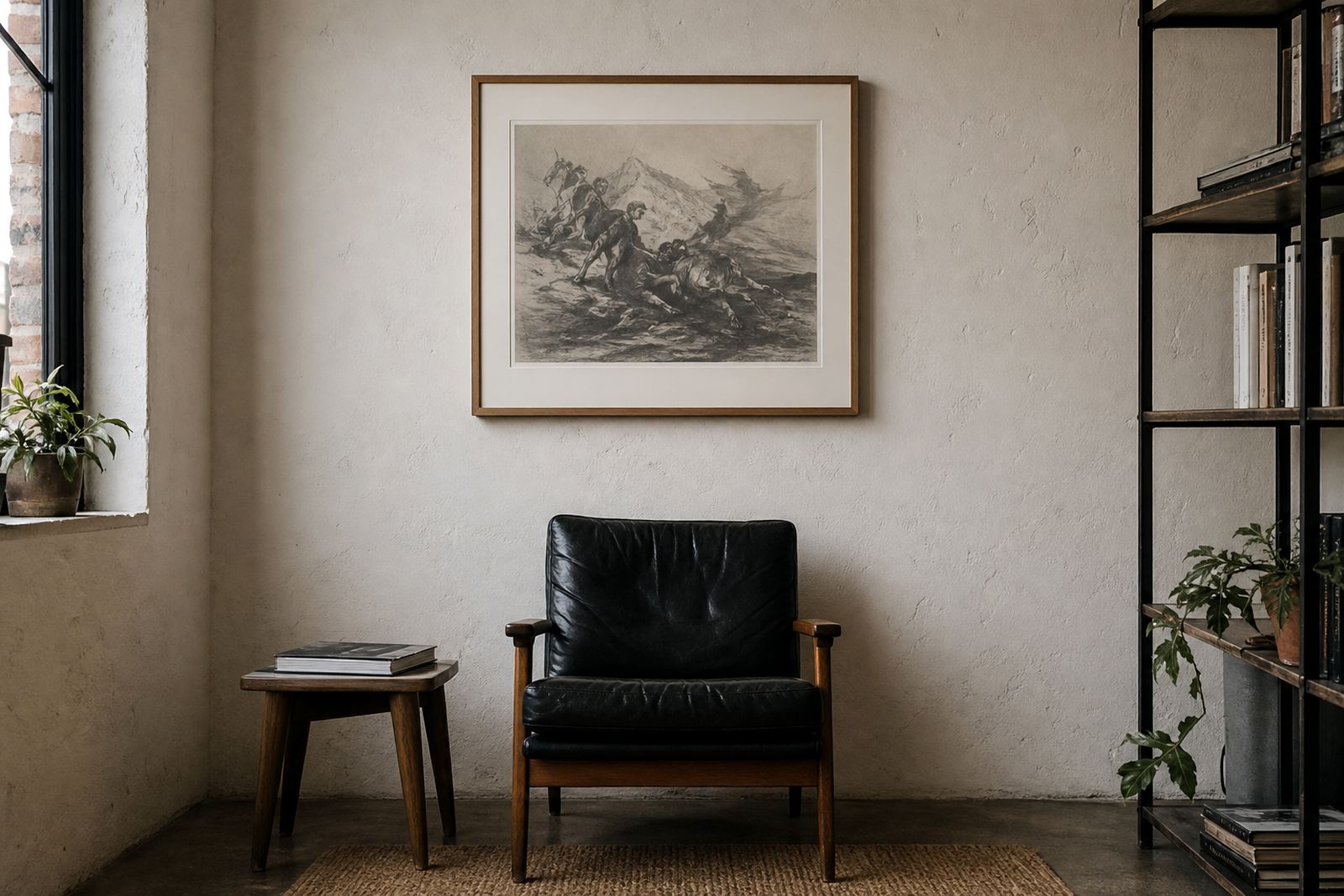
Collectors in Stellenbosch, Sea Point, Newlands, Pretoria and Durban should store lithographs away from direct sun, damp walls and unframed stacking. A simple acid-free sleeve and flat storage go a long way. If a print is framed, use conservation materials and keep it out of harsh coastal moisture, especially in homes near the sea. Good care protects both the image and the value of the edition.
- Store unframed prints flat in a dry, cool place.
- Keep lithographs out of direct sunlight and away from damp plaster walls.
- Use archival materials for packing and framing, not ordinary wrapping paper or tape.