Why Stone Lithographs Suit Compact Rooms
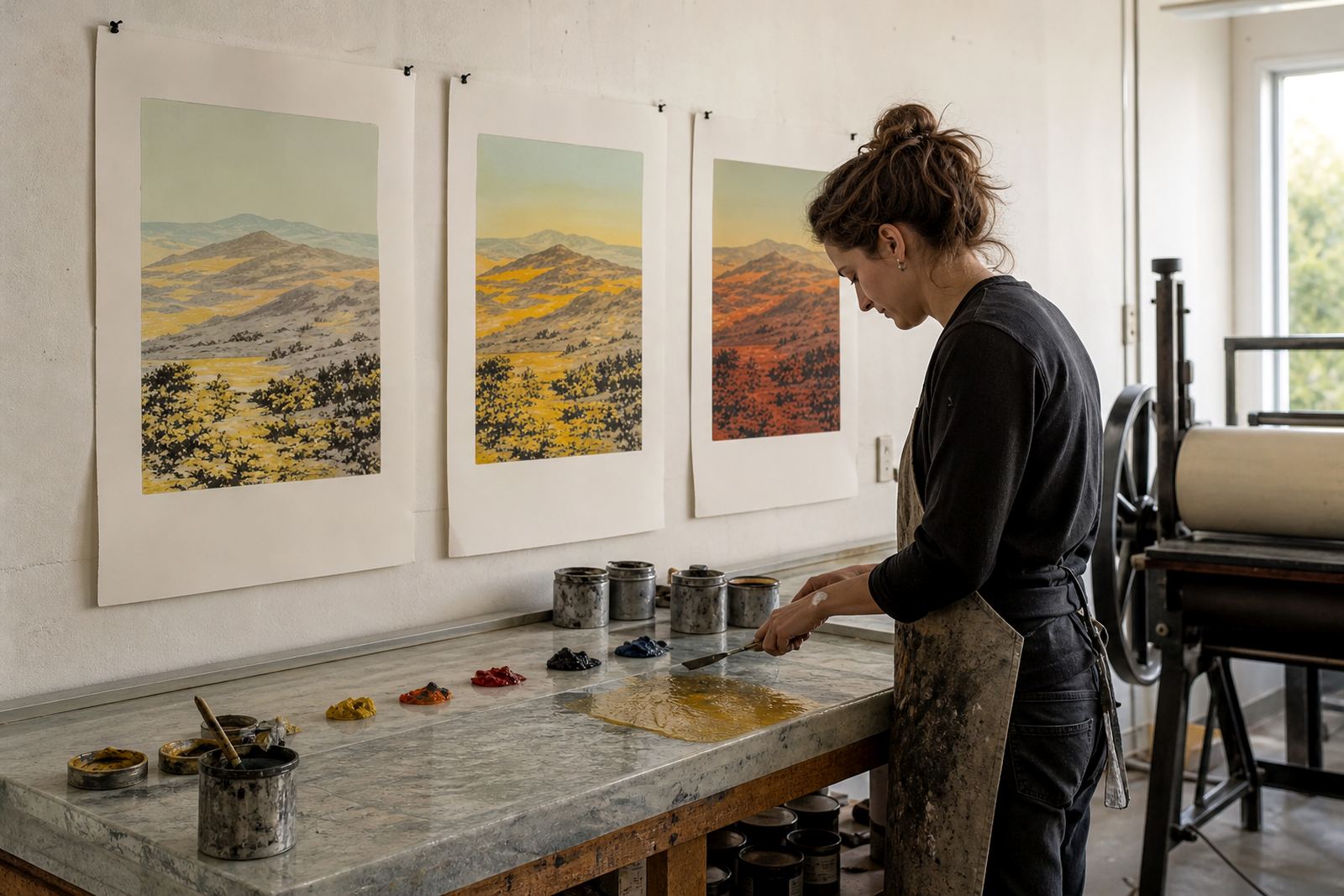
Stone lithography has a natural fit in smaller interiors because the work often carries a strong sense of line, texture and colour without needing a very large format to make an impact. Each print begins on a prepared stone, where the image is drawn in grease-based material, treated so the printed areas accept ink and the rest repel it. That process gives lithographs a quality that feels close and handmade, which works well in a space where every object needs to earn its place.
In a flat or townhouse, one well-chosen lithograph can do the work of several smaller decorative pieces. The surface detail rewards a closer view, and the edition format means you can choose a print that suits your wall size, light levels and colour palette. In Woodstock, many collectors living in apartments prefer pieces that hold attention without overpowering a room, especially where living, dining and work areas overlap.
How To Choose The Right Size For Your Wall
The first rule is to measure the wall, then measure it again. A print should leave breathing room around it, especially in a compact space where furniture, doorways and windows already compete for attention. As a guide, a single framed print often works best when it takes up about two-thirds of the width of the furniture below it. If you have a narrow passage or a small bedroom, one vertical print may be a better choice than a wide group.
Think about viewing distance too. A finely detailed lithograph can be quite small and still feel complete if people will see it from a chair, bed or passageway. If the room is tight, avoid hanging work too high. The centre of the image should sit comfortably at eye level, not near the ceiling. A badly placed print can make a room feel smaller, even if the work itself is beautiful.
- Choose one focal wall instead of placing prints on every available surface.
- Leave a gap of at least 15 to 20 cm above sideboards and shelving.
- Use slim frames in small rooms so the frame does not crowd the image.
- For rental homes, consider lighter framing and secure hanging points that suit the wall type.
Edition Size, Numbering And What Collectors Should Check
When collecting in a smaller home, edition choice matters. A limited edition gives the work a clear place in the artist’s production and helps collectors understand how many impressions exist. The print should be signed and numbered, usually in pencil below the image. This numbering is not just a formality, it tells you where the print sits within the edition and helps with record keeping if you ever move, insure or pass on the work.
Ask about proofing and whether the image was printed from one stone or several stones for colour layers. Multi-colour lithography can be very rich, but it also means the registration and paper need careful handling. At Lithography Art in Woodstock, collectors often ask for guidance on edition planning and paper selection so the finished piece suits the room from the start. A good studio will explain the edition size, the paper used and any variations between impressions, which helps you buy with confidence rather than impulse.
- Look for a clear signature, edition number and date.
- Ask whether the paper is archival and acid-free.
- Confirm if the print is framed or sold unframed, so you can plan the wall space.
- Keep the edition details with your purchase receipt and condition notes.
Framing Choices That Do Not Overload A Room
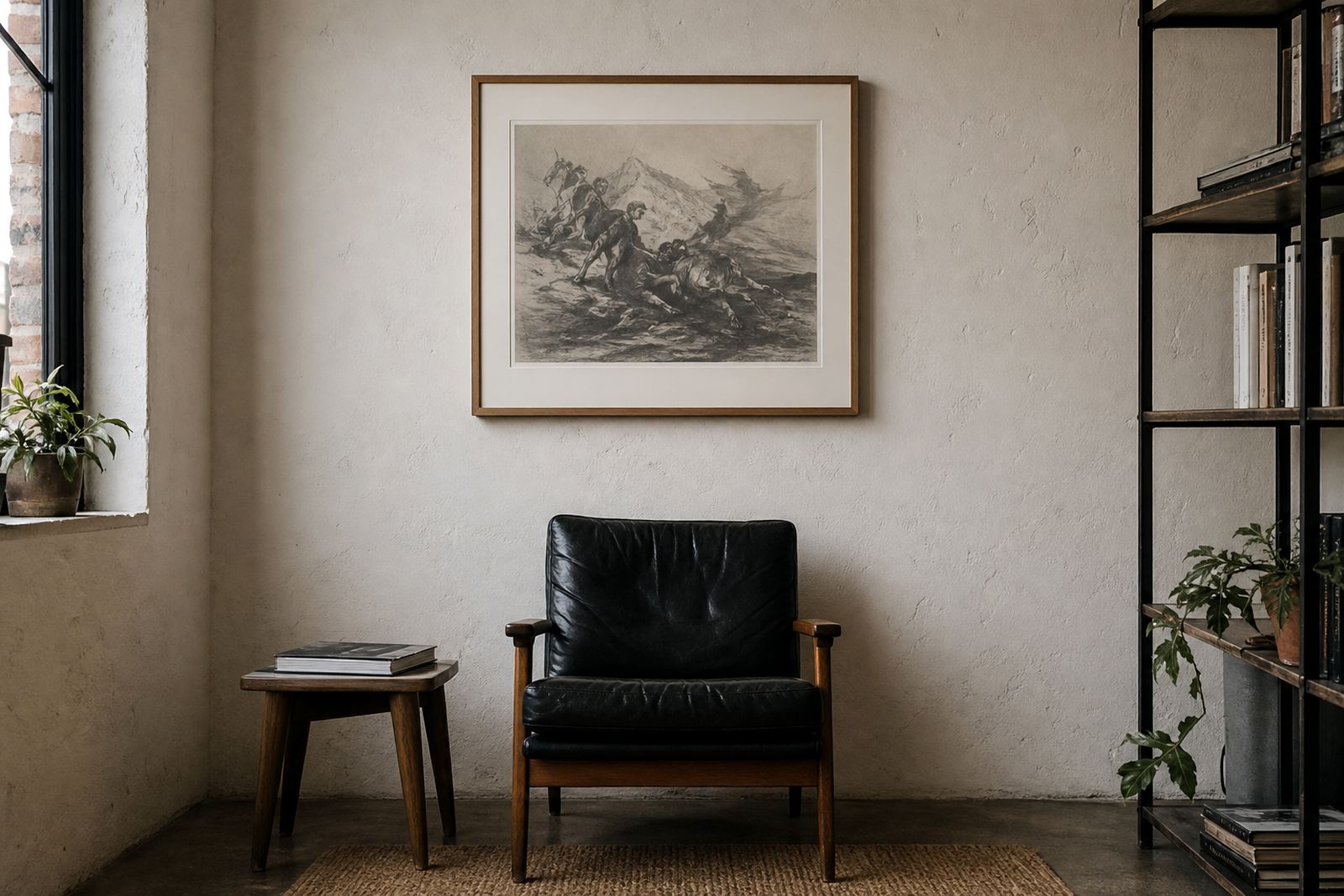
Framing is often where small-space collections go wrong. A heavy frame can swallow a delicate print, while a frame that is too thin may disappear entirely. The best approach is usually restraint. A simple frame with a clean mount gives the lithograph space to breathe and keeps attention on the image. If the room has warm timber floors or built-in joinery, natural wood tones can work well. In cooler interiors, black or white frames are often easier to place.
Glass or glazing should also be chosen with the local climate in mind. In coastal areas like Sea Point and parts of Durban, humidity can be a real concern, especially in rooms without much airflow. For those homes, proper backing, good sealing and safe spacing between the print and glazing are worth the extra effort. In sunny Newlands or a north-facing apartment in Cape Town, avoid hanging a print where direct light will strike it for most of the day.
A local example is a compact flat in Sea Point where the owner wanted one strong piece in the lounge rather than a wall full of art. A single medium-sized lithograph, framed simply and hung above a low sofa, gave the room a clear centre without crowding the view or making the space feel busy.
Display Ideas For Flats, Passages And Open-Plan Living
Small homes often have odd corners, narrow passages and mixed-use rooms, but that can be an advantage. A lithograph can anchor a reading corner, soften a hallway or introduce colour into an open-plan kitchen and sitting area. Instead of treating every wall equally, think in terms of pauses. A blank wall beside a bookshelf or a short stretch of passage can become the right place for one strong print.
If you are working with more than one lithograph, keep the arrangement disciplined. Two or three related prints can sit beautifully together if they share scale, paper tone or subject matter. Do not spread them too far apart, as that can make a modest wall feel chopped up. Keep the spacing even and let the grouping read as one visual unit.
- Use a hallway for a linear hang if the wall is long and narrow.
- Place one print above a chair or side table to create a quiet corner.
- In open-plan spaces, repeat one frame colour to tie the room together.
- For very small rooms, one statement print is often stronger than a cluster.
Caring For Prints In Everyday South African Homes
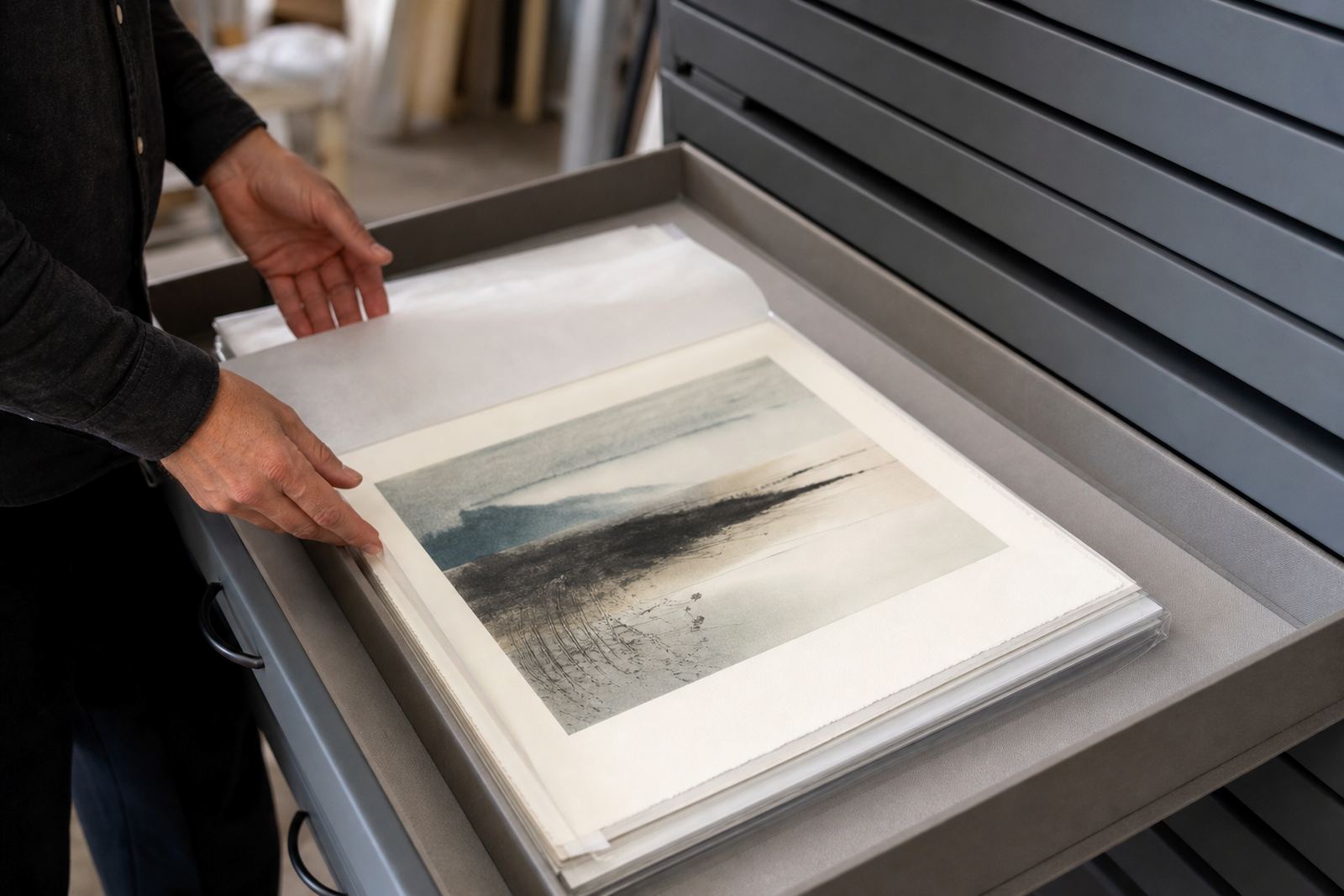
Print care is simple if you build a few habits early. Keep lithographs away from direct sun, damp walls and cooking vapour. In summer, homes can get warm quickly, and in winter some flats stay closed up for days, which can trap moisture. If a print is stored before framing, keep it flat in archival materials and never under a heavy stack where the paper can mark or bow.
Dust frames with a dry cloth and check for signs of condensation after heavy rain or damp weather. If you are unsure about framing or storage, ask for collector advice before the work leaves the studio. Good care keeps the paper sound and the image fresh for years, not just a season.
For collectors in Johannesburg, Pretoria, Stellenbosch, Durban and Cape Town, the same rule applies: buy the piece you love, then protect it properly. In a small home, that one decision carries even more weight because the artwork becomes part of daily life, not background.