What a signature tells you on a stone lithograph
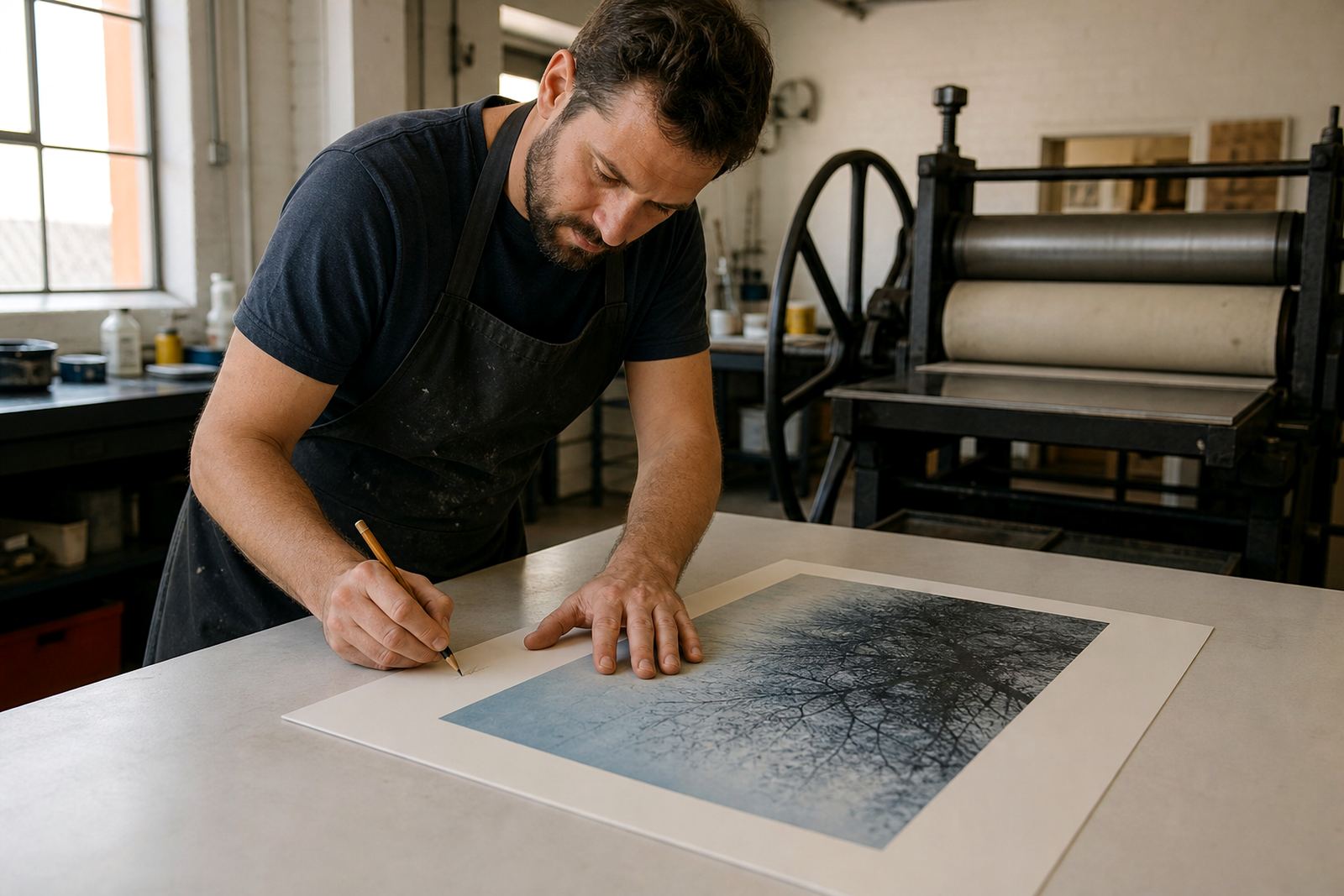
In fine-art print practice, a signature is a record of authorship and approval. For stone lithography, that matters because each print passes through a careful process of drawing on stone, preparing the image, proofing colours, and printing the edition by hand. When the artist signs the sheet, they are confirming that the work belongs to the final edition and that the impression matches the standard they accepted.
That does not mean every signed print is identical in every tiny detail. Hand printing always carries slight variation in pressure, ink density, paper texture and colour response. These small differences are part of the appeal. A signature helps identify the print as part of the authorised body of work rather than a later copy or an unrelated reproduction.
- It confirms artist approval of the finished print
- It links the sheet to a specific edition
- It helps collectors identify provenance and authenticity
Why collectors value a hand-signed edition
Collectors often look for signed prints because the signature makes the work easier to place within a known edition. In South Africa, where collectors may buy in Cape Town, Stellenbosch, Johannesburg, Pretoria or Durban, this matters when a print may travel, be framed locally, or be passed on later. A signed edition gives the owner a clear reference point for the work they bought.
For many buyers, the signature also carries a direct sense of connection. It says the artist was involved right through to the end of the process, not just at the drawing stage. In a stone lithography studio, that often means the artist has seen proofs, chosen paper, discussed colour balance and agreed when the edition is ready to sign. That level of involvement is part of what collectors are paying attention to.
- Signed prints are easier to document in a collection
- They usually sit more clearly within the edition structure
- They give the collector a visible link to the artist’s hand
Edition numbers, artist proofs and what they actually mean
The signature is only one part of the information on a print. Edition numbers tell you how many impressions were planned, while the fraction on the sheet shows the print’s place in that run. A print marked 5/20 means it is the fifth impression in an edition of twenty. That number matters because it shows the work was printed as part of a limited set, not as an open-ended reproduction.
Some editions also include artist proofs or working proofs. These are usually kept separate from the main edition and handled according to the studio agreement. At Lithography Art in Woodstock, edition planning is part of the process from the start, because clear records help both the artist and the collector understand exactly what has been produced.
- Main edition: the agreed set of final prints
- Artist proof: a separate proof set aside by agreement
- Working proof: used during testing and colour adjustments
Signing is part of the studio conversation
People sometimes think signing happens at the end as a quick formality, but in a fine-art lithography studio it is usually the result of several checks. The artist may review proofs, compare colour layers, and decide whether the image needs another pass on the stone. The printer then confirms the edition is consistent before sheets are signed and numbered. It is a practical process, not a ceremonial one.
That process is especially important in a city like Cape Town, where humidity can shift paper behaviour from one week to the next and where careful drying time matters. In a studio setting, the signature becomes the point where all that material work is brought together and acknowledged. It marks the print as complete and accepted.
- Proofs are checked before signing
- The edition is confirmed as consistent
- The final sheet is signed after approval
How to care for a signed print after purchase
A signature is only valuable if the print itself is looked after properly. Fine-art paper can react to sunlight, damp walls and careless handling. A signed lithograph should be treated as a delicate paper artwork, not as a decorative poster.
If you collect in Sea Point or Durban, moisture control matters. If your print is framed in Johannesburg or Pretoria, direct sun through a window can still fade paper and inks over time. Archival materials help, and so does hanging the work away from kitchens, bathrooms and unstable exterior walls.
- Keep the print out of direct sunlight
- Use acid-free mounting and backing materials
- Avoid damp rooms and extreme temperature swings
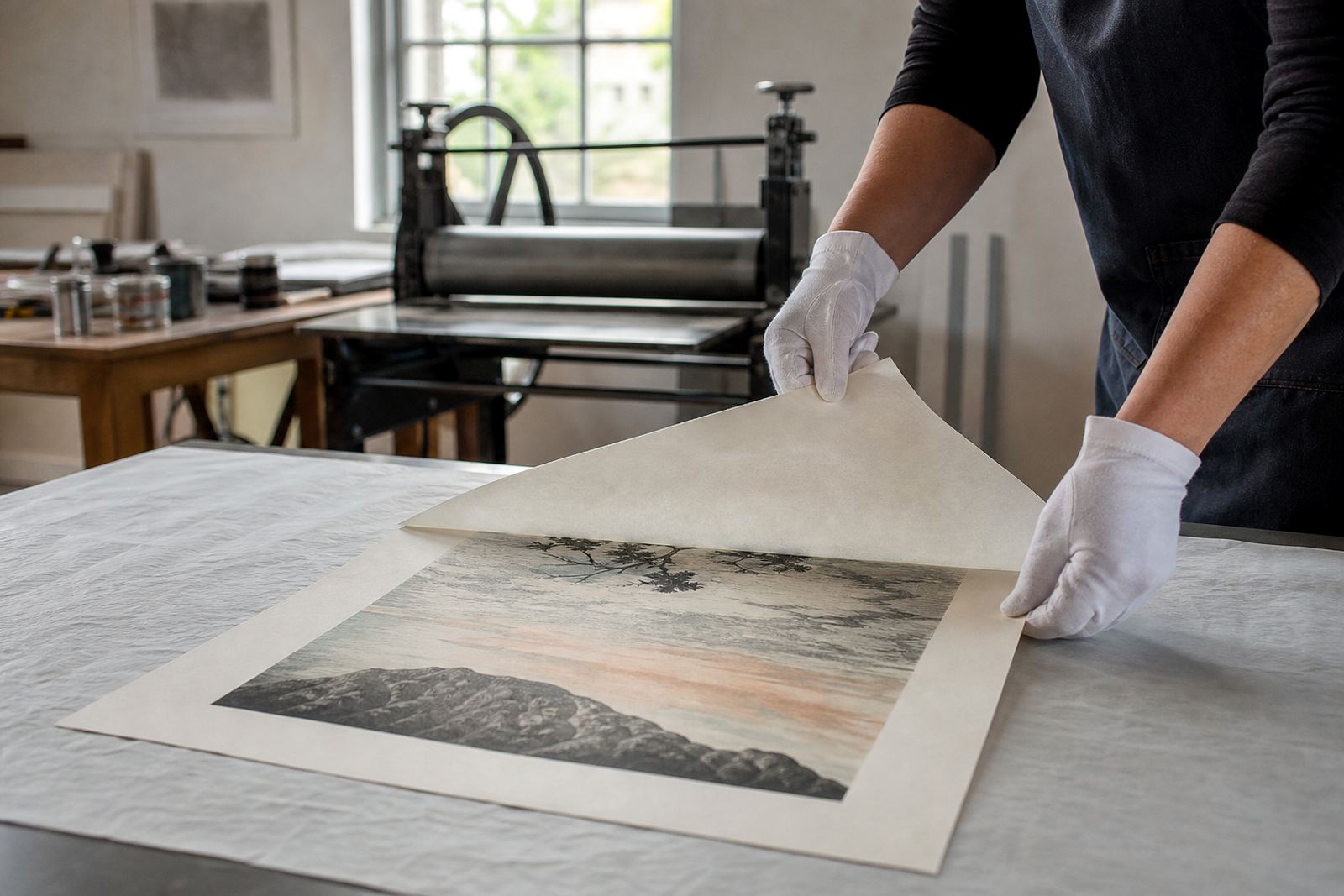
- Handle the sheet with clean, dry hands or gloves
From the press room: A Woodstock edition studio
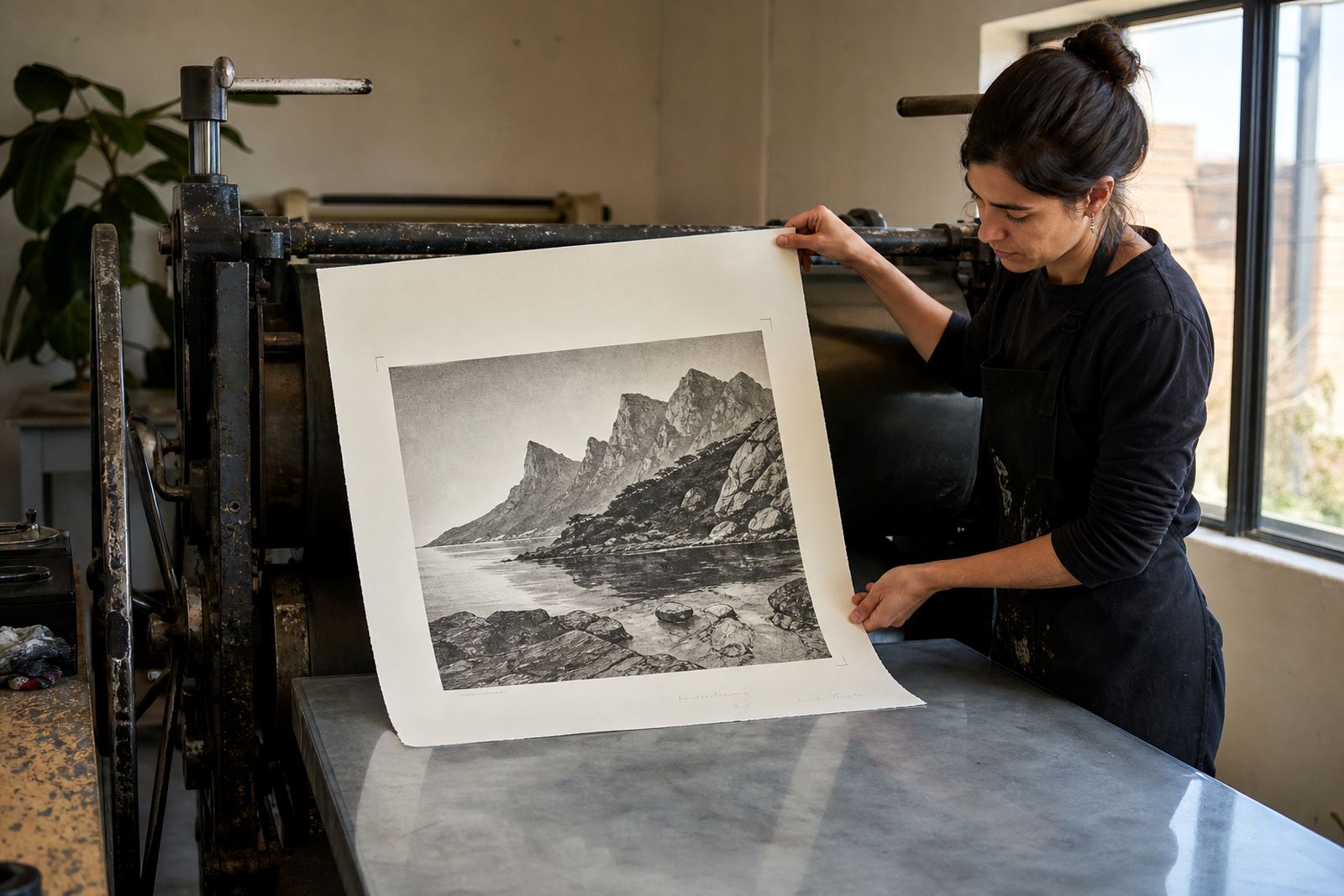
In a Woodstock studio, a limited lithographic edition might be printed with the artist present over several proofing sessions. The printer adjusts colour, the paper is tested for how it takes the ink, and the edition is checked sheet by sheet. When the artist signs the final impressions, that signature records not only approval but the shared labour behind the print. For collectors in Newlands, Stellenbosch or Durban, that is useful because it connects the artwork to a documented studio process rather than a loose, untracked production.
That is why signatures matter in lithography. They tell a collector where the print sits in the edition, who approved it, and whether the work was handled with the care expected of fine art. In a medium built on precision and repetition, the signature is the small human mark that confirms the print is finished.