Why paper care matters with stone lithography
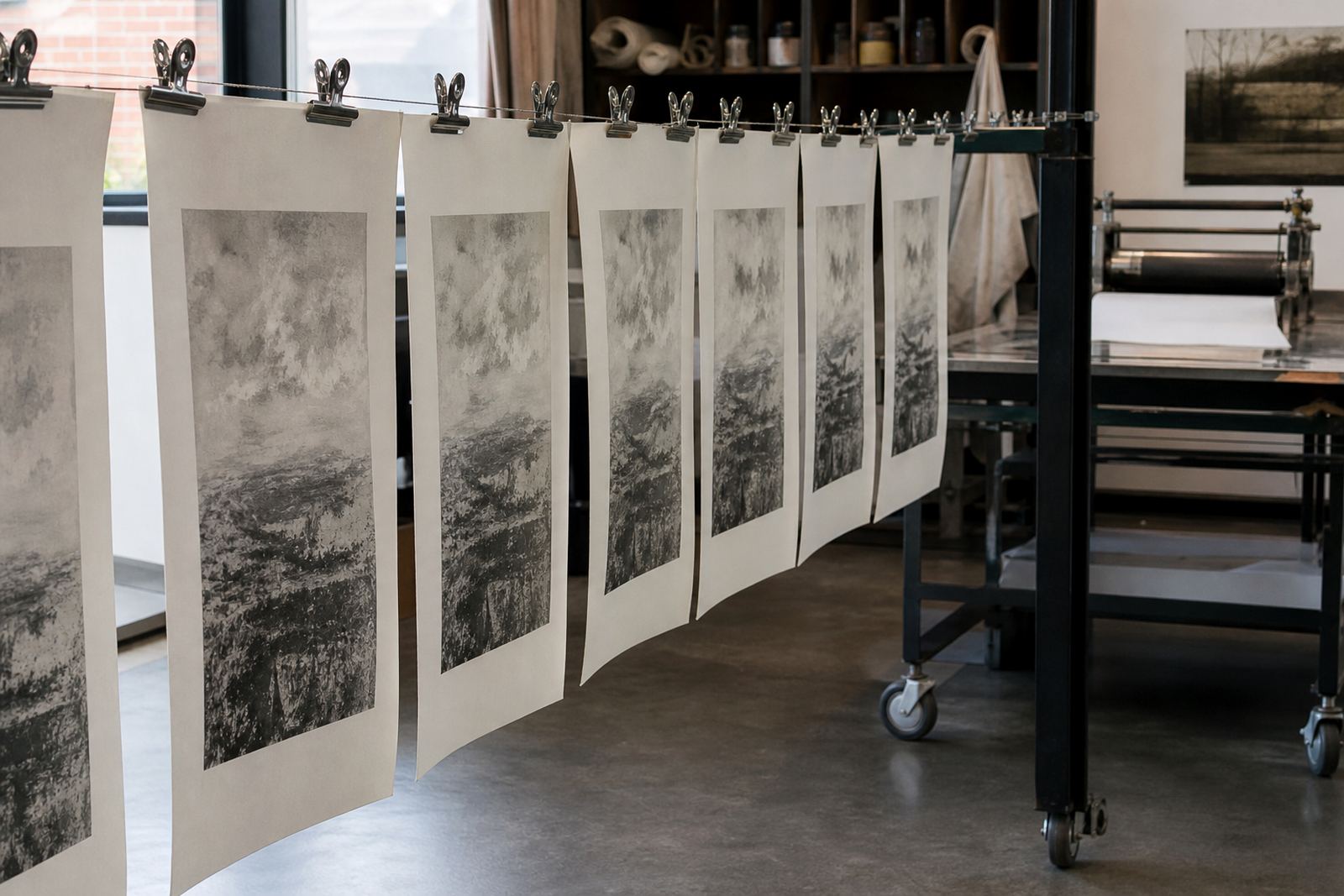
In this direct printing process, the image sits on a prepared stone and is transferred to paper by hand, often in a limited edition. That physical process gives the print its character, but it also means the paper becomes part of the artwork, not just a support.
Good paper care protects the surface, the inks and the edition marks. A lithograph may be made to last, yet it still needs sensible treatment once it leaves the press. Finger oils, damp rooms, poor framing and strong sunlight can all shorten its life. If a collector understands the paper, the print stays in better condition and keeps its value as an editioned work.
At the studio in Woodstock we often explain to collectors that preservation starts the moment a print is taken out of its protective wrap. A careful first handling is worth more than expensive fixes later.
Handle prints with clean hands and a clear surface
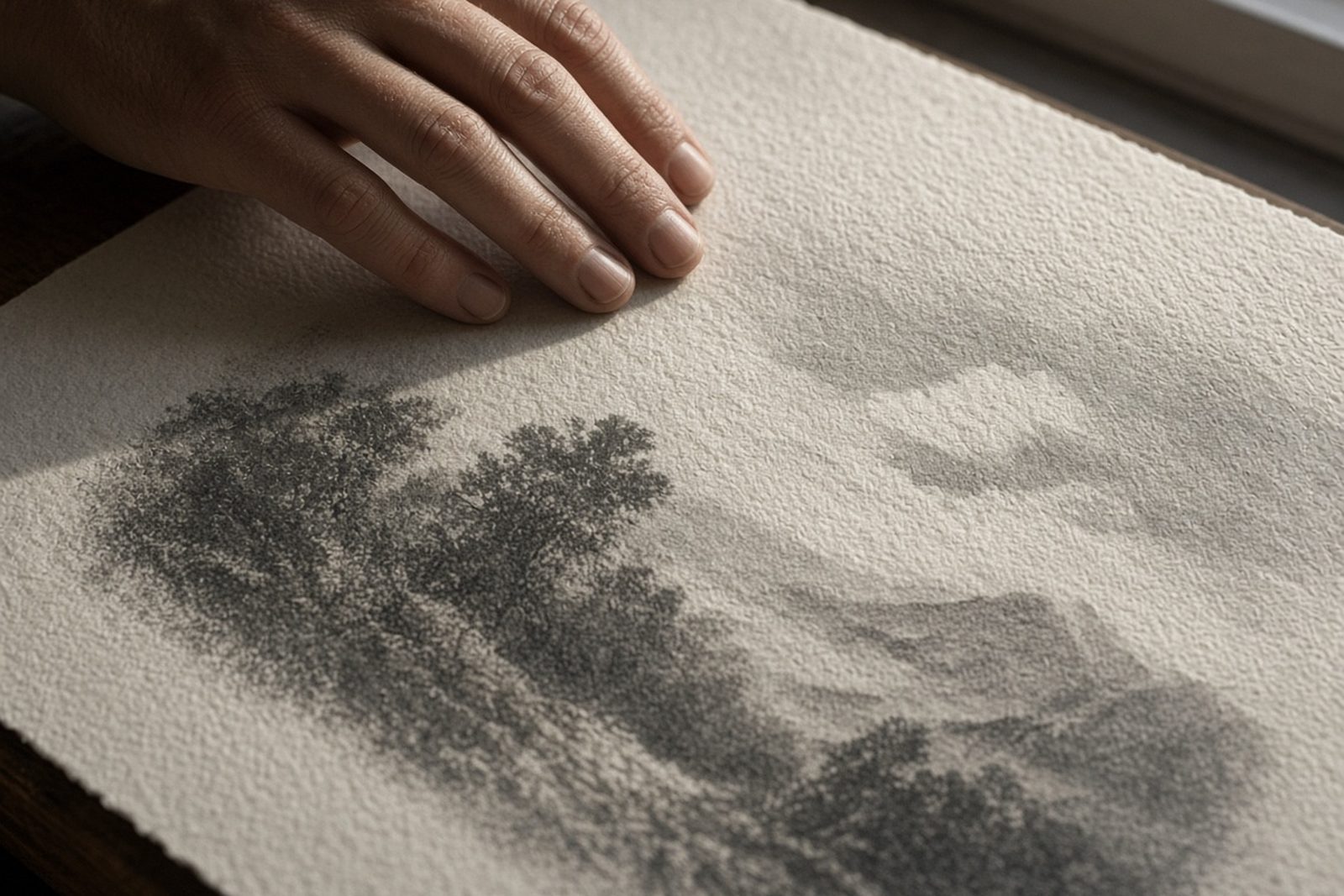
Always work on a clean, dry table with enough space for the full sheet. Do not place a print near food, drinks, open windows or fans that blow dust across the paper. If you need to move a print, support it with both hands and keep it flat.
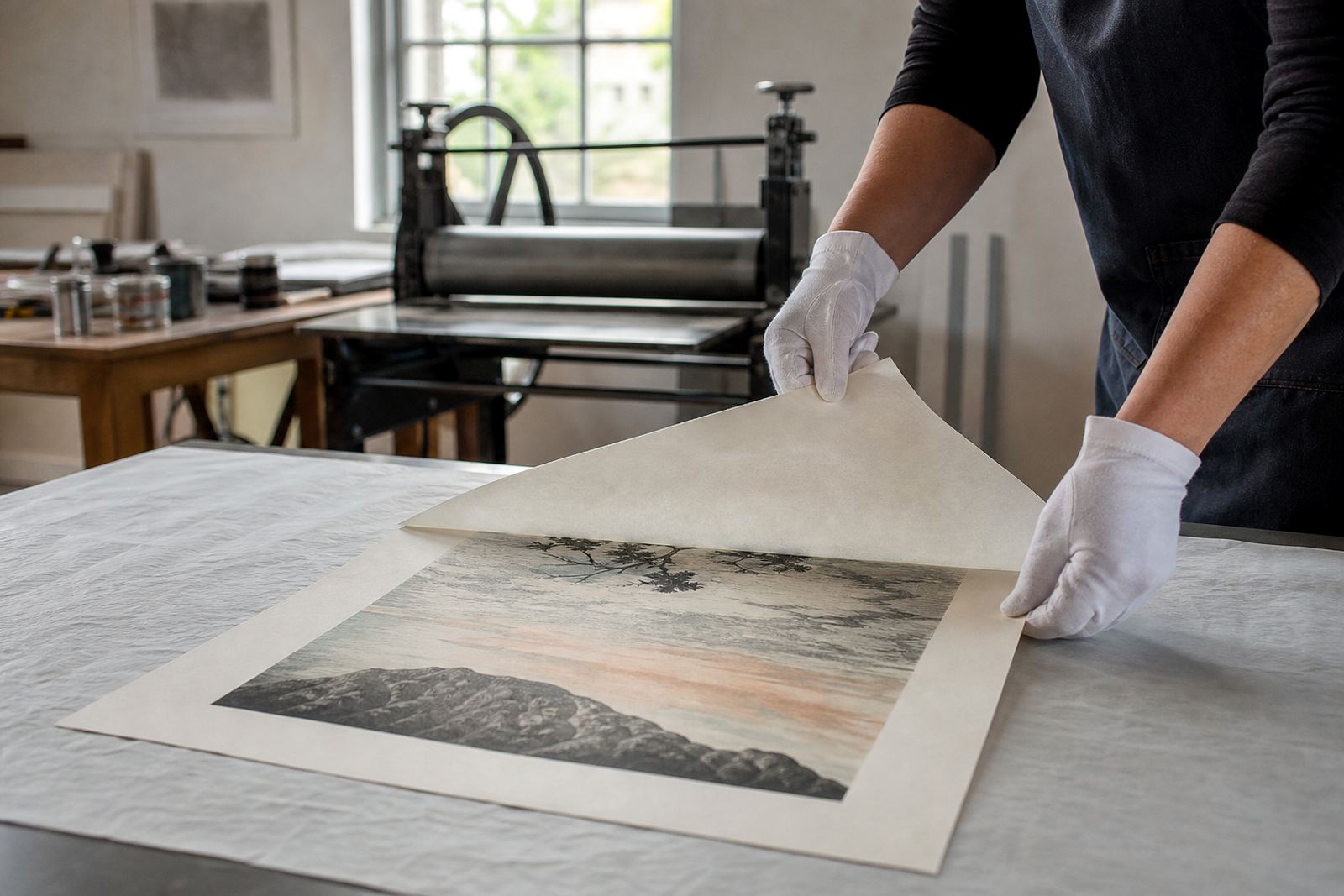
Clean hands are usually better than cotton gloves for many paper works, because gloves can reduce feel and cause accidental snags. If the print is especially large or the paper is soft, use clean, dry gloves and ask someone to help lift it. Never touch the image area more than necessary, and avoid sliding one sheet over another.
- Wash and dry hands before handling
- Use a clean flat surface with no grit
- Keep nails, jewellery and watches away from the paper
- Do not roll a print tightly unless it has been prepared for that
For artists and collectors in Durban or along the Cape coast, the extra concern is humid air.
Light, humidity and temperature are the big three
Paper likes stable conditions. The safest approach is to keep prints out of direct sun and away from heat sources such as stoves, heaters and sunny windowsills. Even good quality inks and paper can fade or yellow if they are exposed to strong light for long periods.
Humidity is just as important. Coastal air can encourage mould, while very dry conditions can make paper brittle over time. Try to keep framed prints and stored editions in a room with moderate, steady conditions. Avoid hanging fine-art paper in a bathroom, kitchen or laundry room where steam gathers.
- Choose an interior wall rather than a wall in direct sun
- Keep prints away from exterior damp patches and rising moisture
- Do not store art in a hot car boot or garage
- Use air circulation, but not strong direct airflow on the work
In Johannesburg and Pretoria, summer storms and sudden weather changes can also affect paper.
Frame with conservation in mind, not just appearance
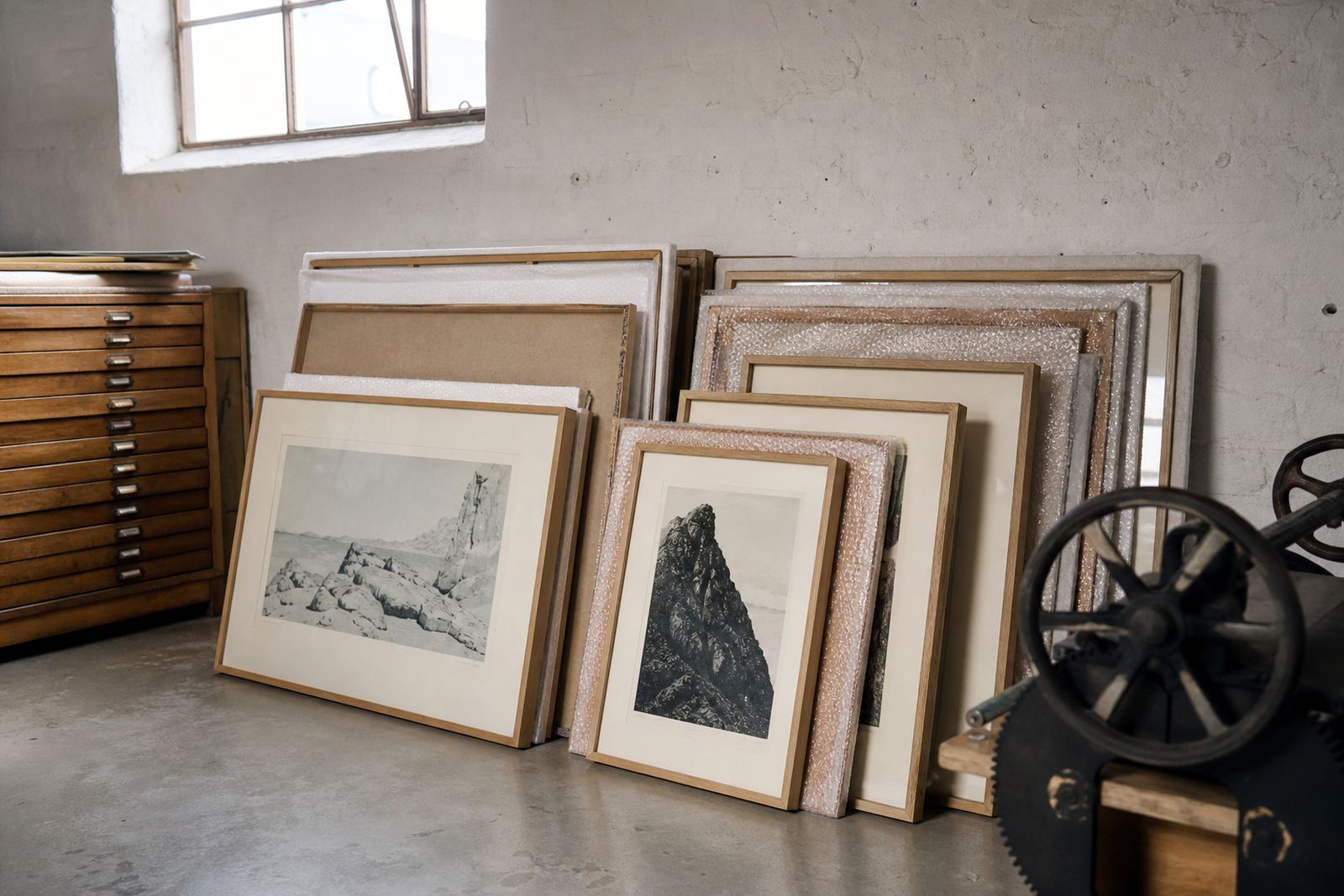
Framing is one of the best ways to protect a print, provided the materials are suitable. Use acid-free mount board, quality backing and spacers where needed so the paper does not sit directly against glass. Regular glass is fine for many works, but the framing should allow the print to breathe and remain flat without pressure marks.
Ask for archival materials wherever possible. Cheap card, poor adhesive tapes and unsuitable foam can stain the paper from the back, sometimes slowly and without any visible warning. A proper frame should support the work and make future removal possible without damage.
For lithographs, signing and numbering are often part of the edition, so the lower margin should remain visible. That white space is not wasted paper. It is part of the artwork and should be respected in the framing layout. A good framer understands this and keeps the proportions right.
Store unframed prints flat and separated
If a print is not on display, store it flat in a dry, clean place. Use interleaving sheets between prints so the surfaces do not rub against each other. Keep the stack off the floor and away from walls that may carry damp. A cupboard in a stable interior room is usually better than a hot loft or a garage.
Do not fold, pin or tape a print directly to anything. Rolling can be acceptable for some works, but only if the paper and edition have been prepared for it and the roll diameter is generous. Tight tubes can create a memory in the paper and make later framing harder.
- Separate each print with archival tissue or clean protective paper
- Keep the portfolio or folder closed when not in use
- Label editions clearly so handling stays organised
- Avoid plastic sleeves that trap moisture unless they are suitable for long term storage
For collectors in Sea Point or Newlands, a flat storage plan is especially useful in homes where sea air and changing room temperatures can affect paper overnight. A little planning avoids a lot of repair work.
What to do if a print shows marks, waviness or foxing
Do not try to wipe a stain off with water or household cleaners. Paper reacts quickly, and a simple mark can spread or set deeper into the sheet. If the print has a scuff, a small tear, foxing spots or mild waviness, put it aside and keep it flat and dry until you can get advice.
Foxing is the brown spotting that can appear on older paper when moisture and impurities have affected the fibres. It is common in improperly stored works and often indicates that the environment needs to change. Waviness may mean the sheet has taken on moisture, while a musty smell can point to mould risk.
When in doubt, stop handling and seek guidance from a paper specialist, framer or the studio that produced the edition. Early advice is often enough to prevent further loss.
Good collector habits protect the edition for years
Fine-art lithographs are meant to be lived with, but they should be handled as editioned works with care. A collector who keeps records, stores certificates safely and notes the edition number has a much easier time when the print is moved, framed or insured.
It also helps to rotate works on the wall if you have more than one, so each piece gets a break from light exposure. If a framed print has been hanging for years, check the mount, backing and hanging cord before moving it. Small failures in the frame can lead to sudden damage during transport.
For many South African homes, practical care is the simple answer: steady room conditions, clean hands, thoughtful framing and a bit of patience. That approach preserves the paper, keeps the edition readable and lets the print age in a dignified way, not a damaged one.