Why lithographs need careful packing before a move
Stone lithographs are made on paper, and paper reacts to changes in pressure, humidity and handling. A print that looks fine on the wall can crease, scuff or cockle if it is packed too tightly, bent in a car boot, or left against damp packaging for too long.
For collectors in Cape Town, Stellenbosch, Johannesburg, Pretoria and Durban, the main risks are different but the result is the same: damaged paper, cracked glass, marks on the image area and corners that lift. Coastal humidity in Sea Point or Durban can soften paper and frame backing, while dry air in Johannesburg and Pretoria can make paper more brittle. A careful packing routine helps prevent all of that.
- Keep prints away from food, paint, tools and cleaning liquids.
- Do not stack framed works flat on top of one another without protection.
- Never pack a print while it is still damp from cleaning or recent framing work.
How to prepare unframed lithographs for transport
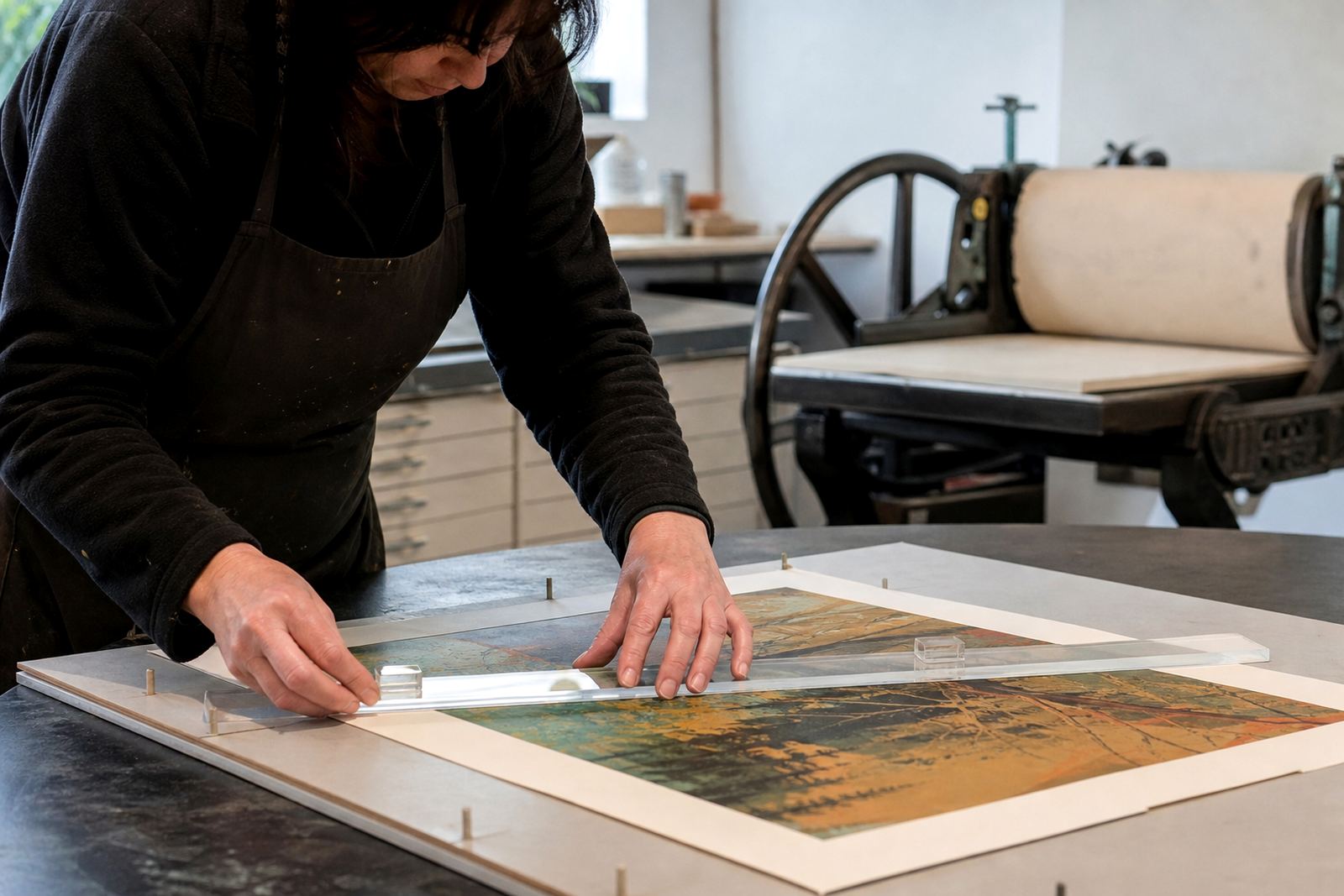
Unframed prints are usually the simplest to move, but they still need a flat, clean surface and support. Start by washing your hands well, then place the print face up on a dry table. If you need to move several works, separate each one with acid-free tissue or clean glassine so the surfaces do not rub against each other.
Roll only if the paper is supple enough and the printer or framer has confirmed it is safe. If a print must be rolled, use a wide tube and roll it image side out only when appropriate for that sheet. A tight roll can leave a memory mark, so use a broad diameter and secure the tube at both ends. For older sheets, or paper with heavy deckled edges, flat packing is usually safer.
- Use acid-free tissue or glassine between each print.
- Pack prints flat in a rigid portfolio, carton or art carry box.
- Do not use newspaper, coloured wrapping paper or sticky tape near the print.
- Mark the outside of the packet clearly as fragile and keep it upright.
Packing framed lithographs without stressing the glass
Framed lithographs need a different approach because the frame, glazing and backing all have to be protected together. First, check that the frame is secure and that the print is not sliding inside. If the mount has shifted, get it checked before moving. A loose frame can rub the paper at the edges and leave marks that are difficult to reverse.
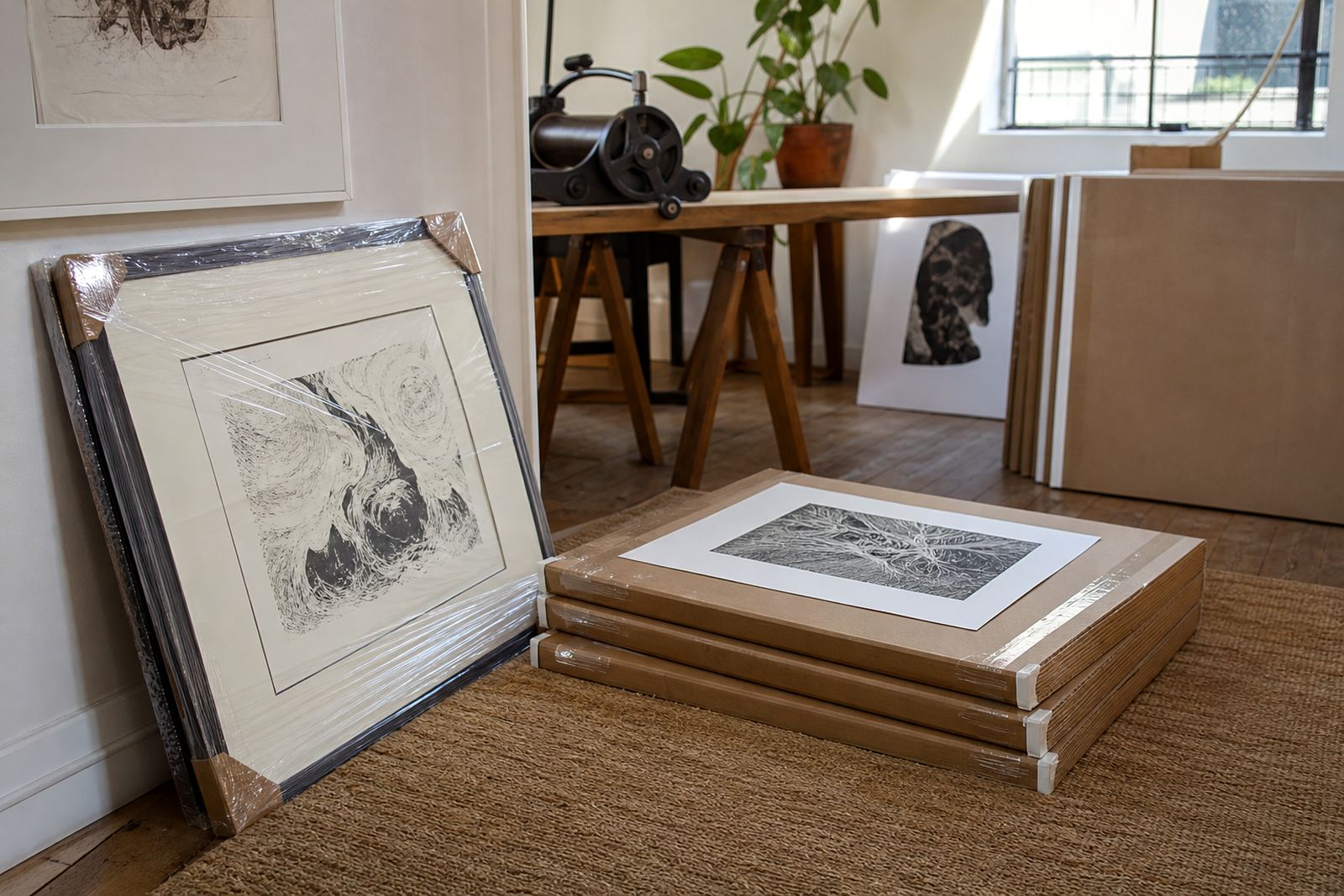
Wrap the whole frame in clean paper or a soft protective layer, then add corner guards. After that, use bubble wrap or similar cushioning around the outer edges, making sure the surface is not scratched by tape. Do not let the glazing touch another framed work. If a framed print is going into storage or a removal truck, stand it on edge with padding between each frame and keep it from falling over.
- Use corner protection on all four corners.
- Place a visible note on the back if the work is glazed.
- Keep framed lithographs upright, never loose in a stack.
- If the frame is very large, two people should lift it.
Editioned prints, signatures and labels deserve extra attention
Editioned prints carry information that matters to the collector, including the edition number, signature, title and sometimes the date. These marks should not be covered with tape, labels or packing material. If a print has been signed in pencil, even light rubbing can smear the inscription, so handle the margins carefully and avoid touching the image area more than necessary.
Keep the paperwork together with the artwork. A simple envelope with the invoice, condition note and any framing details helps when the work is unpacked later. If you are moving several lithographs, make a list that matches each piece to its frame or portfolio sleeve. That way you do not end up with one print in Sandton and its frame in Durban, which happens more often than people think.
- Keep certificates and edition details in a separate dry envelope.
- Write the artwork title on the outer wrap, not on the print itself.
- Check that pencil signatures are not rubbing against glass or backing board.
- Note any chips, foxing or old repairs before the move.
Temperature, moisture and transport conditions to watch
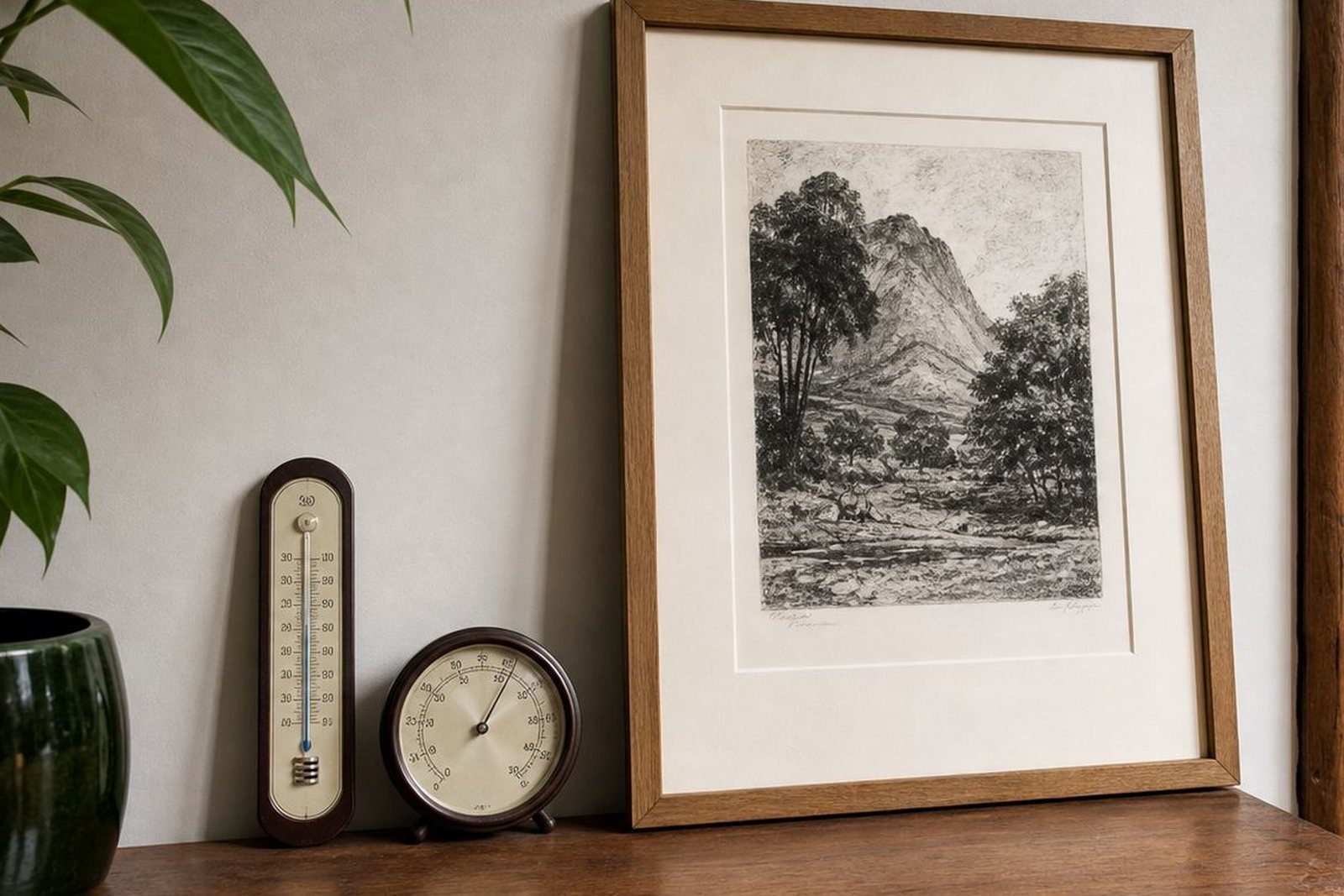
Paper reacts to its environment, so the vehicle and storage space matter almost as much as the packing method. A print left in a hot car boot, especially in Cape Town traffic or on a summer run through Pretoria, can shift in its mount or collect moisture when it is brought back into cooler air. The same applies to coastal routes where humidity rises and falls through the day.
Try to move prints during mild weather and avoid leaving them in direct sun. If a move is happening over several hours, keep the work in the cab rather than the back of an open vehicle. If the prints are going into temporary storage, choose a dry room with stable conditions and no leaking roof or concrete floor damp. A stone lithograph is strong in image quality but the paper still needs proper care.
Good light helps you spot smudges, tears and loose corners before the works are sealed up.
A simple moving routine that works for collectors and studios
Whether you are relocating a single framed print in Newlands or moving a whole collection from Woodstock to Johannesburg, a steady routine reduces the chance of damage. Begin with the most valuable or most fragile works, then work through the rest in a calm order. Keep a clean packing table, a stack of soft wraps, rigid cartons and labels ready before you start.
For larger collections, group the works by size and format. Flat pieces can go in one stack, framed pieces in another and tubes in a separate set. It also helps to photograph each print before packing, so you can check condition after the move. If you are unsure about a large framed edition or a print with a delicate mount, ask for packing guidance before the day of the move rather than after a scratch has appeared.
- Sort works by size, frame type and fragility.
- Photograph each piece before wrapping it.
- Keep a master list of what is packed where.
- Unpack in a clean room, not in the driveway or garage.
Unpacking, resting and checking the prints after the move
Unpacking should be as careful as packing. Remove outer wraps slowly, and let the prints rest in the room before hanging or storing them away. If a lithograph has travelled from Durban humidity to the drier air of inland Gauteng, give it time to settle before you judge whether the paper has shifted. Sudden handling too soon can leave new marks.
Check corners, mounts and glass for movement. Look for rubbing at the edges, new creases or signs that the paper has lifted from the mount. If you notice anything unusual, set the work aside and have it assessed before rehanging. A good move protects not only the image but the condition of the edition for years to come.
For collectors, the most useful habit is simple: treat the print as an artwork first and a moving item second. That one change in approach usually prevents the common damage people only notice after the boxes are gone.