Why the lower margin matters on a lithograph
The bottom margin is where a print quietly records its own working life. For collectors, artists and anyone buying fine art in Cape Town, Woodstock or further afield, that area often gives the clearest proof that the work is part of a considered edition and not just a decorative reproduction.
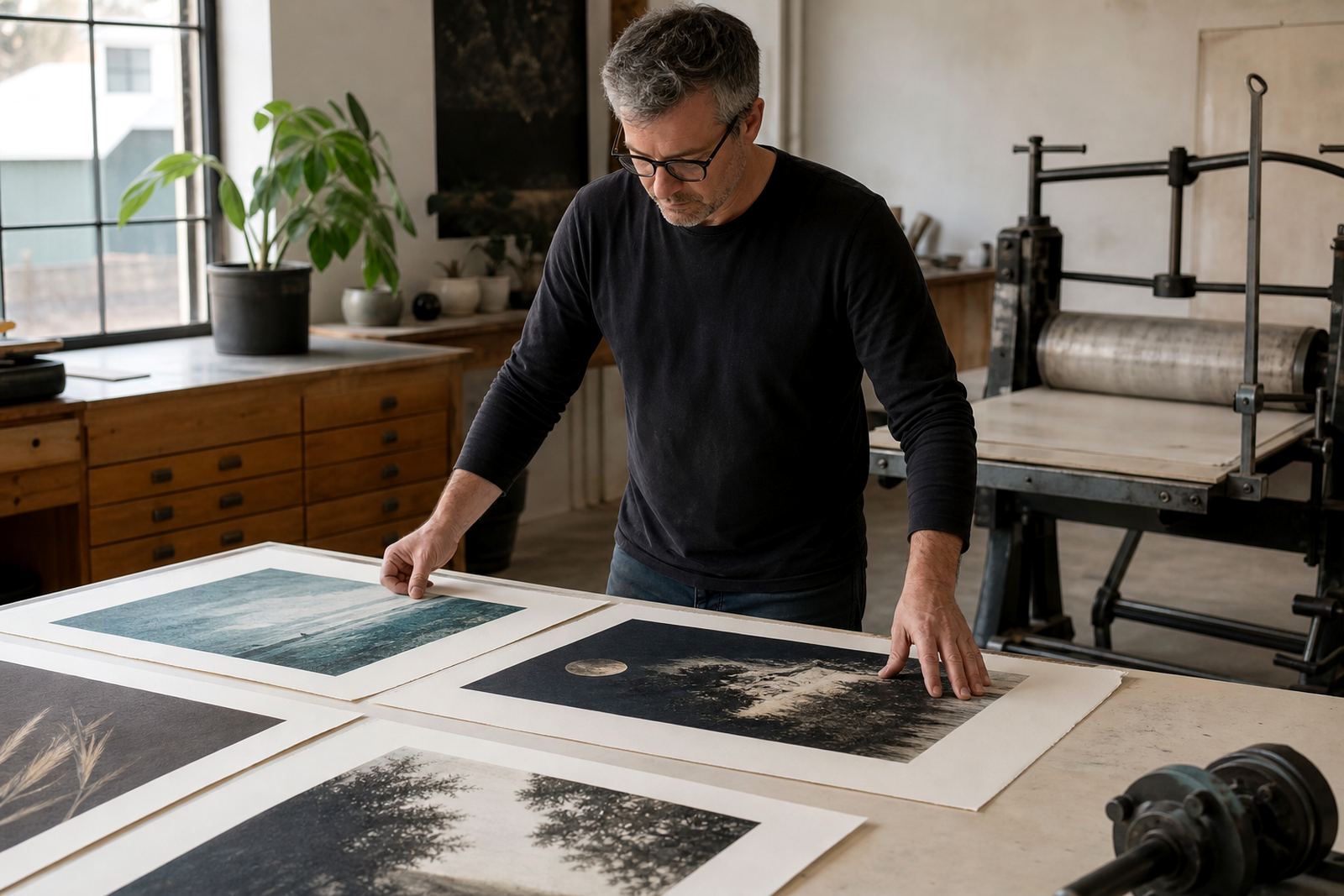
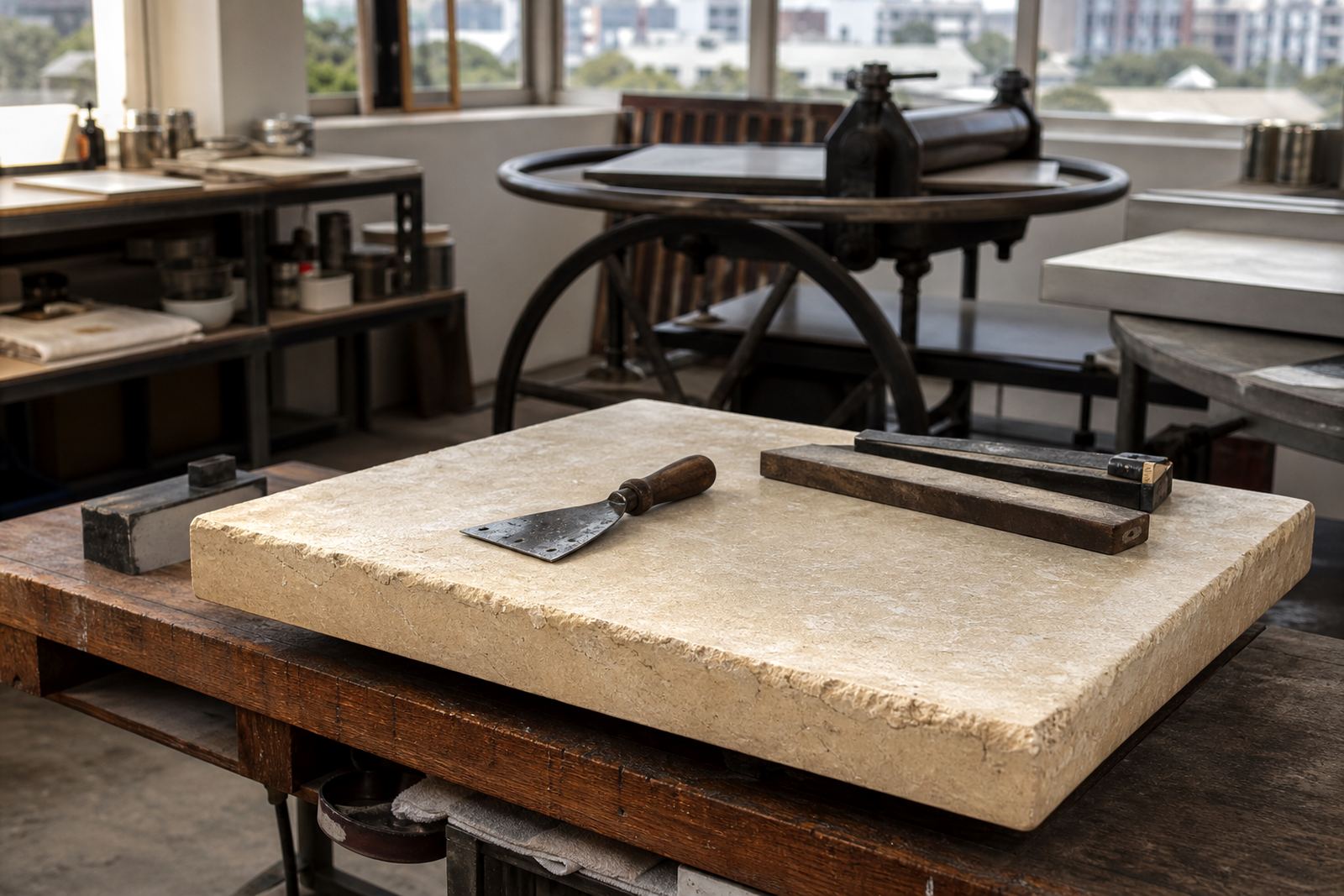
On a stone lithograph, the image is drawn on a limestone stone with grease-based materials, then printed by hand from that stone. Because each sheet is pulled through the press one at a time, the margin can carry notes that help you identify where the print sits in the edition, who worked on it, and whether it is a proof or the final approved impression.
How to read edition numbers without guessing
The most familiar mark is the edition number, usually written as a fraction such as 5/20. The first number is the individual print, and the second is the total number in that edition. So 5/20 means the fifth print from an edition of twenty.
That number does not mean the quality changes from one print to the next. It simply shows order within the edition. In a studio setting, the prints are checked for consistency, and only the approved sheets are signed and numbered. If an artist asks for a small edition, the number matters even more because it affects availability and how scarce the work is.
- 1/10 means the first print in an edition of ten
- A.P. means artist’s proof, usually kept outside the main edition
- H.C. means hors commerce, not for sale, often kept for record or archive
- Some studios also mark trial proofs or printer’s proofs for internal reference
Signatures, titles and the pencil marks that frame a print
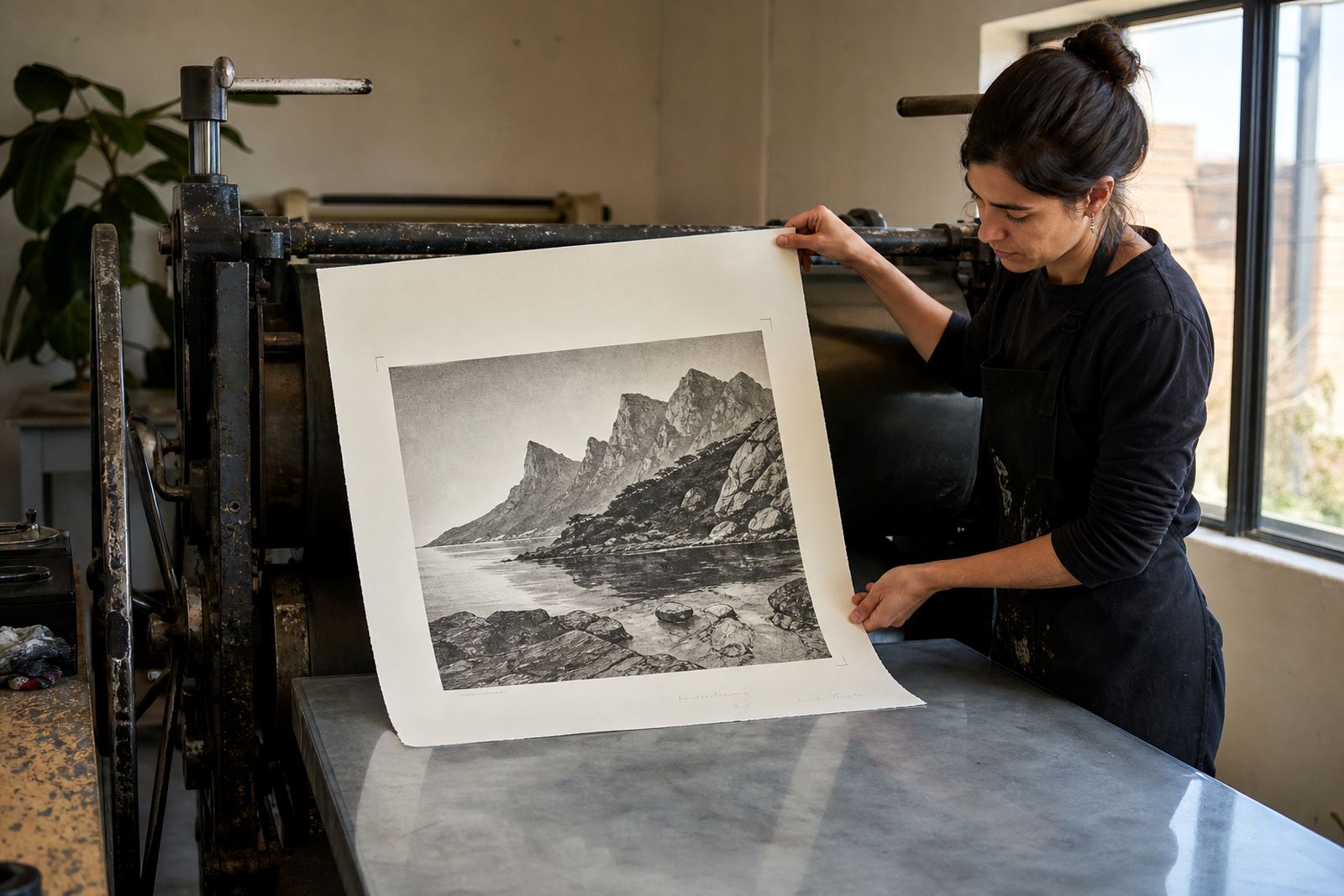
Many prints carry the title in the centre or left side of the margin, with the artist’s signature on the right. That arrangement helps confirm the work and shows that the final sheet has been accepted by the artist. If a printer or studio has also signed the print, that is usually added in pencil and kept discreet.
Not every print will include every detail, and that is normal. Some artists prefer a clean margin with only an edition number and signature. Others include a date, a proof mark, or a short process note. In South Africa, collectors often ask whether a print should be framed with the full margin visible. The short answer is yes, if the paper size allows it and the edition marks are part of the work's presentation.
What proof marks tell you about the making of the edition
Proofs are part of the working process, not mistakes. They show how the image developed and help the studio and artist compare colour, density and placement before the final edition is run. In stone lithography, this can be especially useful when a print uses several stones for layered colour.
If you see a proof mark in the margin, it may indicate an early state, a colour trial, or a sheet pulled to check registration. That is useful information for collectors because it gives context. A proof can be highly desirable, but it is different from the numbered edition and should be described clearly when sold or framed.
- Trial proof: used to test an image, colour or registration
- Artist’s proof: set aside for the artist, often outside the main edition
- Printer’s proof: used to confirm the final look before editioning
- Unique proof states: may show visible changes in the image from one stage to another
Paper notes, margins and why they matter in coastal homes
Paper choice is part of the margin story too. Some prints are made on heavier mould-made paper with a broad border, while others have a tighter trimmed edge. The margin may note the paper type or show the plate mark, deckle edge or other physical details that help identify how the print was produced. For collectors in Durban or Sea Point, paper and margins matter because humidity can affect storage and framing over time.
If you live near the coast, keep the print out of direct sunlight and away from damp walls. Framing should use acid-free mountboard and glazing that helps reduce UV exposure. Let the glass or acrylic sit off the image, and do not tape the artwork directly to the mount. A clean margin makes this easier, and it also helps the print breathe a bit better in the frame.
How to handle, store and frame a signed print properly
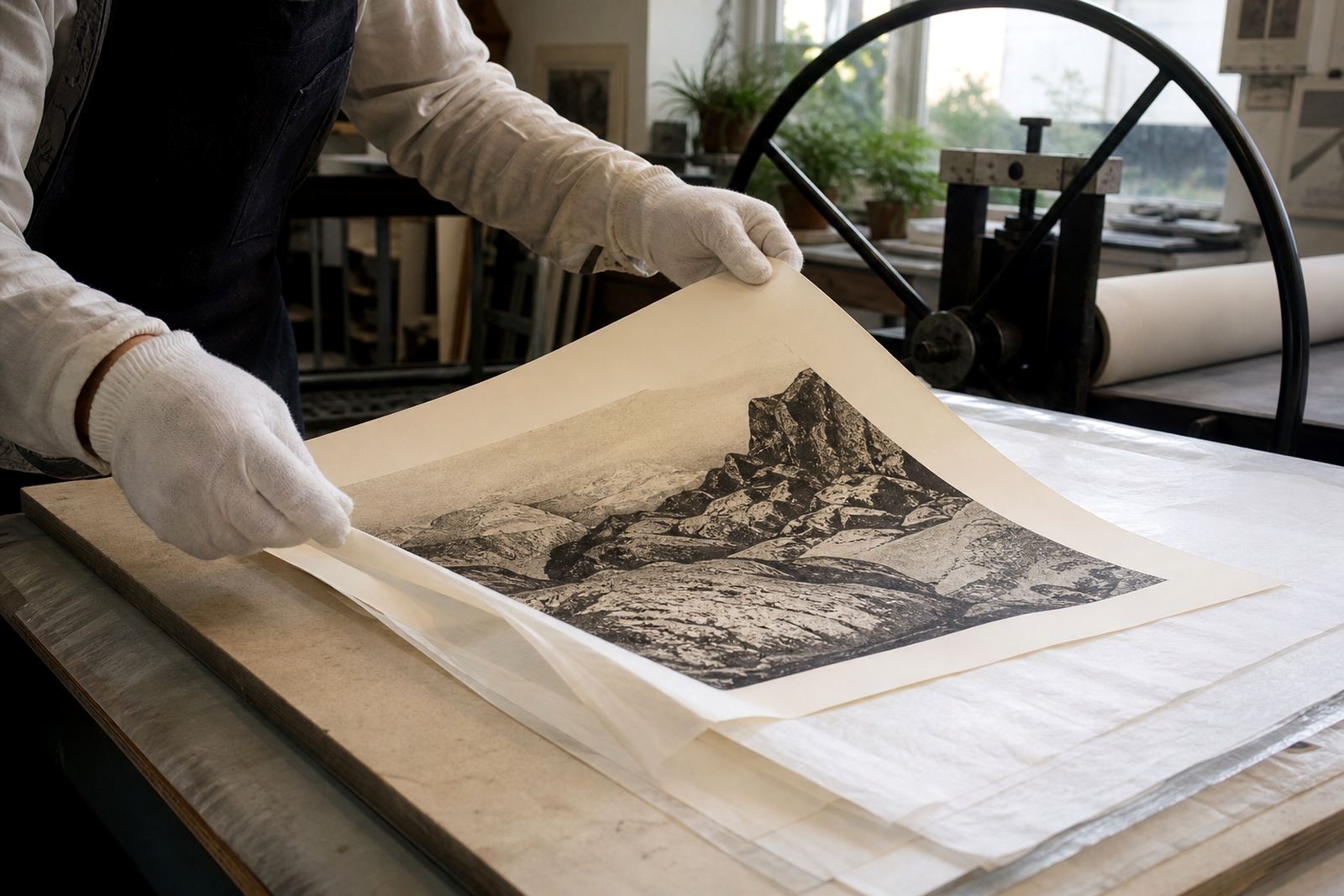
When a print has full margins, it gives the framer more room to work with and reduces the chance of damaging the image area. Always handle the sheet with clean hands or cotton gloves, and support the paper from beneath rather than lifting by one corner. If the sheet is oversized, ask for help from a proper art handler or framer rather than folding or rolling it too tightly.
Good print care is simple but must be consistent. Avoid storing prints near kitchens, bathrooms or external walls that sweat in winter.
- Store prints flat in acid-free folders or archival sleeves
- Keep them away from sunlight, moisture and dust
- Use archival packing for transport between Cape Town, Johannesburg or Pretoria
- Ask for framing coordination if the print has wide margins or fragile paper edges
A Woodstock example of reading the margin before buying
Imagine a collector visiting a studio in Woodstock to view a stone lithograph with a pale grey image and a wide bottom margin. The sheet is numbered 8/15, signed in pencil, and marked A.P. on a separate test impression shown for comparison. That single set of marks tells the buyer the work belongs to a limited edition, the artist has approved the final sheet, and the studio kept a proof for reference. It also helps the collector understand why two similar looking prints may be priced or presented differently.
When you know how to read the margin, you buy with more confidence. You can ask better questions about the edition plan, the proofing sequence and the care the print will need once it leaves the studio. That matters whether the work is staying in Cape Town, going to Stellenbosch for a private collection, or being packed for a wall in Pretoria. In fine art, the small pencil notes are often the most useful part of the whole print.