Start with the paper, not the frame
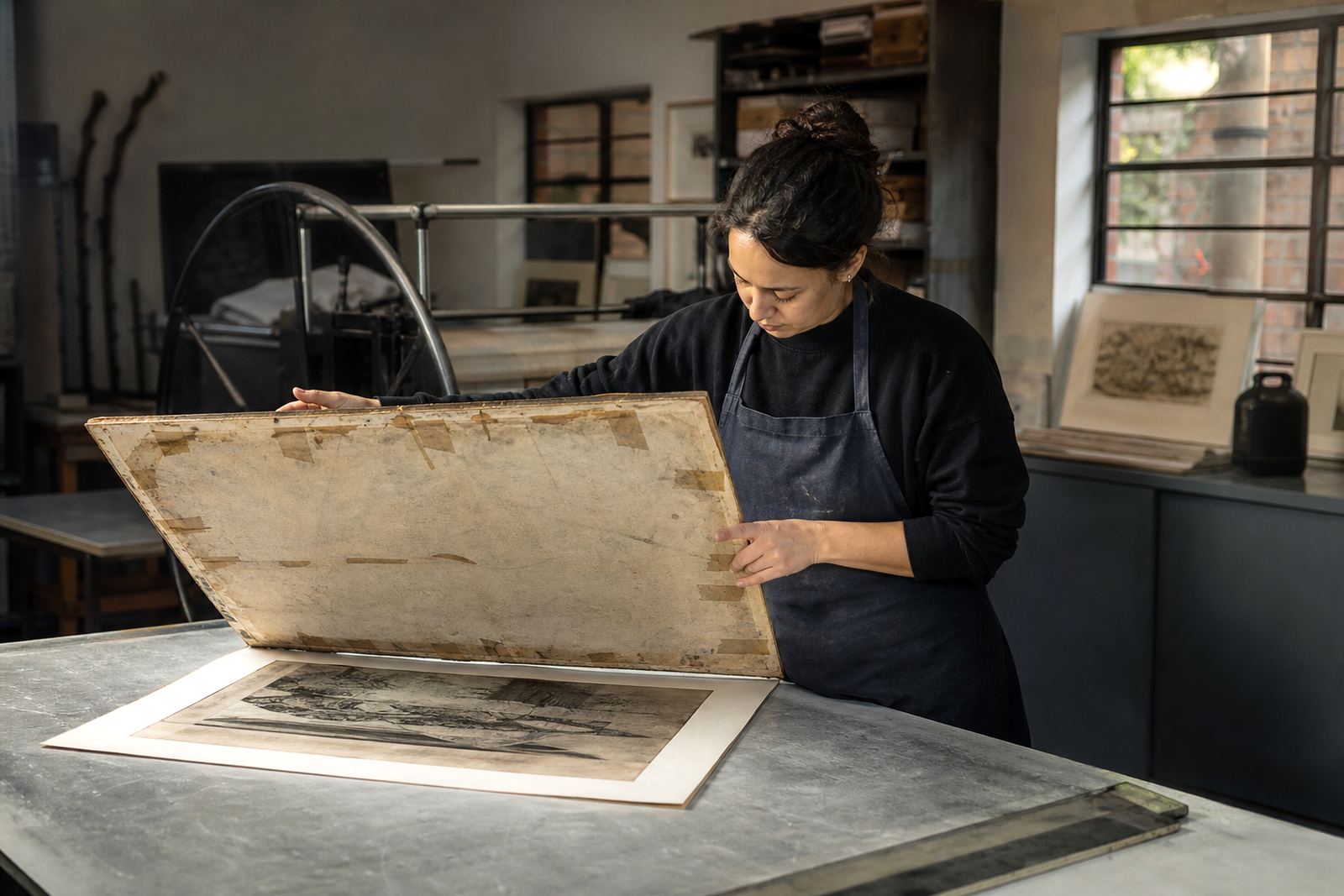
Stone lithographs are printed on paper that responds to light, moisture and pressure over time. If a print is framed with an acidic mount, poor glazing or a backing board that has aged badly, the paper may start showing brown marks, cockling or uneven toning around the edges. That is usually the first sign that re-framing should be considered.
A print can look fine from across the room and still be under stress. If the artwork was framed many years ago, ask whether the original materials were made for preservation or just for display. A frame is not only decoration. It is part of the print’s storage system, especially in Cape Town where coastal humidity can move up and down with the season.
Common signs the frame is past its best
There are a few clear warning signs. Some are visible, others show up when you look closely at the edges and the back of the frame. If you notice any of the following, it is worth getting the artwork assessed before more damage happens:
- The mount has yellowed, stained or started to warp.
- The glass is cracked, fogged or no longer sits properly in the frame.
- The paper shows foxing, tide marks or browned edges.
- The frame has lifted at the corners or the backing has started to bow.
- The print touches the glass, which can cause sticking in humid weather.
- The hanging wire, hooks or fittings feel loose or rusted.
In a place like Woodstock, where studios and homes can get warm in summer and chilly in winter, small shifts in humidity can cause a mount to move against the paper. That pressure builds up slowly. By the time a print looks visibly tired, the damage has often been developing for years.
When a mount is doing more harm than good
The mount should keep the print flat, give it breathing space and separate it from the glazing. Older mounts were often chosen for appearance alone. If the board is acidic or damaged, it can stain the artwork and make the edges brittle. Even if the image still looks strong, the border may be quietly ageing the paper.
Reframing is usually needed when a mount no longer supports the print properly. That includes cases where the opening has shifted, the artwork has slid slightly, or the print sits under tension. A well cut mount should sit square, with even borders and enough depth to keep the surface clear of the glass.
For collectors who keep work in a lounge, passage or study with strong afternoon light, a fresh mount and improved glazing can make a real difference. It is often the simplest way to give an older print a longer life without altering the artwork itself.
How stone lithographs should be handled during reframing
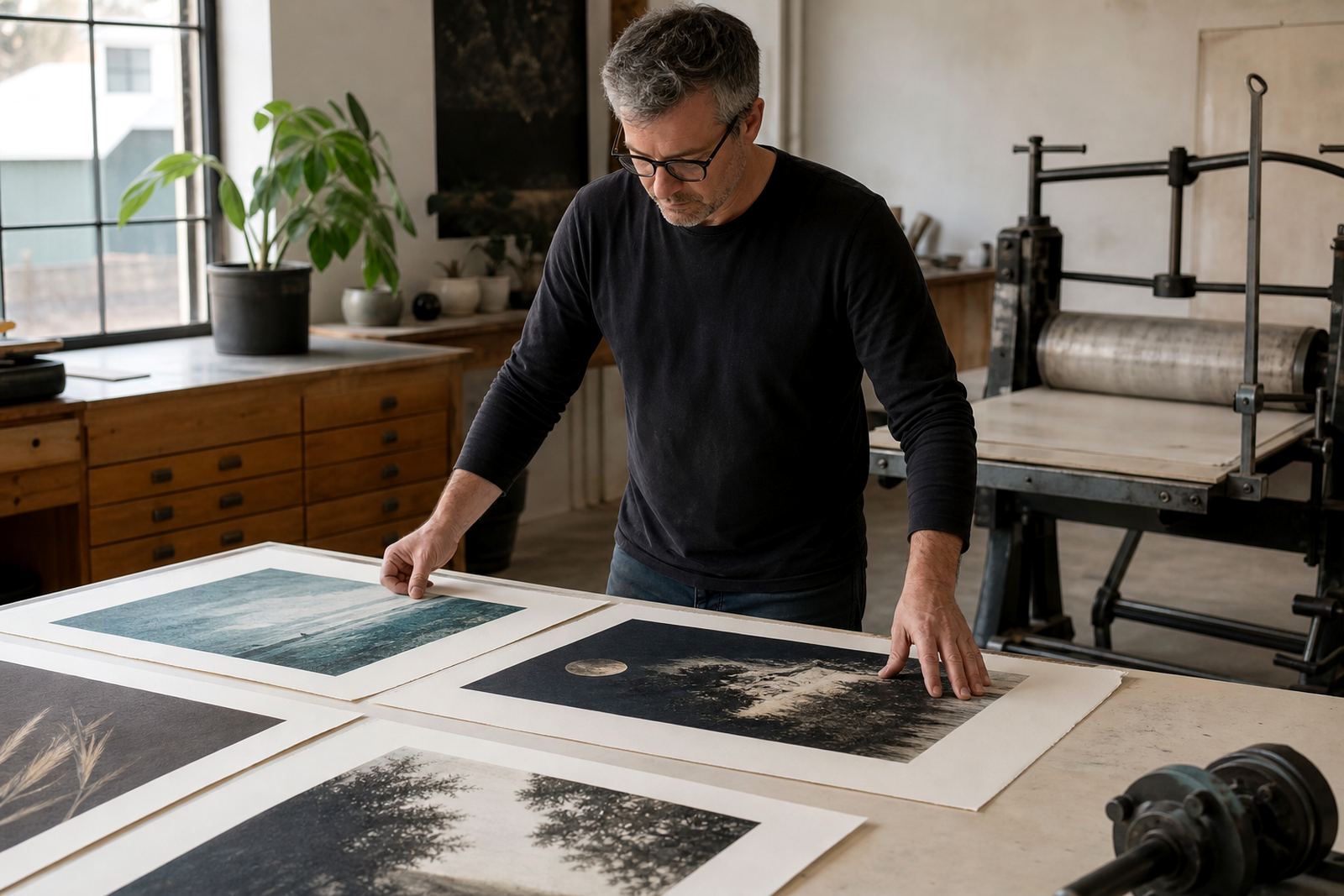
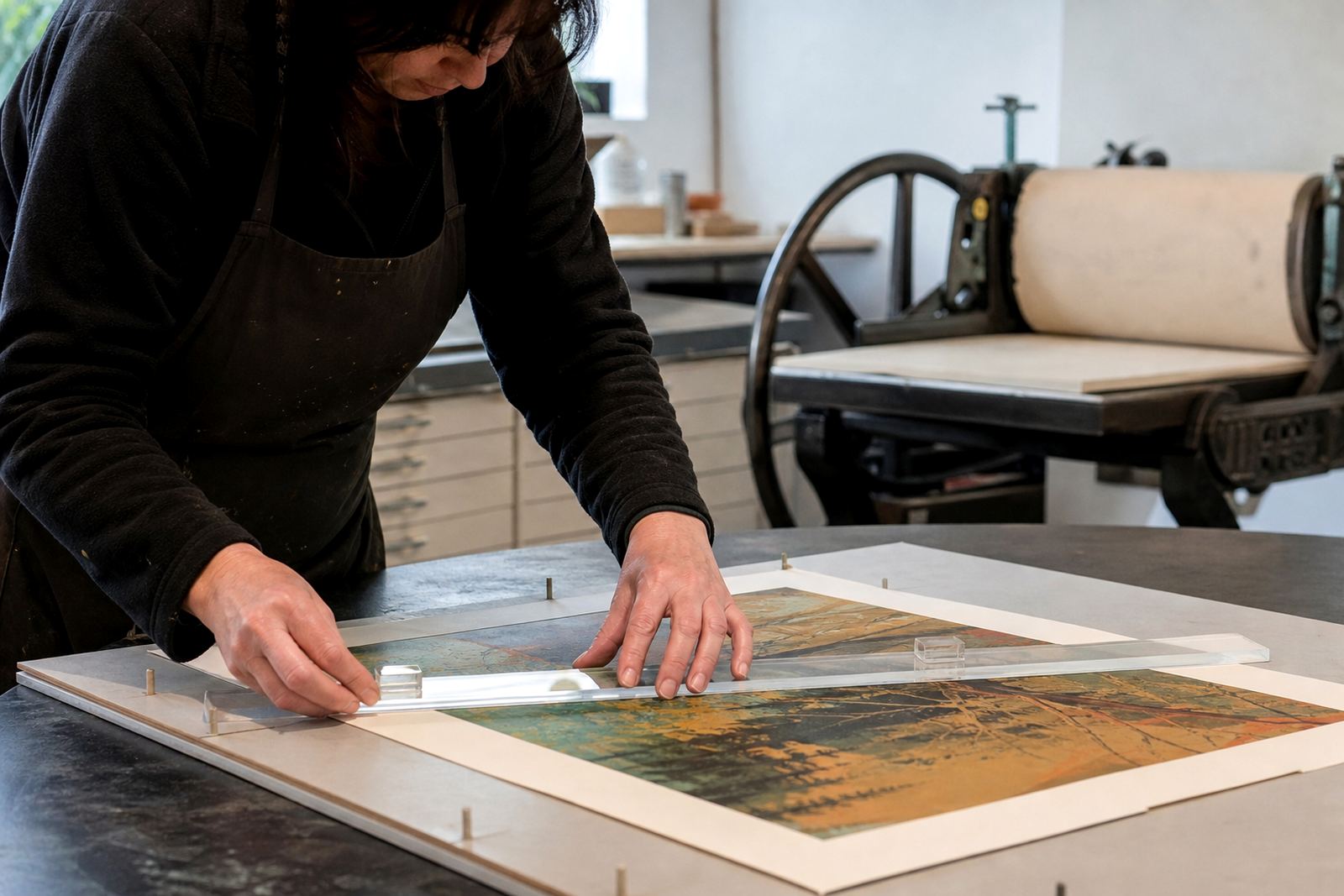
Stone lithographs are valued for their drawn mark, layered colour and the slight variation that comes from hand printing. Because they are often editioned and signed, handling matters. A print should be moved on a clean, dry surface and never folded. Old tape, brittle hinges or damaged corners should be removed carefully, not pulled off in a hurry.
When a print is reframed, it is also a good moment to check the condition of the sheet as a whole. Look for surface marks, small tears, pressure dents or previous adhesive damage. If any conservation work is needed, it is better to deal with it before the new frame goes together. Rushing the process can do more harm than leaving the old frame in place for a while longer.
- Use clean cotton gloves or very clean hands when moving the print.
- Keep the sheet away from direct sunlight and damp walls.
- Store unframed works flat, with interleaving paper between sheets.
- Do not lean framed work against painted walls for long periods.
A simple local example from a coastal home
Consider a collector in Sea Point with a lithograph framed more than ten years ago. The print has spent its life in a bright living room near a window, and the backing board now shows signs of moisture. The image itself still looks strong, but the mount has started to yellow and the paper edge at the bottom has a faint tide line. That is a clear signal to reframe.
In that situation the goal is not to change the character of the work. It is to protect it for the next decade and beyond. A new mount, proper backing and carefully chosen glazing can help keep the paper stable while also making the image read more cleanly on the wall. The result is practical, not flashy and it usually feels like the print has been given room to breathe again.
What to ask before you reframe a print
If you are taking a lithograph to a framer, ask direct questions. A good framing conversation should cover the condition of the paper, the size of the sheet and image, the type of mount board being used and whether the glazing is suitable for the room. If the work is part of a limited edition, it is worth making sure the signature and numbering remain visible and protected.
It also helps to think about where the print will live. A work hanging in Durban near salty air may need a different approach from one in Pretoria where dry heat and dust are bigger concerns. The right framing choice depends on the room, the wall and the light, not just the frame sample.
- Choose materials that will not stain the paper over time.
- Make sure the artwork does not touch the glass.
- Keep the frame size in proportion to the image and sheet.
- Ask for archival packing if you are storing the print after reframing.
When it is worth acting now
If a frame is visibly failing, the safest move is to deal with it sooner rather than later. The cost of waiting can be a stained sheet, a bowed mount or a tear at the edge that could have been avoided. For collectors, artists and families who want to preserve a print properly, reframing is often less about appearance than about stewardship.
At Lithography Art in Woodstock, we often see that the best time to reframe is before the damage becomes obvious. A print that is still sound can usually be protected with a few sensible changes, while a neglected frame can trap dust, moisture and pressure against the paper. If you are unsure, bring the work in for advice through the enquiry form on our contact page. A careful look now can save a great deal later.