
Why registration decides whether the image holds together
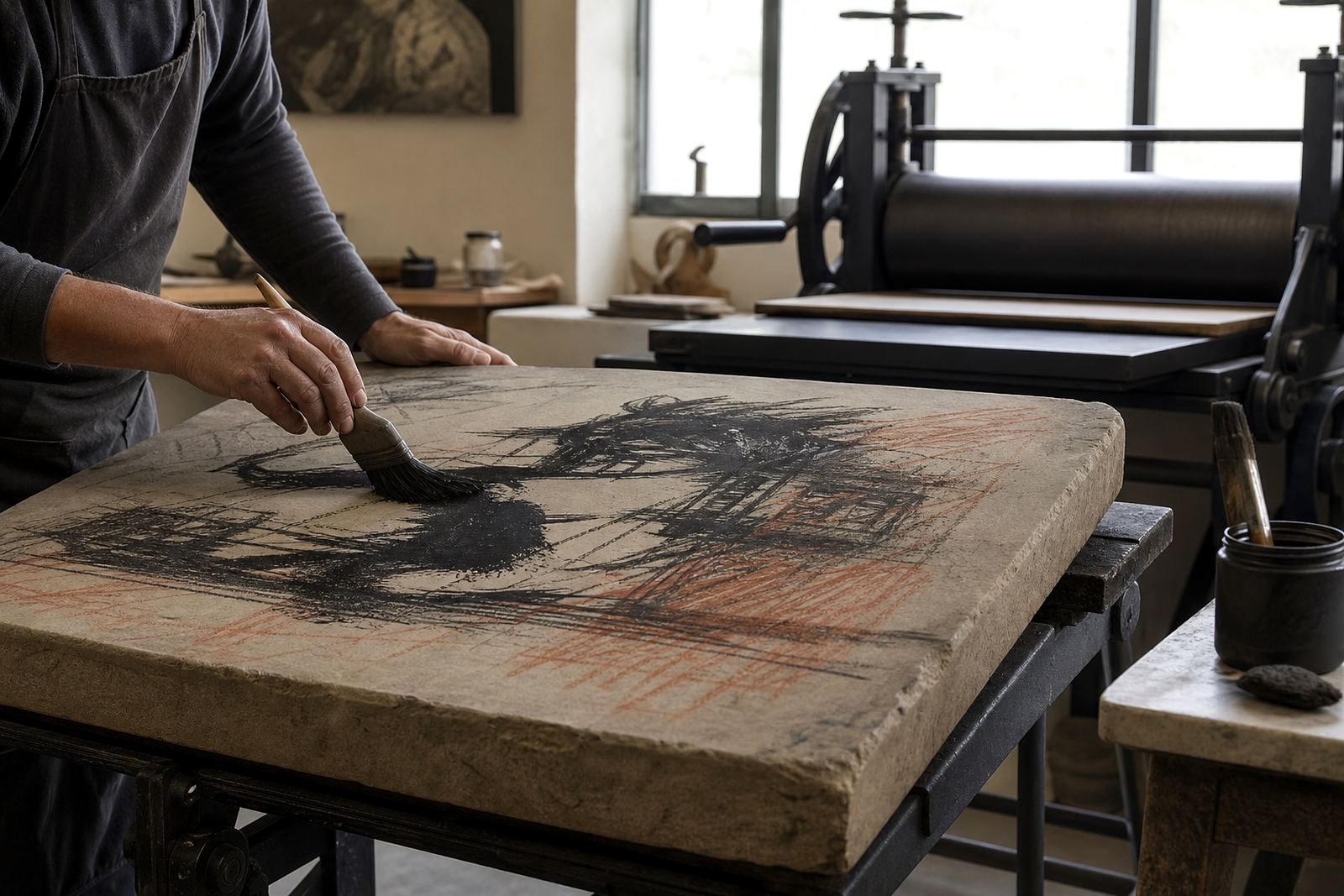
Stone lithography depends on the natural chemistry of the stone, the drawn image, and the pressure of the press. When more than one stone is used, each colour must return to the same position on the paper every time. That process is called registration. If it is even slightly off, a line can blur, a colour can drift, and a hard edge can begin to look soft or doubled.
For artists working with layered colour, registration is not a technical extra. It is part of the image itself. A pale yellow underprint, a strong black key line, and a second colour for shadow or tone all need to meet exactly. In a limited edition, that accuracy has to hold across the full run, not just on one lucky sheet.
How a multi-stone image is planned before the first print
Good registration starts long before the press is rolling. Each stone is prepared with the same image in mind, but not always with the same marks. A colour separation may place one tone on one stone, another on a second, and a final line drawing on a third. The edition plan sets out the sequence, the drying time between passes, and the point where the image is ready for signing and numbering.
- Decide the order of colours before drawing begins.
- Allow for paper movement caused by moisture and humidity.
- Keep margins generous enough for trimming and handling.
- Test proof the image before committing to the full edition.
In Cape Town, where coastal damp can affect paper and stone differently from one day to the next, planning matters even more. A sheet that sits perfectly in the morning may shift a fraction by the afternoon, especially during wetter winter weeks in Woodstock or Sea Point.
The practical tools that keep stones aligned
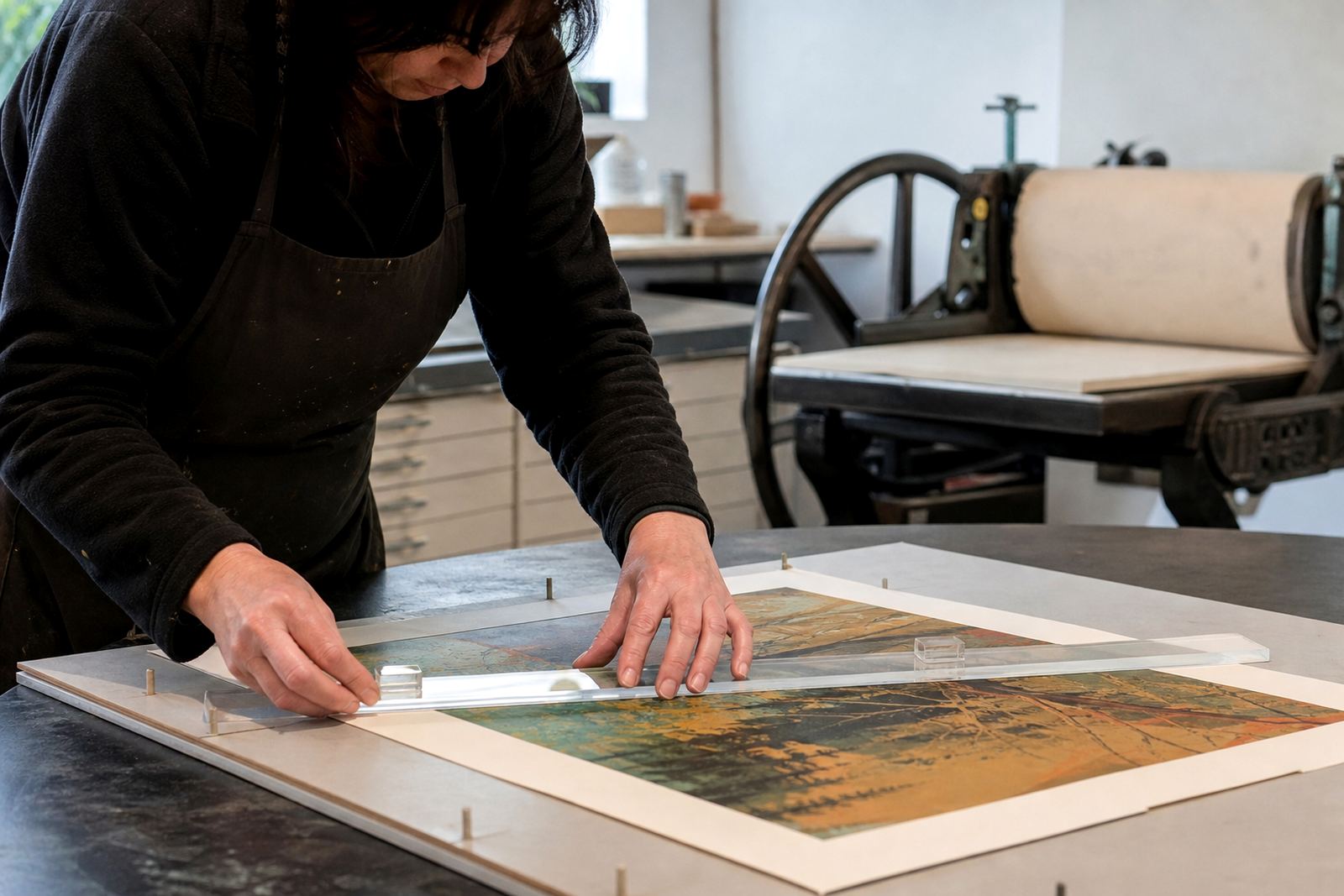
Registration in stone lithography is usually managed with a combination of fixed guides, careful measuring and repeatable handling. The aim is to place each sheet in exactly the same position for every colour. The studio may use edge marks, pin points, corner guides or a transparent layout system, depending on the paper size and the complexity of the edition.
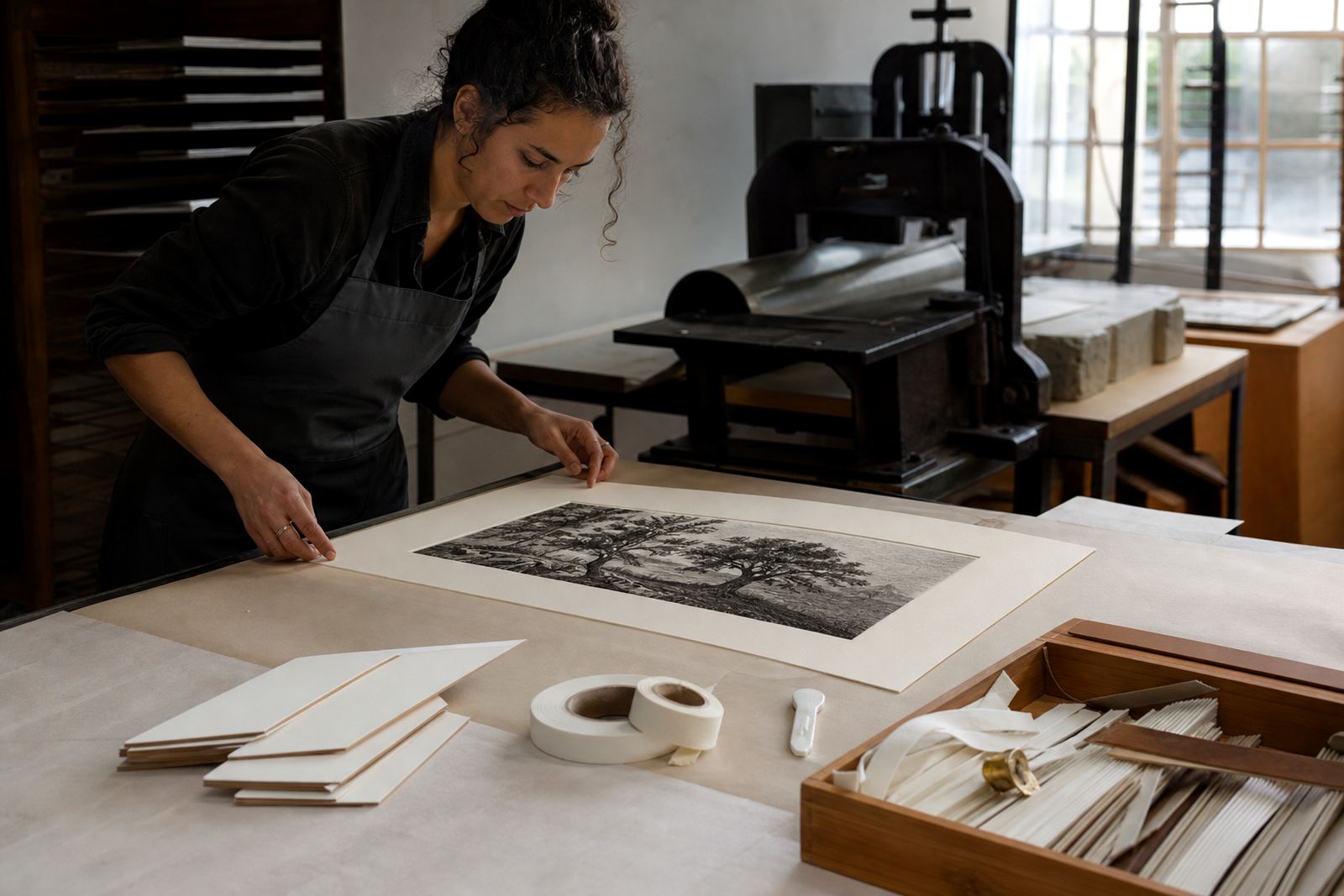
For larger sheets, the handling becomes more demanding. Paper flexes, hands leave moisture, and a heavy sheet can shift while being lifted or laid down. That is why the way a print is carried from stone to drying rack matters as much as the drawing itself. A clean press sheet and a steady rhythm help maintain alignment through the run.
- Measure from fixed points, not by eye alone.
- Keep the paper handling sequence consistent from proof to final print.
- Check that each stone is locked in the same position on the bed.
- Record any adjustment, no matter how small, before continuing the edition.
Why proofing catches problems before they become expensive
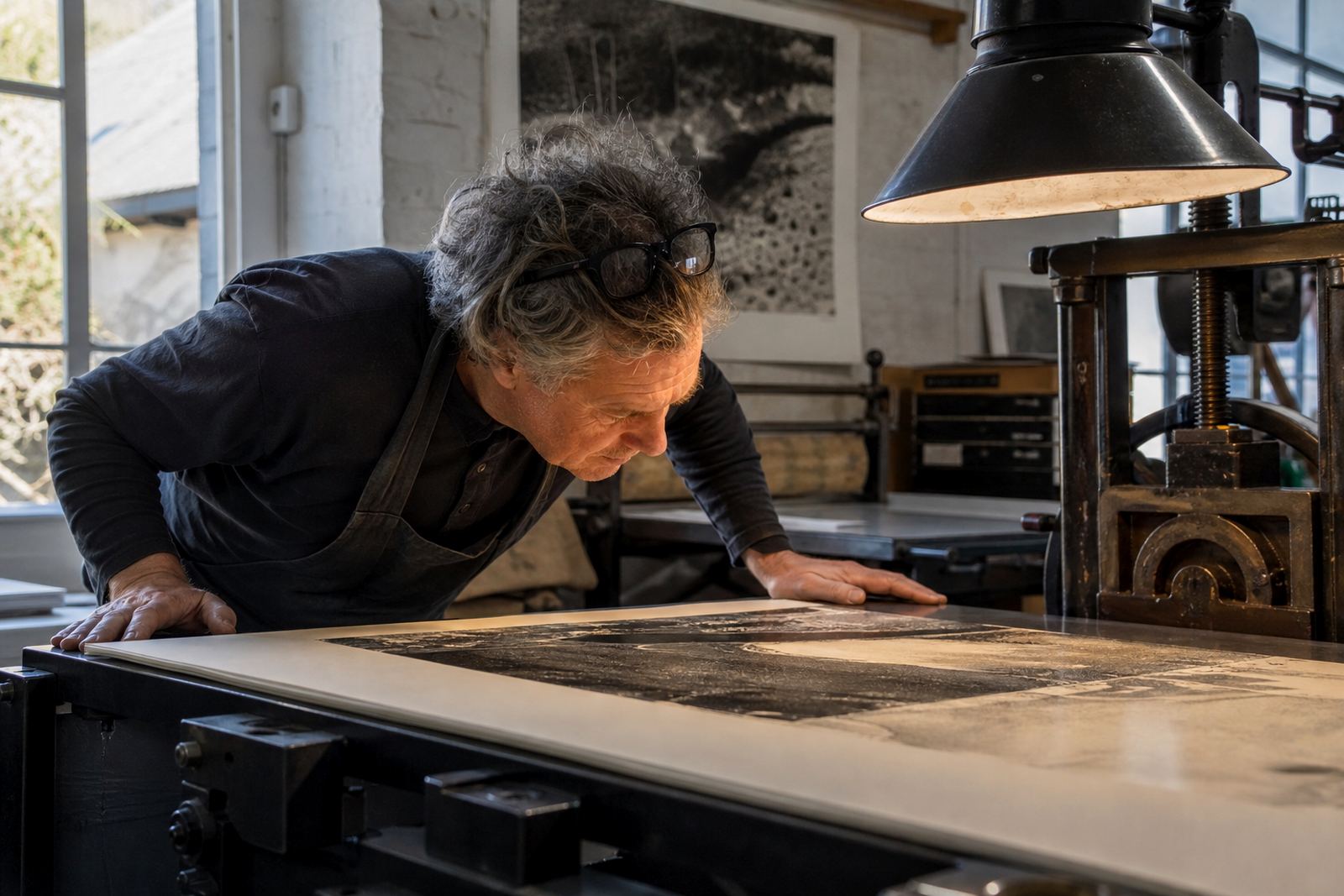
Proofing sessions are where registration is tested in real conditions. The first proofs show whether colours sit correctly, whether a border is balanced, and whether one layer needs a slight shift. In a multi-stone print, a tiny correction can make the difference between a crisp image and one that feels unsettled.
Proofing also protects the edition. If a stone has to be reworked, or if a colour needs to be lightened, that is far easier to settle before the full run begins. Once the edition is underway, repeated adjustments can create inconsistency between sheets. A good studio treats the proof as part of the edition planning, not as a separate step.
Artists and collectors often underestimate how much discipline sits behind a finished print. The final image may look effortless, but underneath it are test sheets, notes, and a fair amount of patient correction.
A Woodstock example: one image, three stones, no room for drift
In a Woodstock studio, a three-colour print might move from a light background stone to a mid-tone stone and then to a key line stone. On paper, the image can look simple. In practice, every pass must return to the same registration point, especially if the work includes small text, fine hatching or tightly drawn shapes. If the paper swells from humidity or the sheet is not seated squarely, the final line can appear out by a hair and once that happens, the whole image feels less settled.
That is why local knowledge matters. Cape Town weather can change quickly, and studios working through winter rain or summer heat need to keep an eye on paper storage, drying time and handling. A print that travels later to Stellenbosch, Johannesburg, Pretoria or Durban should already have been made with those conditions in mind. Careful registration at source gives the collector a cleaner print and the artist a better edition.
Looking after registered editions after they leave the studio
Once a print is complete, care does not stop. A well-registered lithograph should be handled with clean dry hands or cotton gloves, kept out of direct sun, and stored flat where possible. Framing should use archival materials so the paper can breathe and the image is not pressed against unsuitable backing. If a collector is in Durban or any coastal area, extra care helps because humidity can affect both paper and framing materials over time.
- Keep prints flat and away from moisture.
- Avoid touching the printed surface.
- Use acid-free mounts, backing and protective glazing where framing is needed.
- Do not hang unframed work in strong sunlight or near damp walls.
Accurate registration gives the edition its clarity. Good storage and framing help it stay that way for years, which is what every collector wants from a finely made print.