Why proof stages matter before an edition is printed
In stone lithography, the proofing stage is not a side task, it is part of the making. A proof lets the artist and printer check how the drawing has transferred to stone, how much ink the image will hold, and whether the pressure, paper and colour balance are working as intended. Small changes can alter the final result, so proofing protects both the image and the edition.
For artists working with a studio in Woodstock or clients who collect across Cape Town, Stellenbosch, Johannesburg, Pretoria and Durban, proof stages also create clear agreement. Everyone can see what has been achieved before the full run is printed. That matters when a print is meant to stay consistent across a limited edition of signed works.
Trial proofs: the first honest reading of the stone
Trial proofs are usually the earliest test prints pulled from the stone. They are used to check whether the image is carrying properly, whether the grease drawing is coming through cleanly, and whether any areas need more work on the stone. These prints are often rougher than the final edition and may show notes, adjustments or visible changes from one pull to the next.
They are especially useful when a work includes fine line, soft tonal areas or several layers of colour. On damp winter mornings in Cape Town, for example, paper and stone can respond differently than they do on a hot dry afternoon. Trial proofs help the studio read those conditions before the edition begins.
- Check the image strength and tonal range
- Test whether the paper is taking the ink evenly
- Spot areas that need reworking on the stone
- Confirm if the image size, margins and registration are correct
State proofs show the work as it develops
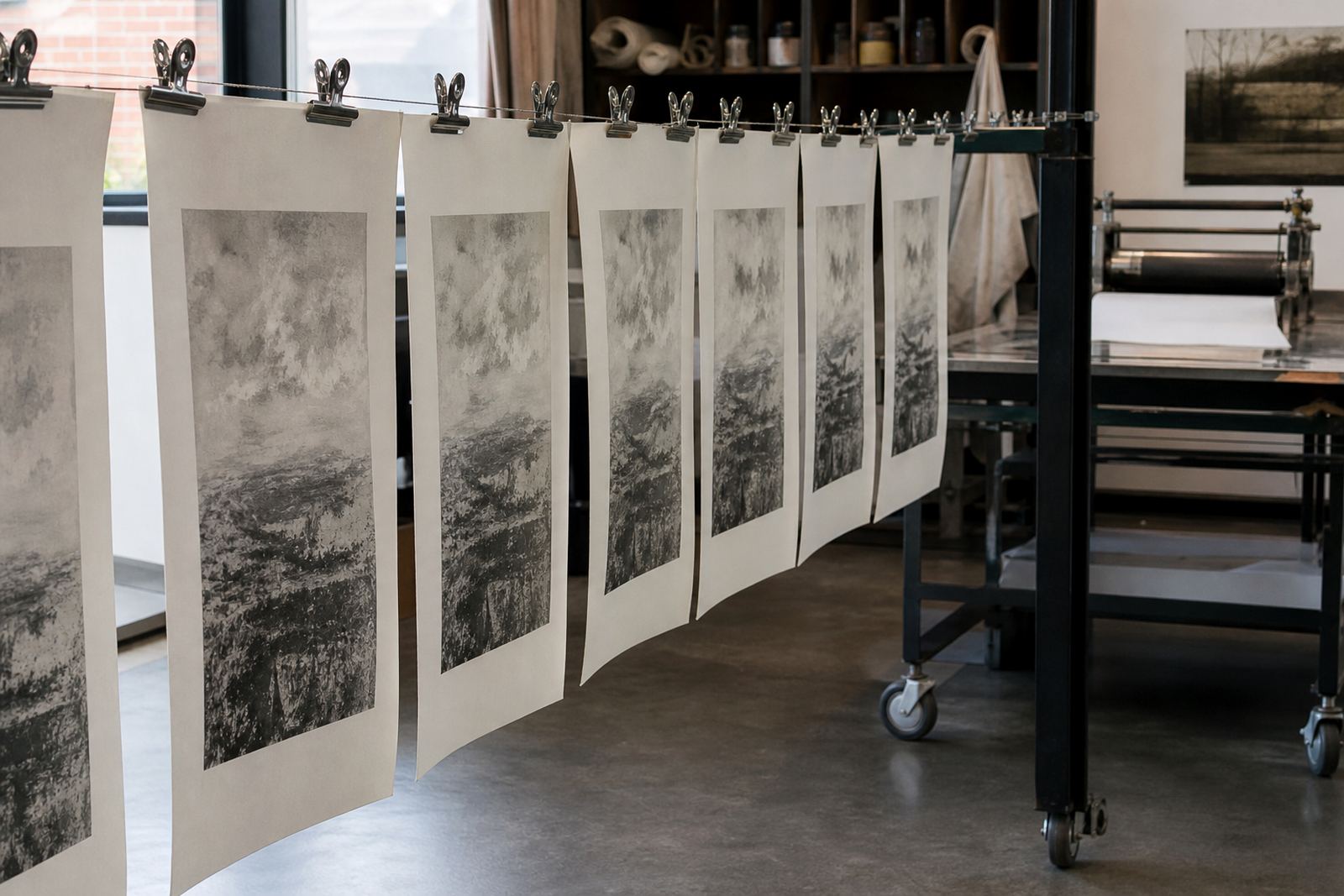
State proofs record a specific stage of the image after changes have been made. If the artist reworks the stone, adds another colour, strengthens a line or removes an area, the next proof becomes a state proof. This gives a clear visual record of the print’s development from first mark to finished edition.
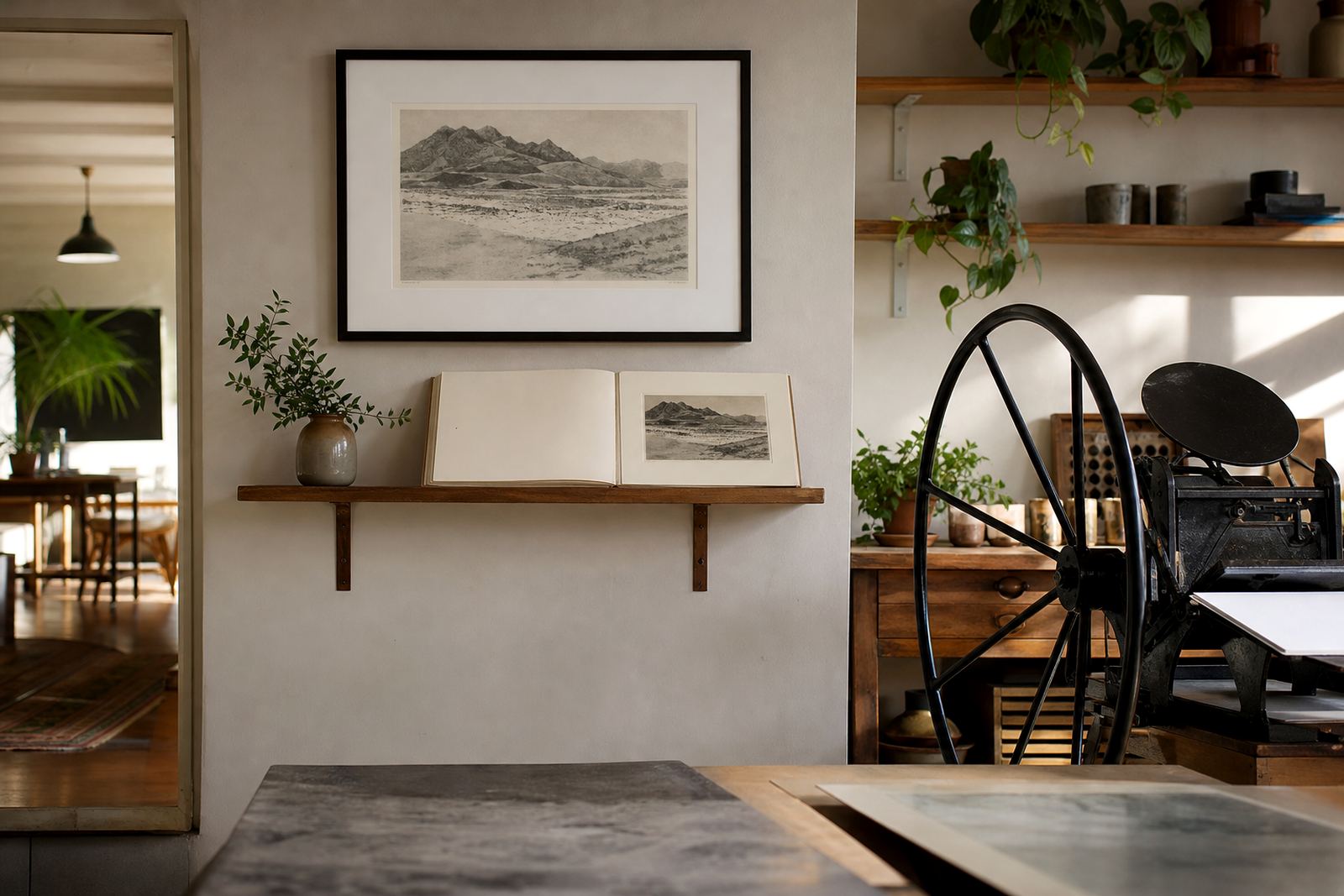
For collectors, state proofs can be useful because they show how a lithograph was built. For artists, they are a practical way to make decisions without guessing. In a studio, the master printer and artist may compare several state proofs side by side to decide whether the image needs more contrast, a softer hand or a cleaner edge. It is careful work, and it saves costly mistakes later on.
How final approval is given on a limited edition
Final approval comes only once the artist is satisfied that the proof matches the intended image. At that point, the edition can move into full printing, with each sheet checked for consistency. Approval should be clear and deliberate because once an edition is underway, any change affects the whole group of prints.
In a fine-art studio, approval is not only about appearance. It also includes paper choice, colour order, drying time and how the sheets will be handled after printing. In a coastal city like Cape Town, humidity can affect drying and storage, so the team may need to pace the edition carefully. Once approved, the printmaker follows the agreed standard for the full run, keeping the work as even as possible from first sheet to last.
- Artist confirms the image, colour and scale
- Paper and edition size are signed off
- Any needed corrections are completed before printing begins
- The edition is then printed to the agreed standard
What collectors should look for in proof terminology
Collectors often see words like trial proof, state proof or artist’s proof and wonder what they mean. A proof is not simply an extra print. It usually marks a step in the process, and that step can affect value, rarity and interpretation. A state proof shows a change in the work. A trial proof shows testing. A final edition print is the approved version produced in the limited run.
When a collector in Sea Point, Newlands or Durban asks about a print, it helps to know which stage they are buying. The difference may be subtle on paper, but it matters for how the work was made and how it should be understood. Good studio records should make this clear, including signing and numbering where relevant.
From the press room: Finished print
Imagine an artist visiting the Woodstock studio with a two-colour stone lithograph. The first trial proof shows that the dark plate has strong texture, but the lighter colour is too flat. The printer adjusts the second colour, pulls another proof, and now the highlights carry better against the main image. After that, a state proof is taken to confirm the revised drawing and registration.
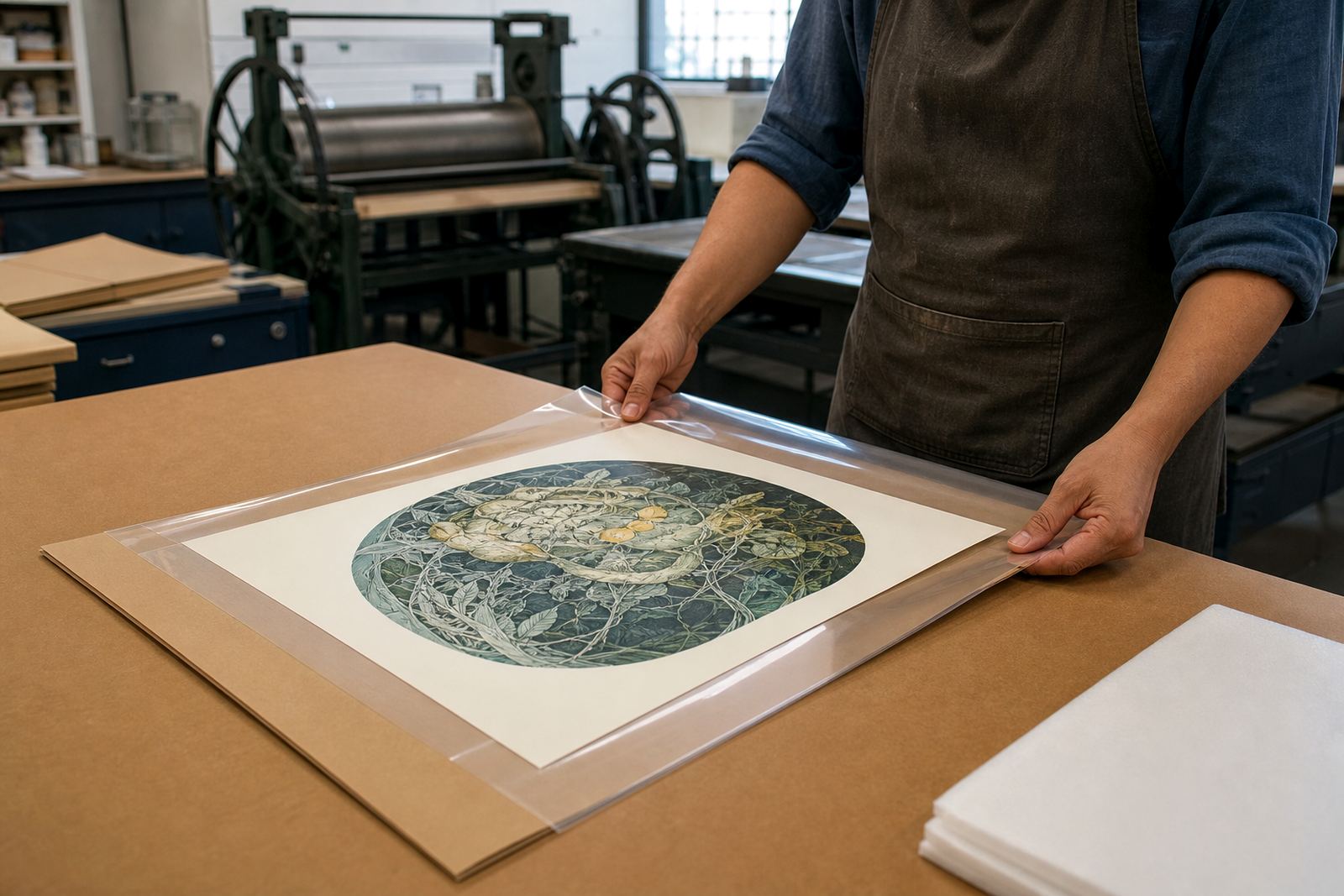
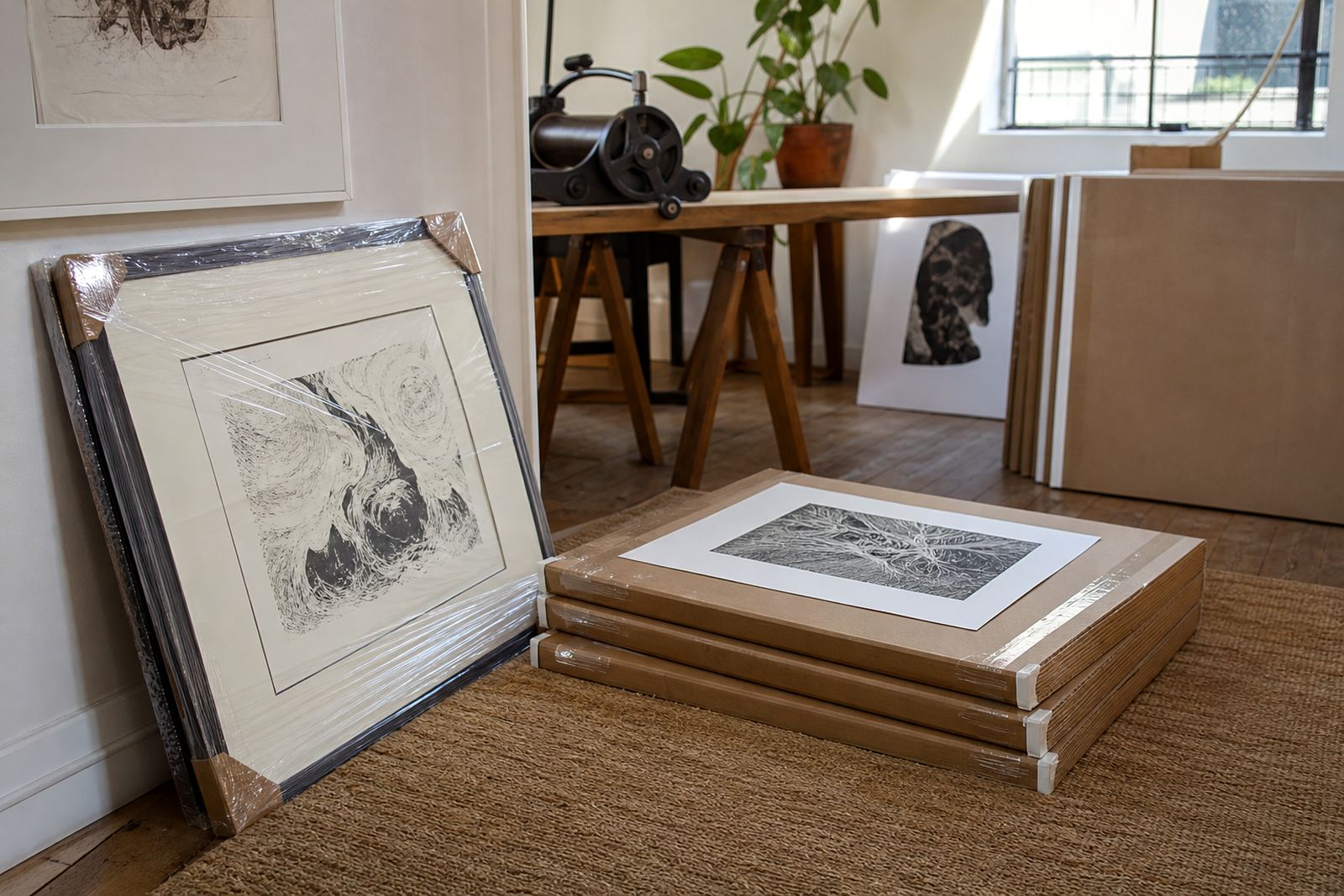
Only once the artist is content does the studio move to final approval. The edition is then printed, sheets are dried flat, checked one by one and packed for safe handling. For a collector in Pretoria or Johannesburg, that process means the finished print has been carefully checked at every stage, not rushed through for the sake of volume.
How to care for proof prints and editioned lithographs
Proofs and finished prints need sensible care from the moment they leave the press. Keep them flat, away from direct sun and in a dry room with stable temperature. South African homes can vary a lot from one season to the next, so it is best to avoid storing prints near kitchen steam, bathrooms or walls with damp patches. If a work is framed, use archival materials and place it out of harsh light.
Collectors should handle prints by the edges and avoid touching the image area. If a work is not framed yet, leave it in protective packing until it can be placed properly. A studio can also advise on framing coordination and archival packing, which is especially useful for prints travelling between Cape Town and other provinces.
- Store flat in clean, dry conditions
- Avoid direct sunlight and strong indoor heat
- Use archival sleeves, mounts and backing boards
- Keep hands off the printed surface