Unframed lithographs for Cape Town collectors
Collectors often buy lithographs unframed because it keeps the print lighter to transport, easier to store, and simpler to match with a frame that suits the room. In Cape Town, many buyers also prefer to receive the print flat so a local framer can measure it properly and work around the exact paper size, margins, and any deckled edges.
Unframed work is also practical when you are ordering from another city. A collector in Johannesburg may want the print shipped flat in a protective sleeve, then framed locally to avoid the cost and risk of sending a finished framed piece across provinces. That matters even more with larger sheets, since glass, timber, and finished frames add weight and handling risk.
- You can choose the frame moulding, mount colour, and glazing later.
- You avoid shipping glass, which can crack in transit.
- You have more time to decide where the work will hang.
What stone lithography means for the print you receive
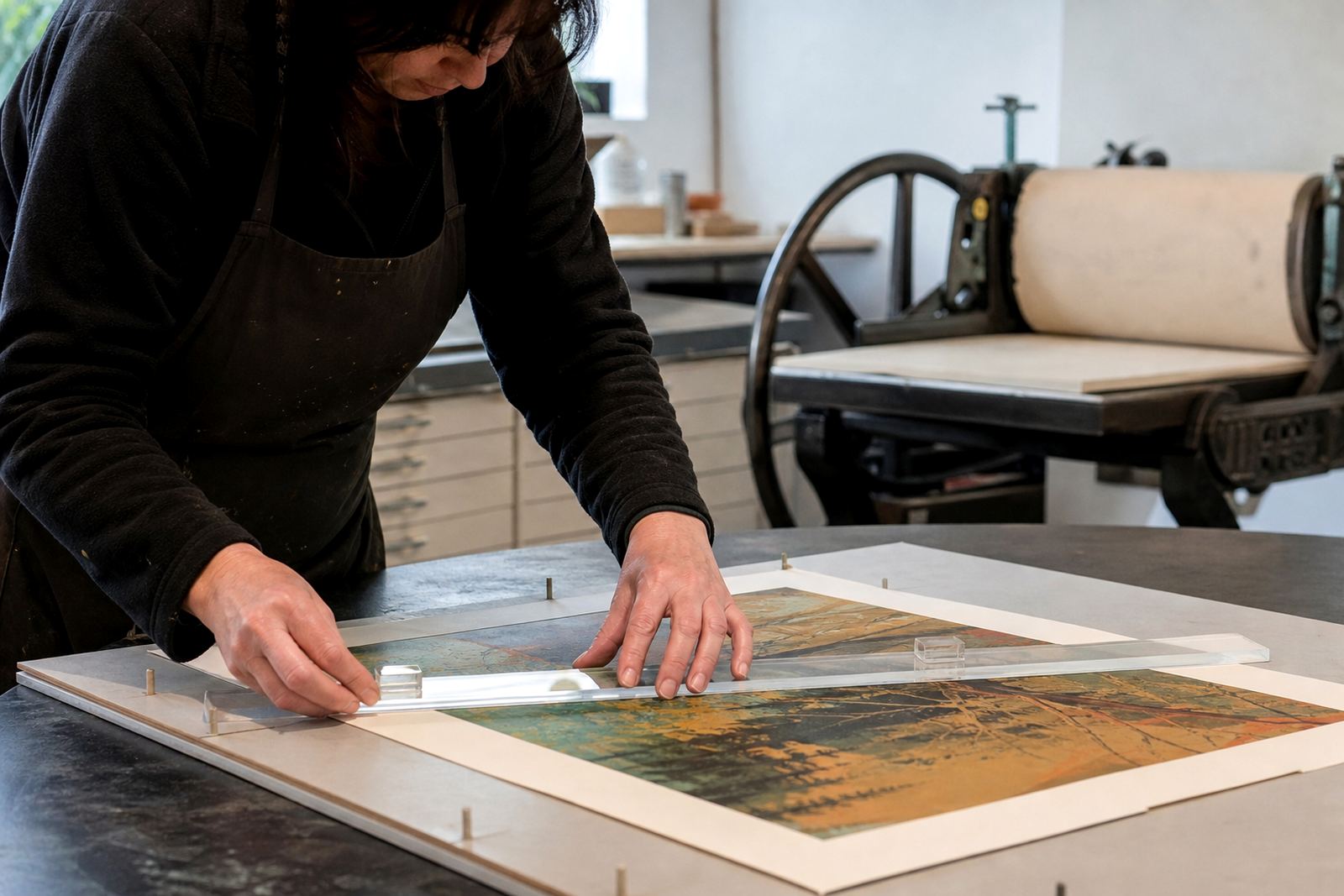
In this process, the image is drawn or worked onto a prepared limestone surface, then printed by hand onto paper. The image is not a digital reproduction. Each colour is printed separately, often with careful alignment between passes so the final edition carries the subtle marks and texture of the process.
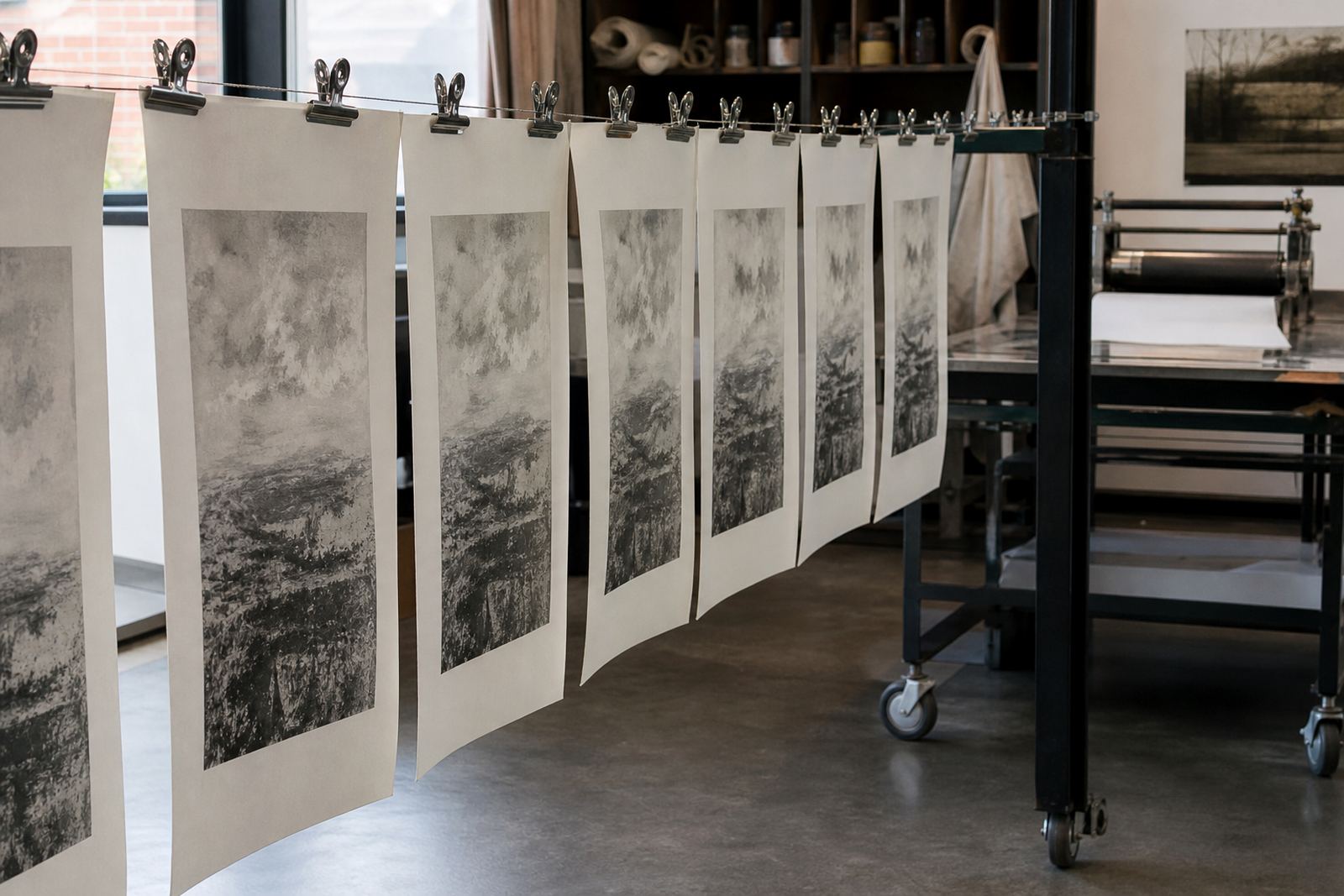
When you buy unframed, you are usually receiving the sheet as it leaves the studio after printing, drying, inspection, and editioning. That means you may notice natural variations in inking, paper tone, or pressure, especially where colour is layered. These differences are part of the appeal of hand-pulled printmaking and not defects.
If the print has been signed and numbered, it means it belongs to an agreed edition. The edition size is set before printing begins, and the same image is not run indefinitely. A collector can therefore know exactly where a print sits within the edition, whether it is 3/20 or 14/20, which helps with transparency and future resale.
How editions work, and why the numbering matters
When a lithograph is editioned, the studio and artist agree on the number of prints to be made from that stone or set of stones. Once the edition is complete, the stone may be cancelled or archived so the image is not printed again in the same form. For buyers, this gives confidence that the work is part of a limited body of prints rather than an open run.
It is also worth asking how proofs were handled. Proofs are working impressions made during the process to adjust colour, registration, or pressure. Not every proof becomes part of the final edition. If you are buying unframed, a good studio should explain exactly what you are receiving and whether the sheet has been signed, numbered, or reserved as an artist proof.
- Check the edition number and the total edition size.
- Ask whether the print was pulled on the final approved paper.
- Confirm whether the sheet is signed on the front or verso.
- Request a condition check before packing, especially for larger works.
Paper, margins, and why handling matters
Fine-art lithographs are usually printed on cotton rag or other archival paper selected for strength and good ageing. Some sheets have generous margins for framing, while others may be trimmed closely to the image. If you are buying unframed, the paper format is important because it affects both presentation and storage.
Fresh prints should be handled with clean dry hands or cotton gloves, and kept away from moisture while they finish drying and settling. In a coastal city like Cape Town, humidity can be part of everyday life, so the print should be kept flat in a clean, dry room and not left in a car boot or near a damp wall. In summer, coastal air and strong afternoon heat can do more damage than people expect.
- Store the sheet flat under clean board, not rolled unless the studio advises it.
- Keep it away from direct sunlight and kitchen steam.
- Never tape the print itself to a wall or shelf.
- Leave enough room around the work so corners do not curl or crease.
Framing later: what to plan before the print arrives
Buying unframed does not mean framing can wait forever. It just means you can choose the right framer and the right materials after you have the print in hand. A proper mount should allow the paper to sit flat without pressure, and the backing materials should be acid-free. For works going into bright rooms, museum-grade glazing can help reduce fade risk.
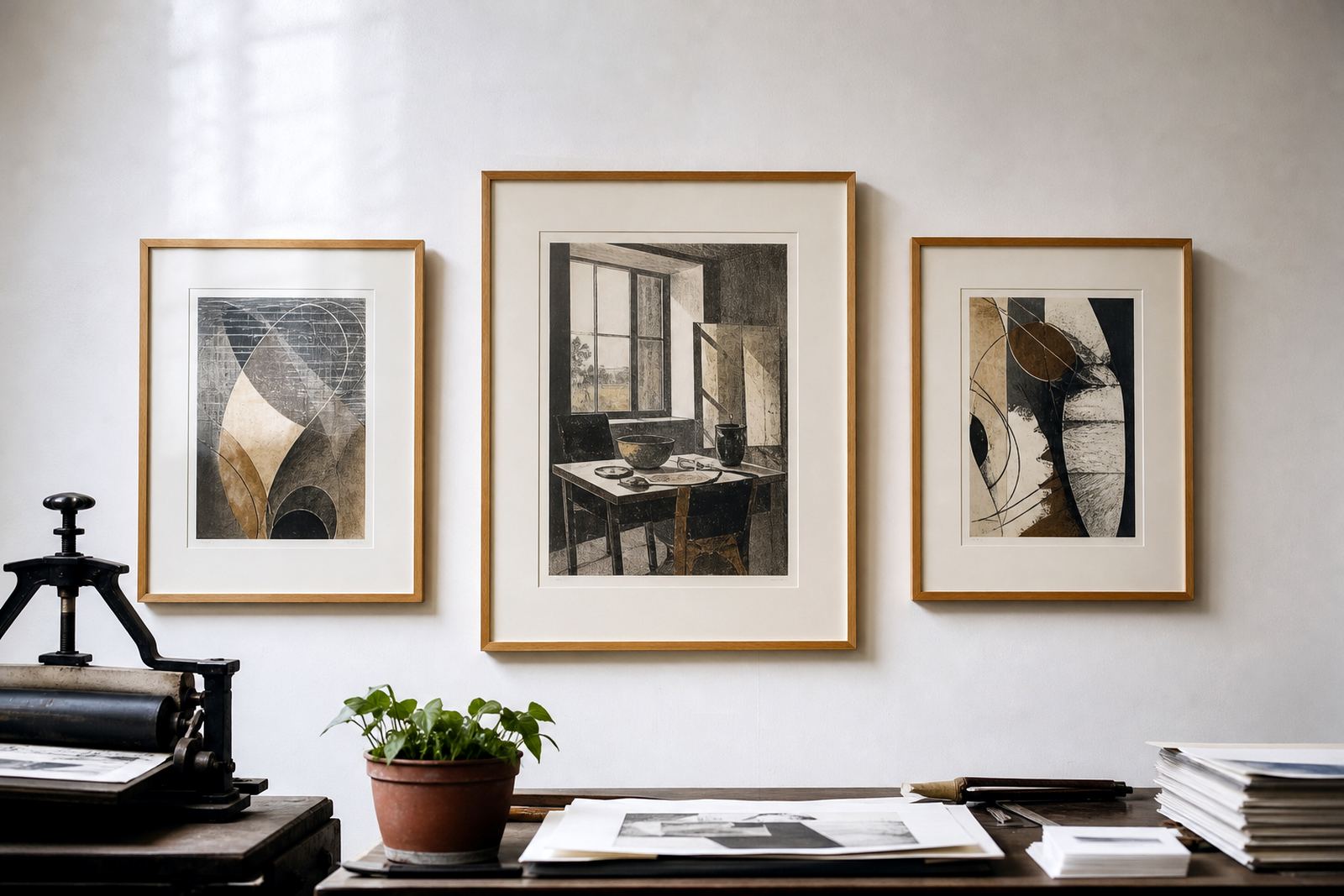
It is wise to speak to the framer before the print arrives, especially if you are in Stellenbosch, Pretoria or Durban and the frame will be made locally. Measure the sheet accurately, confirm whether you want the full paper edge visible, and decide if the piece needs a float mount or a more traditional window mount. These choices change the final look quite a lot.
At our Woodstock studio, collectors often collect unframed sheets and then coordinate framing later through a local framer in Sea Point, Newlands or elsewhere in the city. That gives more flexibility, especially for works meant for a specific wall or a new home where furniture and lighting are still being arranged.
From the press room: The provinces
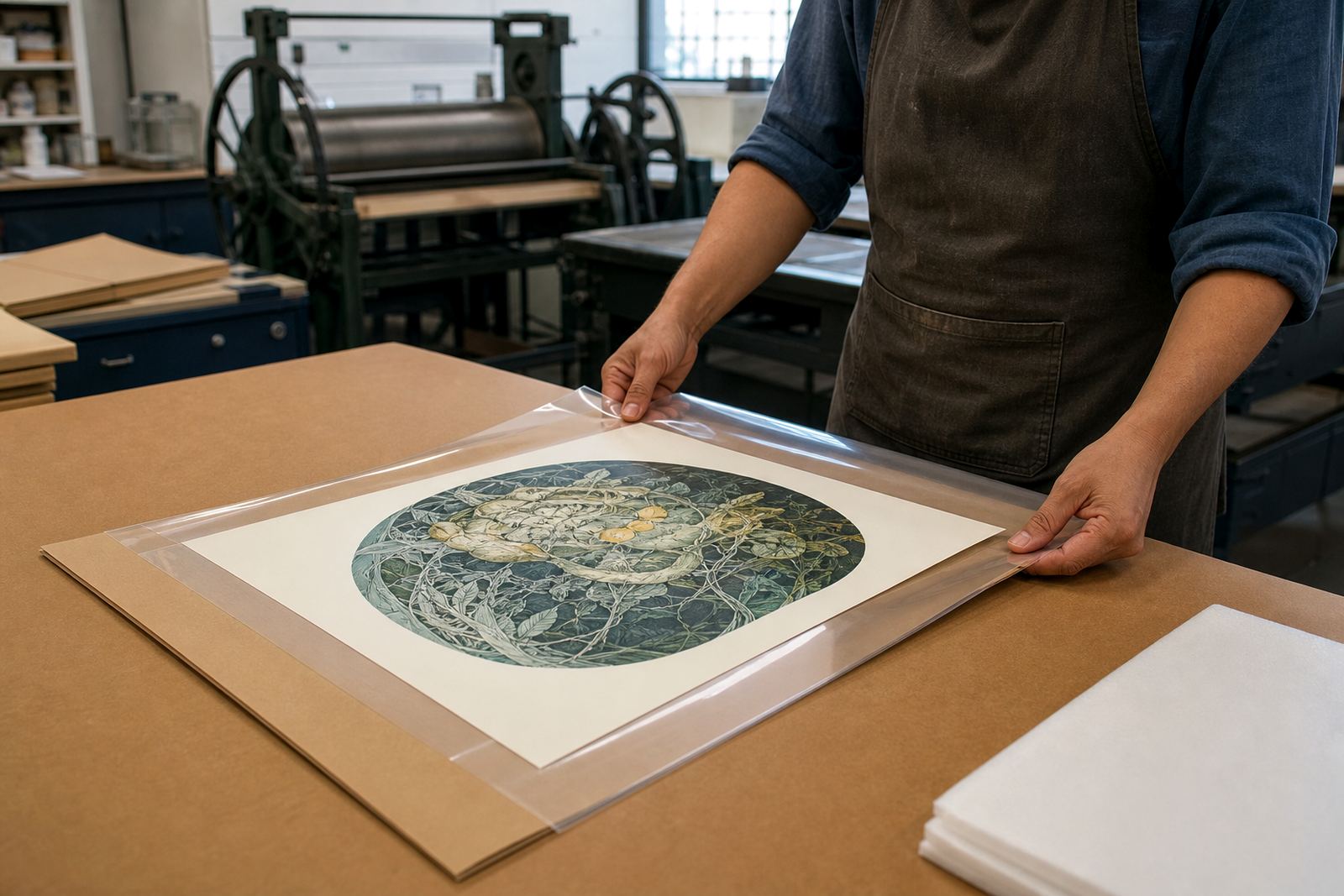
Say a collector in Johannesburg chooses a limited lithograph from a studio in Woodstock. The print is checked, signed, numbered, and packed flat in archival wrapping. The collector then keeps it stored indoors while arranging framing with a local framer who knows the wall size at home. This avoids sending a framed work over long distance, and it lets the buyer decide whether the print needs a light timber frame or a darker profile to suit the room.
That same approach works for buyers in Durban, where humidity and coastal air can affect how a finished frame is stored before hanging. It also helps when a work is being placed in a new office or home and the final interior details are still changing. Buying unframed gives you breathing room, as long as the print is handled with care from the start.
- Collect the print as flat as possible.
- Keep the paperwork with the work for future reference.
- Frame only when the room, wall size, and light are settled.
How to look after an unframed lithograph long term
Once the print is home, good care is mostly about consistency. Keep it in a stable room, away from direct sun, leaks, and smoky air. If you are storing it before framing, place it flat between clean sheets of board and check it occasionally for any sign of damp or cockling. Avoid touching the image area, even if the paper looks dry.
If you are unsure about framing or storage, ask the studio for guidance before you pack the print away. A careful handover makes a difference, and it is better to ask early than try to fix a crease or stain later. Small mistakes happen, but paper gives very little second chances.
For many collectors, buying unframed is the most practical way to bring a lithograph home. It gives you control, preserves the sheet during transport, and lets the final presentation be shaped by the room rather than the shipping box.