What an edition number actually tells you
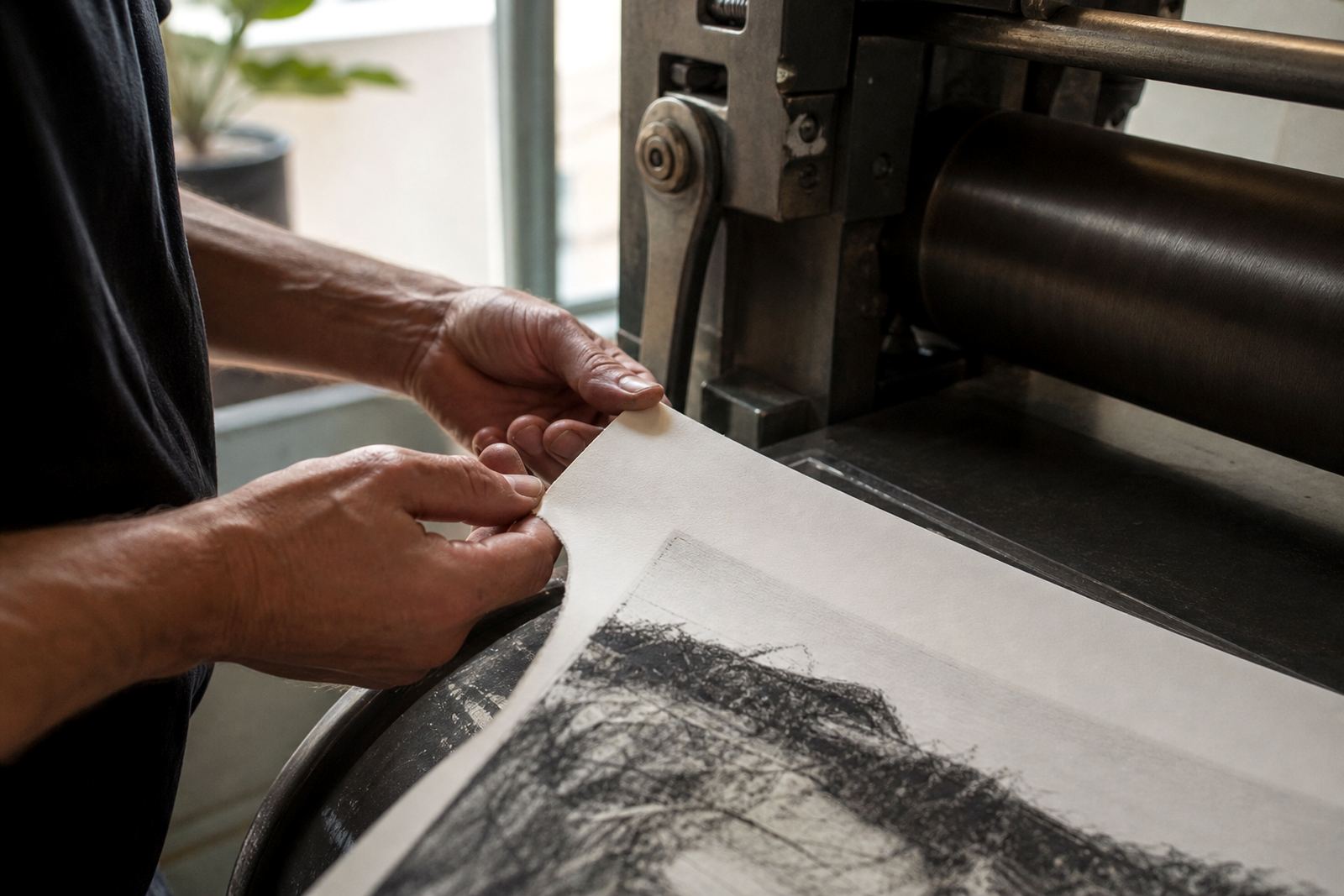
An edition number is the simple fraction you see on a print, such as 12/30. The first number shows the individual print, and the second shows the total number printed in that edition. So 12/30 means you hold the twelfth print from a planned run of thirty. In stone lithography, that number matters because each sheet is pulled by hand, checked and approved through the studio before it leaves the press.
Collectors often ask whether a lower number is better. In most cases, it is not. The quality of a print should be judged by the impression, the paper, the colour and the condition, not by whether it is number 2 or number 28. What the number does give you is clarity. It tells you that the edition was limited, that the print belongs to a defined group and that the artist and printer agreed on that limit before the edition was complete.
Why limited editions matter in stone lithography
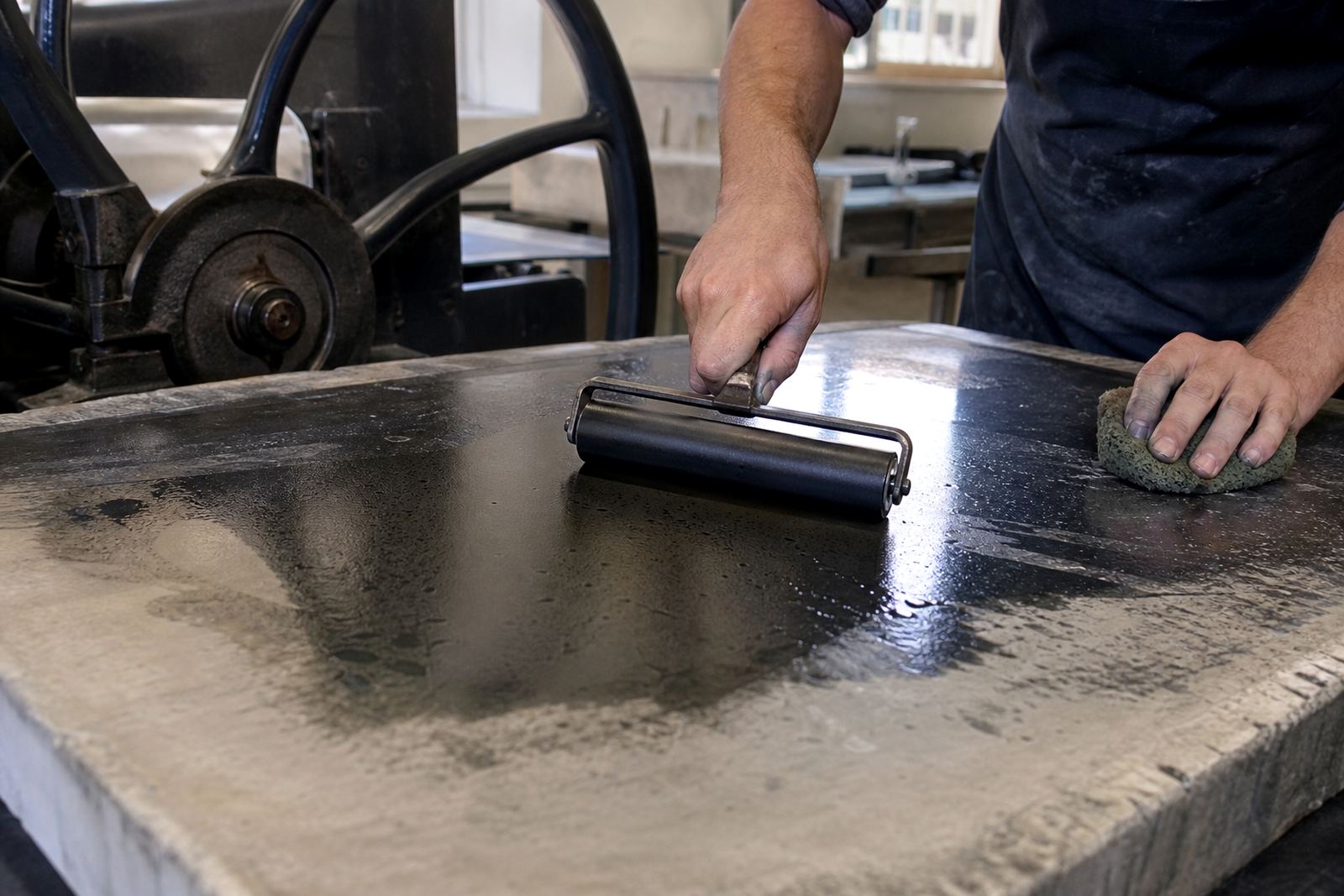
In simple terms, stone lithography is a planographic printing method. The image is drawn or transferred onto prepared limestone with greasy materials, then treated so the image area accepts ink and the non-image area repels it. Because the process is made by hand, each colour or layer can require careful registration, proofing and repeated printing. That is one reason editions are limited. A stone only holds so much detail before it starts to lose its sharpness and consistency.
For collectors in Cape Town, Stellenbosch, Johannesburg, Pretoria or Durban, a limited edition gives a print a clear boundary. It is not an open-ended run that can keep growing. Once the edition is complete, the stone is usually cancelled or marked according to the studio’s working method, so no further prints are taken from that image in the same form. That protects the integrity of the edition and helps collectors know exactly what exists.
- Limited editions create clarity for buyers and artists.
- They help keep the image consistent across the run.
- They support long-term value by fixing the number of impressions.
How printers and artists agree on an edition
Before any numbering starts, the artist and printer decide the edition size during the planning stage. That decision depends on paper size, the complexity of the image, the number of colours, and how many good impressions can be printed with steady quality. A small edition may suit a highly detailed image with several colour layers. A larger edition may suit a simpler image that prints cleanly and consistently.
In a working studio, proofs are pulled first. These test prints help refine colour, pressure and registration before the final edition begins. Once the final proof is approved, the edition is printed, dried and checked sheet by sheet. Only then do signing and numbering happen. That sequence matters because numbering should reflect the finished body of work, not a rough working copy.
Some editions also include artist proofs. These are separate from the numbered run and are usually marked A/P rather than 1/20 or 8/50. They are not extra editions in the casual sense. They form part of the agreed studio record, and they should be clearly identified so there is no confusion later.
Why the number itself is not the whole story
A print’s edition number is useful, but it does not tell the whole story. Two prints from the same edition can still differ slightly because of hand printing, paper texture or the way ink settled on the stone. That is part of the charm of lithography. The aim is consistency, not mechanical sameness. Small variations are normal, especially in prints with subtle colour layering or rich tonal passages.
Collectors should also look for the full information around the number. A clear pencil signature, the title if provided, the edition fraction and any proof marks help identify the print. A well-kept studio record can also show paper type, date and any special notes about the run. If a print is framed, keep the information visible on the backing or note it separately in your records.
- Check that the edition fraction is legible and consistent.
- Look for a signature in pencil, not just a printed mark.
- Keep any studio notes or certificates with the work.
What collectors in South Africa should ask before buying
If you are buying a lithograph in Cape Town or having one shipped to Durban, ask practical questions before you commit. How many prints are in the edition? Are there any artist proofs? Was the image printed from stone lithography or from another process? Has the print been dry-mounted, framed with archival materials or packed for transport? These details are helpful because they affect care, display and future resale.
It is also sensible to ask how the print should be stored in local conditions. Coastal humidity in Sea Point and Durban can affect paper if prints are left in damp rooms or against poor-quality backing board. In Pretoria and Johannesburg, strong summer light can fade paper and inks if works are hung in direct sun. For all collectors, the safest approach is to keep prints out of direct sunlight, away from wet walls and away from areas with heavy temperature swings.
Our studio often advises collectors to keep a record of where and when a print was bought, who numbered it and how it was packed. That kind of detail is useful when the work is moved, insured or re-framed later on.
Caring for a numbered print after it leaves the studio
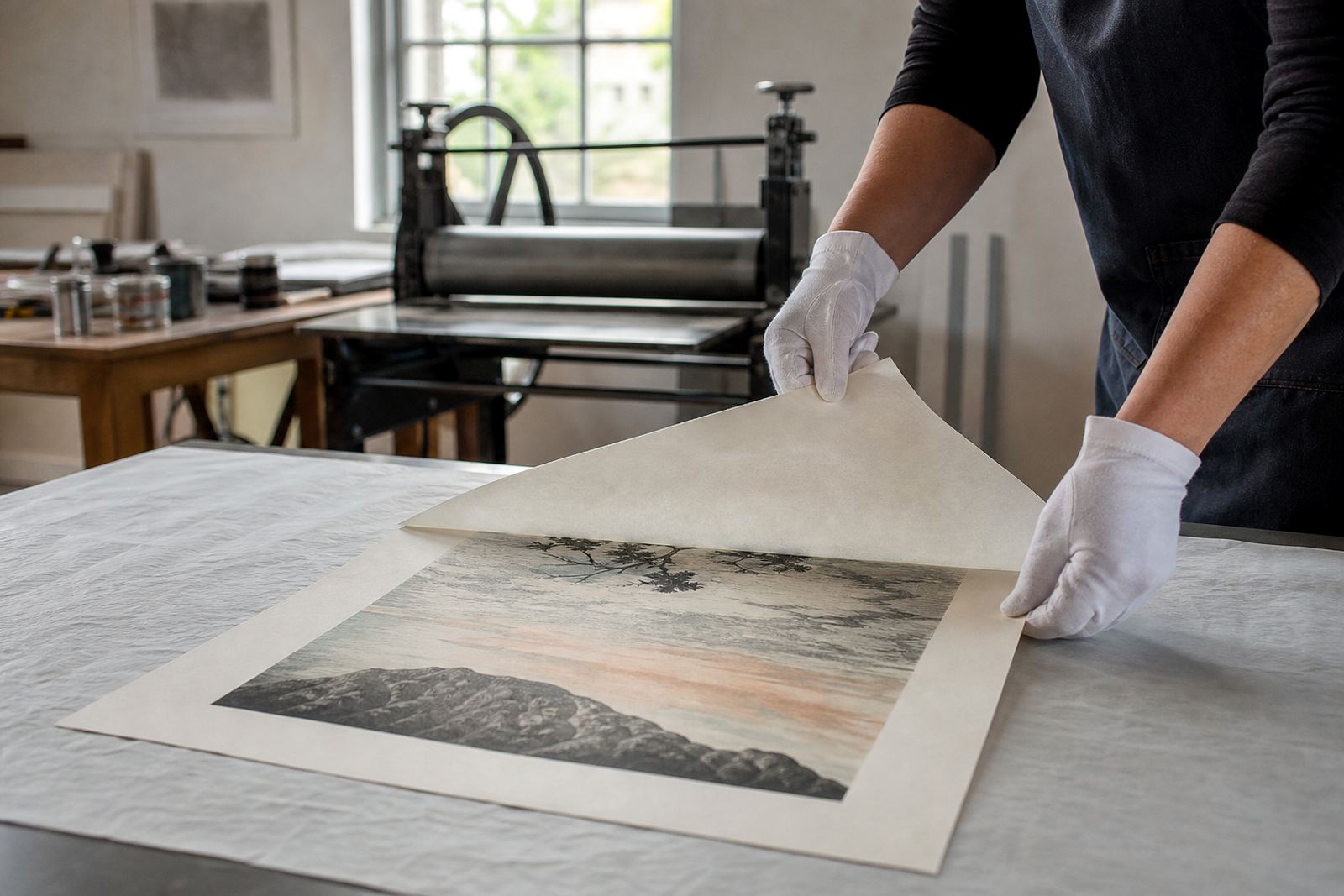
Edition numbers only stay meaningful if the print is cared for properly. Handle the sheet with clean hands or cotton gloves, and support it fully when moving it. Never roll a print tightly unless a conservator has advised it, and avoid sticky tape at all costs. If the print is framed, use archival backing and a mount that keeps the paper off the glass. That helps prevent cockling, staining and mould.
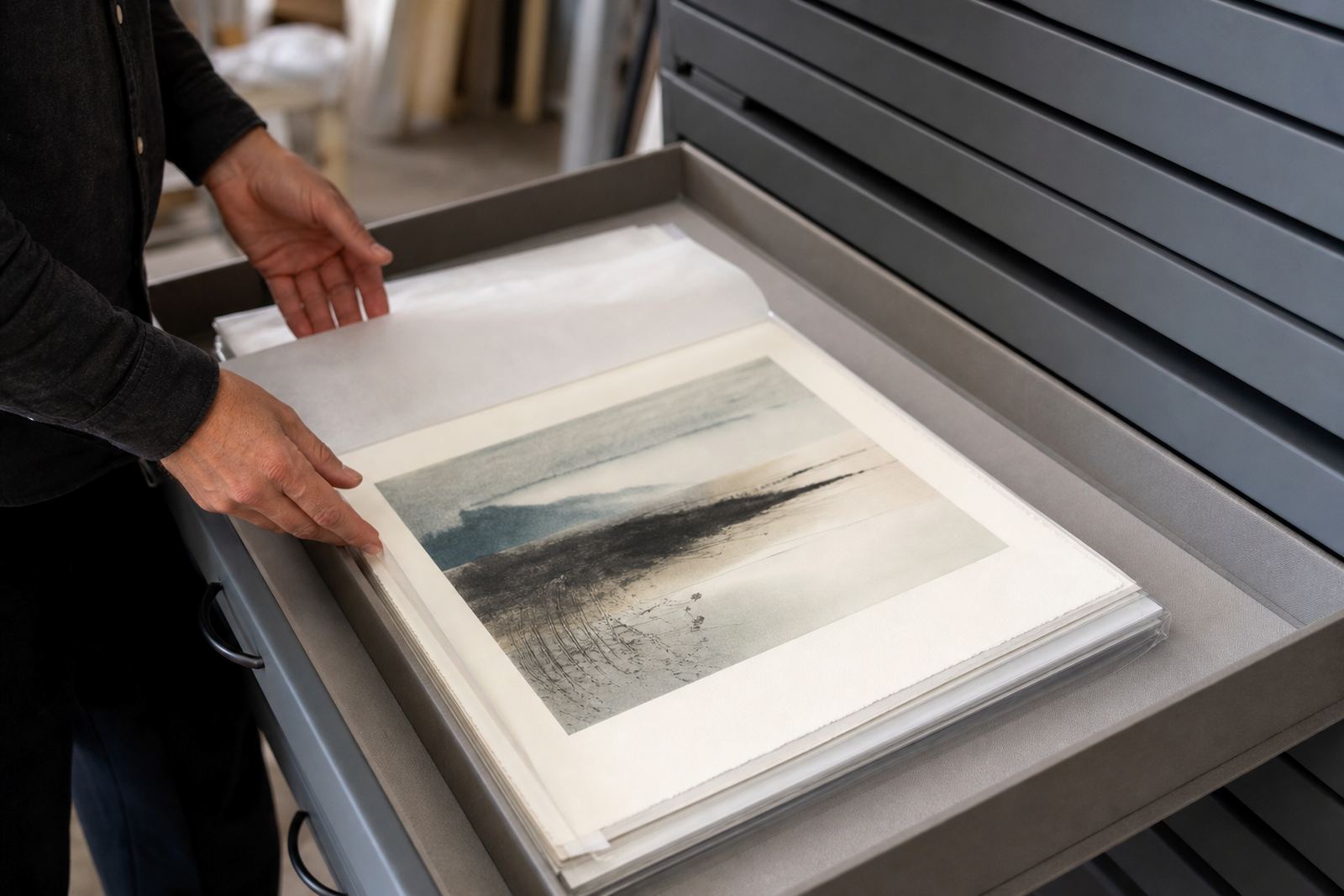
If you store unframed prints, keep them flat in a dry place with stable temperature. In coastal areas, a cupboard that gets damp in winter is not a good option. A simple acid-free folder in a clean, dry space is often better than an ornate storage solution that traps moisture.
Edition numbers are not just a label for buyers. They are part of the print’s history. When a collector understands what the number means, they are better placed to care for the work, discuss it accurately and pass it on with confidence.