Why stone lithography still matters in the studio
Stone lithography is one of the few print processes where the artist can draw directly on a limestone surface and keep the pressure, mark and hand of the original drawing in the final print. The stone is not just a carrier for the image, it is part of the printing system itself. At our Woodstock studio, that matters because it gives artists a way to work with tone, line and texture in a very direct way, whether they are making a single proof or a full edition.
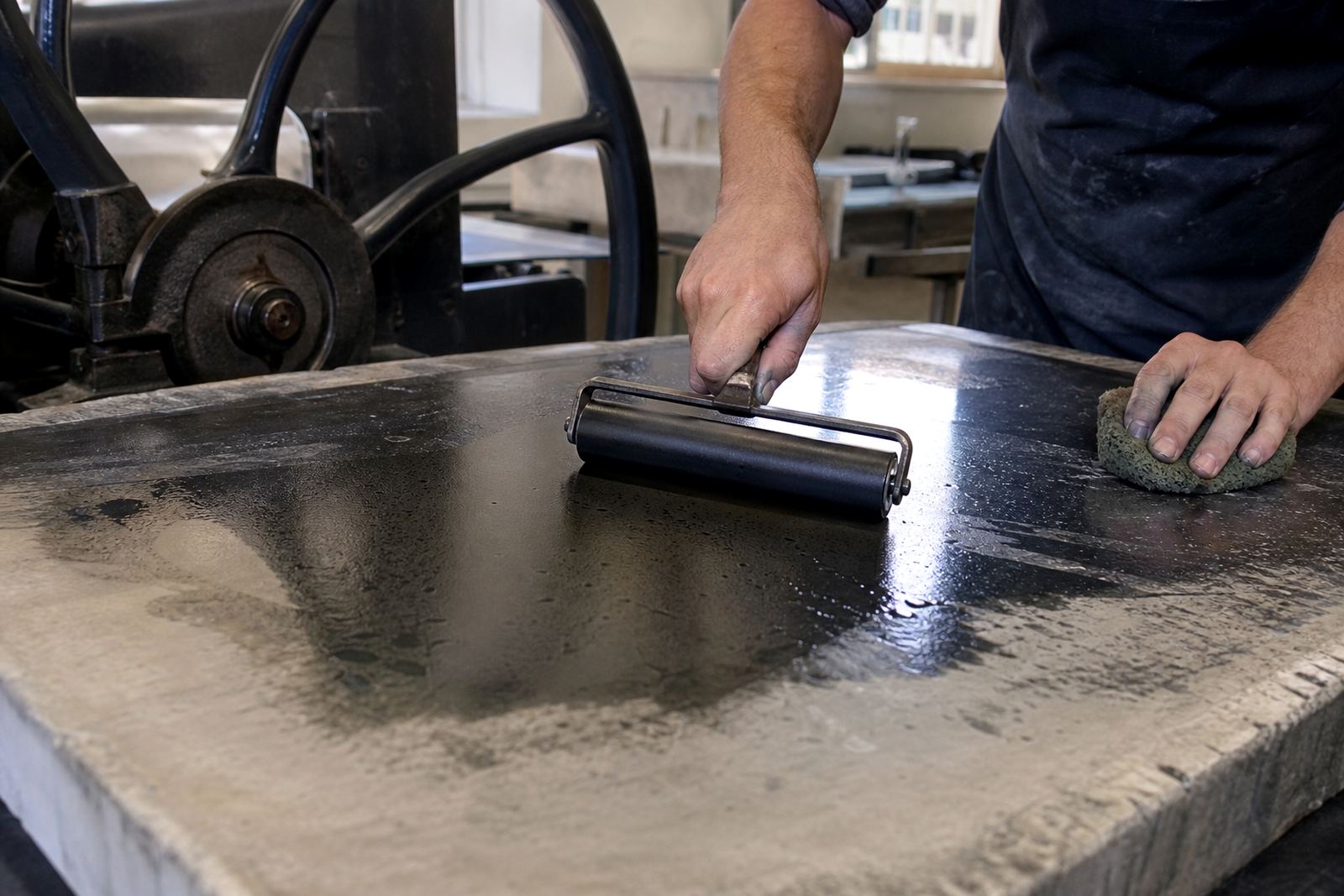
The grease and water principle is the heart of it. The image areas accept ink because they have been drawn or treated with greasy materials. The rest of the stone is kept damp, so it repels the greasy ink. That push and pull is what makes lithography possible, and it is why the process can hold very subtle marks without losing character.
How grease and water separate the image from the stone
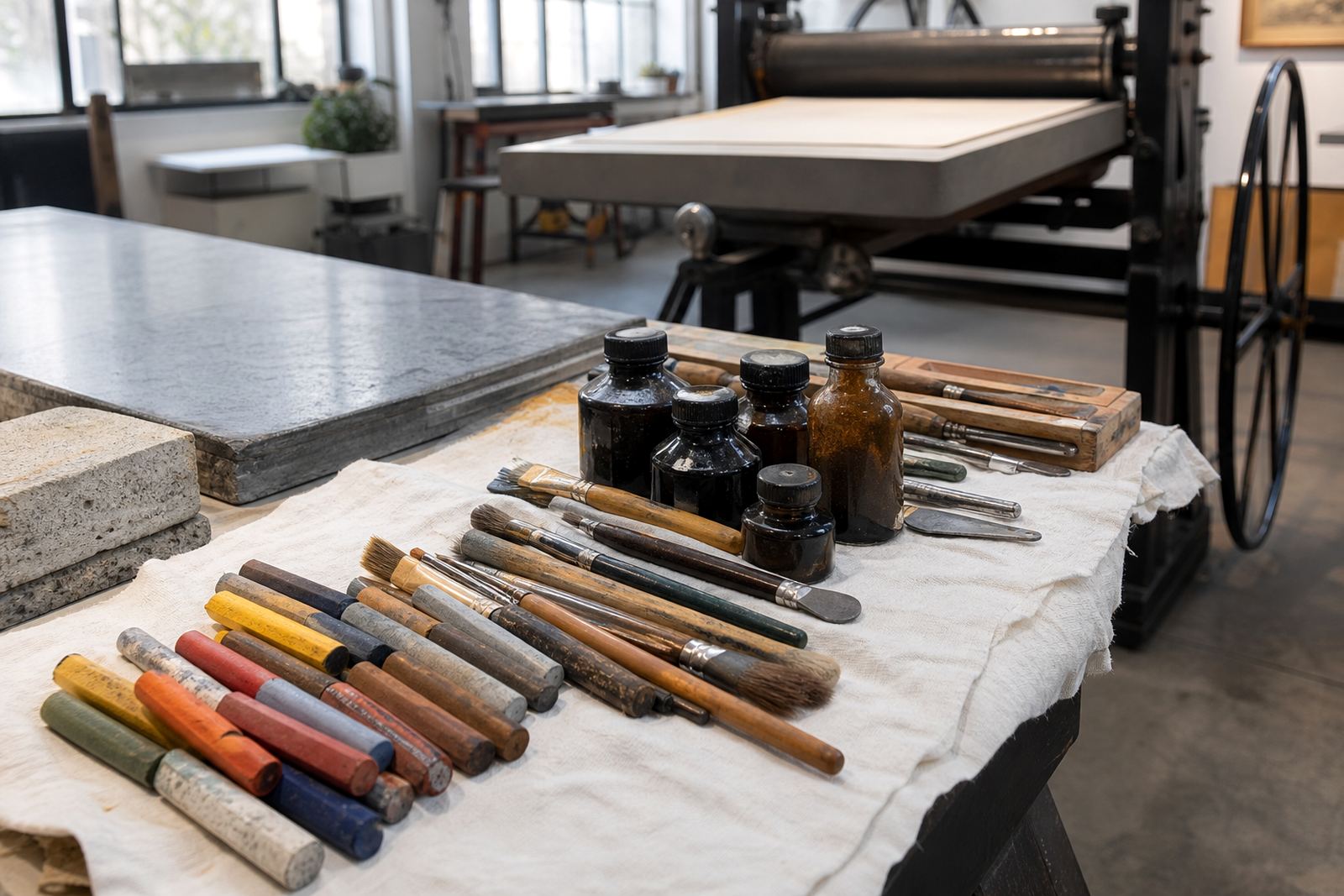
In practical terms, the artist draws on a prepared stone with materials that contain grease. The stone is then processed so the drawn areas become ink receptive while the clean areas hold moisture. When the printer rolls ink across the surface, the damp non-image areas stay clean and the greasy image areas take the ink.
The balance has to be right every time. Too much water and the image weakens. Too little water and the non-image areas begin to pick up unwanted ink. That is why a lithography studio watches the stone closely throughout printing, especially in Cape Town where humidity, temperature and long dry spells can change how the stone behaves from one day to the next.
- Greasy drawing materials create the image area
- Water keeps the non-image area active and clean
- Ink adheres only where the stone has been prepared to receive it
- Each pull must be monitored so tone stays consistent
What the printer is watching during every proof
A good proof is not just about getting a clean impression. It is about reading the stone, checking whether the drawing is holding, and adjusting the water and ink balance with care. Small changes can alter the print greatly, especially in areas of fine tonal work or broad colour fields. This is where experience counts, because the same stone may need different handling as the edition progresses.
At Lithography Art, proofing sessions are used to test the image before an edition is committed. That lets the artist and printer compare line weight, tonal density and registration before the final run begins. If a colour is too heavy or a soft line starts to close up, the issue can be corrected before dozens of sheets are printed.
- Check whether the drawn marks are holding cleanly
- Watch for unwanted ink in the damp areas
- Test registration between stones in colour work
- Compare first proofs with later pulls to keep the edition even
Why edition planning starts before the first print
People often think editioning begins after the image is finished, but in practice it starts much earlier. The number of impressions, the paper choice, the number of stones involved and the amount of hand work all affect the final edition. A single-colour print on a strong sheet of paper will behave differently from a multi-colour work that needs careful registration and drying time between each layer.
Edition planning also helps protect the integrity of the print. If the edition is too ambitious for the materials or the artist’s schedule, the quality can slip. A proper plan keeps the work focused, so every impression in the run stays within the agreed standard. Collectors notice that, and artists do too.
Choosing paper that supports the image and the climate
Paper is not an afterthought in stone lithography. It affects how the ink sits, how the surface feels and how the print ages. Some papers take a heavy ink layer beautifully while others are better for lighter tonal passages. The printer also has to consider how the sheet will respond to local conditions, especially in coastal areas like Sea Point or Durban where moisture can affect handling and drying.
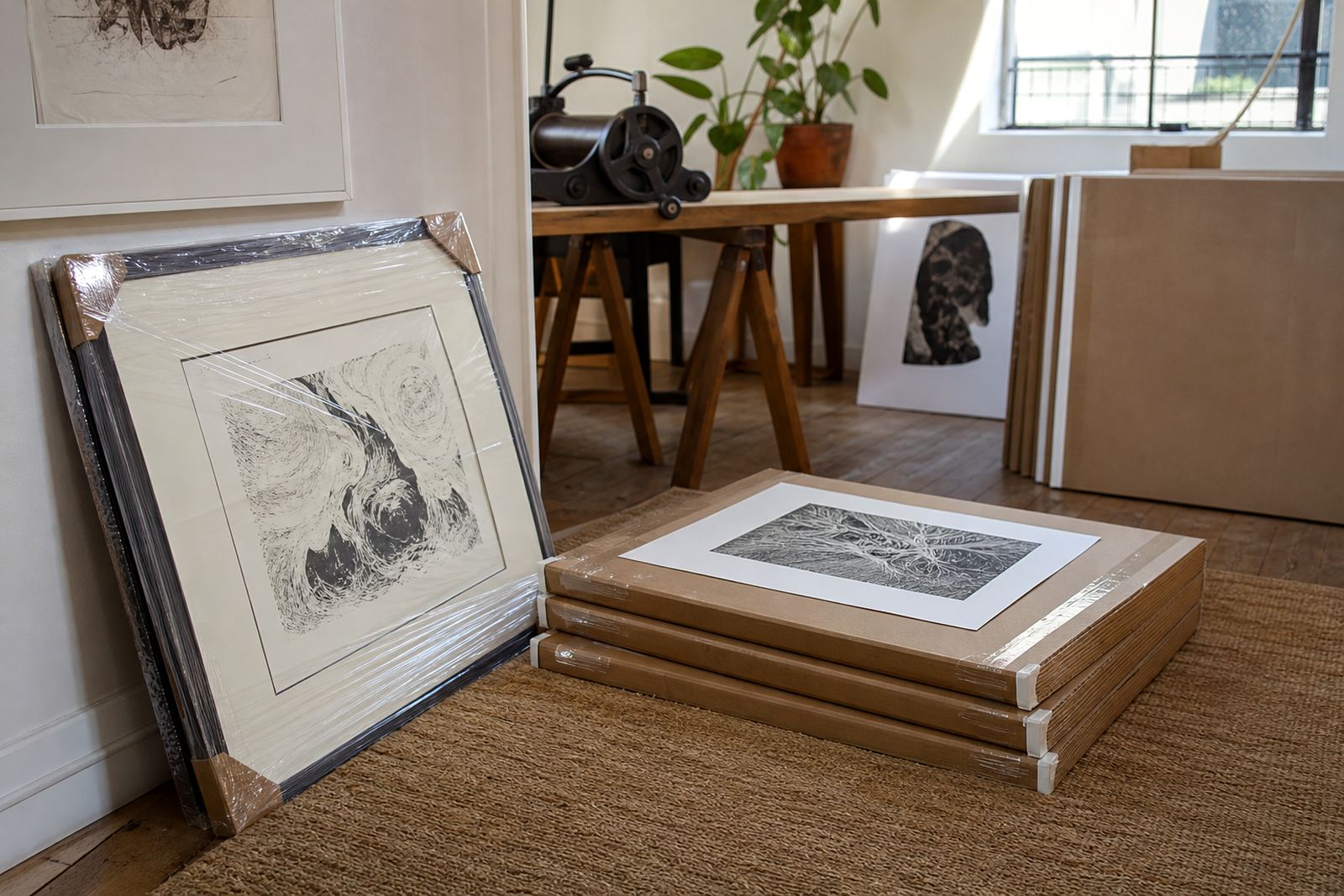
For artists and collectors, paper choice is one of the most practical decisions in the studio. A sheet that is too thin may buckle during printing, while a sheet that is too absorbent may soften detail. For editions sent to Johannesburg or Pretoria, the final packing has to keep the sheets flat and protected from dust and heat during transit.
- Fibre content affects strength and handling
- Surface texture changes the look of the print
- Heavier sheets suit more pressure and layered work
- Archival packing helps the paper stay stable in transport
What collectors should know about care after purchase
Once a lithograph leaves the studio, its care is straightforward but important. Prints should be kept out of direct sun, framed with archival materials and handled by the edges where possible. If a print is stored flat, it should be placed in a clean, dry space away from damp walls and roof heat.
Collectors in Stellenbosch or Newlands often ask whether a print can be displayed immediately. The answer is yes, provided the framing is done properly. Use a mount and backing that do not damage the sheet, and avoid hanging the work where steam or sea air will affect it. With the right care, a lithograph can stay fresh and stable for many years.
From the press room: The studio floor in Woodstock
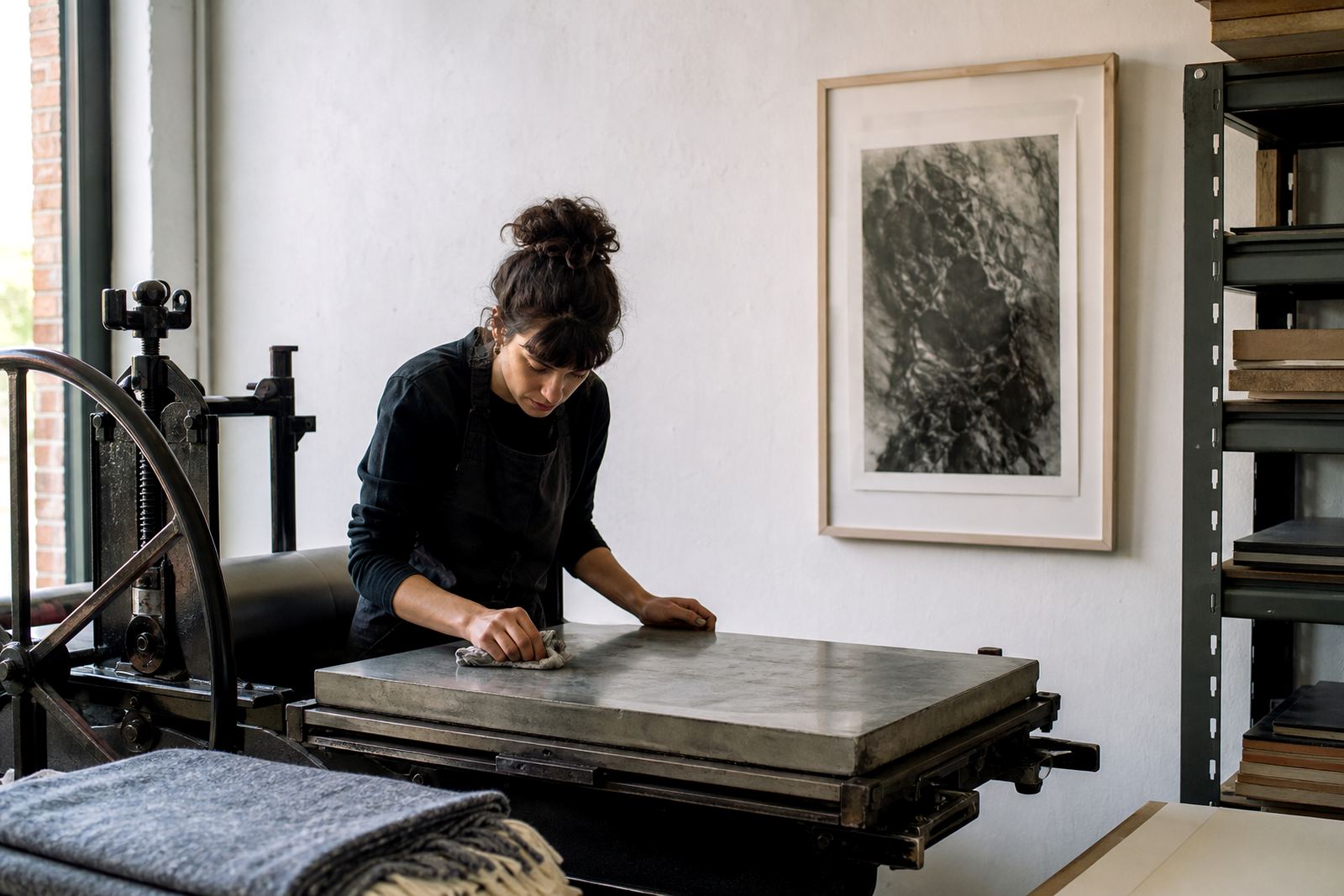
One of the clearest ways to understand the grease and water principle is to watch a stone being brought to print in our Woodstock studio. A drawing is made, the stone is prepared, and then the first proof is pulled with careful attention to dampening and ink roll-out. If the image is too light, the printer may adjust the ink mix or the water balance. If a colour layer is part of the work, each stone must register precisely with the others.
That process is practical, not magical. It depends on patience, timing and a good eye. For artists visiting from Cape Town or collectors arranging studio visits, it becomes clear very quickly that lithography is a craft of fine control. The chemistry is simple enough to explain, but the outcome depends on skilled hands and steady judgement.
That is why the grease and water principle remains central to stone lithography today. It is not just the theory behind the process, it is the reason the work can carry such depth, line and presence from stone to paper.