Why a lithograph needs gentler handling than a poster
A stone lithograph is printed from a drawn stone, then pulled onto paper in a hand-worked edition. That means the paper, ink layer and deckle or trimmed edges all deserve more care than a mass-produced print. Even when the image is dry, the sheet can still pick up smudges from skin oils, bend under its own size, or crease where the paper fibres are stressed.
The safest mindset is simple: treat every sheet as if it can mark easily. Avoid stacking prints loosely on a table, sliding them across rough surfaces, or holding them by one corner. In a studio, on a framing counter, or at home in Observatory or Sea Point, the same rule applies. Smooth hands, clean surfaces and patient movement do more for the print than fancy storage ever will.
- Keep food, drinks and damp cloths away from the print area.
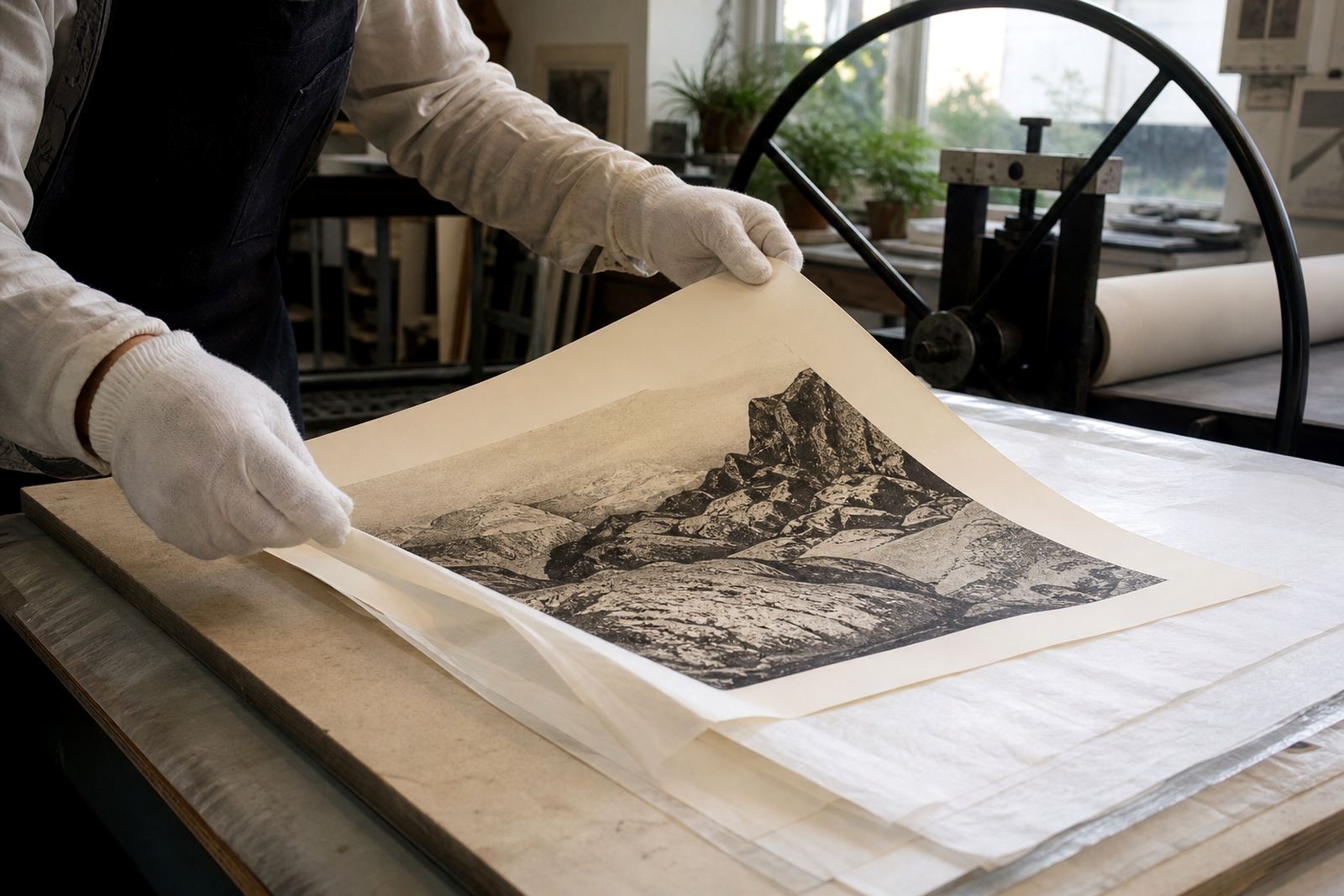
- Wash and dry hands before handling, or use clean cotton gloves if the paper is very sensitive.
- Work on a clean, flat surface with enough space for the full sheet.
How to lift, carry and turn a print without marking it
Most handling damage happens during the move from one surface to another. Lift the print with both hands and support it from underneath, especially if it is a large edition sheet. Never pinch the paper edges tightly. That pressure can leave a permanent bend, especially on heavier cotton papers used for fine-art editions.
When turning a sheet, slide one hand under the print and the other at the far edge, then rotate it slowly on the surface. If you need to inspect a corner or the signature area, do not drag the print towards you. Lift, reposition and lower it gently. In humid Cape Town weather, paper can feel slightly softer, so even light pressure can leave a mark if the sheet is not fully supported.
- Keep fingers away from the printed image where possible.
- Do not lift a print by one corner only.
- If two people are moving a large sheet, agree on one direction before lifting.
Smudges, oils and the trouble with impatient fingers
Fresh-looking prints can still be vulnerable to surface marks, especially if the image contains dense black areas or rich colour passages. Skin oils, lotion and dust create small shiny spots that are hard to remove without affecting the print. Once a smudge is on the paper, it is usually there for good, so prevention is the only reliable approach.
If you need to check a print closely, use clean support paper beneath it and handle the sheet by the outer margins. For editioned work, avoid touching the signature and numbering area while the print is being moved around the studio or at home. It is a small habit, but it protects both the image and the record of the edition.
- Do not rest wrists or forearms on the paper.
- Keep pencils, markers and loose pigment away from the sheet.
- Never rub a smudge in the hope of lifting it.
Flat storage, humidity control and local conditions
For collectors in Durban, Cape Town and other coastal areas, humidity is one of the main concerns. Paper can cockle, curl or feel more vulnerable when the air is damp. The best storage is flat, in an archival box or between clean, acid-free sheets, away from direct sun and away from walls that pull in moisture. In dry inland homes around Pretoria or Johannesburg, the problem is often less about damp and more about dust, heat and careless stacking.
If you are storing unframed prints, keep them horizontal and fully supported. Never slide a print under a pile of books or lean it upright behind furniture. A print that looks fine today can develop edge waves or corner bends by the next day if the storage is poor. For long-term keeping, stable room conditions matter more than constant moving from room to room.
- Store prints flat, not rolled, unless a printer has advised otherwise.
- Avoid top shelves near ceilings where heat gathers.
- Keep prints out of sunlight and away from geysers, kitchens and bathrooms.
Framing and transport when the print leaves the studio
Transport is often where a good print gets damaged. If you are carrying a sheet from Woodstock to Stellenbosch or sending work to a collector in Durban, the print should be protected between stiff boards or in a rigid portfolio. A loose envelope is not enough. Wind, vibration and a sharp corner can all leave a crease before the print even reaches the framer.
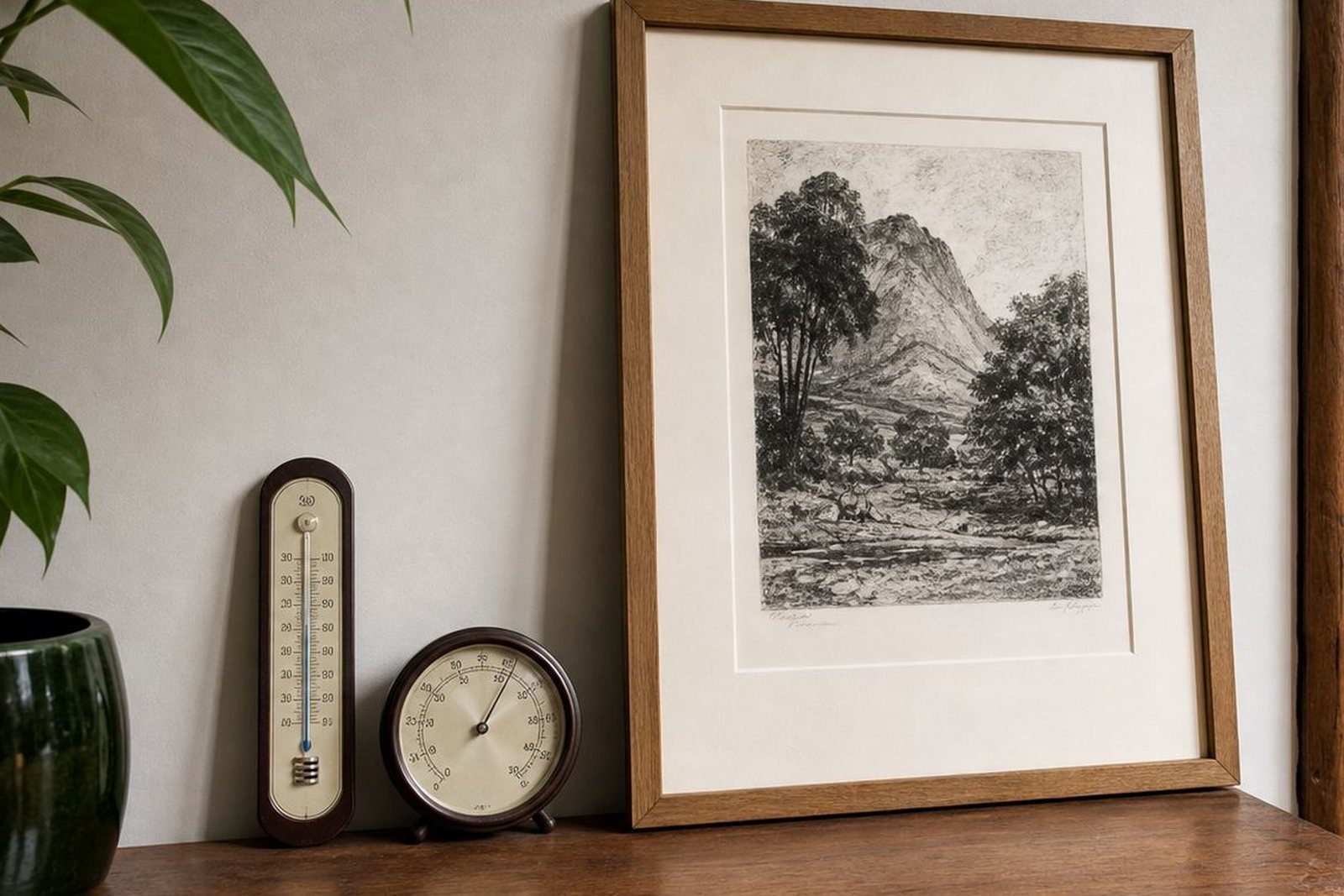
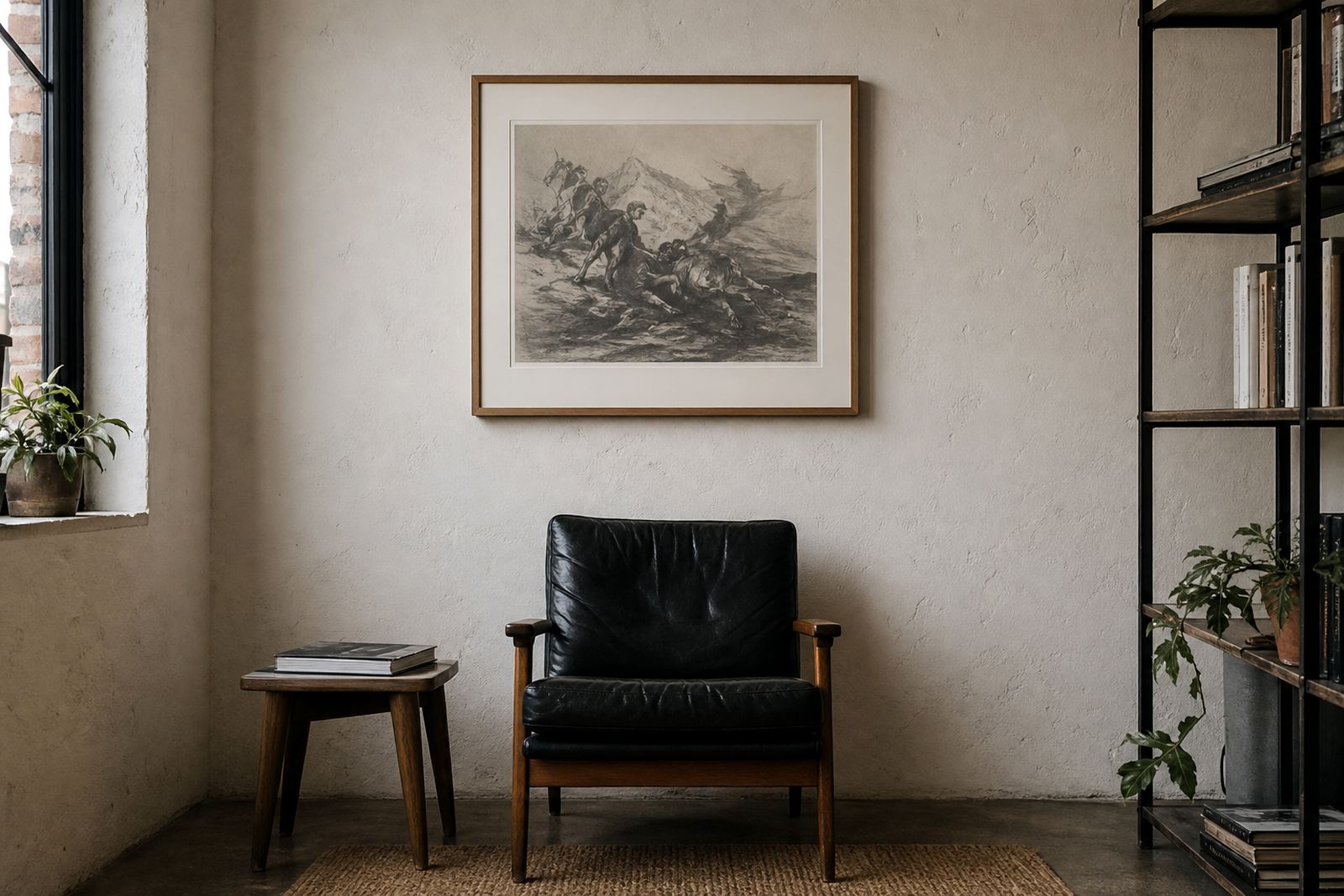
Framing should also support the print properly. Use materials suited to archival care, and make sure the sheet is not forced under glass or held by tape that can stain later. If a print is being delivered before framing, keep it in its protective folder until it reaches a stable, dry place. One careless handover at reception or in a car boot can undo a lot of careful studio work.
- Carry prints flat in a rigid folder or between boards.
- Do not leave prints in a hot car.
- Check that framing materials will not touch the image or stain the paper over time.
Edition care for collectors, artists and studios alike
Safe handling is part of edition care, not just storage. When a print is signed and numbered, the edition record matters as much as the image itself. Keep the certificate or note of edition details with the work, and if you are selling or gifting the print, pass along any handling notes too. Collectors appreciate clear information on how the sheet was stored, framed or transported.
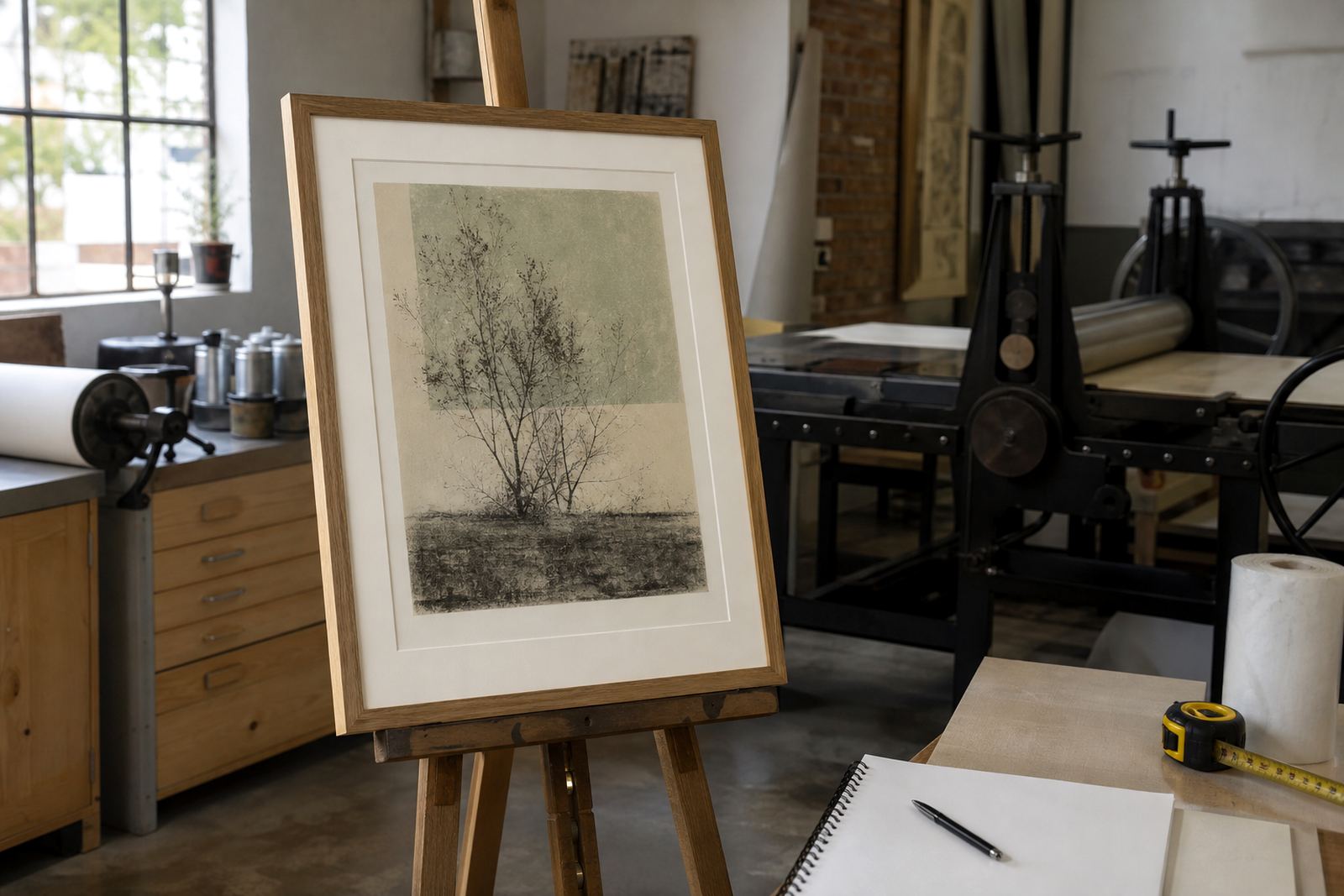
In a working studio, prints should be checked on a clean surface before they leave the press area. That is where a small crease, a thumb mark or a rubbed edge is easiest to catch. For collectors, the same discipline applies when opening packaging at home. Take your time, clear the table first, and let the print lie flat before removing any interleaving paper. Slow handling is not fussy, it is practical.
- Keep edition information with the print for future reference.
- Open packaging on a clean, dry table with enough space.
- Inspect edges and corners before framing or filing the print away.