Why paper reacts so quickly to the air
Paper is made from fibres, and those fibres take up and release moisture from the air. When humidity rises, paper can soften and expand. When the air dries out, it can contract. That movement is part of everyday life for any paper-based artwork, but it becomes more noticeable in fine-art prints where clean edges, even borders and accurate registration matter.
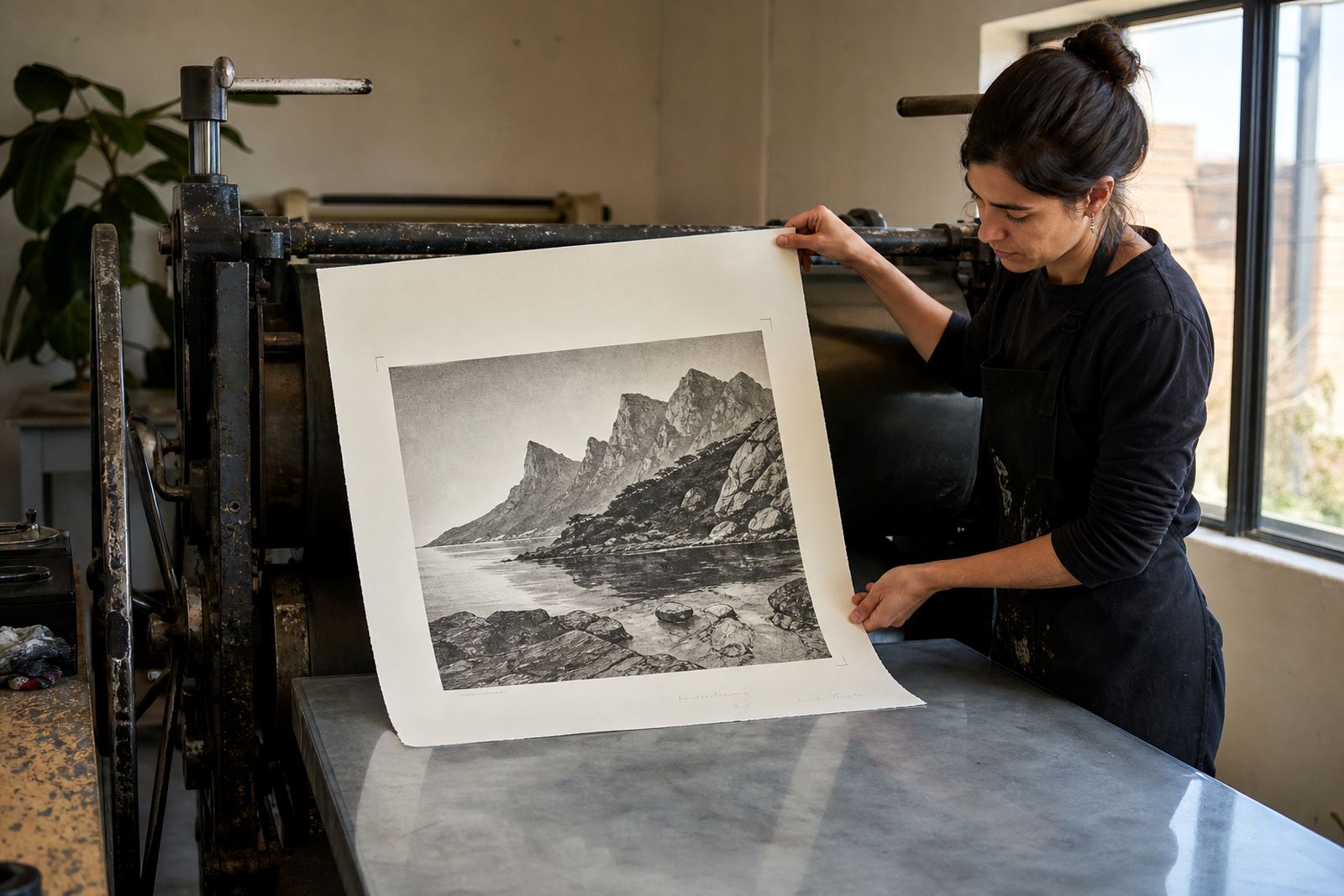
In stone lithography, the paper sits at the centre of the process. A good edition depends on careful inking, pressure and drying. If the paper is too damp or too dry, the sheet may not lie evenly, and that can affect the final impression. For collectors, the same principle applies after the print leaves the press. A calm environment helps the work age more gracefully and makes framing and storage easier.
What stable humidity means in a Cape Town context
Cape Town weather can shift quickly. A cool, damp morning in Woodstock can turn into a dry afternoon once the wind picks up, while coastal air near Sea Point or Durban brings its own moisture. Inside a home, open windows, heaters, air conditioners and closed cupboards all influence the air around a print. That is why stable humidity matters more than chasing one perfect number every day.
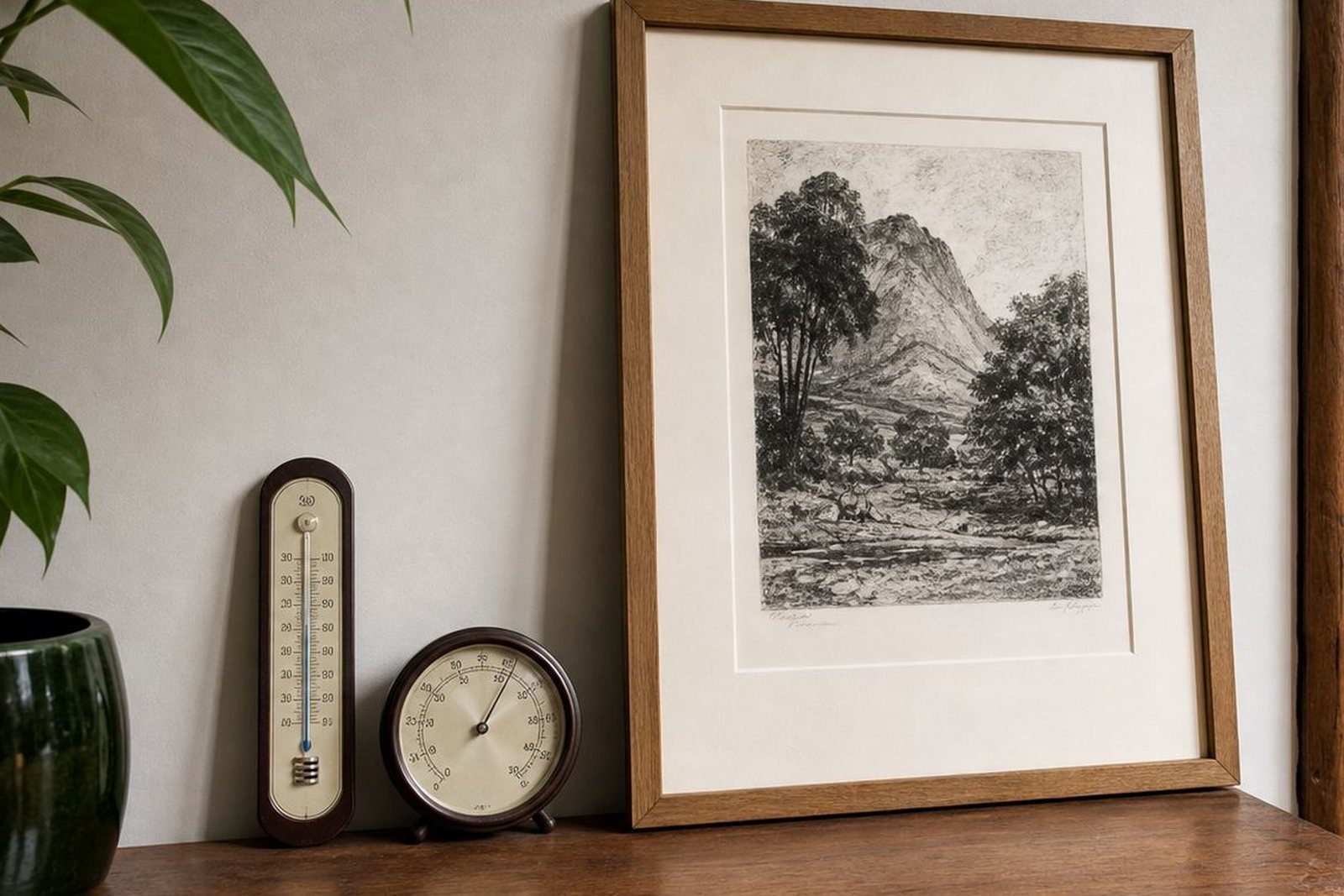
For paper artworks, the goal is consistency. Large swings are harder on the sheet than a moderate level that stays fairly even. In practice, that means keeping works away from damp walls, direct sun and spots where air moves hard and fast from a fan or heater. In older homes and flats with uneven ventilation, this takes a little planning but it is worth it.
- Hang or store prints away from bathrooms, kitchens and laundry areas
- Avoid placing framed works directly above heaters or in strong sun
- Let newly framed works rest in a stable room before moving them again
- If a room feels clammy in summer, improve airflow rather than sealing the paper in a warm spot
How stone lithographs are made to handle the editioning process
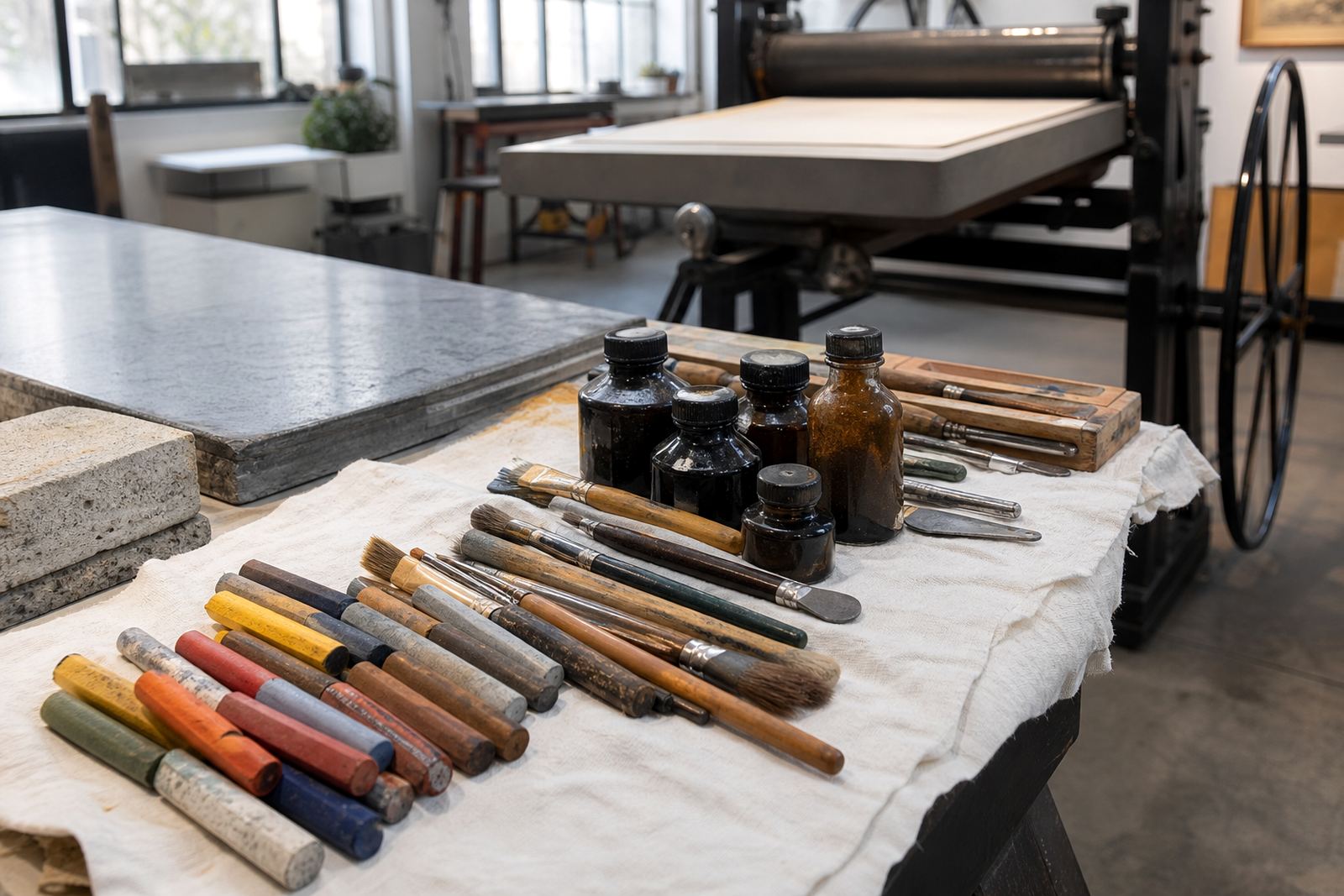
With stone lithography, printing happens from a specially prepared stone surface using grease-based drawing materials and a chemical balance between image and non-image areas. Each colour is printed separately when needed, and each sheet passes through the press with care. Because the paper must accept ink cleanly and hold the image without damage, the condition of the sheet matters from the first proof to the final signed print.
Editioning is the process of producing a planned number of prints from the same image. Within an edition, consistency is important. Paper choice, dampening, drying and handling all need to be controlled so that each sheet sits as close as possible to the intended result. If humidity swings during production, the paper may behave differently from one session to the next, and that can affect registration, ink density and the time needed for drying.
- Paper should be stored flat in a dry, clean space
- Sheets need time to acclimatise before printing or framing
- Finished prints should dry fully before packing or stacking
- Edition records help track paper type, colour state and handling notes
Signs that humidity is becoming a problem
Most collectors notice trouble first as a visual change. A print may start to wave at the edges, or the mount may no longer sit flat. Over time, repeated moisture changes can create cockling, slight ripples or weak corners. In severe cases, mould can form if a sheet is stored in a closed, damp space. That is especially relevant in coastal homes, basement storage and rooms with poor air movement.
It helps to inspect works now and again rather than waiting until a frame is opened years later. A print that has been protected from direct sun may still suffer if the backboard was made from poor materials or if the wall behind it stays cool and damp. This is common in winter on outside walls in older Cape Town buildings, and similar conditions can happen in Johannesburg during dry spells followed by summer storms and indoor cooling.
- Look for waviness, tide marks or a musty smell
- Check that the frame backing is dry and clean
- Watch for white spotting or brown foxing on older sheets
- Make sure the print is not touching glass unless it was framed that way with care
Practical print care for collectors at home
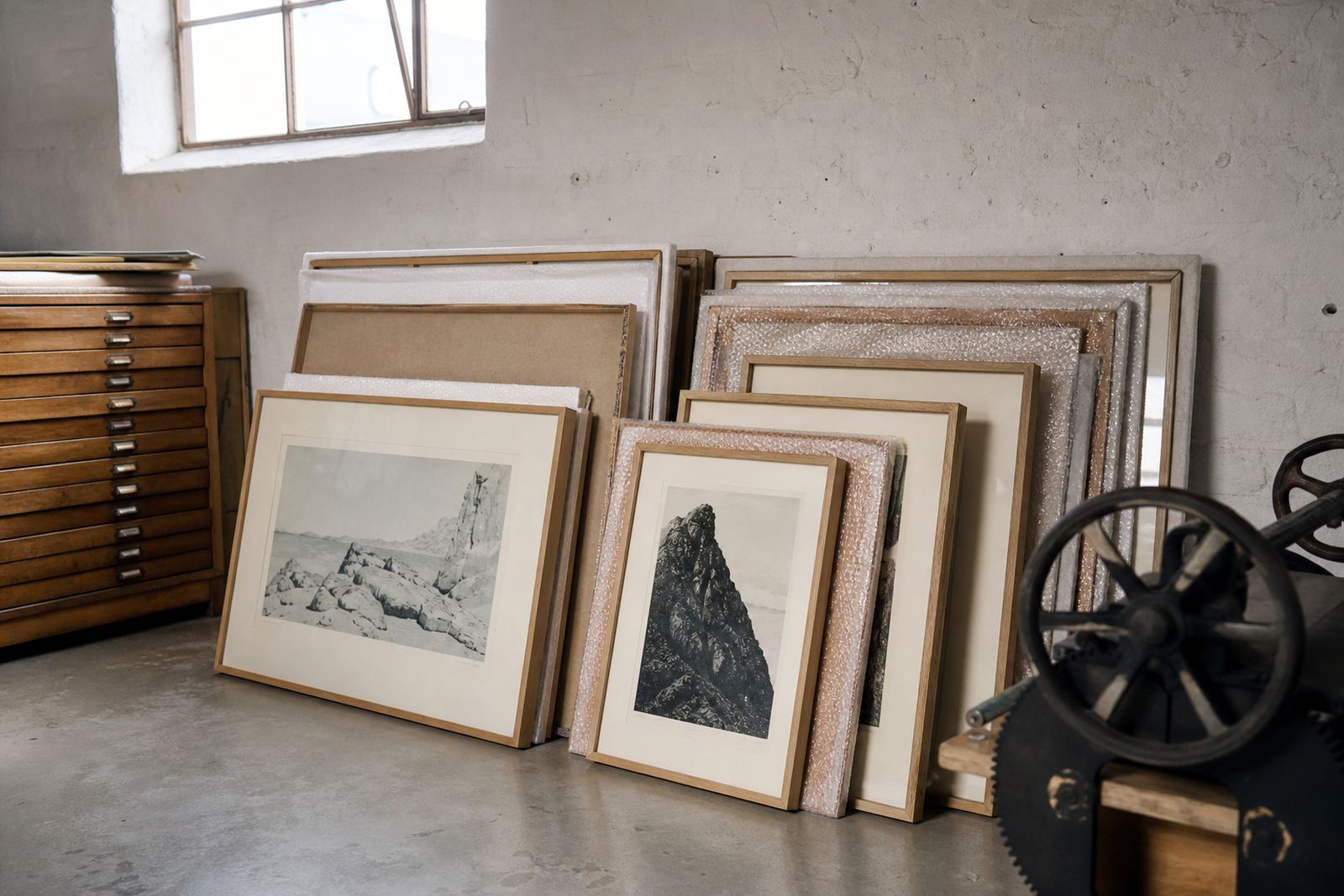
The best care is simple and steady. Keep unframed works in archival sleeves or folders, stored flat and off the floor. Framed prints do well in rooms with even conditions and limited direct light. If a home uses air conditioning, avoid placing the artwork where the airflow blows straight onto the wall. If you live near the coast, check the back of framed works a few times a year, because salty air and moisture can creep in around the edges.
For collectors in Stellenbosch, Pretoria or Durban, the same principle still applies: avoid extreme changes. A print taken from a cool room into a hot car, then straight into a humid room, can move too fast. Give it time to settle. If a print needs cleaning, do not wipe the surface with a damp cloth. Dust should be removed gently with a clean, dry method that will not disturb the ink or paper surface.
- Store unframed prints flat, in acid-free sleeves or interleaving
- Use archival mounts and backing materials for framing
- Keep artworks out of kitchens, bathrooms and window glare
- Move prints slowly between spaces with very different temperatures
When to ask for studio advice
Some humidity issues are easy to manage at home, but others call for a careful look from a print studio. If a sheet has warped, shown mould, or picked up marks from poor storage, it may need specialist advice before any further handling. The same applies if you are planning a larger collection wall and want the prints to hold their shape over time. A good framing plan starts with the paper itself, not only the frame around it.
At a working lithography studio, edition planning often includes advice on drying time, packing and long-term storage because these decisions affect the life of the print after it leaves the press. That is true whether the work goes to a collector in Woodstock, Newlands, Sea Point or farther afield. Stable humidity will not solve every preservation issue, but it does remove one of the main sources of stress on paper. For fine art, that is a solid start.
A simple rule for long-term preservation
If paper can stay in a calm room, it has a far better chance of staying flat, clean and easy to enjoy. That is the main reason humidity matters. Prints are made to be lived with, but they need a steady environment to do that well.
For collectors, the habit is plain: keep the air stable, handle the sheet gently and frame with care. For artists and printers, it means building each edition on a controlled routine from the stone through to packing. The work may begin in the studio, yet its life continues in the room where it hangs.