Why rotation helps a print stay in good condition
Stone lithography relies on the bond between image, paper and hand printing. That makes each sheet something worth looking after, especially once it is framed and exposed to light, humidity and everyday dust. Rotating your displayed works is one of the simplest ways to slow fading and reduce stress on the paper, particularly in South African homes where summer sun can be strong and coastal air in places like Sea Point or Durban carries extra moisture.
When a print stays in the same position for years, the areas nearest a window or a light fitting can age faster than the rest of the sheet. Even if the change is gradual, it becomes visible over time. Rotation lets you share the light more evenly across a collection and gives each work a rest from direct exposure. It also helps collectors notice details again, which is part of the pleasure of owning editioned prints in the first place.
How stone lithography prints respond to light and handling
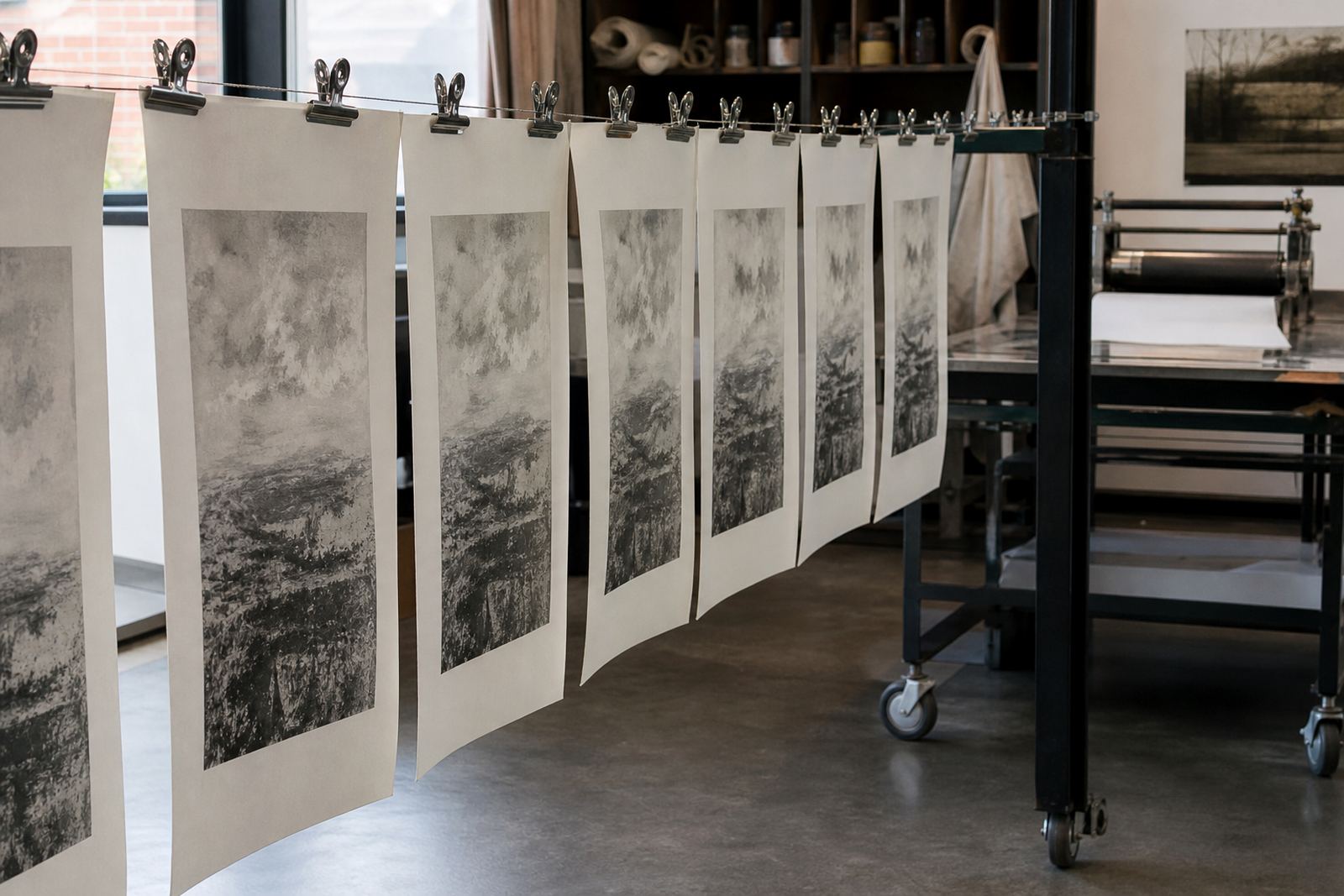
In stone lithography, the artist draws or works on a limestone surface, then the image is fixed through the traditional grease and water process before printing. The result is a print with rich marks, fine tonal shifts and a strong handmade character. Because the image sits in the paper rather than on top like a poster coating, care starts with handling and framing from day one.
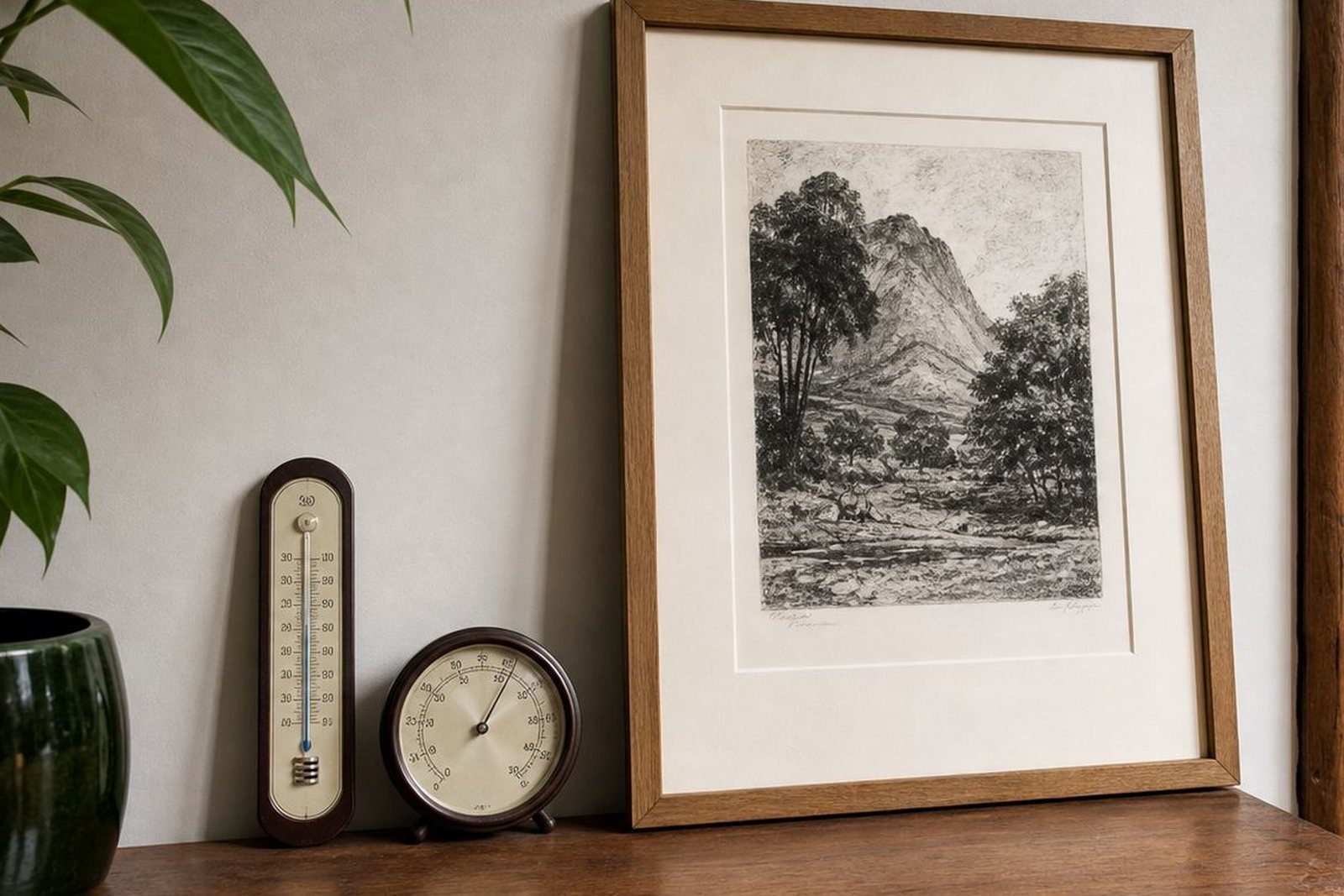
Collectors often ask whether a print can simply stay up permanently. It can, if the display conditions are sensible, but rotation gives you more control. Paper is sensitive to direct sun, damp rooms and heat from ceiling lights or heaters. In a Cape Town flat or a Johannesburg townhouse with bright morning light, moving works every few months can make a real difference. It is also a good time to check mounts, glazing and any signs of foxing or dust build up.
A simple rotation plan for homes and small collections
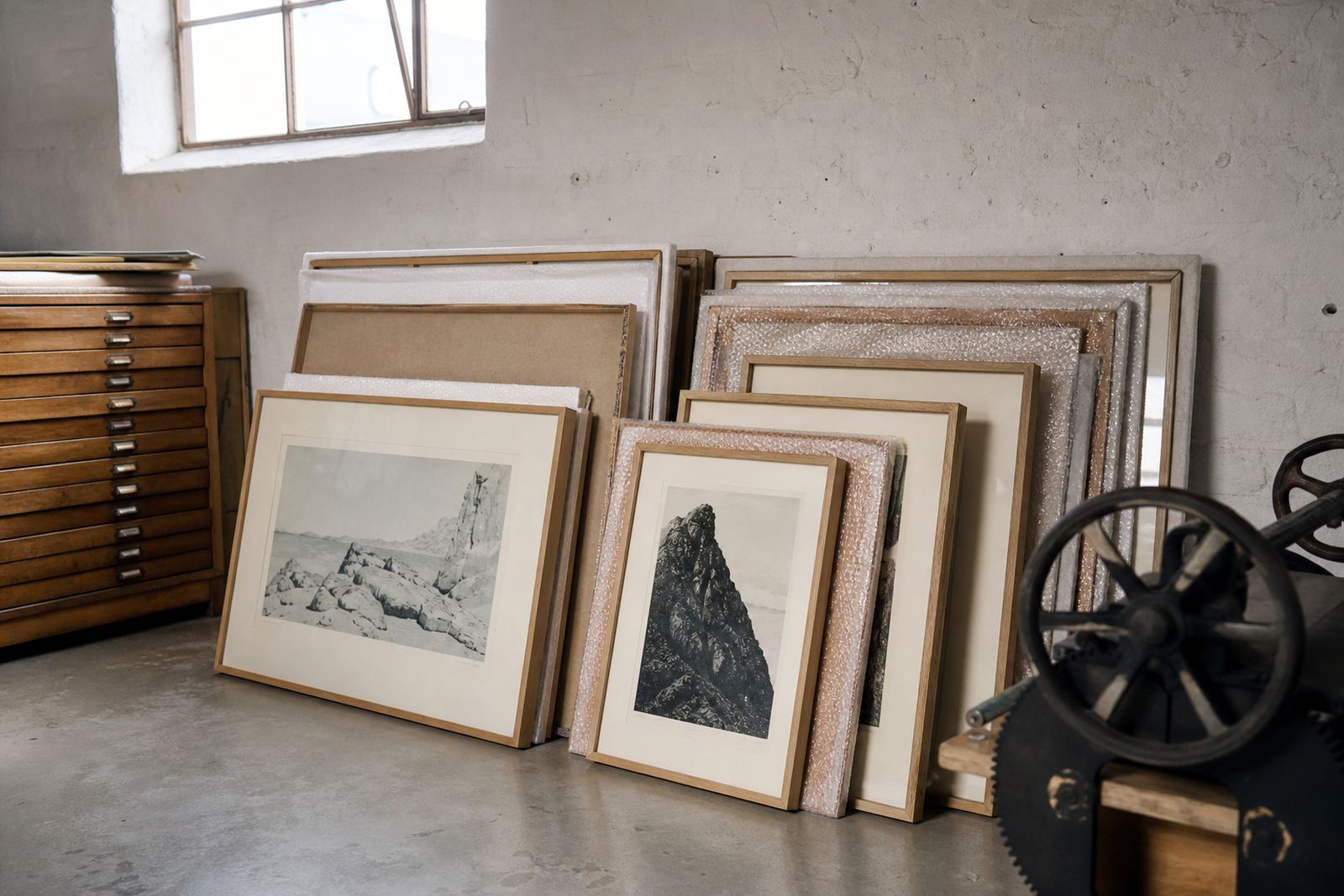
You do not need a large storage room or a complicated system. A practical rotation plan can be as simple as changing key works with the seasons, or swapping them when rooms are redecorated, painted or cleaned properly. Many collectors keep one group on the wall and another group stored flat in archival folders, then alternate them through the year.
- Keep a note of where each print was displayed and for how long.
- Use archival interleaving paper between unframed works.
- Store prints flat, in a dry room, away from direct sun.
- Handle sheets with clean hands or cotton gloves if the paper is delicate.
- Check the back of framed works for dust, loose fixings and any signs of moisture.
A rotation plan is especially useful if you collect across different sizes. A large lithograph can anchor a lounge for a while, then a smaller image can take its place when you want a change. This keeps the room fresh without forcing you to crowd too many works together.
Reading the edition and deciding what to display now
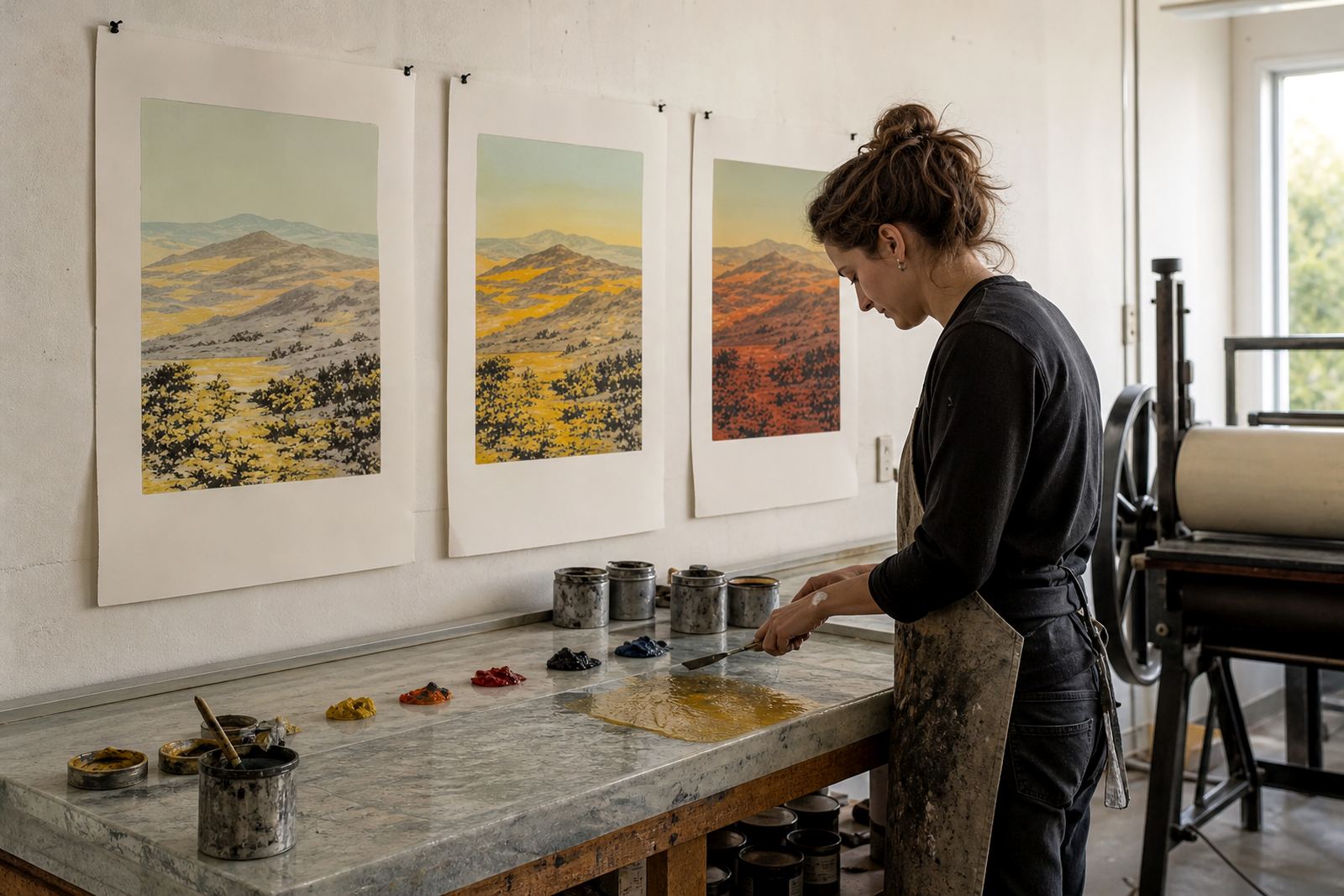
Editioned lithographs carry their own logic. Some collectors prefer to keep the earliest impression they bought on the wall, while others choose the print that suits a particular room best. There is no single rule, but it helps to understand how the edition sits together. Proofs, signed sheets and numbered copies all belong to the same making process, yet each one may show slight variation in ink, pressure or paper tone.
That is part of the appeal of limited editions. A work can be both consistent and individual. If you own several prints from the same edition, rotation gives you a chance to compare them. You may notice how one sheet carries softer colour, while another has sharper contrast. For collectors, that comparison can be as rewarding as the display itself, and it often deepens appreciation of the artist's process.
- Choose the strongest visual match for each room, not just the largest sheet.
- Keep signed and numbered details visible when framing allows.
- Use rotation to protect more fragile papers from long exposure.
- Revisit older works, they often feel new again after a few months off the wall.
Local conditions matter, especially in Cape Town and coastal areas
In Woodstock, where many studios and collectors work in converted spaces, the environment changes from one room to the next. High ceilings, street dust and afternoon sun through large windows all affect paper differently. A print that is perfectly happy in a north-facing study may not suit a sunlit living room in Newlands or a coastal apartment in Sea Point.
Humidity is another reason to rotate. Near the coast, framed works can show stress if the back is not sealed properly or if the room gets damp during winter. In inland cities, dry air and intense summer heat can also be hard on framed paper, especially if a work sits above a fireplace or near a cooking area. The point is not to keep art hidden, but to place it thoughtfully and give it a break now and then. That small habit can make a collection last much longer.
Working with a studio when you want to update a display
For many collectors, the easiest way to manage rotation is to speak with the studio that printed the work. A good stone lithography studio can advise on paper handling, edition notes, framing support and packing when a print needs to travel between homes. That matters whether you are moving a sheet from Cape Town to Stellenbosch, or sending a work to a family member in Pretoria or Durban.
At Lithography Art in Woodstock, collectors and artists often discuss edition planning, paper choice and archival packing at the same time as the print itself. That practical approach helps when a collection grows. If you are unsure which works should stay on display and which should rest in storage, a studio visit can help you decide. The goal is simple: keep the prints in good condition, and make sure the ones on the wall still earn their place every day.