Why limestone still matters in the lithography studio
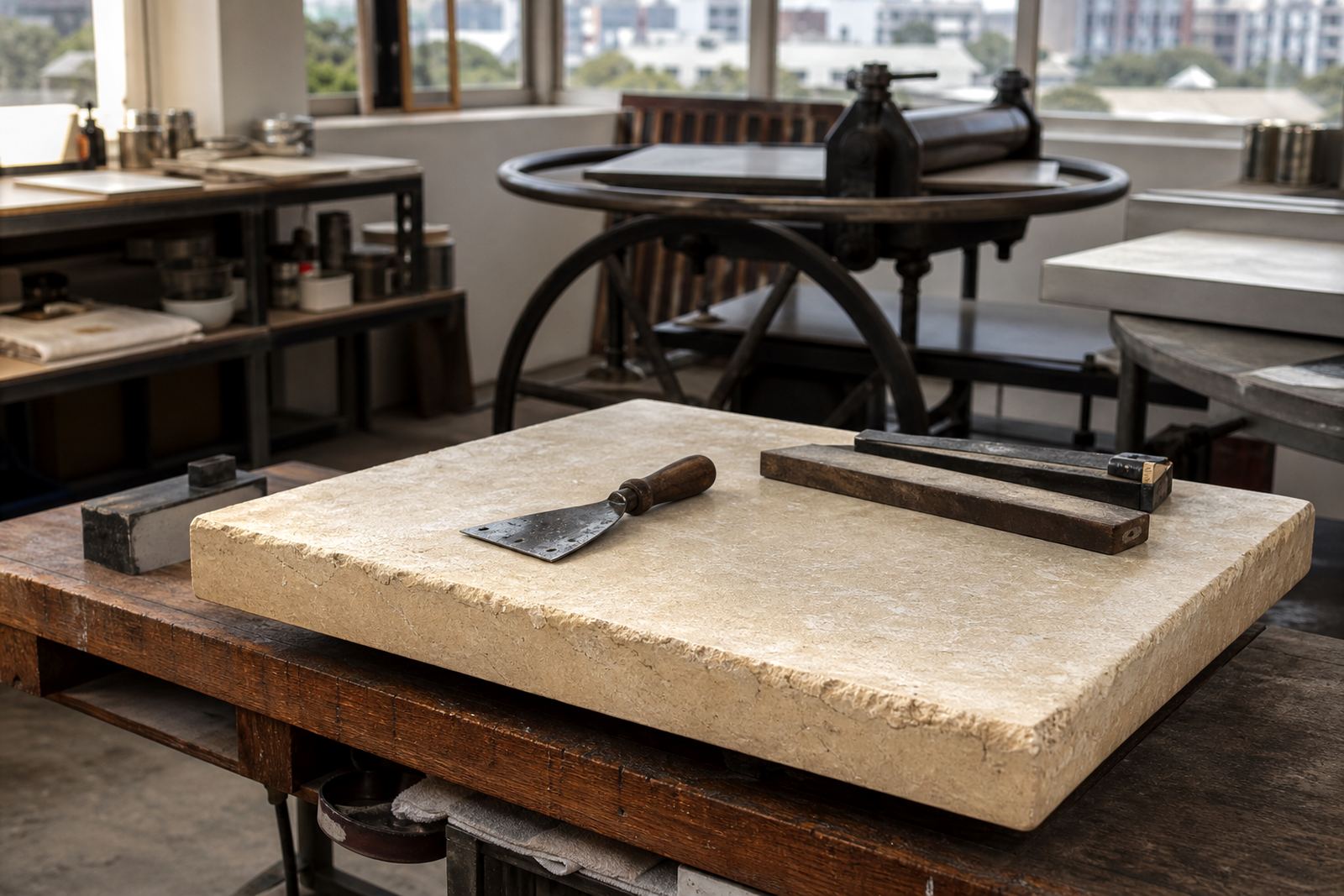
In stone lithography, the image is drawn directly onto a carefully prepared limestone surface. The stone is not just a support, it is part of the printing process itself, because the drawn areas accept ink while the damp non-image areas repel it. That simple chemical principle is what gives stone lithography its particular depth, tonal range and grain.
Good limestone has a fine, even structure that lets an artist work with pencil, crayon, tusche or other lithographic materials and still hold delicate marks. It also stands up to repeated processing, which matters when a small edition has to be printed over several sessions without losing consistency.
How a stone becomes a printing surface
Before any image is drawn, the stone is ground flat and even. This preparation is essential because a lithographic stone must take pressure evenly across the bed of the press. After drawing, the image is chemically processed so the marks bond with the stone and the surrounding areas can be kept wet during printing.
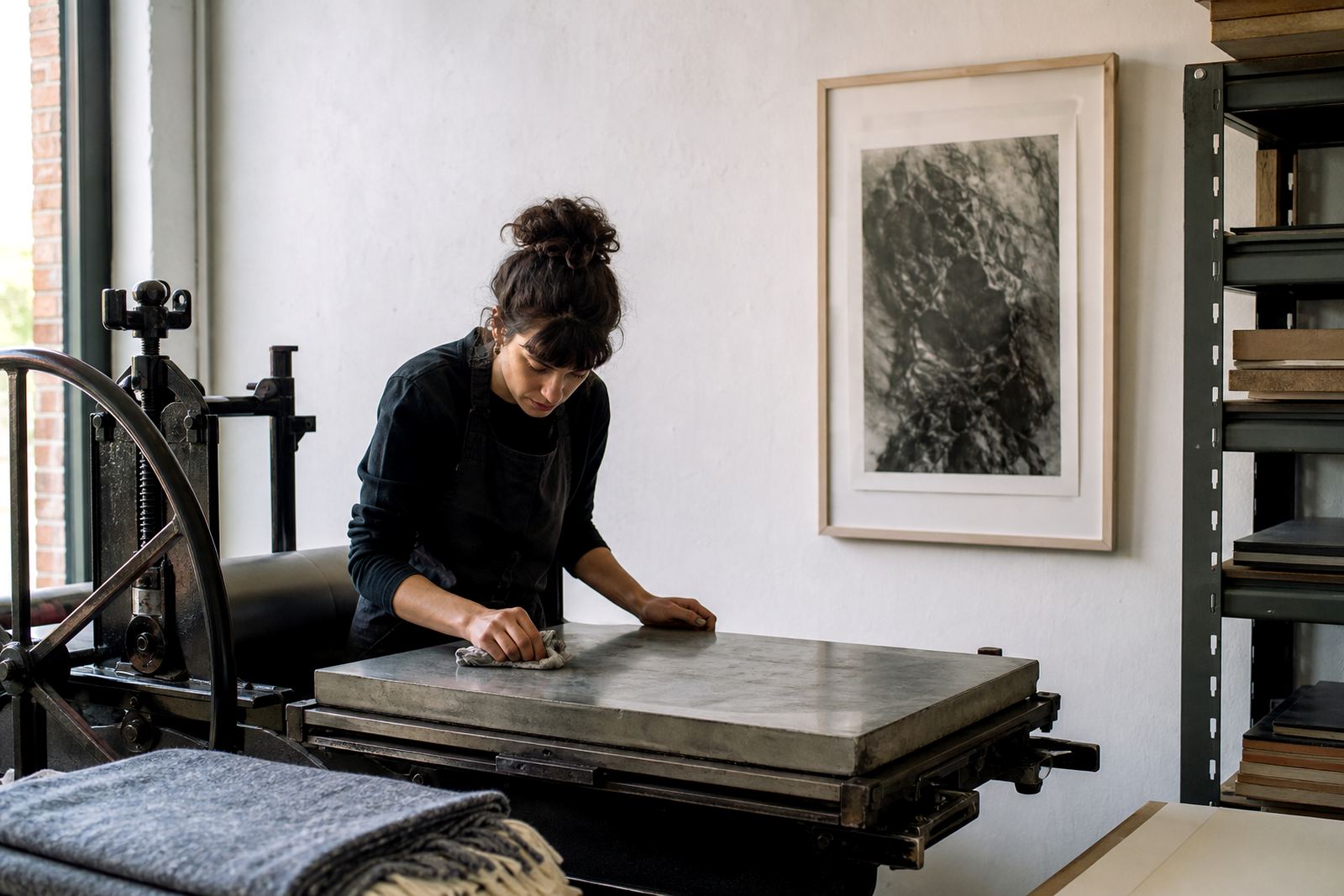
The printer then works by dampening the stone, rolling ink over the surface, and pulling a proof. The ink adheres only where it should. If the balance between water, ink and pressure is off, the print will show it straight away. That is why stone preparation is as important as the drawing itself, and why experienced handling saves time later in the edition.
- Flatness affects registration and pressure
- Fine-grain stone supports detailed line and tone
- Proper processing helps the edition print consistently
What artists gain from working on stone
Artists choose stone lithography because it keeps the hand of the maker visible. A line pressed lightly into the stone can sit beside a dense rubbed tone, and both can stay in the same image. That flexibility is hard to match in many other print methods. The result can feel direct, but still refined enough for editioned work.
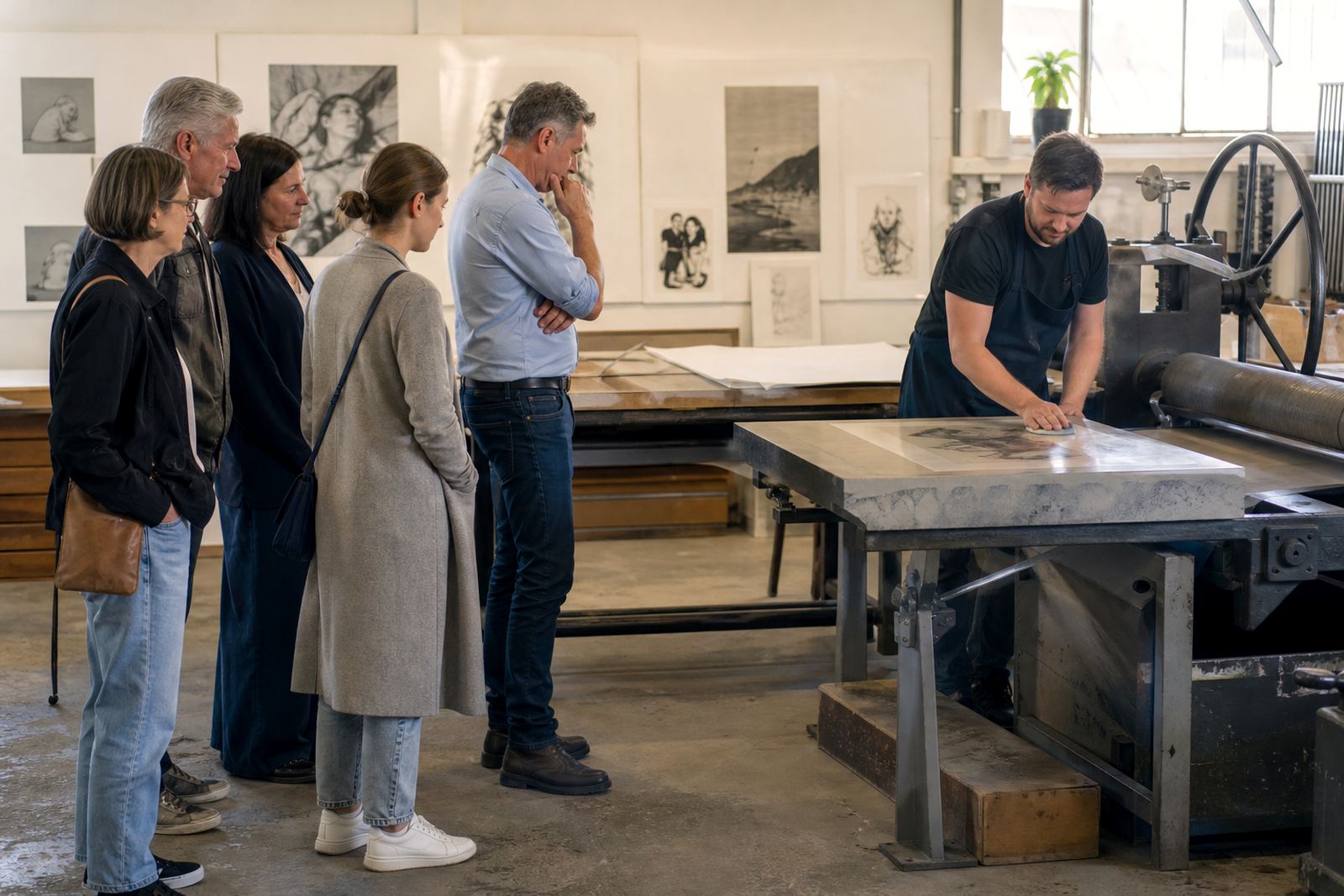
At a studio level, the stone also allows close collaboration. The printer can advise on how a mark will print, whether a colour needs another pass, and where a drawing may need strengthening before editioning starts. For artists in Cape Town or further afield in Stellenbosch, Johannesburg, Pretoria or Durban, that hands-on exchange helps the final print stay true to the original intent.
- Strong tonal range from pale washes to deep blacks
- Room for hand-drawn texture and subtle detail
- Close collaboration between artist and printer
Edition planning protects the integrity of the print
Because stone lithography is made by hand, an edition needs planning before the first full run is printed. The artist and printer agree on the edition size, colour sequence, paper choice and proofing approach. That planning keeps the edition clear and avoids unnecessary wear on the stone.
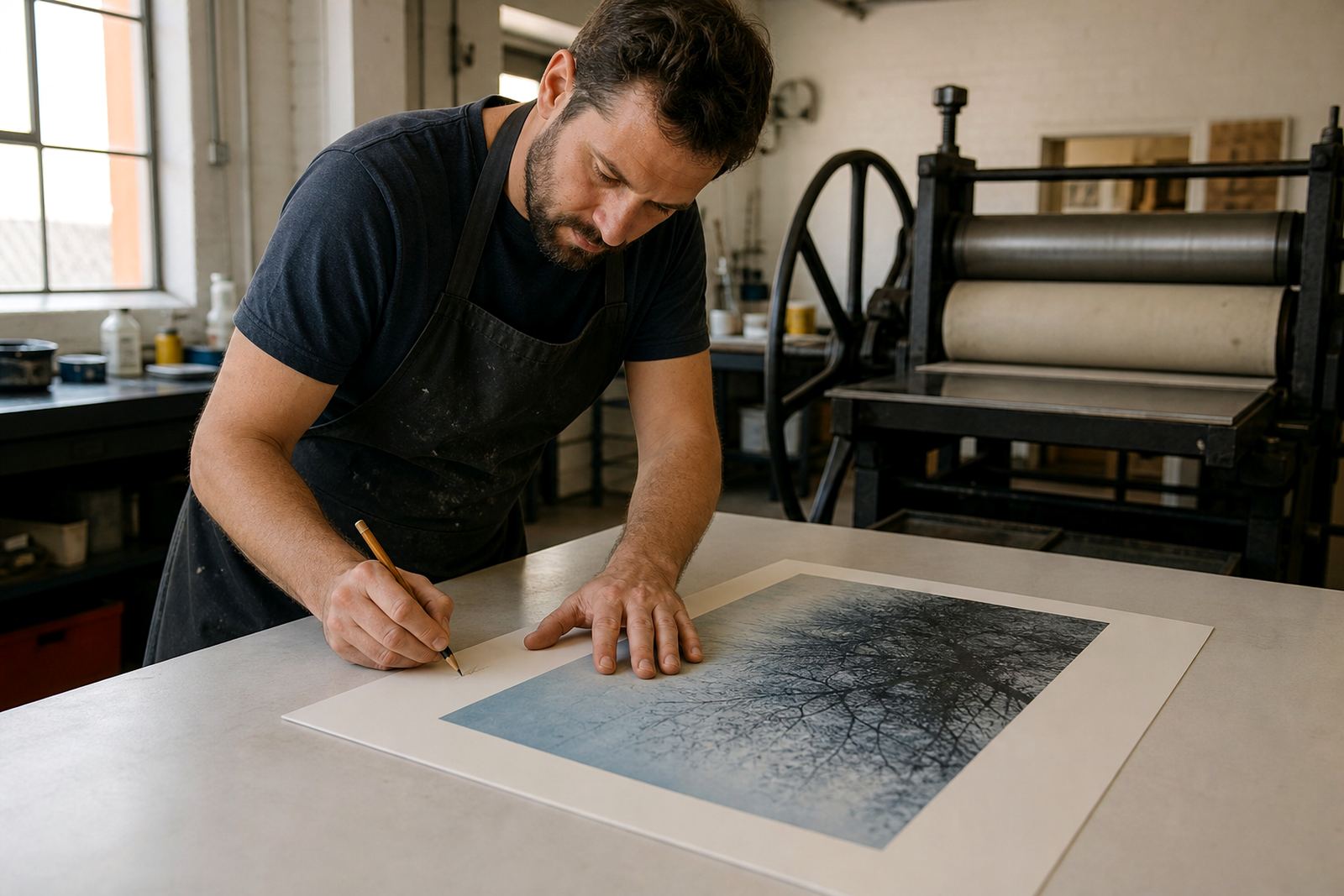
Proofing sessions are especially useful when several colours are involved. Each colour may need its own stone or its own drawing stage, and the order of printing changes the look of the image. A careful edition plan also makes signing and numbering straightforward, so collectors know exactly where a print sits within the edition. A small edition, well handled, often carries more confidence than a larger run that was rushed.
Why limestone behaves differently in South African conditions
Local conditions matter. In Woodstock and along the coast, humidity can change how paper settles and how a stone holds moisture during a long printing day. In hotter inland cities, the pace of drying shifts again. A stone lithography studio has to read those conditions and adjust the workflow, sometimes by slowing down between passes or managing paper more carefully.
That is where practical studio systems matter. Stones are stored safely, paper is kept flat, and each edition is packed only when it is properly settled. Small details like these help protect the edition from avoidable problems.
Caring for stone lithographs once they leave the studio
Collectors do not need special equipment, but they do need sensible care. Lithographs should be kept out of direct sun, away from damp walls and handled with clean hands or cotton gloves when framing. Acid-free backing and proper framing materials help keep the paper stable over time.
If a print is unframed, it should lie flat in archival packing and be stored in a dry place with steady temperature. Avoid rolling it unless there is no other option, and even then use a wide tube with interleaving. If the work is framed, check that the frame is secure and that the hanging point suits the weight of the piece. In coastal homes, good framing matters even more because sea air can affect paper and fittings over time.
- Keep prints away from direct sunlight
- Use acid-free framing materials
- Store unframed works flat and dry
- Handle editions by the edges, not the printed surface
From the press room: The rest of the country
A practical example: an artist in Cape Town may bring a limestone image into the studio for proofing, then refine the drawing after seeing how the first proof reads on paper. Once the colour separation and edition order are settled, the printer can move through the run with a clear plan, whether the final collectors are in Sea Point, Newlands, Pretoria or Durban. That process keeps the work consistent without stripping away its handmade character.
That is why limestone remains central to traditional lithographic image making. It offers a direct way to draw, test, adjust and print, while still leaving room for skill and judgement at every stage. In an age of quick reproduction, stone lithography keeps the image tied to the actual making of the print, and that matters to artists and collectors alike.