Why a lithography print is built in stages
Printing from stone begins with a prepared limestone surface in this planographic process. The artist draws directly on the stone with greasy materials, then the stone is treated so that ink sticks only to the drawn areas. Because colour is built up through separate passes, the first sheets are usually part of a testing process rather than the final edition.
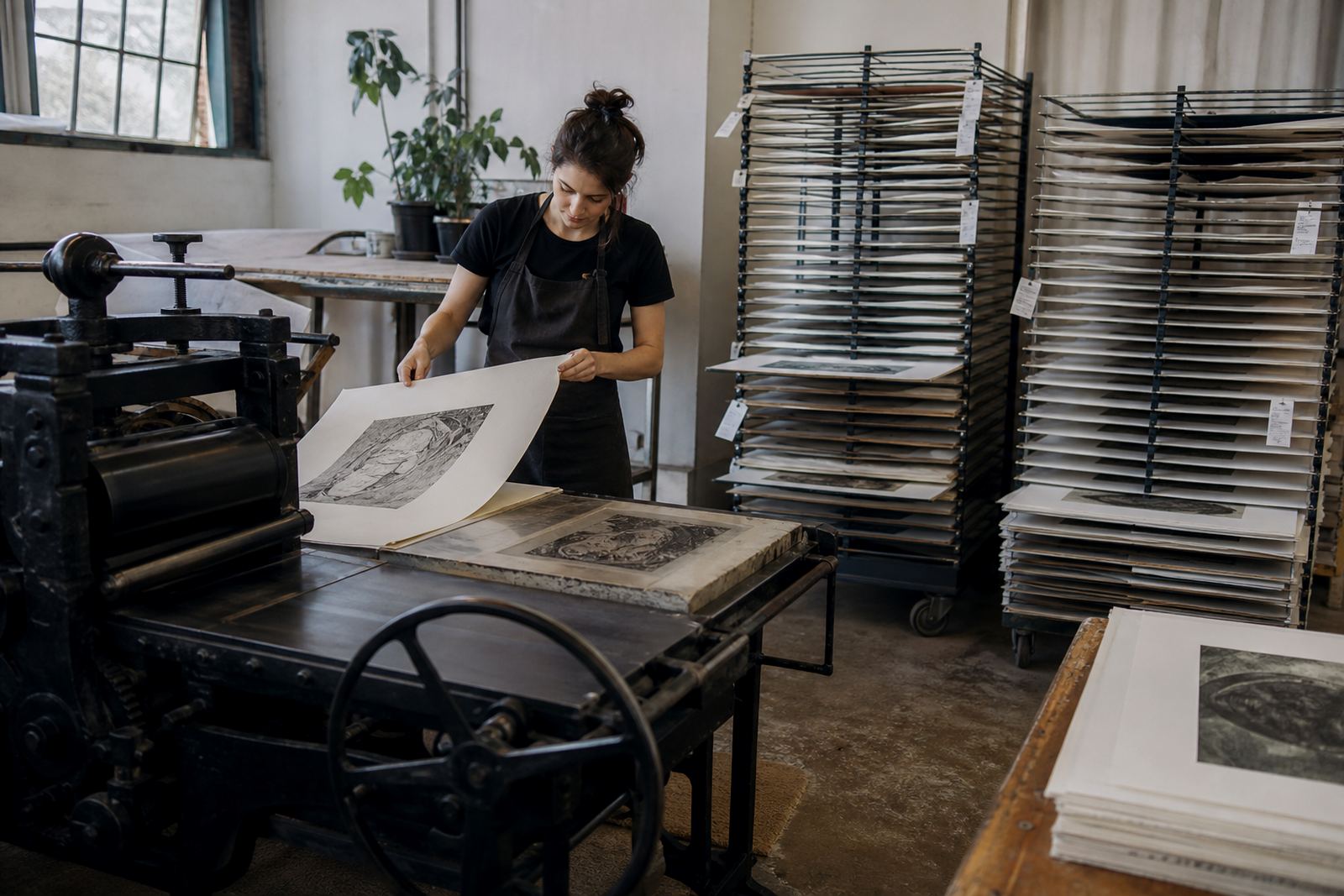
In a working studio in Woodstock, that stage-by-stage method matters. A print may need several adjustments before the image sits correctly on the paper, the registration is right, and the colour reads as intended. That is why it helps to separate test prints, proofs and edition sheets from the start.
What test prints are for
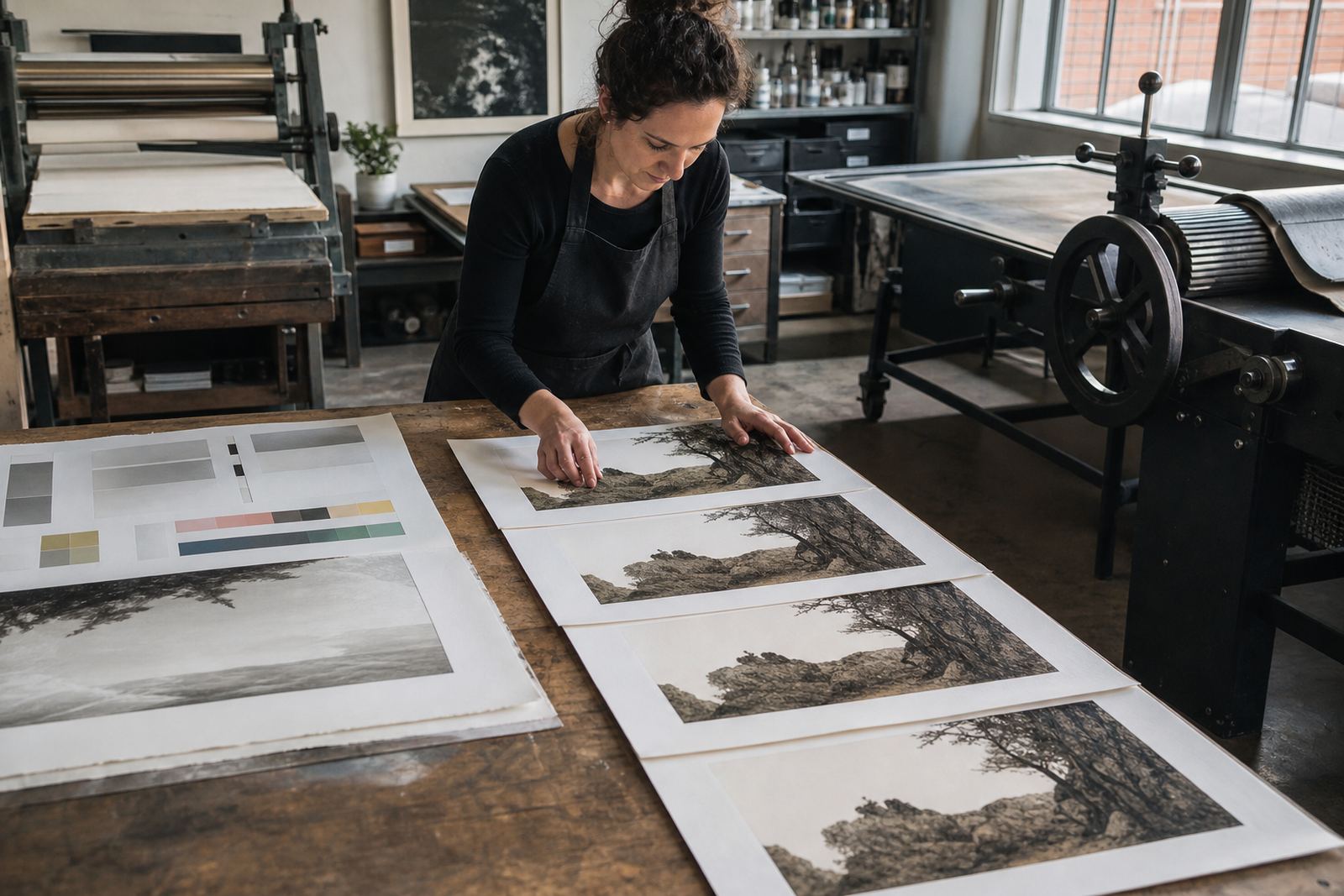
Test prints are working sheets used to check whether the stone is behaving properly and whether the image is transferring cleanly. They may show weak colour, uneven pressure, marks from the edge of the stone, or early changes made while the image is still being adjusted. They are not part of the final edition, and they are not usually signed and numbered for collectors.
A good test print tells the printer something specific: does the drawing hold enough tone, does the paper take the ink well, and is the colour separation working across each layer. The studio may keep these sheets as reference, or the artist may approve them as the starting point for the edition.
- Used to check pressure, registration and colour balance
- Often show visible adjustments or technical marks
- Normally kept out of the signed edition
Artist proofs are part of the decision-making
Artist proofs are the sheets the artist and printer use to judge the work before the edition is closed. They are often pulled after the main setup is settled, but before the final edition run begins. In many studios, the artist proof may be slightly different from the numbered edition sheets because it is used for approval and final decisions.
This is the point where small changes matter. A line can be sharpened, a colour can be warmed, or a seperation can be adjusted so the image reads properly on the final paper. For collectors, an artist proof can be important because it shows the print at a critical stage in its making, not just as a finished object.
- Used by the artist and printer for approval
- May differ slightly from the numbered edition
- Usually marked as an artist proof, not as an edition sheet
Final edition sheets and why numbering matters
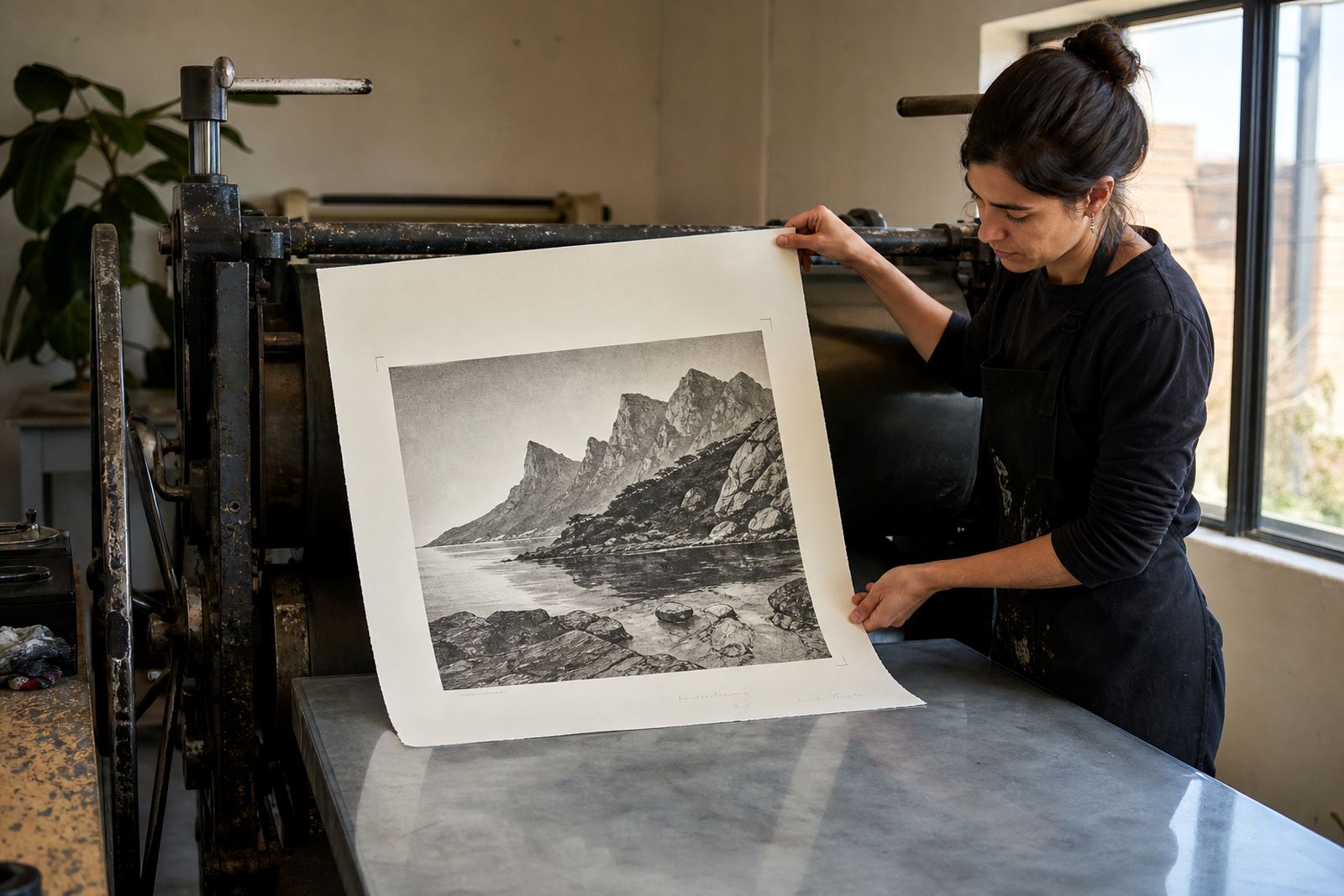
Final edition sheets are the agreed prints from the edition run. Once the artist approves the image, the studio prints the planned number of sheets using the same setup, paper and inks as far as possible. Each sheet is then signed and numbered according to the agreed edition structure.
Editioning gives the work clarity. If a collector buys an edition sheet, they know it comes from the final approved run and sits within a fixed number of prints. That fixed number is one reason editioned lithographs are valued by collectors in Cape Town, Stellenbosch, Johannesburg, Pretoria and Durban, where buyers often want clear records and proper documentation.
- Printed after approval of the final image
- Signed and numbered in the agreed edition size
- Made from the same stone and setup as the approved proof
How a collector can read the labels
When you are buying a lithograph, the label or pencil notation should tell you what you are looking at. An artist proof, trial proof or test sheet should not be confused with a final edition sheet. If a work is framed, ask what the notation says before you decide where it belongs in your collection.
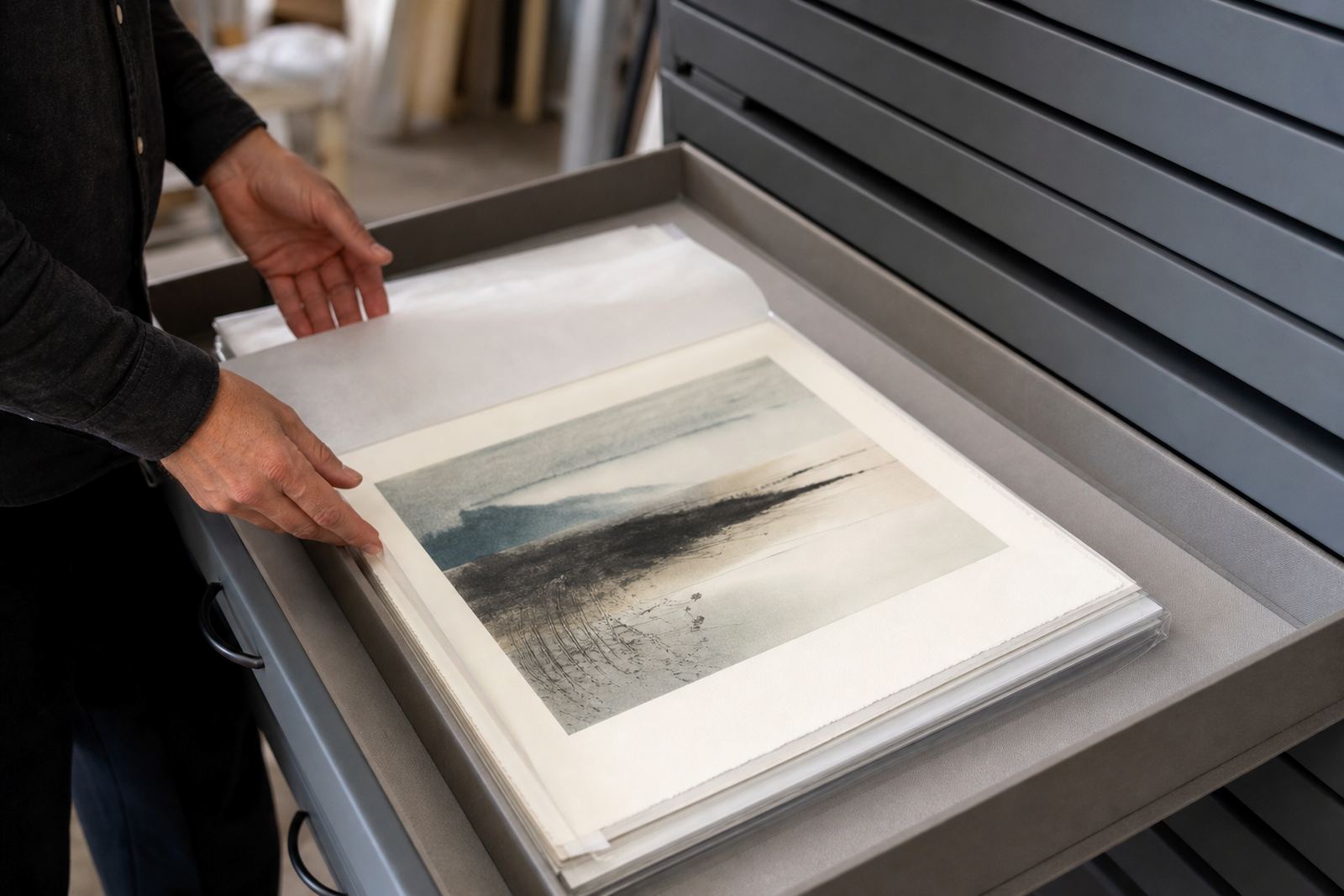
Collectors in coastal areas such as Sea Point often ask about storage as well, because humidity can affect paper over time. Keep lithographs away from direct sunlight, damp walls and rooms with repeated temperature changes. In Durban and other humid cities, archival packing and sensible framing become even more important, especially if the work is not going straight on the wall.
- Check the notation in pencil at the bottom margin
- Ask whether the sheet is a test, proof or edition print
- Keep the sheet flat, in a dry space, and away from strong sun
From the press room: The studio
Imagine an artist comes into the Woodstock studio with a stone ready for a two-colour image. The first prints are test sheets used to sort out the pressure and paper response. After that, the artist reviews an artist proof and decides the blue needs to be slightly deeper so the drawing line does not disappear against the background. Once that is approved, the edition run begins and every final sheet is kept consistent.
That process is not about perfection in the abstract. It is about control, timing and knowing when the image is ready to be fixed as an edition. For collectors, understanding those stages helps avoid confusion and makes it easier to care for the print properly once it leaves the studio.