1. The approved proof is the turning point
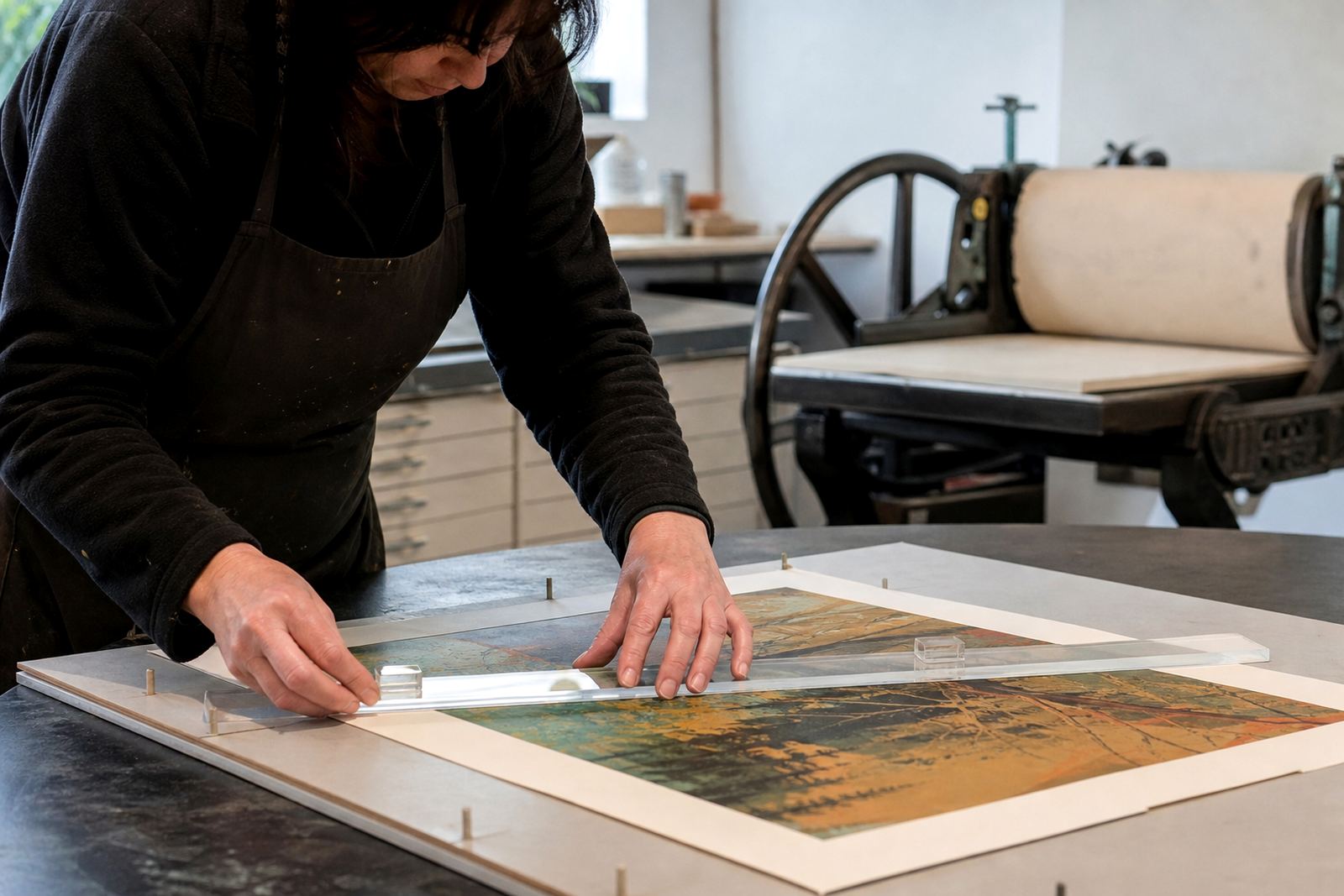
Once the artist signs off on the final proof, the print run becomes a matter of control and consistency. At that stage we are not chasing ideas anymore, we are repeating an agreed image as faithfully as possible across the full edition. That means checking registration, colour balance, paper choice and the condition of the stone before the first numbered print goes through the press.
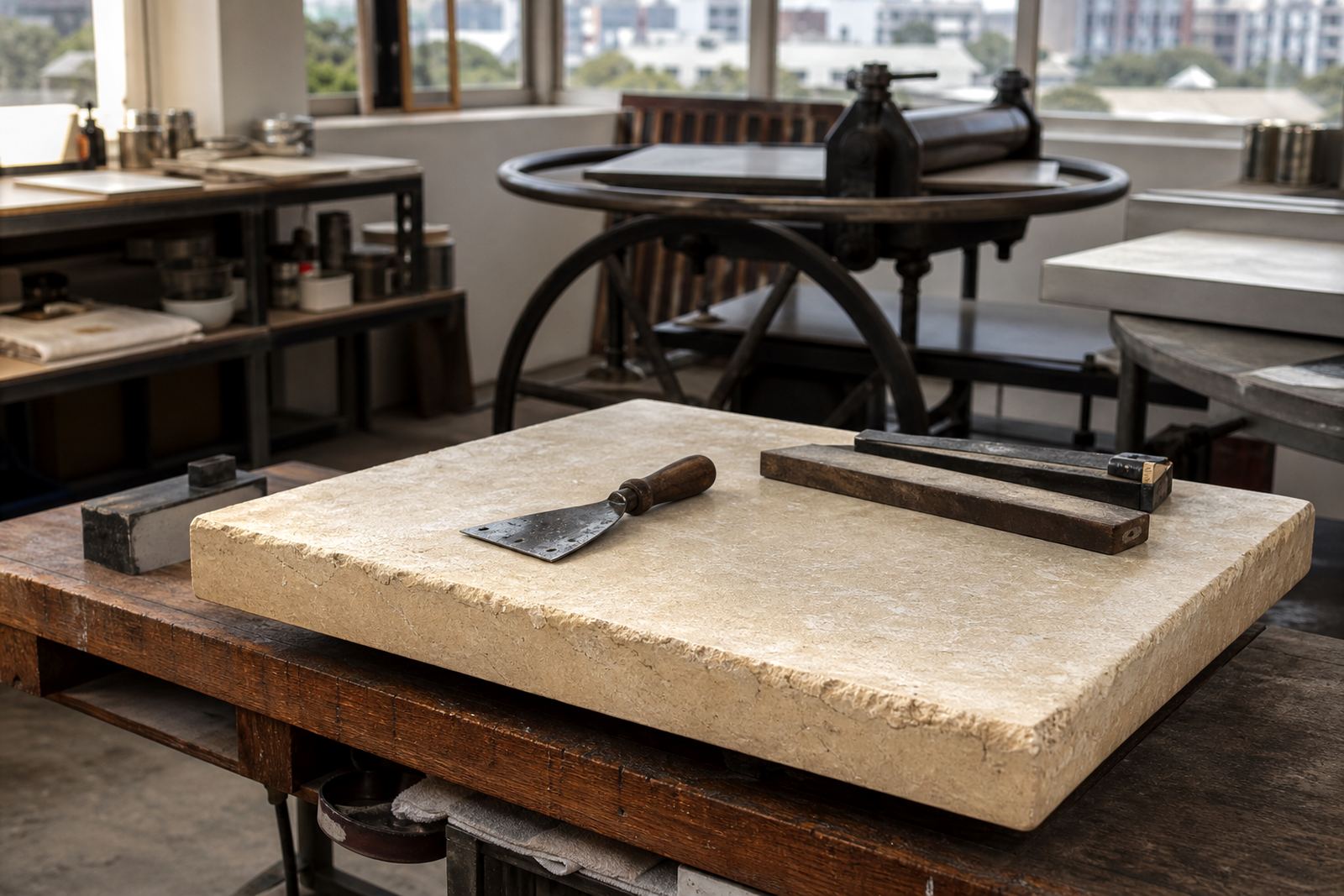
A stone lithograph is made from a limestone surface that has been drawn on with greasy materials. The image and the non-image areas respond differently to water and ink, which allows for subtle marks, soft tonal changes and fine colour layers.
- The artist approves the final image and colour direction.
- The studio confirms the edition size and print sequence.
- Paper is selected for weight, texture and handling.
- The stone is cleaned, dampened and ready for the run.
2. Edition planning keeps the run consistent
Edition planning sounds simple, but it is where the practical decisions are made. A small edition needs the same care as a larger one, because each sheet must match the last closely enough that the set reads as one body of work. We plan the order of colour layers, drying time between impressions and whether any variant sheets or artist's proofs are part of the schedule.
In a busy studio this also means allowing for weather and working conditions. Good editioning allows for that, so the edition stays clean and the paper behaves predictably. No one wants a rushed print that looks tired by the third sheet.
- Set the edition size before the first full run starts.
- Decide how many proofs, if any, will be retained.
- Leave enough drying space between colour passes.
- Keep a written record of sequence and impressions.
3. Stone preparation shapes the final look
Before any print can be pulled, the stone needs careful preparation. The surface must be cleaned back without damaging the drawing, then dampened and rolled so the image accepts ink properly. If the work uses several colours, each stone or layer must align precisely.
This stage is where the character of lithography really shows. A stone can hold a velvety black, a transparent wash or a crisp line depending on how it was drawn and prepared. It is also a very physical process. The paper, the stone and the press all need to work together, otherwise the edition starts to drift.
- Inspect the stone for surface marks or contamination.
- Re-establish the image area and dampening balance.
- Test the press pressure with sample sheets.
- Confirm alignment before the main run starts.
4. Printing the edition sheet by sheet
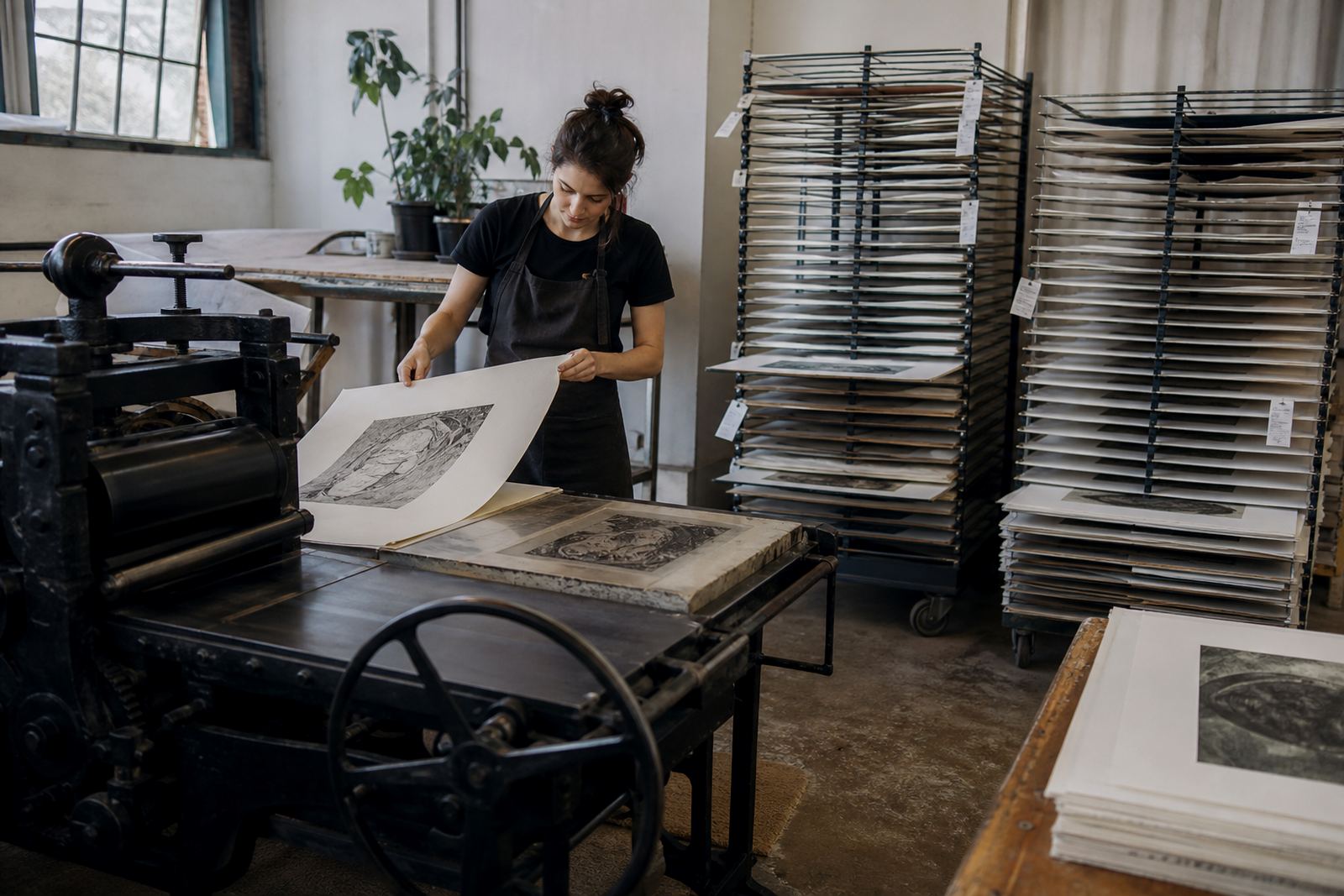
Once printing begins, the studio settles into rhythm. Each sheet is placed by hand, run through the press, lifted clear and checked before the next one is printed. When the artwork has multiple colours, this happens layer by layer, with each pass adding depth or changing the temperature of the image. It is slow work, but that pace is part of the value of a hand-made edition.
We check for even ink coverage, paper movement and any slight shift that could affect the final alignment. If a sheet needs to be held back it is better to stop and correct the cause than to carry on and hope for the best. That kind of discipline protects the edition and the artist's intent. In a good run, every print looks related without becoming mechanical.
- Ink is rolled evenly across the stone surface.
- Each sheet is positioned and printed by hand.
- Printed sheets are inspected before drying.
- Any variation is noted immediately for the edition record.
5. Drying, signing and numbering finish the set
After printing, the sheets need time to dry fully before signing and numbering. Depending on the paper and ink build-up, that can take longer than people expect. Rushing this part can cause offsetting or surface marks, so the studio keeps finished sheets flat and separate until they are ready for the final steps.
Editioning includes signing, numbering and recording the final count. This is the point where the edition becomes an accountable body of work rather than a stack of prints. Some collectors like to know where their sheet sits in the run, while others are mainly concerned with condition and clarity. Either way, the record matters. It is what gives a limited edition its discipline and traceability.
- Allow full drying before handling the sheets again.
- Sign and number only when the print surface is stable.
- Record the edition count and any proofs separately.
- Keep the edition sequence consistent from first print to last.
6. Packing and care for collectors across South Africa
Once the edition is complete, the final stage is protection. Prints are packed with archival materials so they travel safely to collectors in Woodstock, Sea Point, Newlands, Stellenbosch, Johannesburg, Pretoria or Durban. Archival packing helps protect against dust, bending and humidity while the work is in transit or waiting to be framed.
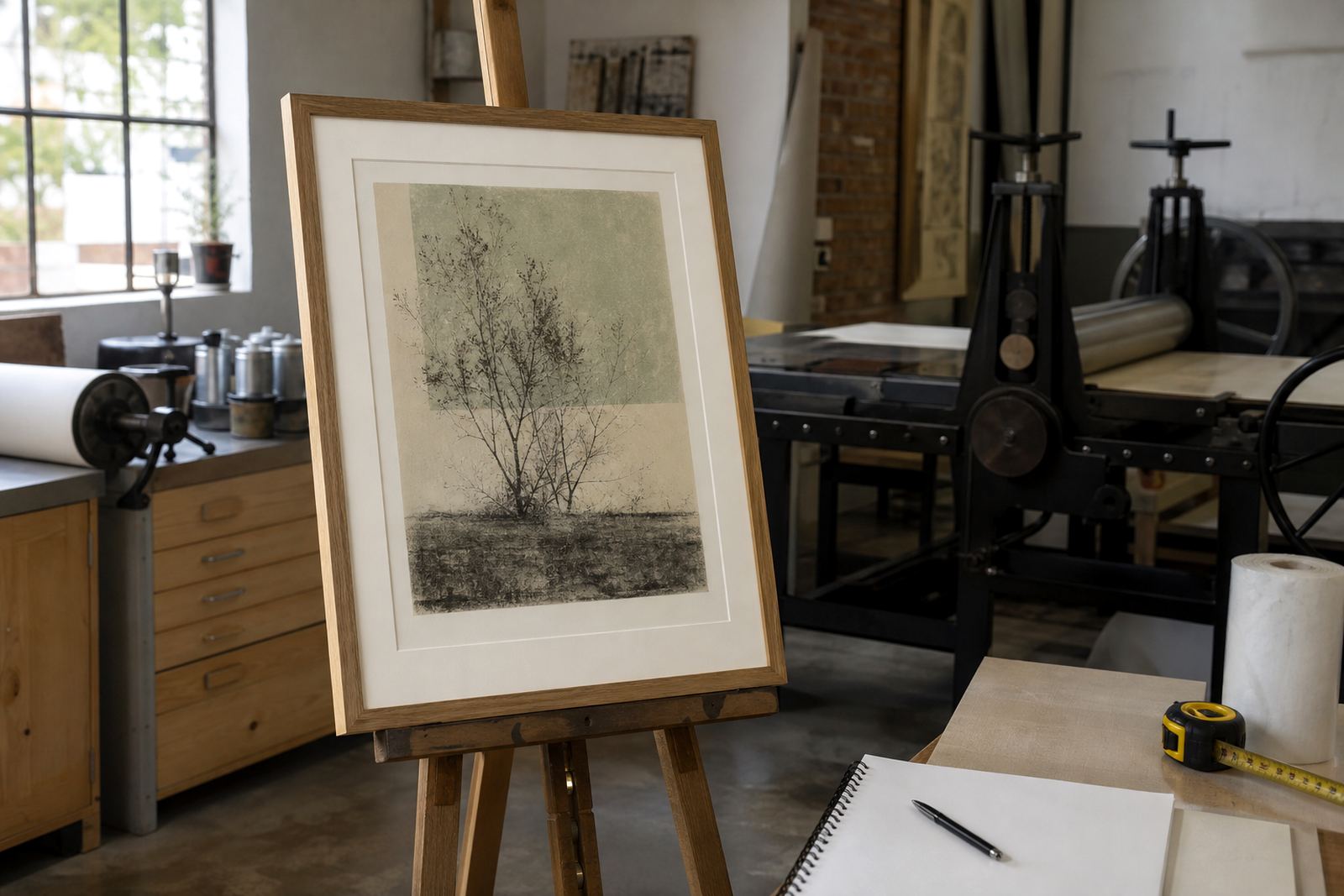
For collectors, the care starts as soon as the work arrives. Keep the print out of direct sun, away from damp walls and not under glass until the framing materials are ready. If you live near the coast, or your home gets strong afternoon heat, it is worth allowing the print to acclimatise before framing. A little patience now can prevent paper cockling later. If the edition is being framed, we also advise on glazing, backing board and spacing so the work can breathe properly.
- Store unframed prints flat in a dry room.
- Avoid direct sunlight and high humidity.
- Use acid-free framing materials for long term care.
- Ask for handling advice before opening the package fully.
7. Why the run matters as much as the image
People often focus on the finished print, but the print run itself is where much of the value lives. A limited edition is only as good as the decisions made from proof approval onward: the pressure on the press, the timing between colours, the paper chosen, the care taken with each sheet. That is why a well-run edition feels settled, not forced.
For artists and collectors alike, understanding the run makes the work easier to trust. It explains why two prints from the same edition are related but never exactly identical, and why hand-made lithography carries its own quiet marks of process. In our Woodstock studio, that process is the point, from first approved proof to the final numbered sheet.
When the edition leaves the studio, it carries that care with it. For collectors in Cape Town or further afield, the print is not just an image, it is the record of a considered run, printed one sheet at a time.