Why light changes a print over time
Stone lithography prints are made with inks on paper, and both parts respond to light. Over time, strong sunlight and some artificial lighting can cause colours to shift, pale, or lose contrast. That does not mean a print should stay hidden, but it does mean placement matters from day one.
Ultraviolet light is usually the main problem, though visible light also adds to the damage when exposure is constant. A print hanging opposite a bright north-facing window in Johannesburg will face a very different level of stress from one kept in a cooler room away from direct sun in Woodstock. Heat can make the effect worse, especially where rooms get warm in summer or where a frame sits close to a lamp for many hours.
Stone lithography and why editions need careful handling
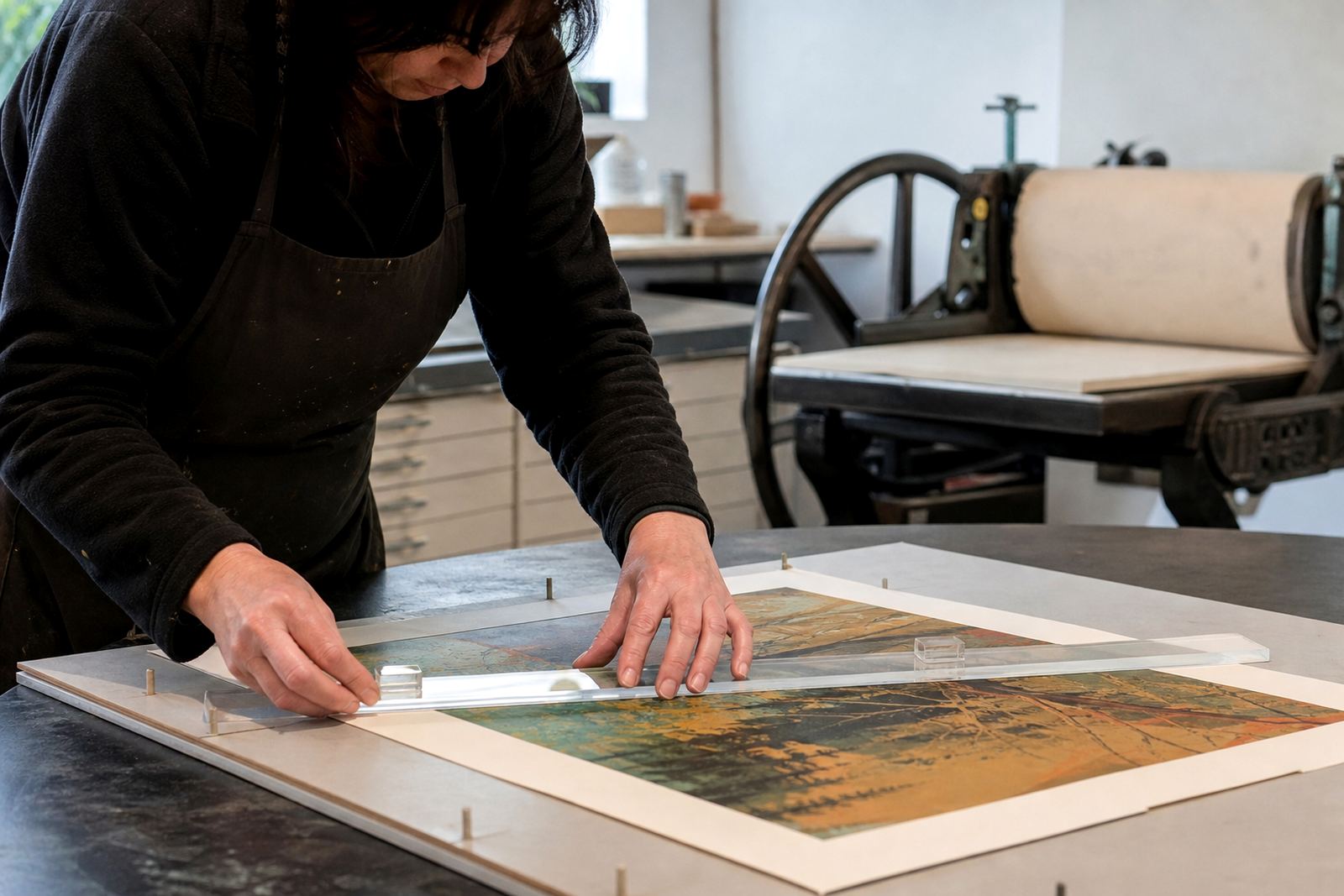
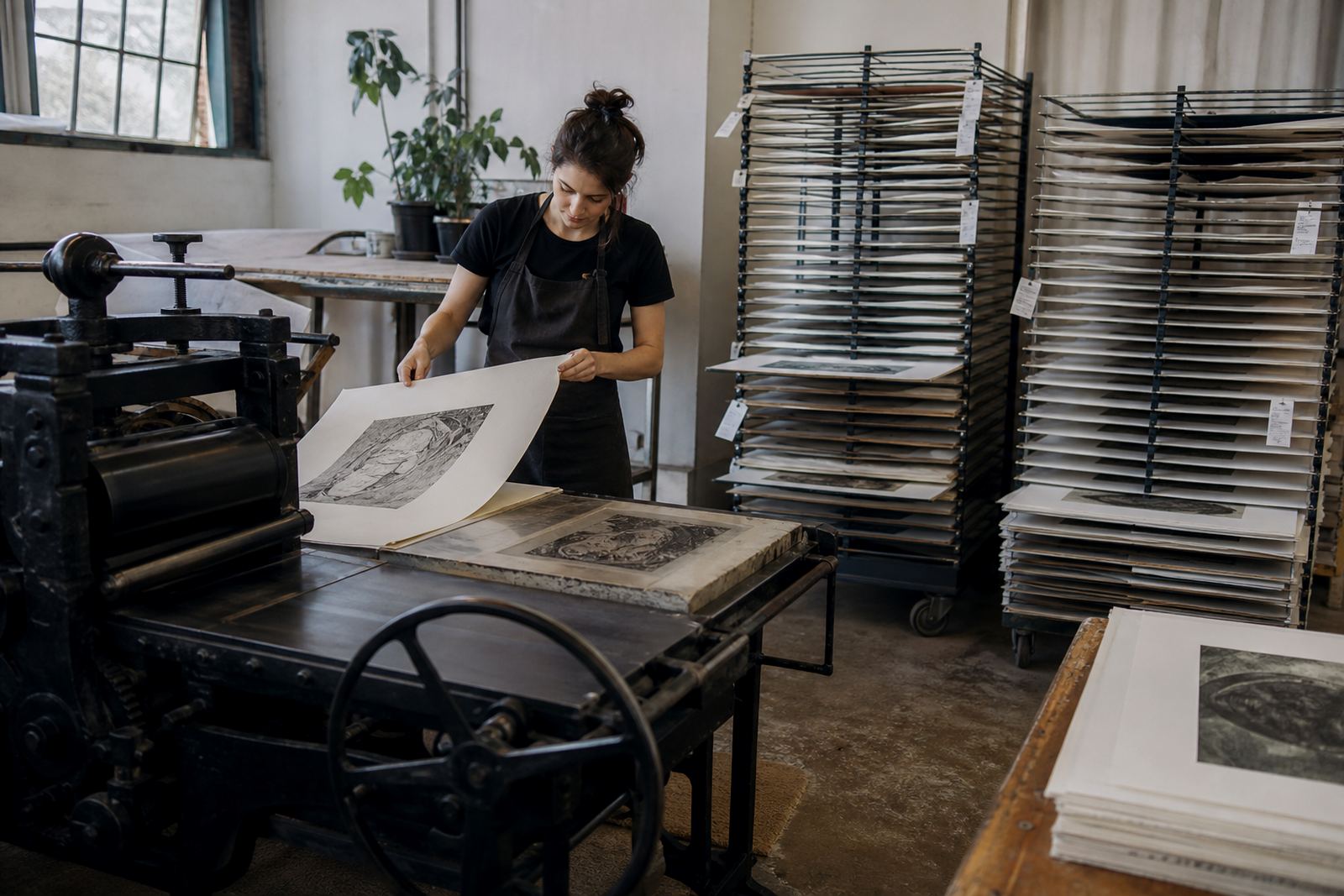
In this process, the image is printed from stone rather than built through relief or intaglio methods. The image is drawn onto a prepared stone with grease-based materials, then the stone is treated so the image area accepts ink and the non-image area repels it. Each sheet is pressed by hand through the press, which gives the print its character and its slight differences from a digital reproduction.
Because limited editions are made in planned numbers, each impression matters. Good editioning keeps the whole run consistent, while still allowing the hand-made nature of the process to show. That is why collectors are often advised to think beyond the image itself and consider paper, ink density, framing materials and where the work will live in the home.
- Limited editions are made in fixed numbers, not open runs.
- Each impression is checked for consistency before signing and numbering.
- Paper and framing choices influence how well the work holds up in strong light.
The places where fading starts first
Fading is not always even. In many homes the first signs appear on the brightest side of a print, or in pale areas where the paper has the most direct exposure. Colours such as yellow, red and some blues may change at different rates, so a work can look slightly unbalanced before the whole image appears dull. If a frame hangs above a fireplace, near a patio door, or in a room that gets all afternoon sun, the risk is higher.
South African homes often have strong light. In Cape Town, Sea Point and Newlands, reflection from glass and pale walls can add brightness even when the sun is not directly on the print. In Durban humidity brings another issue, since damp air can affect the paper and framing materials too. For coastal homes the challenge is often a mix of light, moisture and salty air, which means storage and hanging conditions need a bit more thought.
- Direct sunlight is the fastest route to visible change.
- Bright white walls and glass can bounce extra light onto the print.
- Heat, humidity and poor framing can make light damage worse.
Practical framing choices that slow down fading
Framing is not only about appearance. A good frame should protect the work from dust, handling and light exposure. UV-filtering glazing is often worth considering, especially for pieces that will be on view every day. A spacer or mount helps keep the print from touching the glass, which is important when temperatures rise or when coastal moisture builds up indoors.
It also helps to use archival backing materials so the paper is not in contact with anything acidic. Cheap boards and tapes can yellow over time and mark the sheet. If a collector is framing a lithograph for a home in Pretoria with strong dry light, or for an apartment near the Cape Town foreshore where glare is constant, the frame should be chosen with the room in mind, not just the artwork.
How collectors can display prints without risking them
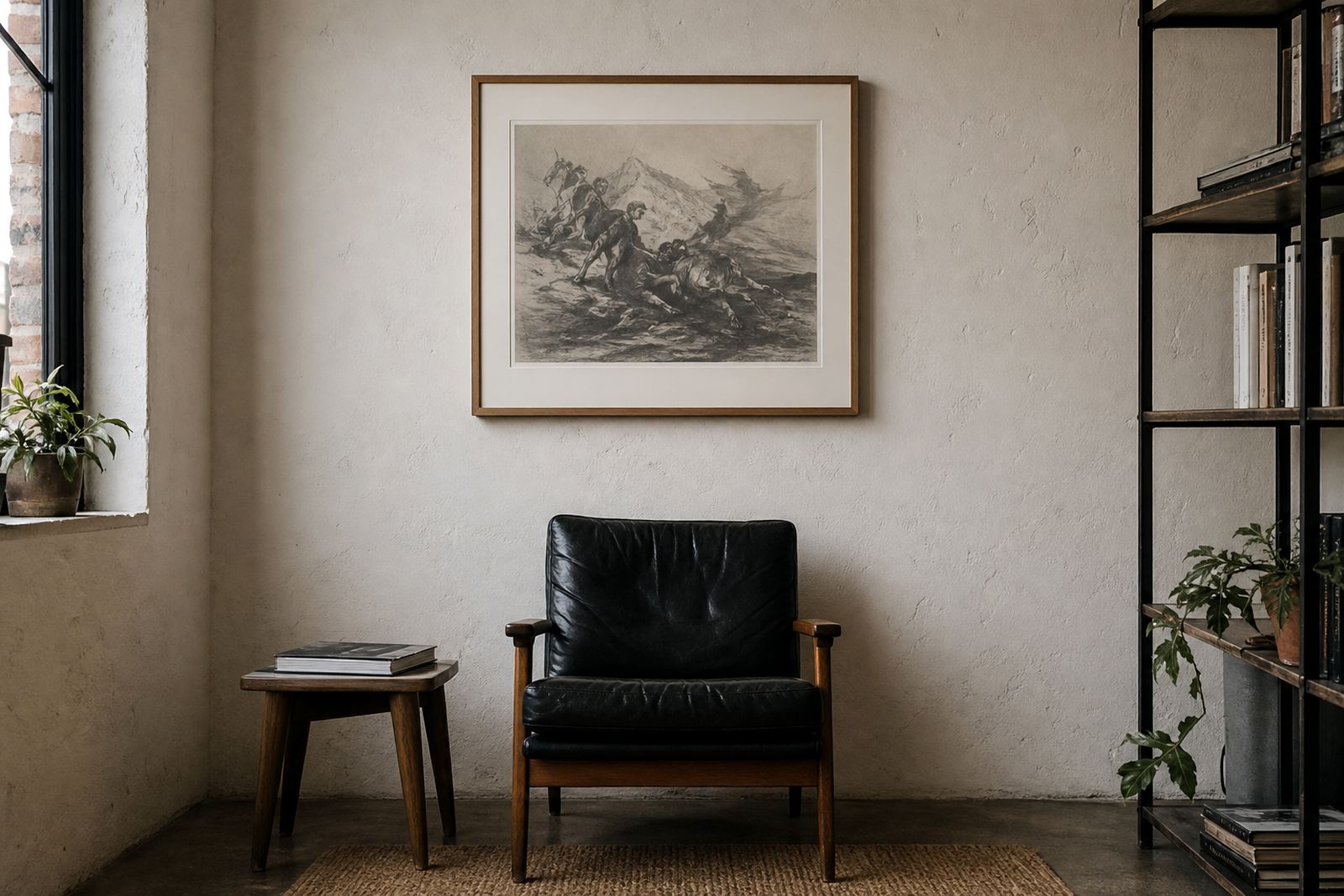
You do not need to keep a print in storage forever. The simple rule is to avoid direct sun and to reduce prolonged exposure to intense artificial light. A hallway with filtered daylight is usually safer than a window wall. LED lighting is generally kinder than older hot bulbs, but even LEDs should not be placed too close to the artwork. The aim is to enjoy the piece without baking it under constant light.
For collectors in places like Stellenbosch or Johannesburg, where bright rooms and open-plan living areas are common, a little planning goes a long way. Rotate works if you have several pieces on display, and if a room gets harsh afternoon sun use blinds, sheer curtains or reposition the print. It is a simple habit, but it can add years to the life of the paper and image.
- Hang prints away from direct sun and strong lamps.
- Use curtains, blinds or UV-filtering glazing where needed.
- Rotate works if one wall gets far more light than the others.
A Woodstock studio view on long term care
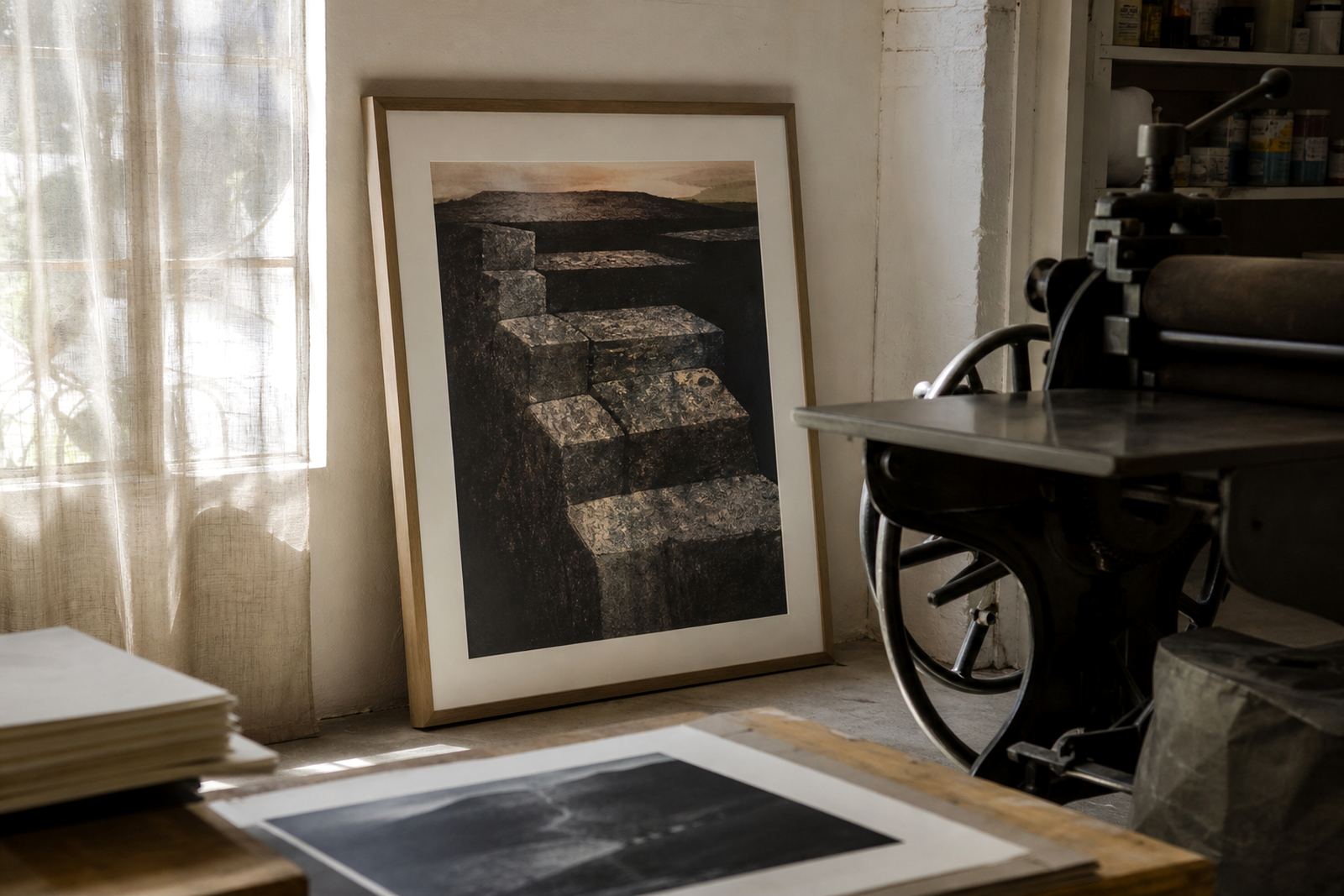
At a fine-art stone lithography studio in Woodstock, the question is often not just how a print looks on the day it leaves the press, but how it will age in a collector’s home. A print that has been carefully editioned, signed and numbered still needs sensible care once it is framed and hung. That applies whether the work is going to a flat in Durban, a family home in Pretoria or a collector’s wall in Sea Point.
When we talk to collectors and artists, the advice is usually straightforward: think about light before you think about position. The best place for a print is one where it can be seen and enjoyed, yet protected from the worst of the sun. A little caution now saves a lot of regret later, and the image stays closer to the artist’s original intent.