Why framing matters for a stone lithograph
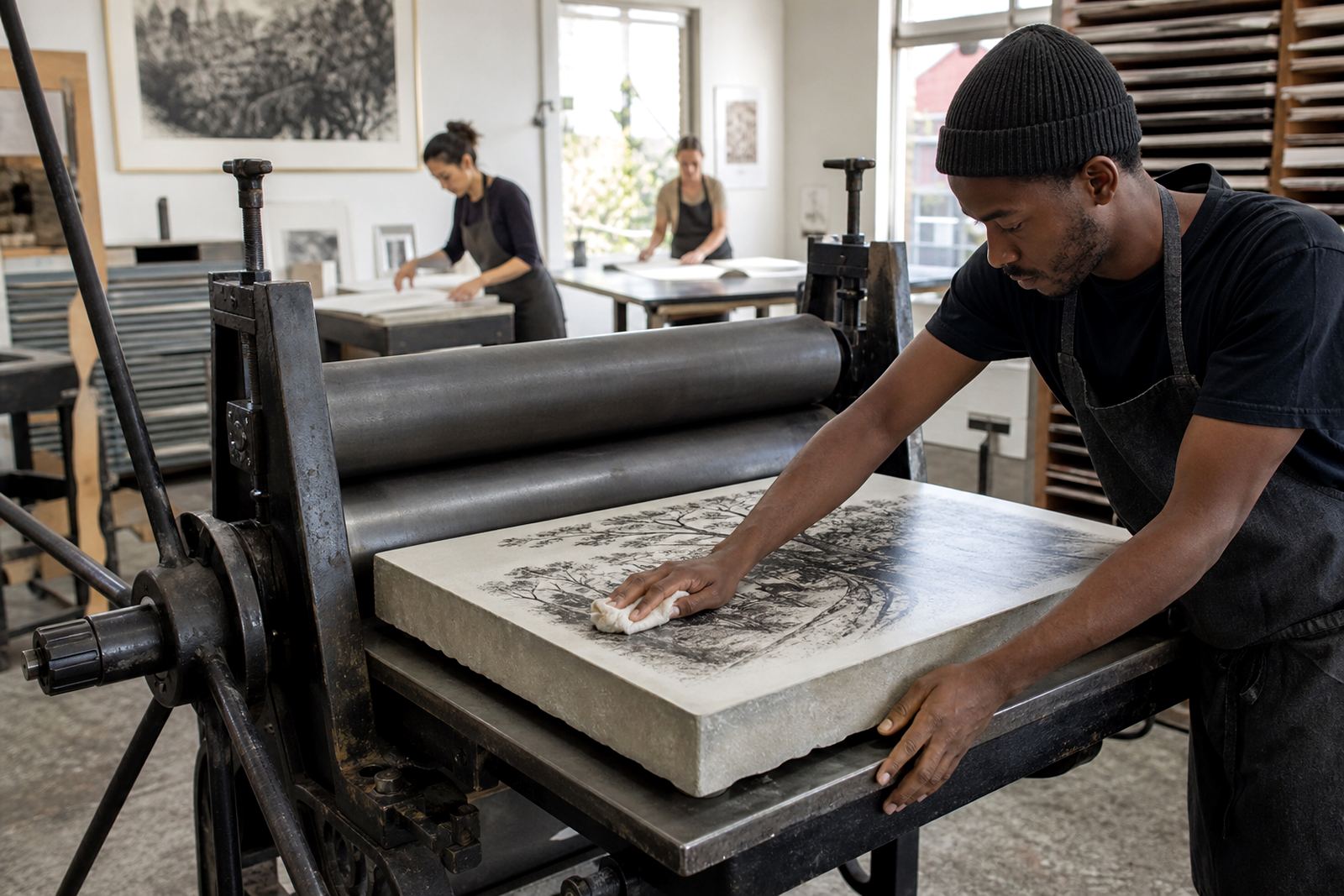
A stone lithograph is made from a drawn stone surface, then printed onto paper in limited editions. The paper carries the image and also carries the risk, because paper reacts to light, moisture, heat and poor handling. Good framing supports the print without trapping stress against it.
In Cape Town, the air can be damp near the coast and drier inland during summer. In Johannesburg and Pretoria, the climate is different again, and both extremes can affect paper over time. A frame is not just decoration, it is part of the print's long-term care.
Start with the right mount and window opening
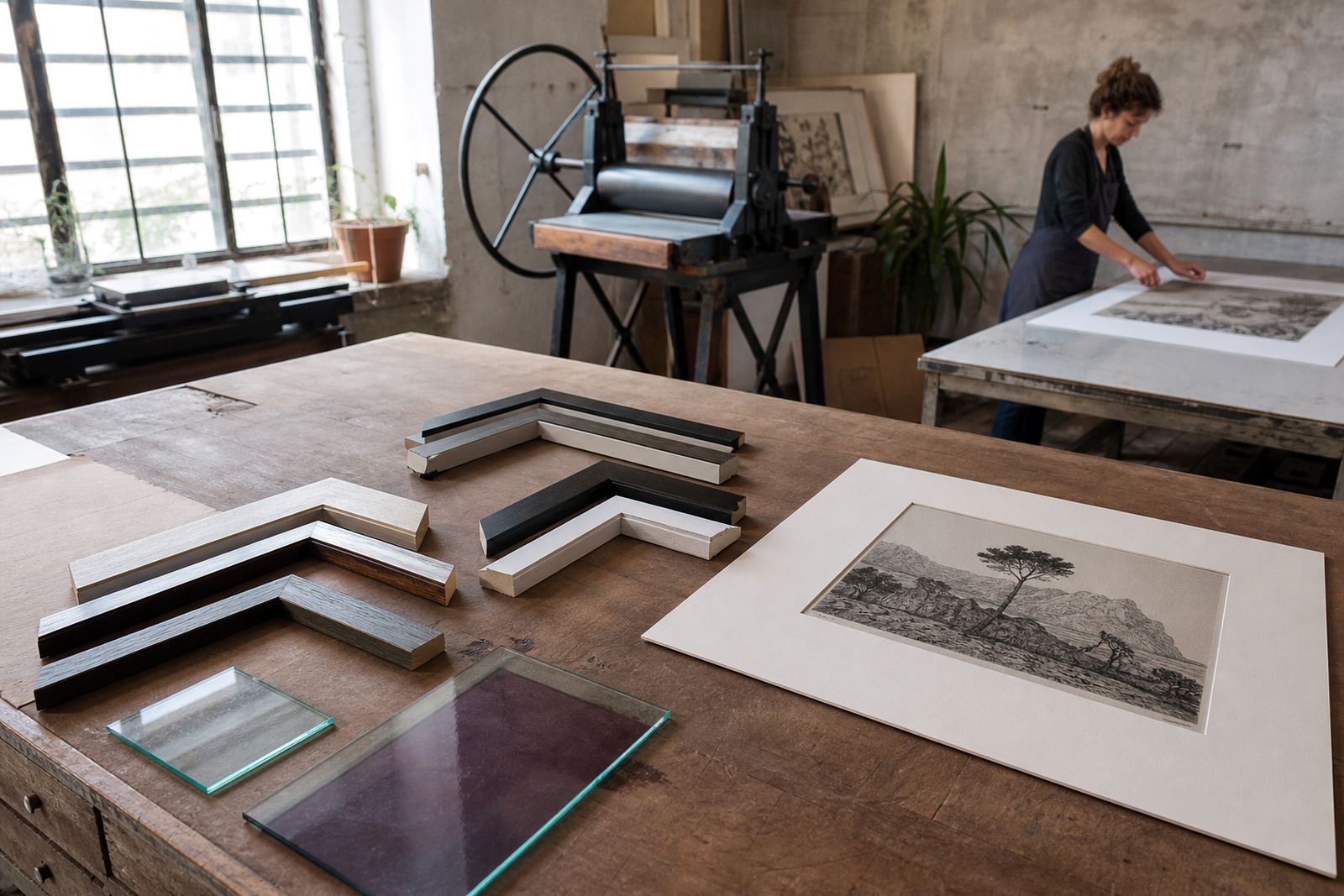
The mount should hold the print securely without touching the image area. For preservation, the paper must sit flat and be supported by archival materials that will not stain or break down quickly. The window opening should be cut cleanly, with enough border visible to show the hand of the edition, signature and numbering where appropriate.
- Use an acid-free mount board and backing board.
- Keep the print off direct contact with ordinary cardboard or adhesive tape.
- Allow a small air gap so the surface is not pressed against the glazing.
- Leave enough margin so the edges are supported, not squeezed.
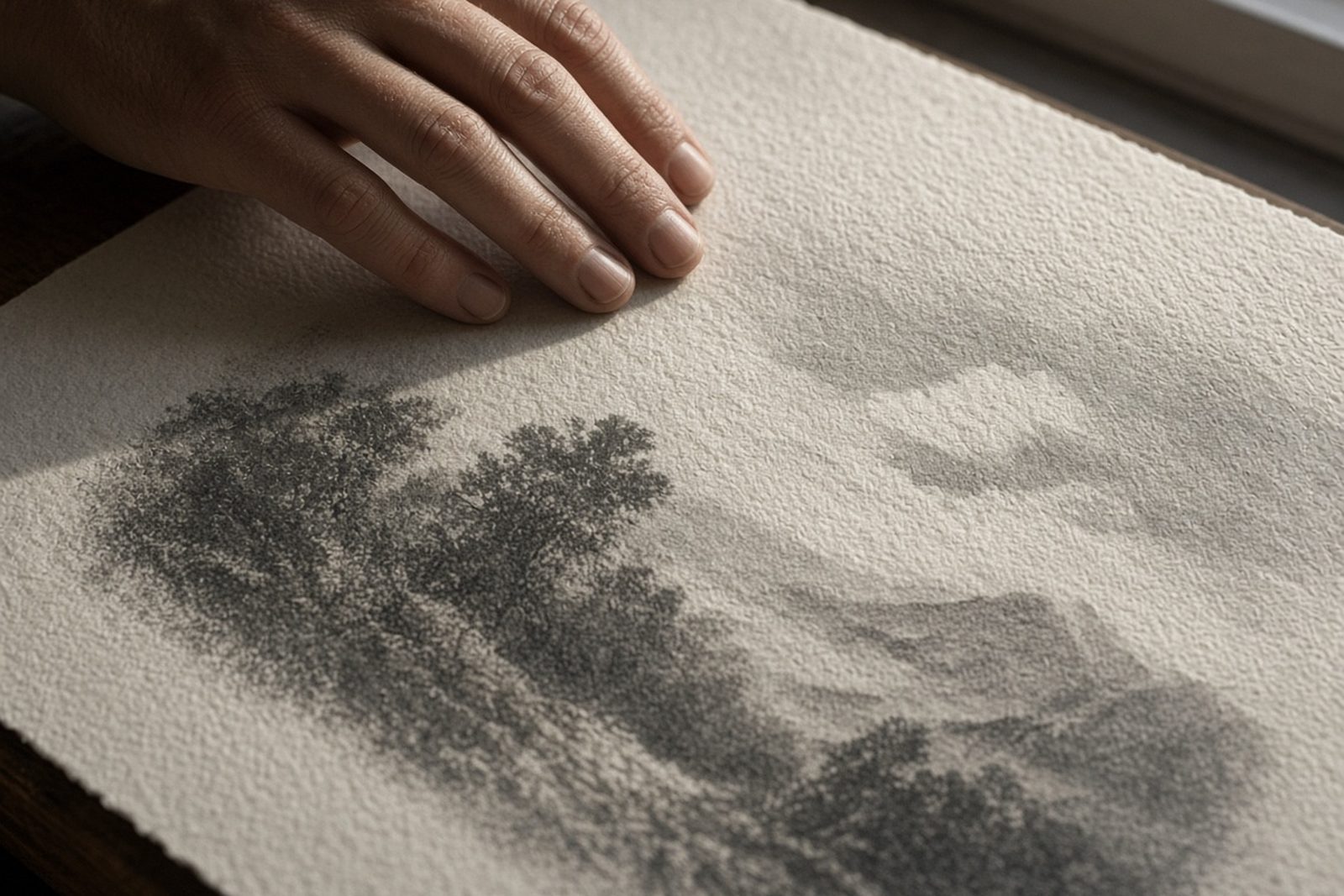
For works with deckled edges, a float mount can be a better choice than a tight cover over the paper. It keeps the full sheet visible and reduces pressure on the image.
Choose glazing that suits the room, not only the frame shop
Glazing protects the print from dust, fingerprints and everyday knocks. Standard glass can be suitable in some rooms, but it needs careful handling because it is heavier and can break. For homes in busy areas or upstairs flats in Sea Point or Newlands, a lighter glazing option may make sense where the work is moved often.
If the print will hang in a space with strong natural light, glare control is worth considering. The aim is to keep the artwork readable without forcing the viewer to deal with reflection all day. Avoid placing framed prints in direct sun, even if the glazing offers some protection.
- Ask for glazing that suits the room's light levels.
- Check that the frame can support the weight safely on the wall.
- Make sure the hanging system matches the wall type, especially on older plaster or brick.
- Keep framed prints away from kitchens, steamy bathrooms and fireplaces.
Humidity, coastal air and the South African home
Humidity is one of the biggest concerns for print care. In coastal homes, especially closer to Woodstock, Sea Point or Durban, moisture in the air can encourage rippling, mould or sticking if the work is framed badly. In drier interiors, the concern may be more about paper becoming brittle over time if it is exposed to too much heat.
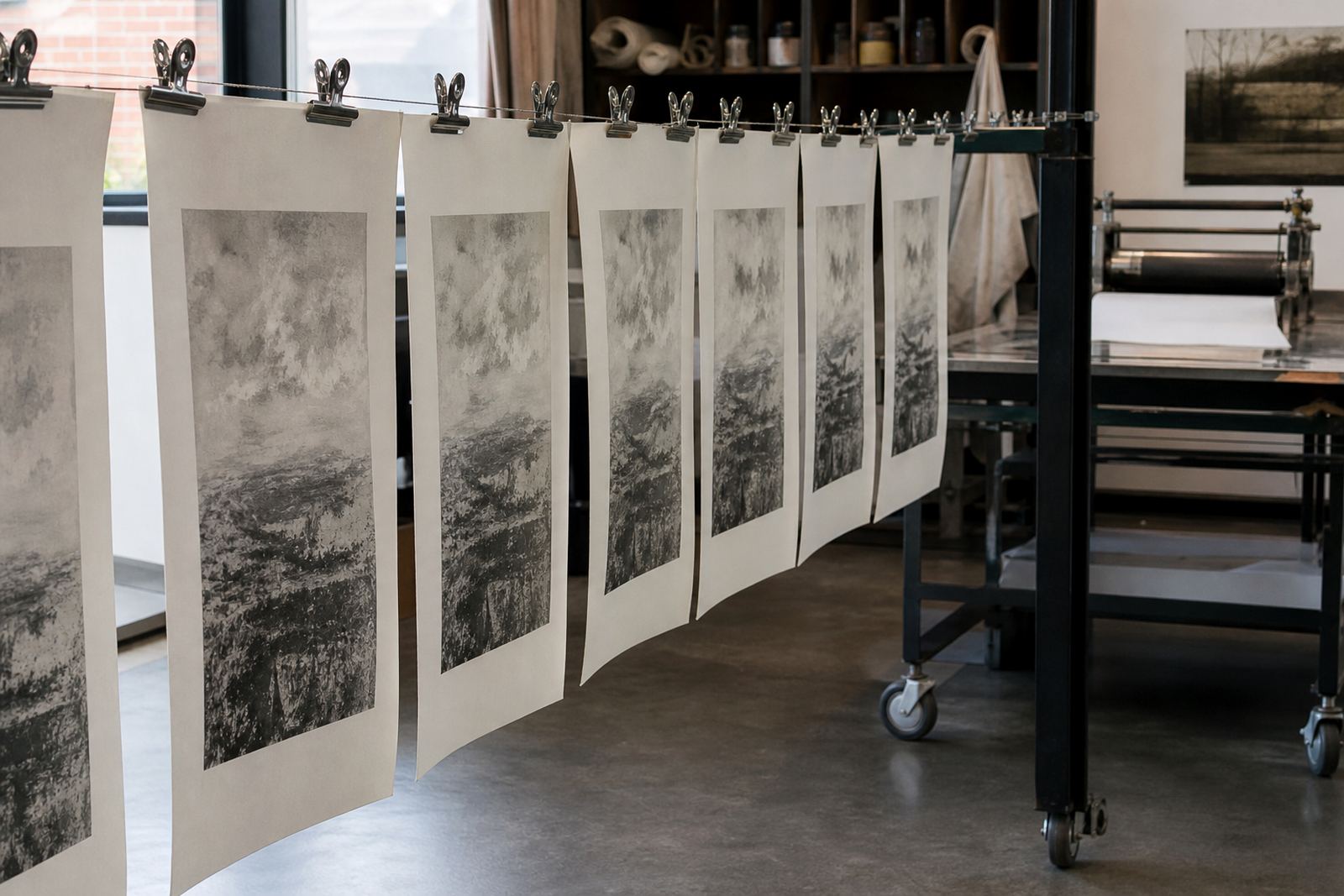
Framing helps when the package is sealed properly, but it should not trap damp paper inside. A print should be fully dry before it is mounted and framed. If a work has just come from the studio, give it the right settling time before it goes behind glass.
That is one more reason to keep prints out of direct sun and away from hot windowsills or damp outer walls.
What to ask for when you frame an edition
Not every frame is suitable for a limited edition print. Ask clear questions before any work is mounted so the framing supports both the object and its value as an edition. A careful approach also makes later conservation work easier if the print ever needs to be remounted.
- Will the print be hinged in a reversible way?
- Is the backing board archival and replaceable?
- Will the signature and edition number remain visible?
- Can the frame be opened without damage in future?
- Is there enough space between the print and glazing?
These details matter for collectors in Stellenbosch, Johannesburg and Pretoria as much as they do for local buyers in Cape Town. A print that is well framed from the start is easier to live with and easier to preserve.
When framing should be coordinated with the studio
Some prints are best framed soon after editioning, while others may need a period of inspection first. If a collector wants framing advice before the work leaves the studio, it helps to know the paper size, the margins, and whether the sheet carries any texture or plate mark that should remain visible.
At a fine-art lithography studio, framing coordination often begins before the print is signed and numbered. That makes it easier to plan the border, the mount proportions and the final presentation. It also helps avoid last-minute decisions that do not suit the print.
For collectors in Durban or further inland, a conversation about room conditions can be useful before the frame is ordered. The same print may need a slightly different approach depending on light, humidity and the wall it will sit on.
Simple care after the frame goes on the wall
Once the print is framed, day-to-day care is straightforward if the hanging spot was chosen well. The goal is to keep the frame clean and stable, while letting the artwork remain undisturbed. A little care goes a long way with paper works.
- Use a soft, dry cloth to lift dust from the frame without rubbing hard.
- Do not spray cleaner directly onto glass or frame edges.
- Check the hanging hardware from time to time.
- Watch for any signs of waviness, spotting or lifted corners.
- If the frame is damaged, have it repaired before moisture or dust gets inside.
A print should not be opened and handled often. If you need to move it, use clean hands and support the frame from underneath. If you ever notice mould, cockling or insect damage, take the work down and get advice before the problem spreads.