Why monochrome still feels fresh on stone
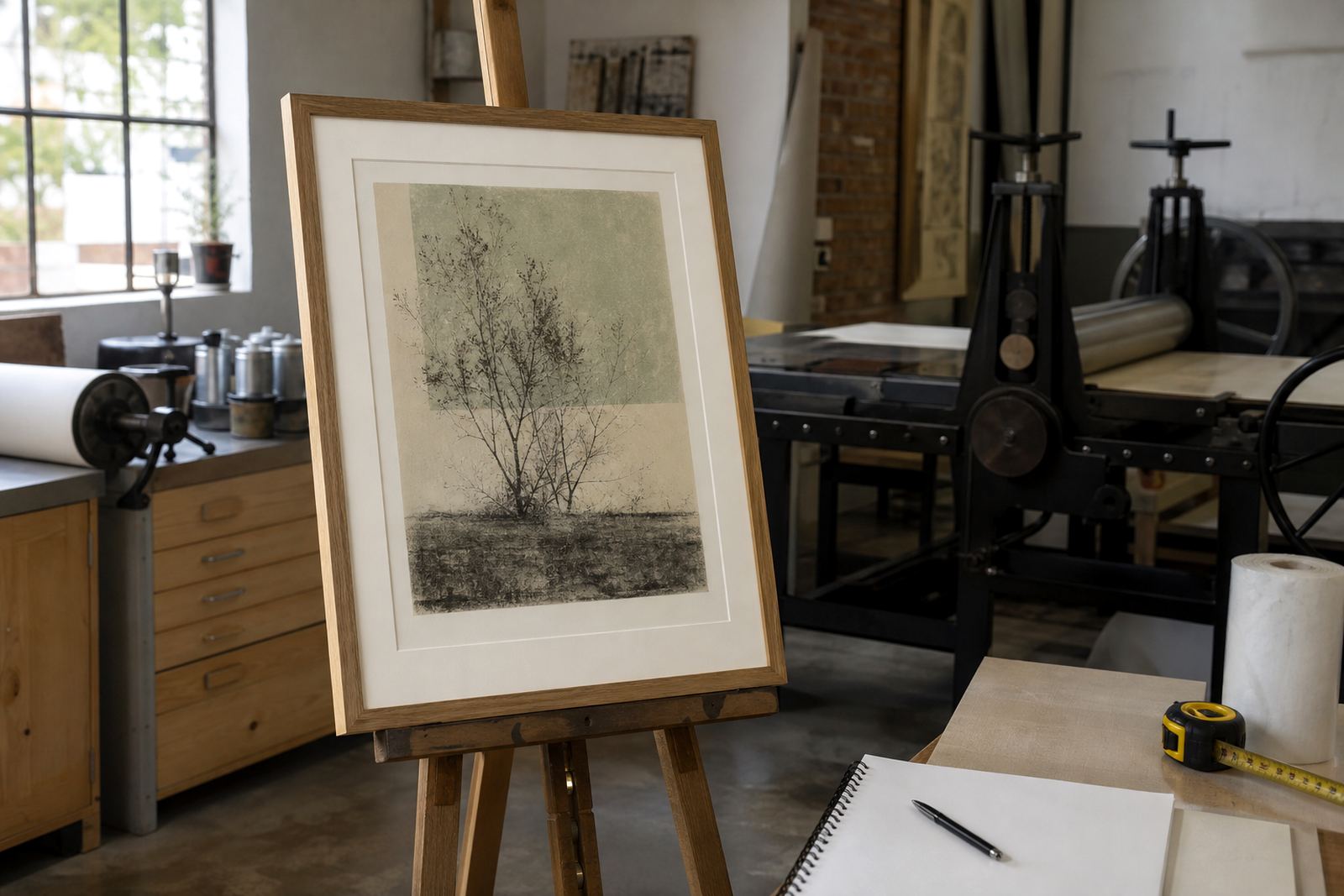
Black and white lithography has a way of stripping an image down to what matters most. On a limestone block, every mark, tonal wash and drawn line is transferred with a clarity that rewards restraint. Without colour doing the heavy lifting, the eye notices structure, contrast and the movement of the hand.
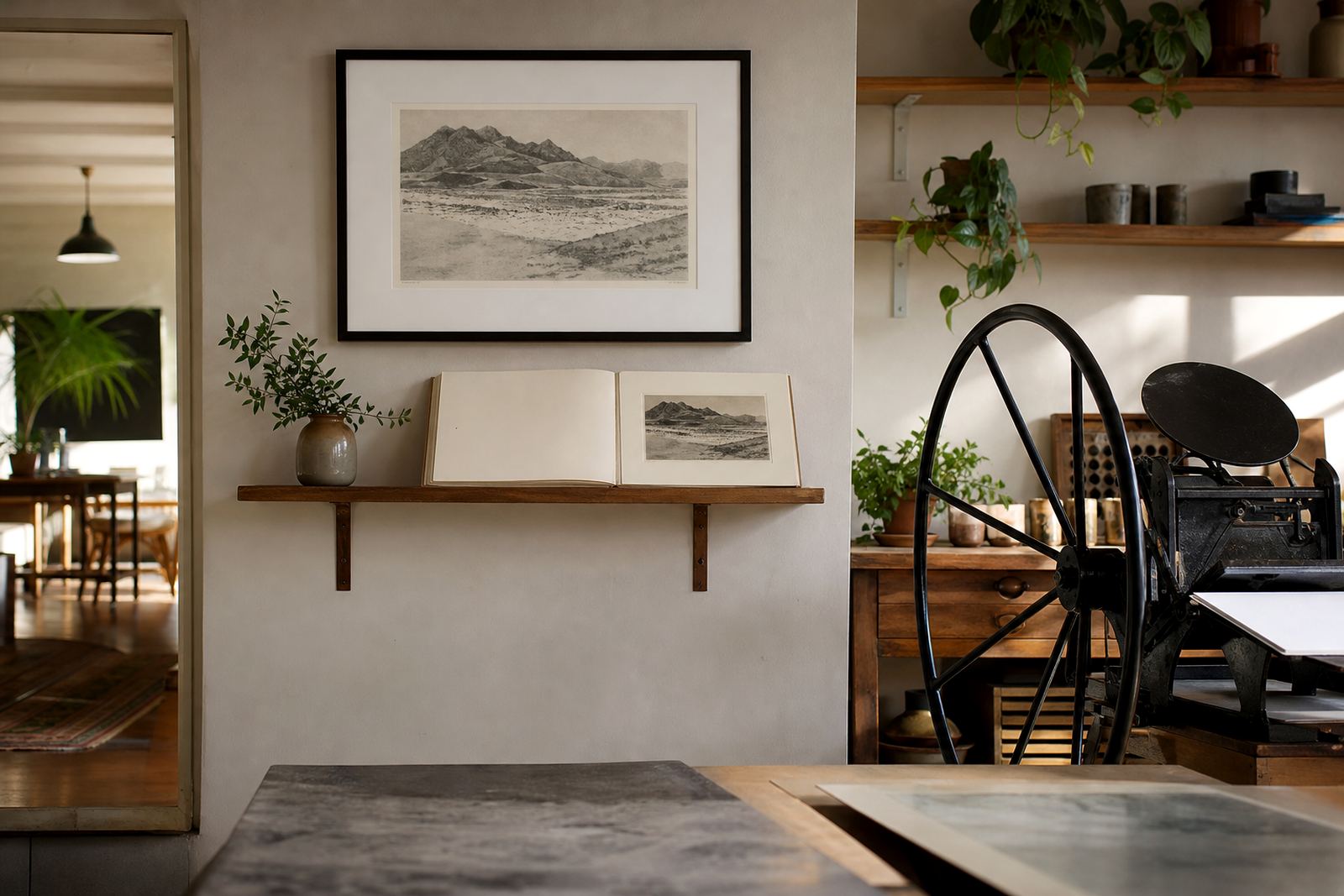
That is one reason monochrome lithographs remain popular with both artists and collectors in South Africa. A well-made black and white print can feel intimate in a small apartment in Sea Point, then just as at home in a large family house in Johannesburg or Pretoria. The palette is simple, but the reading of it is not. A print might look quiet at first and then reveal pressure marks, velvety blacks and pale greys that shift as the light changes.
For artists, monochrome is also disciplined. It asks for confidence in line, spacing and tonal control. For collectors, it offers a print that is often easier to place in a home or office and less likely to clash with changing interiors.
How stone lithography creates depth without colour
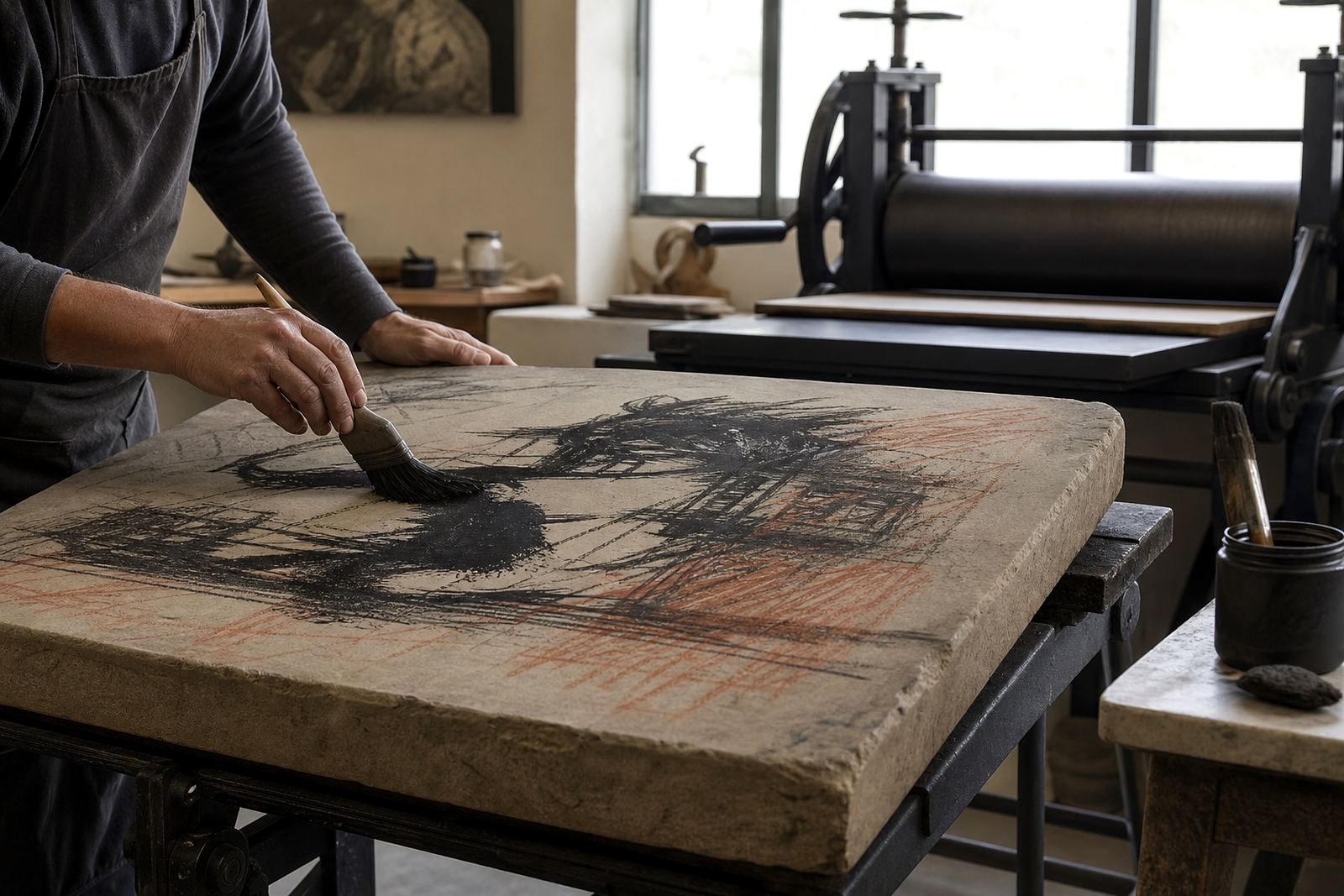
In planographic printing, the image sits on a flat surface rather than a raised block or etched plate, which is how stone lithography works. The artist draws directly onto the prepared stone with greasy materials. The stone is then chemically processed so that ink accepts the drawn areas and repels the non-image areas. When paper is pressed to the stone, the image transfers with a character that is hard to copy by other means.
In black and white work, the method is especially rewarding because tone can be built in many ways. A single image may include dense black passages, dry drawn lines, tusche washes, rubbed textures and soft greys made through careful proofing. The result is not just black or white, but a full range of greys that gives depth to figures, streets, interiors and coastal scenes.
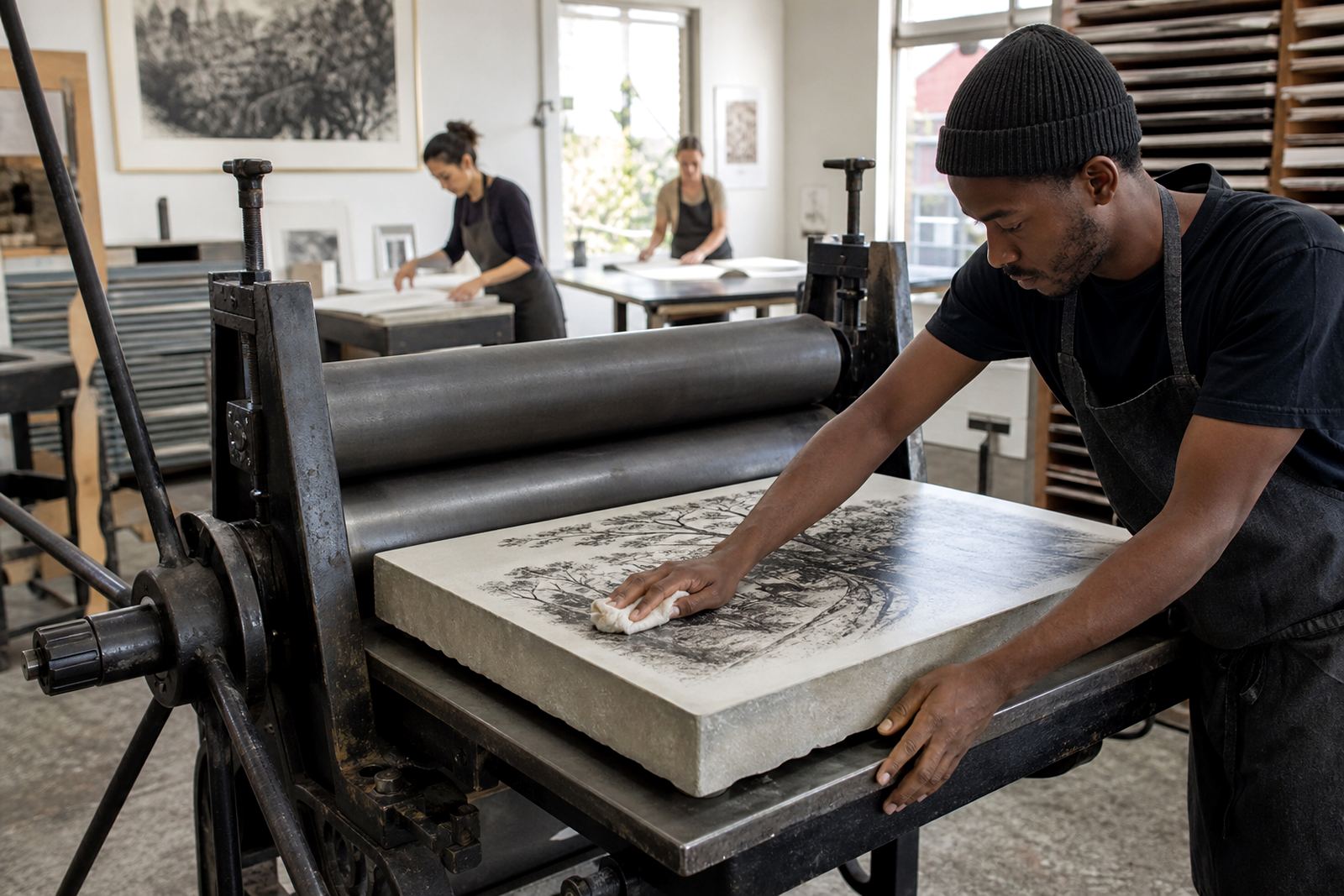
In a Woodstock studio, this process also has practical value. Stone lithography does not depend on fast digital output, so it suits artists who want an image to develop through proofing sessions and close studio discussion. That makes the method steady and very hands on.
What makes a limited edition worth collecting
Collectors often ask what gives a lithograph its value beyond the image itself. The answer usually starts with the edition. A limited edition means the artist and printer agree on the number of finished prints that will be made from a single image, and that number stays fixed. Each impression in the edition should be as consistent as possible, with the same paper, inks and print size.
Editioning matters because it protects the integrity of the work. Once an edition is complete, the stone is usually cancelled or otherwise marked so the image cannot be printed indefinitely. That gives the collector confidence that the print is part of a defined body of work, not an open-ended run.
Useful things to check before you buy:
- Is the print signed and numbered by the artist?
- Does the edition size match the stated print run?
- Has the paper been handled and packed for archival storage?
- Are you buying a print, a proof, or a trial impression?
- Has the work been framed with materials suitable for long-term display?
These details may seem small, but they are what separate a casual print from a carefully made edition. For collectors in Durban or Stellenbosch, that information is just as important as the image itself.
Paper, ink and proofing choices that shape the final image
Black and white lithographs can look very different depending on paper and ink. A soft, absorbent paper will hold rich blacks and a slightly gentler edge, while a harder-surfaced paper may give a crisper line. The paper weight also matters because a heavier sheet sits better under the press and tends to travel more safely between studio and frame shop.
Proofing sessions are where these choices are tested. In monochrome work, small changes in pressure or dampness can alter the feeling of the whole print, so this stage needs patience.
Practical points for artists and clients:
- Choose paper that suits the subject, not just the look of the sheet
- Allow enough drying time before packing or framing
- Keep proof notes, especially if the edition is complex
- Store sheets flat in a dry room away from coastal humidity
For collectors along the Atlantic seaboard, humidity is worth paying attention to. Even a beautifully printed sheet can cockle if stored badly, so archival packing and sensible framing are part of caring for the work from day one.
A Woodstock example: black and white in a Cape Town studio
In Woodstock, where old workshops and working studios sit close together, monochrome lithography still feels at home. The pace of the area suits a process that depends on observation, adjustment and repeat handling of stone and paper. A black and white image printed there can speak equally to a local collector and to someone buying from further afield in Pretoria or Johannesburg.
One practical strength of monochrome is that it travels well. A collector ordering from Cape Town to Durban does not need to worry about colour shifts across the edition. What matters is tone, registration and condition. That consistency makes black and white editions attractive for buyers who want a print that will arrive looking like the approved studio proof.
Local buyers also value guidance on framing and display. In homes with strong light, especially near the coast, a print should be kept out of direct sun and framed under glass or acrylic with archival mount board. Simple handling keeps the paper clean and the blacks sharp for years.
How to care for a black and white lithograph for the long term
Once a lithograph leaves the studio, the aim is to keep it stable. Black and white prints are often more forgiving than heavily saturated colour work, but they still need proper care. Finger oils, damp walls and harsh light can all shorten the life of a print. So can cheap framing materials, which may discolour the sheet from the back over time.
If you are collecting for a home in Newlands, a office in the CBD or a coastal property in Sea Point, the basics are the same: store flat before framing, avoid damp rooms and ask for archival materials. If you are not framing right away, keep the print in acid-free tissue and a protective sleeve in a cool, dry place.
Good care habits:
- Handle the sheet by the edges only
- Avoid hanging in direct sun or over heat sources
- Use archival mount board and backing
- Keep framed work away from bathrooms and kitchens
- Check periodically for signs of moisture or insect damage
A print that is cared for properly will keep its tonal range and paper quality for many years, and that is part of the pleasure of collecting lithographs in the first place.
Nowhere to hide in monochrome
Black and white lithographs stay compelling because they are honest. There is nowhere to hide in a monochrome image. Every line, every soft grey and every quiet blank area has to earn its place. That makes the work direct, but never simple.
For artists, the format offers precision and room for experimentation. For collectors, it offers editions that are easier to live with, easier to frame and often more timeless than trend-driven colour work. In a market where people want prints that can move between homes, offices and gallery walls, monochrome keeps its place.
At Lithography Art, black and white editions often begin with a conversation about subject, scale and finish, then move through proofing, signing and numbering, and finally archival packing for delivery across South Africa. The appeal endures because the medium does what good printmaking should do: it lets the image speak clearly, without fuss.