Start with the print, not the frame
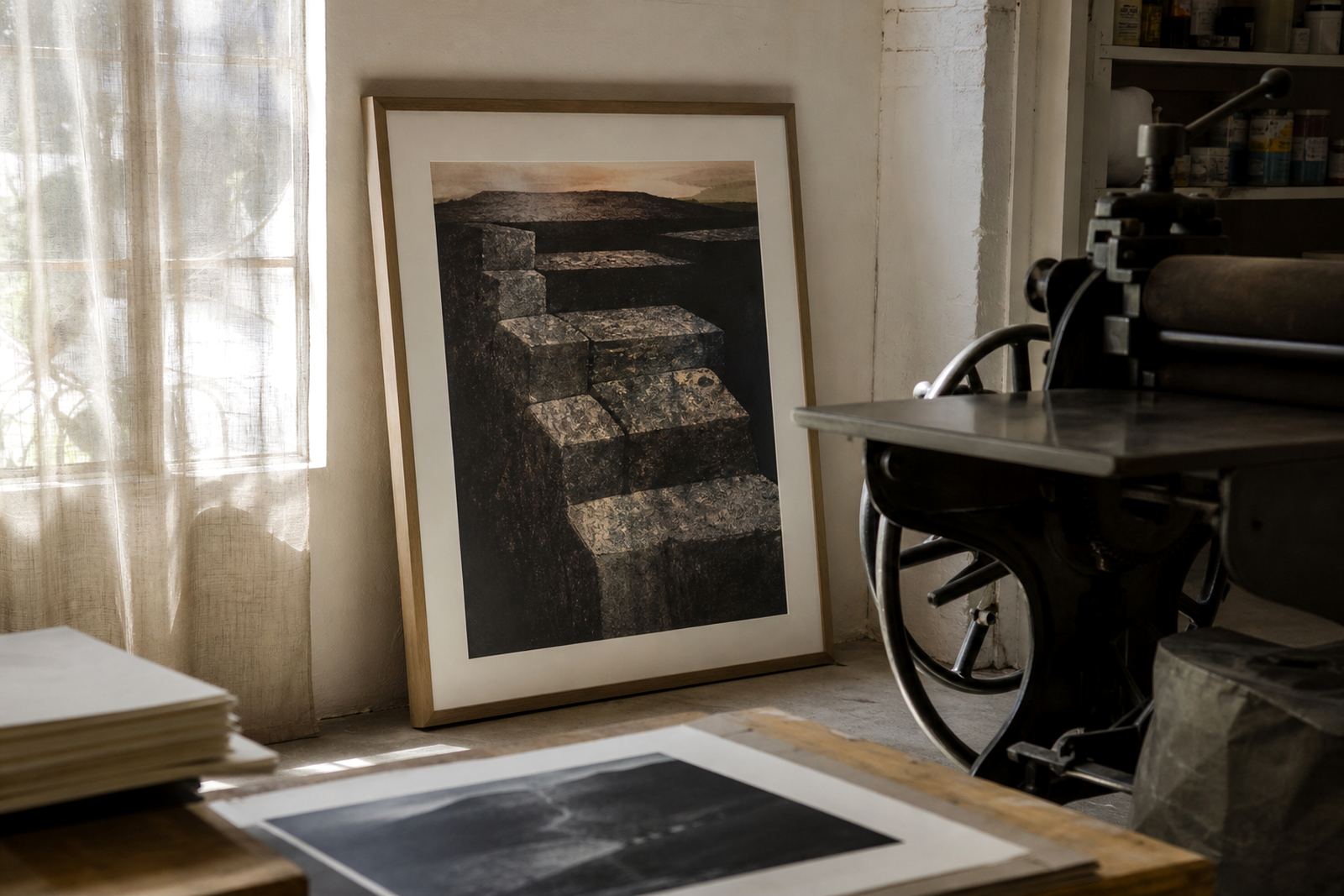
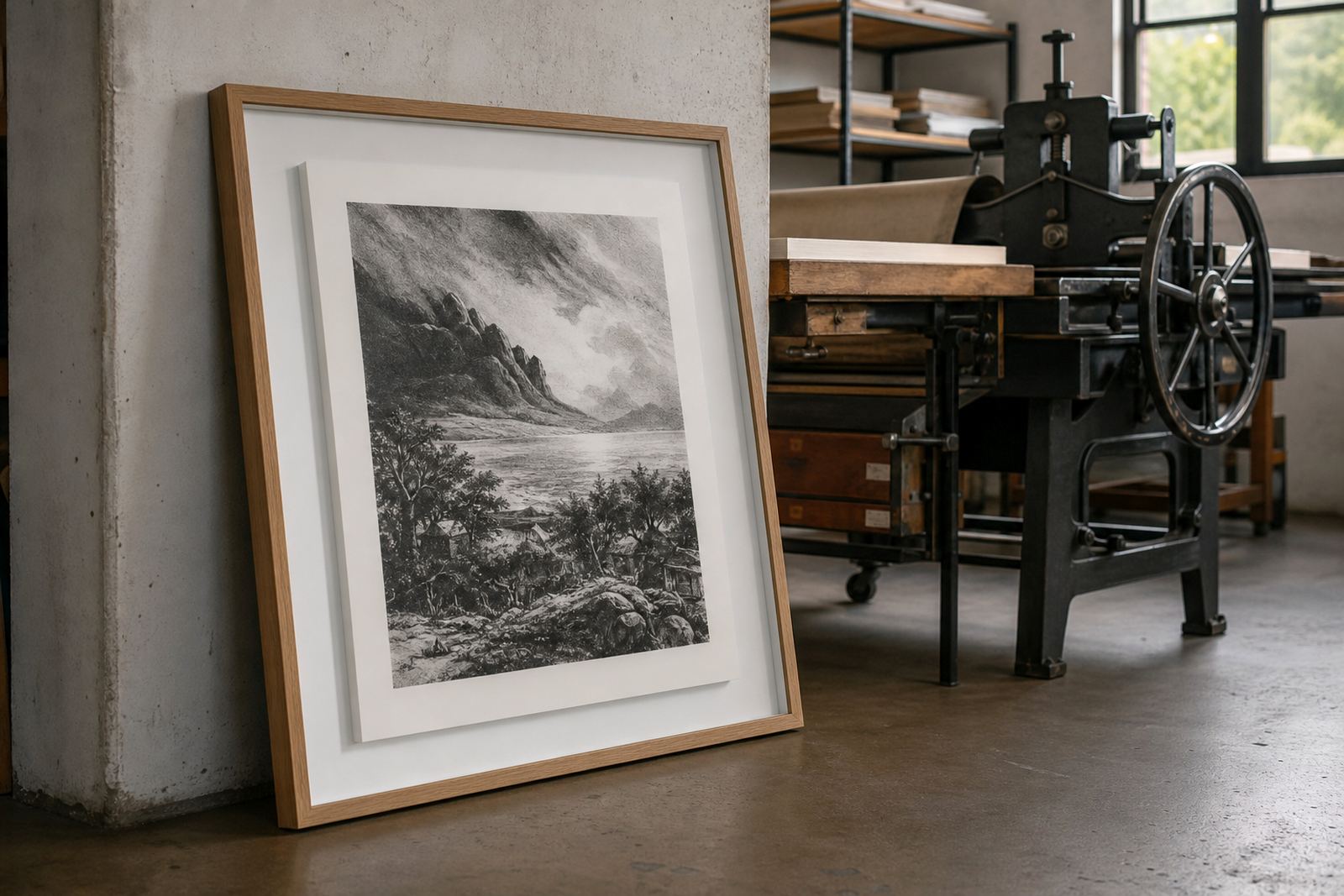
When you are buying a framed print, the first question is not what the frame looks like, but whether the framing suits the work itself. A fine-art lithograph is made on paper, often in a limited edition, so the frame needs to protect the sheet from moisture, dust and handling while keeping the image true to colour and scale. A good frame should support the print, not fight with it.
Ask what materials are used between the print and the frame. Archival backing board, acid-free mounts, and proper glazing all matter. If the print has a deckled edge or the artist wants a border visible, that should be planned from the start. Good framing is quiet. It lets the image speak for itself and keeps the paper in stable condition over time.
Questions that show if the framing is properly done
Before you commit, ask clear questions about how the print has been finished. You do not need jargon, just straight answers about materials and method. That will tell you if the piece is ready for a home, office or collector wall.
- Is the artwork mounted with acid-free, archival materials?
- Does the glazing protect against dust and light, or is it plain glass?
- Has the print been fitted so the paper is not touching the glazing?
- Is the frame deep enough for the artwork and backing board?
- Will the hanging system suit the wall type in your home or office?
- Has the frame been checked for chips, loose joints, or movement in transit?
If the answer is vague, keep asking. A framed print should arrive display ready, not needing repairs before it can go up.
What display ready really means
Display ready means the print has been framed to a finished standard and can be hung soon after collection or delivery. It should have a secure backing, clean glazing, and a hanging system that suits the weight and size of the frame. For buyers in Cape Town, Johannesburg or Durban this matters because a piece may travel a long way before it reaches the wall, and loose fittings can shift in transit.
A display ready framed print should also come with clear handling guidance. If the work is on a delicate paper or has a wide border, it helps to know where to lift the frame, how to position it, and whether it should be hung away from direct sun. In a bright Sea Point apartment or a warm Pretoria room, that advice can make a real difference to how long the piece stays in good condition.
Editioning details should be visible and protected
For collectors, a framed lithograph is not only wall decor. It is part of an edition and should carry the correct signatures, numbering, and any studio marks in a way that remains visible where appropriate. These details are part of the work’s identity, so the framing must not cover them unless that has been agreed in advance.
When you buy, check that:
- The edition number is clear and legible.
- The artist signature has not been hidden by the mount.
- Any date or studio note is protected from rubbing or fading.
- The print is housed so that future removal is possible without damage.
This matters particularly for limited editions, where paper condition and documentation help preserve collector value. A neat frame is not enough if the edition details are squeezed out of sight or handled badly.
Choose framing for the room you will actually use
Framing should suit the place the work will live in, not just the gallery wall in your head. A large, bold print in an open-plan Newlands home may need a simple frame so the image remains the focus. A smaller piece in a study or passage can carry a bit more visual weight, but only if the proportion is right.
Think about light, humidity and daily use. Coastal areas such as Sea Point can bring more moisture into the room, so sealed backing and careful material choice matter. In a busy family home or office, a frame with strong joints and sensible hanging hardware is worth the extra attention. If the print will sit near a window, ask how much UV protection the glazing offers and whether curtains or blinds are recommended.
Print care after framing still matters
Once a print is framed, the care does not stop. Dust the outer frame with a soft dry cloth and avoid spraying anything directly onto the glazing. Keep the piece away from damp walls, cooking steam, and direct midday sun where possible. Even a well-made frame cannot fully protect paper from years of hard light.
When moving the work, hold it from both sides and keep it upright. Do not rest it face down on grit or a rough table. If the framed print is ever knocked or dropped, inspect the corners, backing and hanging wire before putting it back on the wall. A small fault can become a larger problem if ignored, especially in a humid or dusty room.
A practical collector habit: inspect before you pay
Whether you are buying a framed print for the first time or adding to a serious collection, inspect it like you would any finished object. Look closely at the corners, the mount lines, the backing, and the overall fit of the frame. The glass should be clean, the paper flat, and the artwork centred without strain. If the piece is framed with a wide border, check that the print sits square and the white space is even on all sides.
In our Woodstock studio, we often remind collectors that framing should serve the print for years, not just for the day it leaves the studio. A well-framed lithograph is easier to hang, easier to live with, and far less likely to need correction later. That is the standard worth asking for.