
Why stone lithographs need careful storage
Fine layers of ink are built up on paper in stone lithography, often with subtle colour shifts and delicate surface detail. Because the paper is part of the artwork, good storage matters just as much as framing. A print that is folded, damp, dusty or pressed against rough material can mark easily, and those marks are usually hard to reverse.
For South African collectors, the main risks are heat, humidity, dust and sudden changes in temperature. Coastal air in places like Cape Town and Durban can bring moisture into storage cupboards, while inland homes in Johannesburg and Pretoria may be drier but still face dust and strong sun. The aim is simple: keep the print flat, clean and away from anything that can stain or abrade it.
Best storage conditions at home or in a studio
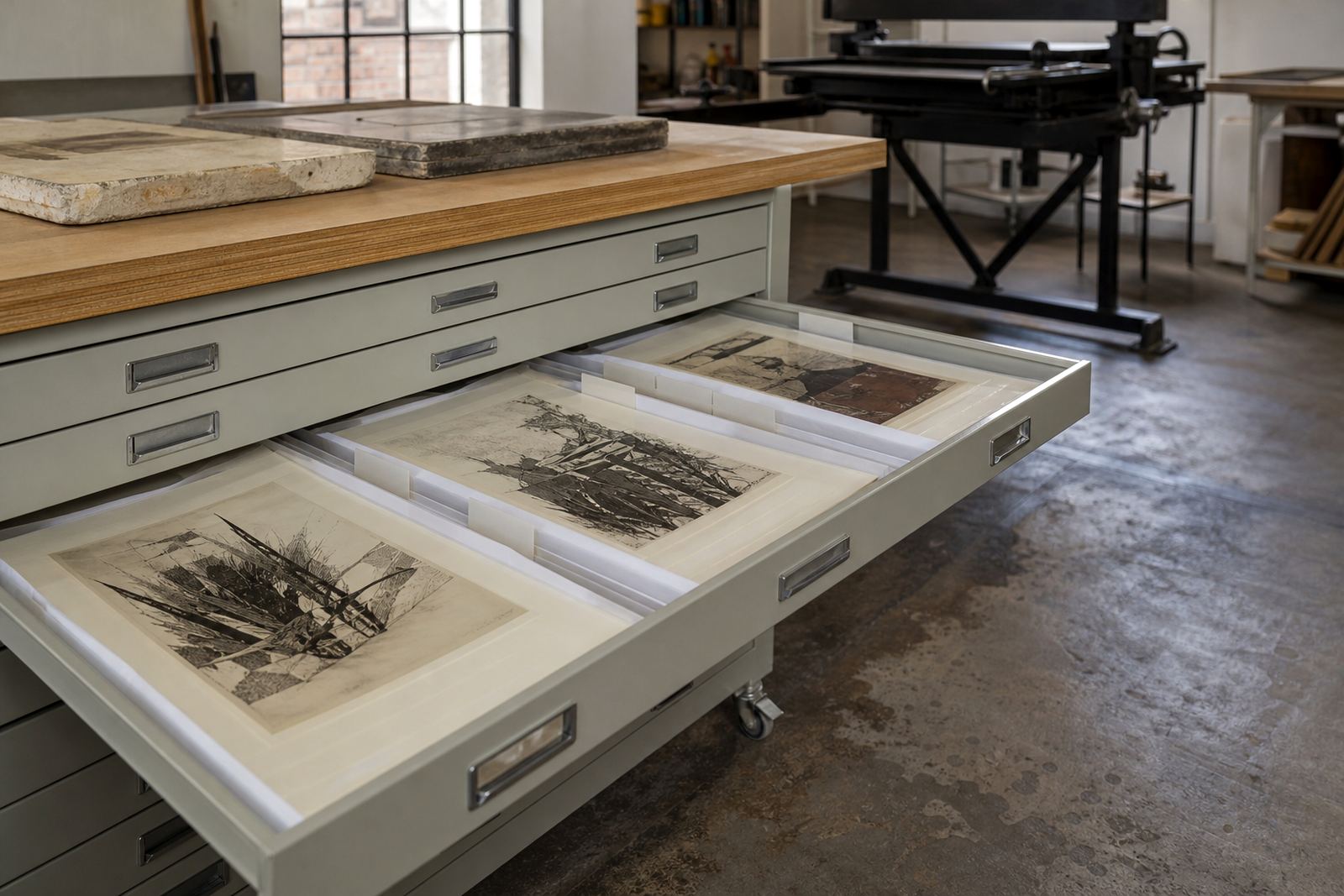
Store lithographs in a room with stable conditions, away from direct sunlight, kitchens, bathrooms and exterior walls that sweat in winter. A dedicated cupboard, portfolio cabinet or flat storage drawer is best. If you are using a shelf or box, make sure the print lies fully flat and is not leaning under pressure from other items.
- Choose a cool, dry room with low foot traffic
- Keep prints away from windows and heaters
- Avoid garages, attics and garden sheds
- Do not store near cleaning products, paint or food
- Leave space so the stack is not squeezed tight
A closed cupboard in a shaded room is usually better than a warm space with direct afternoon sun. In humid weather, check the storage area now and then for musty smells, cockling in the paper or signs of damp on the box or sleeve.
How to handle prints before you file them away
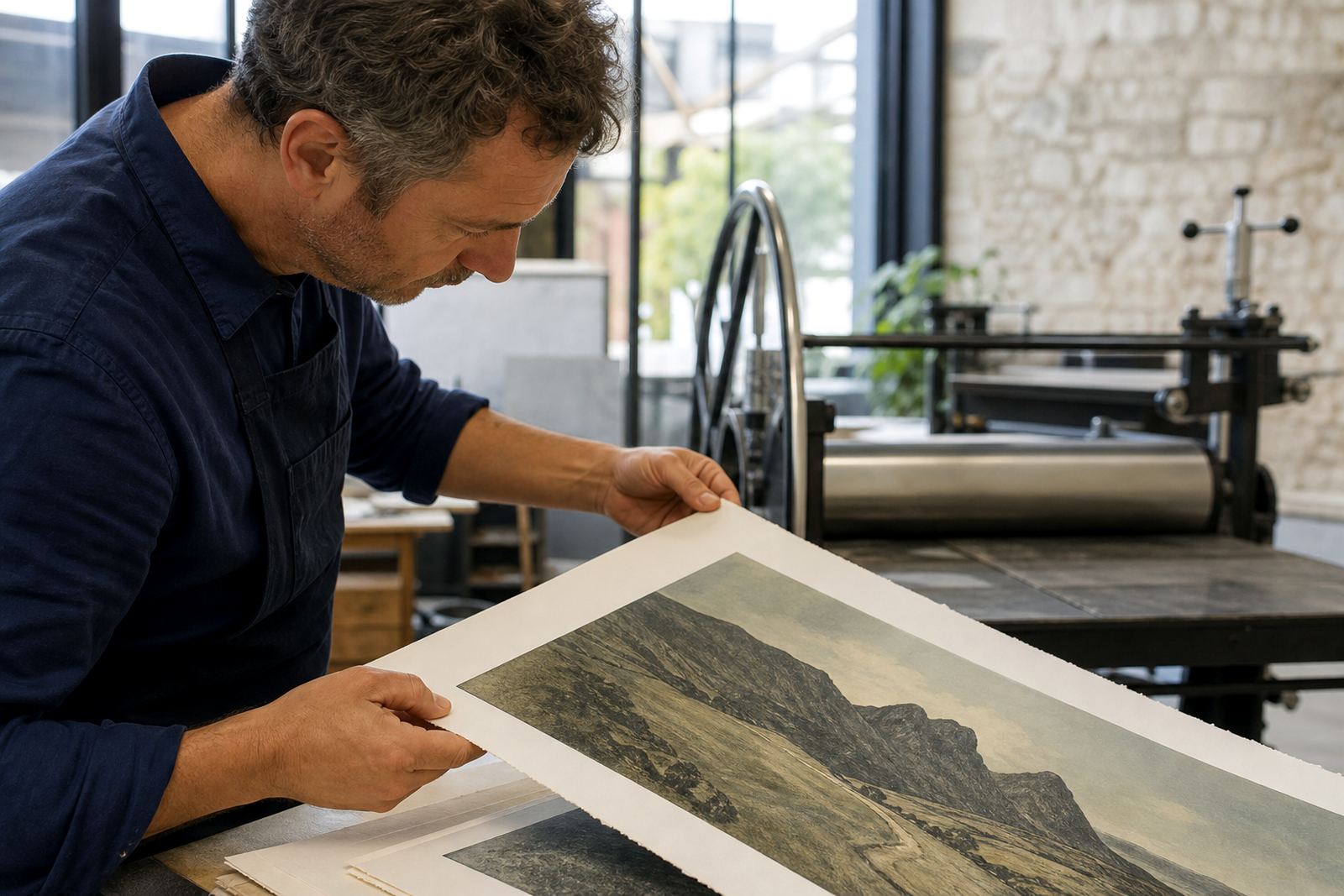
Always wash and dry your hands first, or use clean cotton gloves if the paper is highly sensitive. Handle the print by its edges and support it with two hands so it does not flap or bend. Never pick up a lithograph by one corner, and never stack it against a rough wall while you clear space.
Before storing, give the print a quick inspection under good light. Check for loose dust, fingerprints, bending, scuffs or any moisture on the surface. If the print has just returned from framing or transport, let it rest flat for a short while in the room where it will be stored so it can settle to that temperature.
- Use clean hands or lint-free gloves
- Hold the sheet at the edges only
- Check for dust, damp or surface marks
- Allow the print to acclimatise before packing
- Keep drinks, glue and food well away
Packing materials that help protect the edition
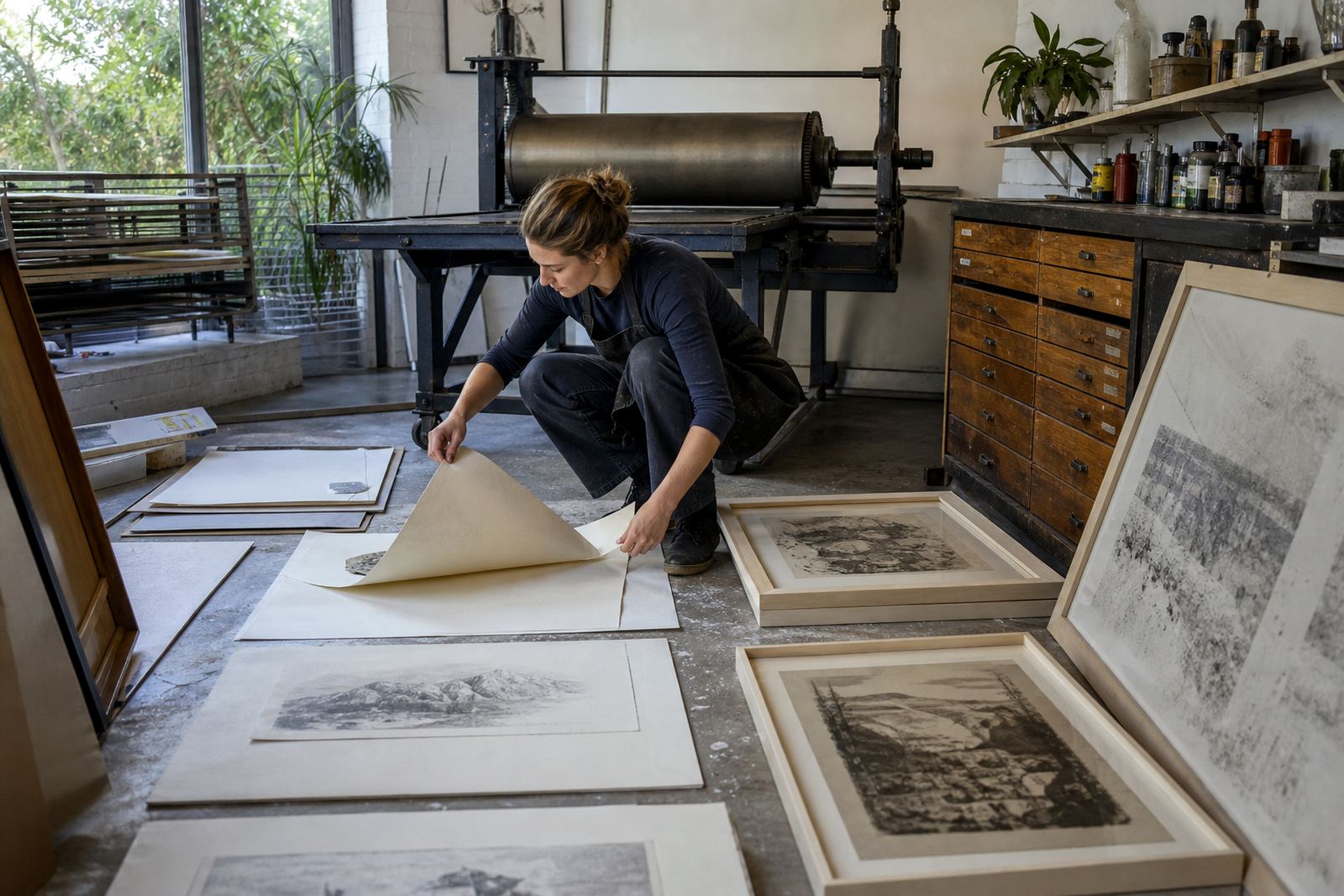
Use acid-free interleaving, archival sleeves or clean tissue made for art papers. Avoid newspaper, coloured wrapping paper, plastic that traps moisture, sticky tape and old cardboard with yellowing edges. If the edition is staying in storage for more than a few weeks, place each print in a protective sleeve or between sheets of acid-free paper before it goes into a flat box.
For larger works, a rigid portfolio case or archival storage box is often safer than rolling. Rolling can stress the paper, especially if the sheet has been printed on heavier paper or has already been framed before. Keep the box fully supported on a level surface so the contents do not slide when it is moved.
- Acid-free paper or tissue between each sheet
- Archival sleeve or portfolio for single works
- Rigid flat box for multiple prints
- Label the box with size, edition and artist name
- Keep tape, staples and rubber bands off the artwork
Edition control and record keeping
When storing limited editions, keep the print, its paperwork and any edition notes together so nothing goes missing between displays. A collector file with the title, edition number, sheet size, date received and storage location saves time later, especially if you keep work in more than one room or property.
Good records also help if you are planning future framing or insurance discussions. If a sheet is part of a numbered edition, note whether it has been signed, proofed or already displayed. That information matters when you are moving work between a home in Sea Point, a studio in Woodstock or a collector's wall in Johannesburg.
Checking stored prints before the next display
Before you frame or hang a stored lithograph again, lay it out in clean light and check the paper edges, corners and image surface. Look for waviness, foxing, discolouration, lifted fibres or any smell of damp. If you see a problem, do not force the print into a frame or sleeve that is too tight. Let it breathe first and get advice if needed.
If the print has been stored for a long time, let it come to room temperature slowly before opening the sleeve. Quick temperature changes can create condensation, and that is one of the easiest ways to damage paper. A careful recheck takes only a few minutes and can save a lot of trouble later.
- Inspect corners, edges and image surface
- Watch for damp, mould, stains or cockling
- Open sleeves slowly in a clean room
- Do not force a print into a tight frame
- Repack the edition only when the paper is fully settled