Start with the edition details, not just the image
A proper limited edition should tell you exactly what you are buying. Ask whether the print is part of a numbered edition, an artist proof run, or a later state. In stone lithography, each colour is usually printed from a separate stone and the final result can change with each proof, so edition planning matters from the start.
Check that the edition size is stated clearly and that the numbering matches the print in front of you. If a print is marked 12/30, it should sit within a fixed run of 30 impression, with any proofs or printers proofs noted separately. If the edition information is vague, ask for clarification before you commit.
What to look for in the stone lithograph itself
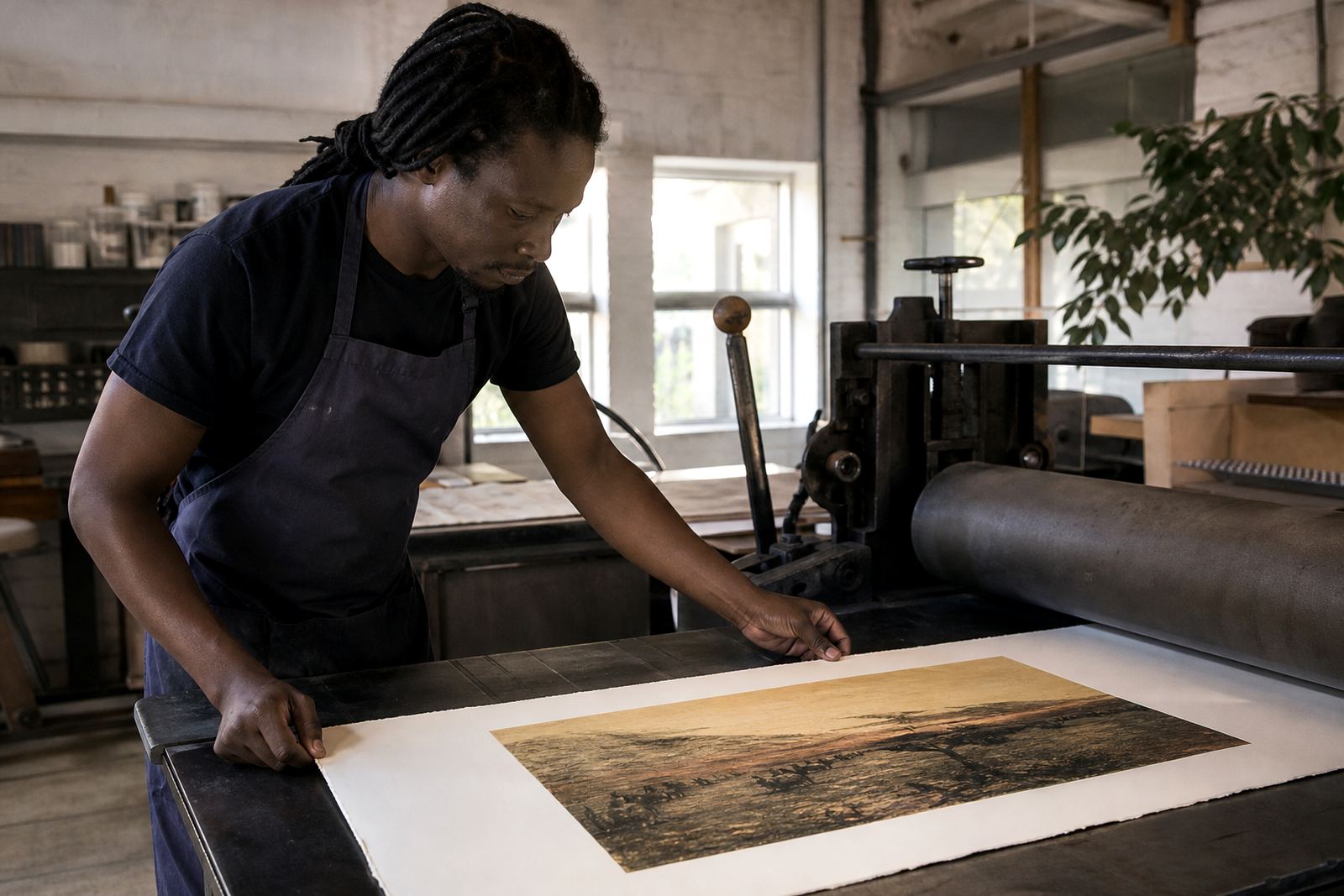
Stone lithography has a particular quality that collectors value. The image often shows rich blacks, subtle tonal shifts and a very direct mark from the stone, even when the work is highly coloured. Because the process is planographic, the print is not made from raised or engraved lines, and the surface character is part of its appeal.
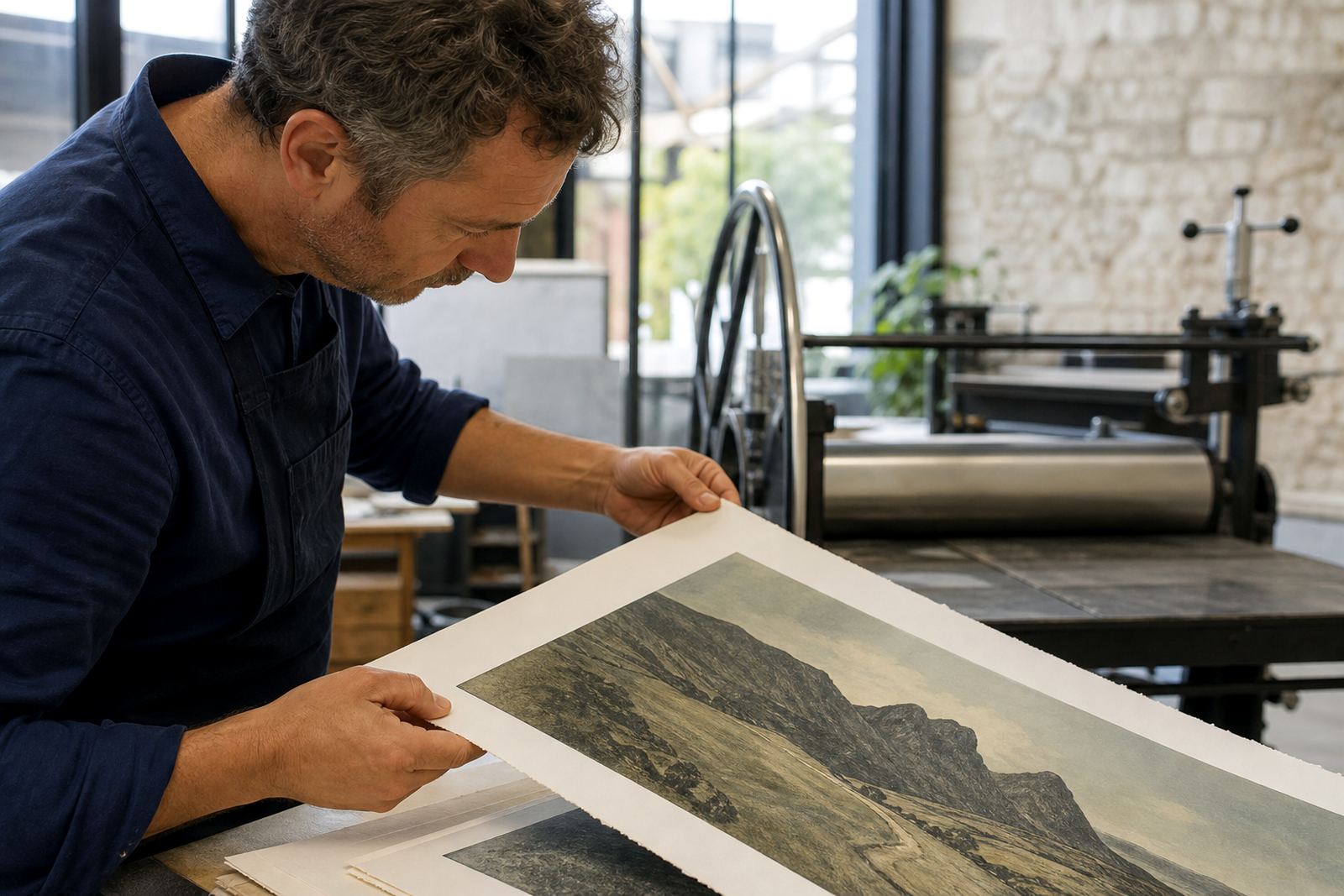
Look closely at the registration of colours, the clarity of the image and the evenness of the inking. Slight variation is normal in hand-printed work, but the print should feel resolved and intentional. If the paper has heavy cockling, scuffing or an uneven image area, ask whether that is part of the process or a sign of handling issues.
Check signature, numbering and studio notes
Authentic limited-edition prints are usually signed and numbered by hand, often in pencil below the image. The signature should be consistent with the edition and placed where it is easy to read without crowding the artwork. A studio chop or blind emboss may also appear, depending on the print run and the artist’s preference.
- Confirm the artist’s signature is present and legible
- Check that the edition number is written in the same hand
- Ask whether the sheet includes a title, date or studio note
- Request details on whether the print is a proof, edition print or unique variant
If you are buying from a collector or dealer, ask for a clear record of these details. A solid paper trail helps if the work is later framed, insured or resold.
Paper quality and why it matters in South African conditions
The paper is not just a support, it is part of the artwork. Most fine art lithographs are printed on acid-free paper that is made to age well, but storage conditions still matter. In coastal areas like Cape Town and Durban, humidity can affect paper if a print is left unframed or stored badly. Inland, dust and dry air can also cause problems over time.
Check the sheet size, the margins and whether the paper has deckled edges or a clean cut, depending on the edition style. For framed work, make sure the mount and backing are archival and that the glass or acrylic allows the print to breathe properly. Avoid direct sunlight, and keep the work away from damp walls, kitchens and bathrooms where moisture can creep in.
How to judge condition before you pay
Aprint can be well made and still have condition issues. Look at the sheet in natural light if you can, and inspect all four corners, the margins and any printed surface area close up. Minor surface marks may be acceptable on older work, but anything that affects the image, paper fibres or edge structure should be discussed before purchase.
- Check for foxing, stains or tide marks
- Look for creases, tears or soft corners
- Inspect for smudges, mat burn or adhesive residue
- Ask whether the print was ever framed with non-archival materials
If you are uncertain, request time to review the work again or to compare it with another print from the same edition. A careful buyer does not rush the process, especially when the print is intended for long-term collection.
Packing, transport and display after purchase
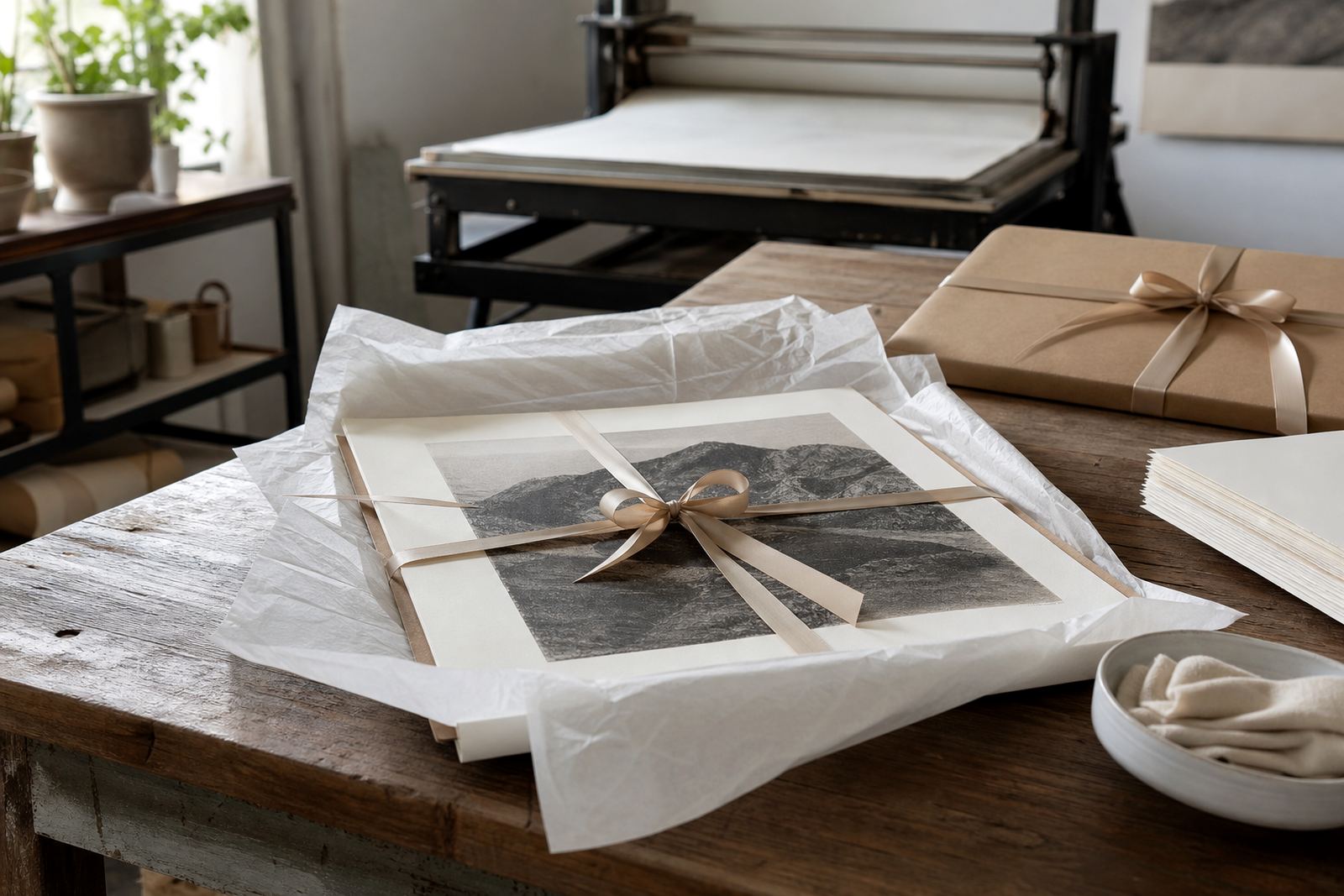
Once you have chosen a print, the next step is to move it safely. A lithograph should be handled with clean, dry hands and supported fully so the sheet does not bend at the edges. If the print is travelling to Stellenbosch, Johannesburg, Pretoria or Durban, make sure it is wrapped flat and protected against moisture and impact. On a warm delivery day, a sealed package can trap heat so it is worth allowing the work to settle before opening.
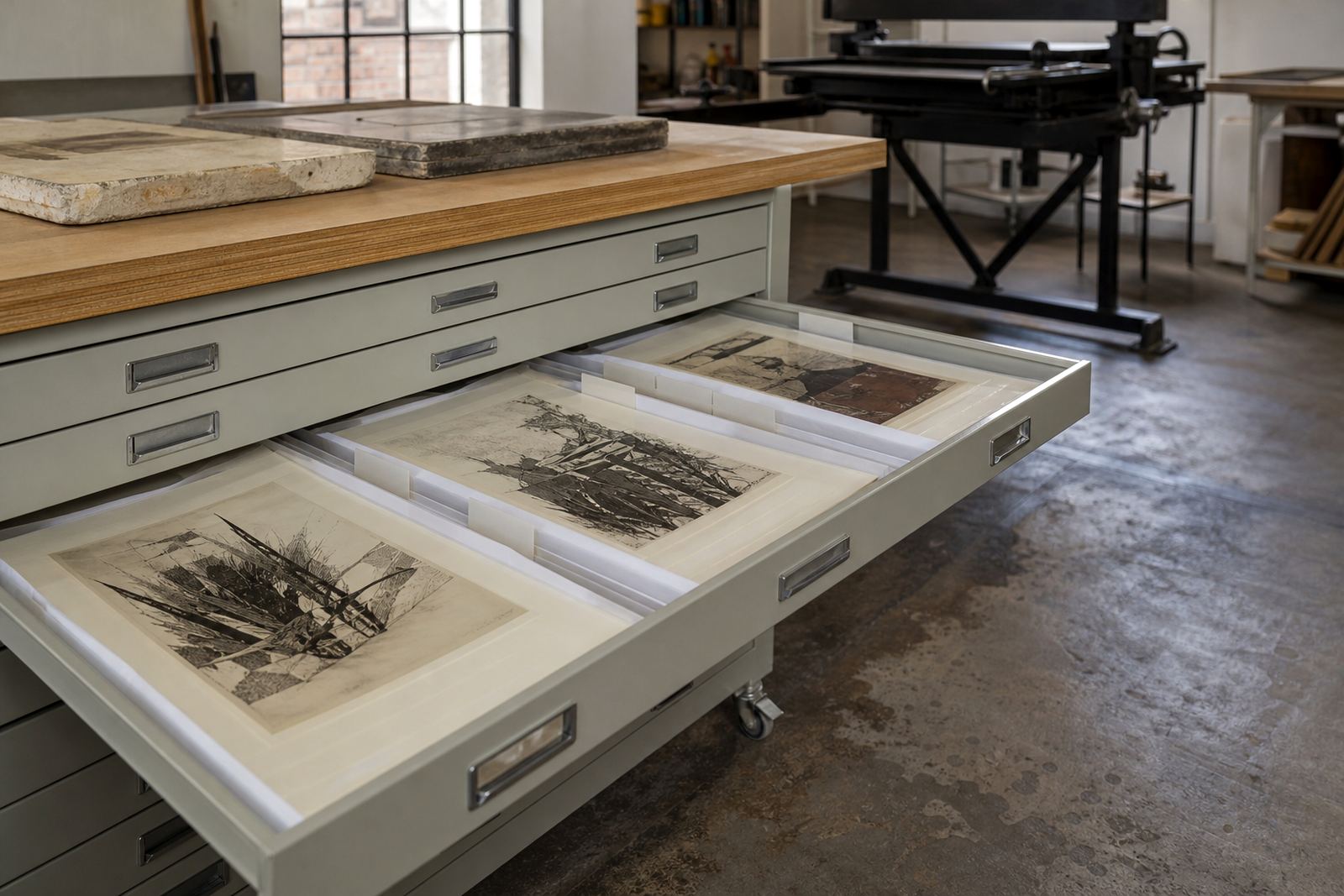
For display, choose a place with stable light and good air circulation. If the work will be stored before framing, keep it flat in an acid-free sleeve or folder, away from direct sun and high traffic areas. Good care starts on day one, and it saves trouble later.
Questions to ask before you add a print to your collection
A few direct questions can tell you a lot about the print and the edition. This is especially useful when you are buying remotely or comparing works from different studios and private collections. Ask for the facts, then decide whether the print suits your space, budget and collecting goals.
- What is the edition size and number of this impression?
- Is this a standard edition, artist proof or trial proof?
- What paper was used and how should it be stored?
- Was the print framed previously, and with what materials?
- Are there any condition notes I should know about?
If the answers are clear and consistent, you are on firmer ground. A well documented print is easier to enjoy, insure and hand on later, which is what good collecting is really about.