Why light is the first thing to manage
Paper and pigment both react to light. Over time, strong sunlight and even high indoor lighting can cause fading, yellowing and a loss of contrast. Stone lithographs are especially valued for their tonal detail, so the aim is to slow that change as much as possible.
In South Africa, the strongest risk is usually direct sun through north or west facing windows. In Cape Town and Durban, coastal humidity can add another layer of concern because damp air can affect paper condition if a work is already exposed to heat and light. The safe approach is simple: keep the artwork out of the sun, away from hot walls and away from spots where the light falls on it all day.
Choose the right wall before the frame goes up
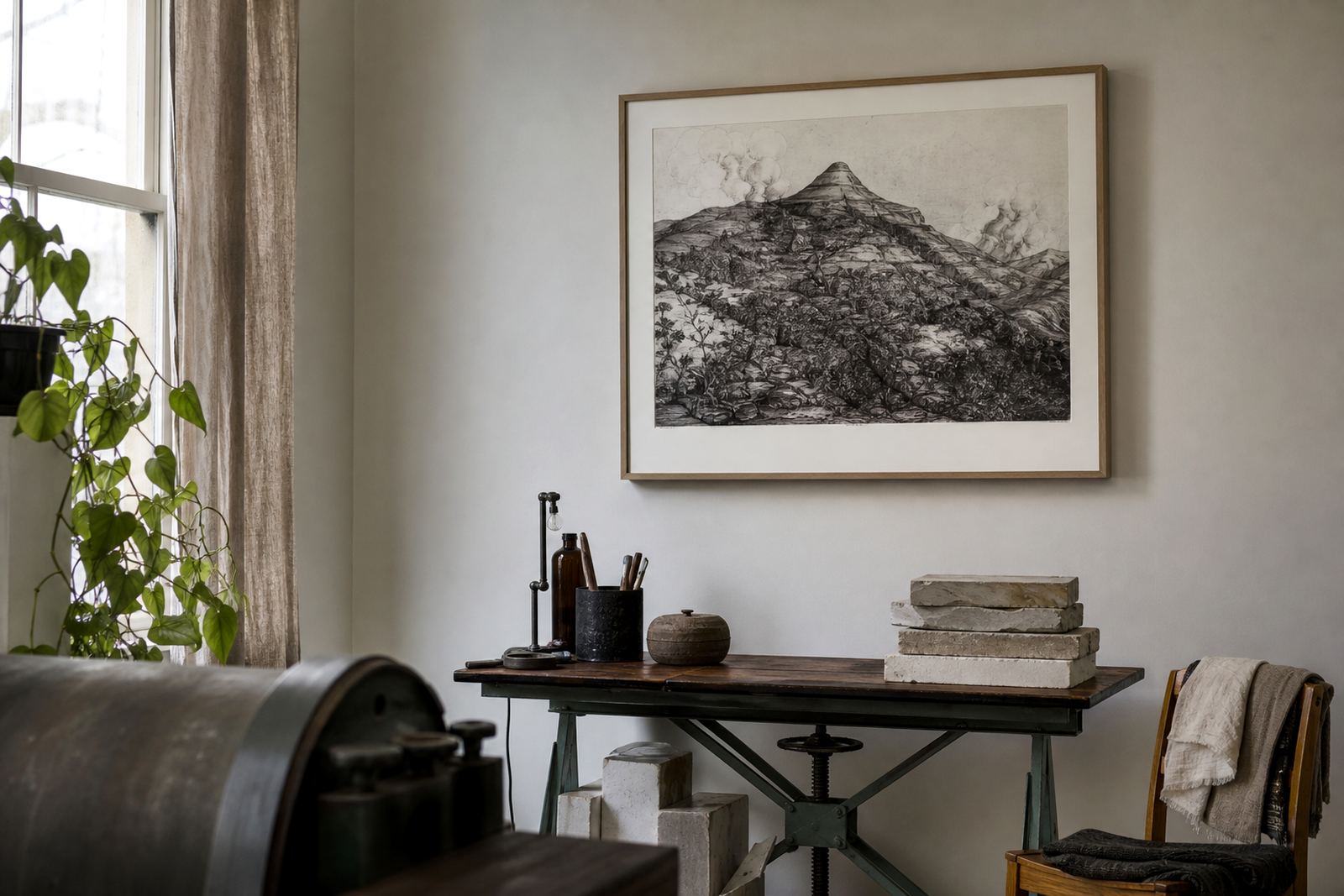
Before hanging anything, stand in the room at different times of day and watch where the sunlight moves. A wall that looks calm at 8am may get a hard beam by late afternoon. The best display position is usually a wall with indirect light, such as one opposite a window or in a shaded passage with controlled lighting.
If you are hanging in a house with strong summer sun, consider these checks before you commit:
- Avoid direct sun on the glass or paper at any time of day.
- Keep framed works away from fireplaces, kitchen heat and aircon outlets.
- Do not hang above radiators, kettles, braais or humidifiers.
- Leave a small gap between the frame and an outside wall if the wall sweats in winter.
- For coastal homes, watch for salt air and condensation near open doors and windows.
In offices and reception areas, it is worth checking whether downlights shine directly onto the work. Artificial light can also contribute to slow fading, so less is better. Lightfastness matters alot when a print is intended for long term display.
Frame it properly for long term display
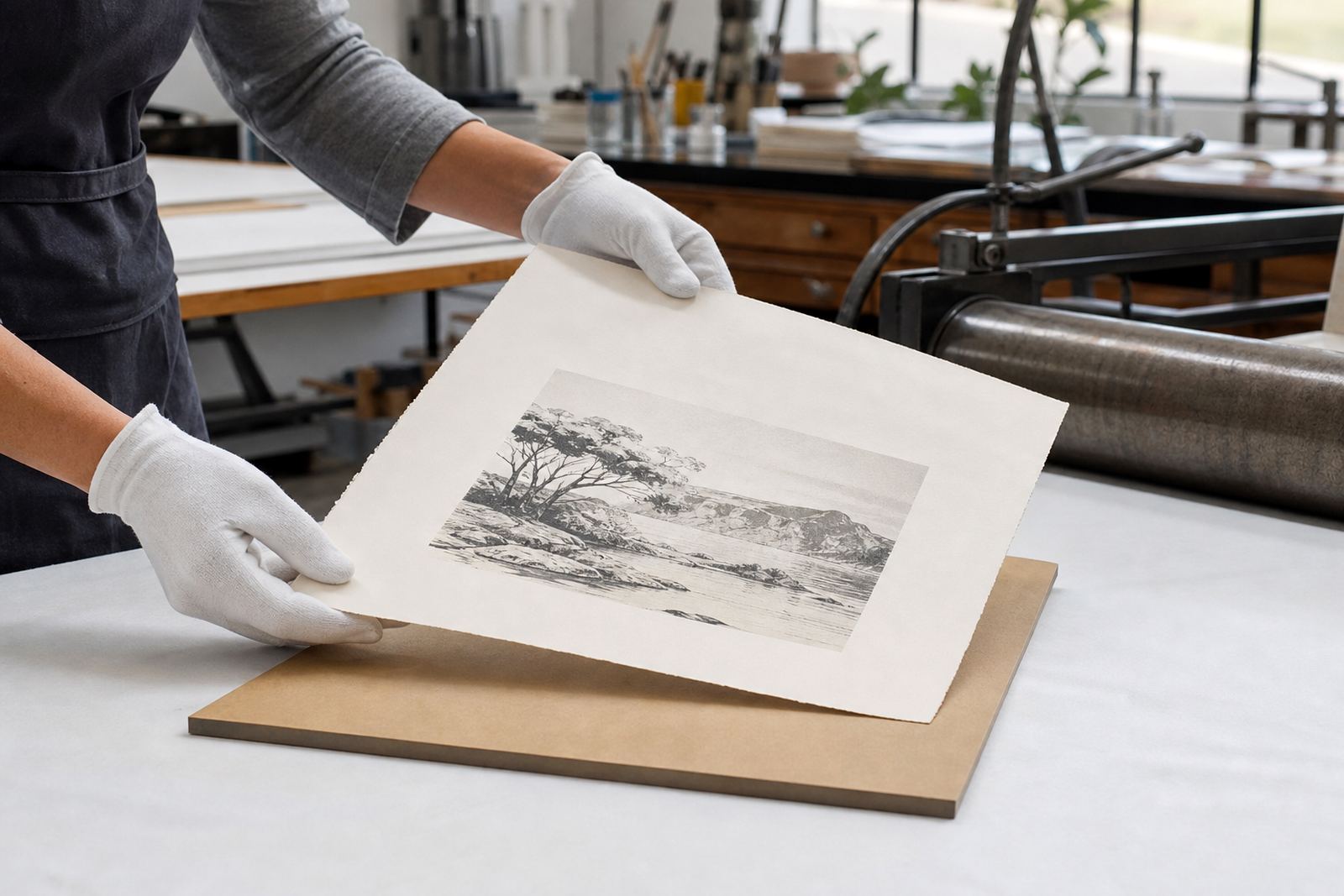
Good framing does more than look neat. It helps create a protective barrier between the paper and the room. Use conservation quality materials wherever possible, including acid free mount board, backing board and tape. A proper mount keeps the print from touching the glass, which reduces the chance of sticking and moisture marks.
For lithographs, a frame with UV filtering glazing is worth considering, especially if the work will hang in a bright room. It does not make a piece immune to light damage, but it can slow the damage and buy time.
- Use acid free materials only.
- Keep the artwork float mounted or properly matted by a trained framer.
- Choose UV filtering glass or acrylic for brighter rooms.
- Make sure the frame is not pressing on the paper.
- Seal the back to reduce dust, insects and damp air entry.
How to light a print without overexposing it
If you want to light a work on paper after dark, keep the fitting simple and indirect. A small picture light placed above the frame can work if it does not create heat spots or shine too close to the surface. LED fittings are generally preferable because they run cooler than older bulb types, but the beam should still be soft and controlled.
Try to avoid bright spotlights that hit the same area for hours every night. The safest display is often the one with the least amount of light needed to see the image clearly. For collectors in Johannesburg, Pretoria or inland towns where daylight is intense, it is often better to rely on ambient room light in the evening rather than a direct lamp aimed at the frame.
A simple test is to stand where you normally view the artwork and check whether you can see glare on the glass. If you can, the light is probably too strong or badly placed.
Simple care routine for collectors
A print does not need constant handling, just regular sensible checks. Every few months, look at the paper edges, the mount and the backing for signs of mould, insect activity or discolouration. If the frame is placed near a window, check for sun streaks or fading changes on the outer edges of the image.
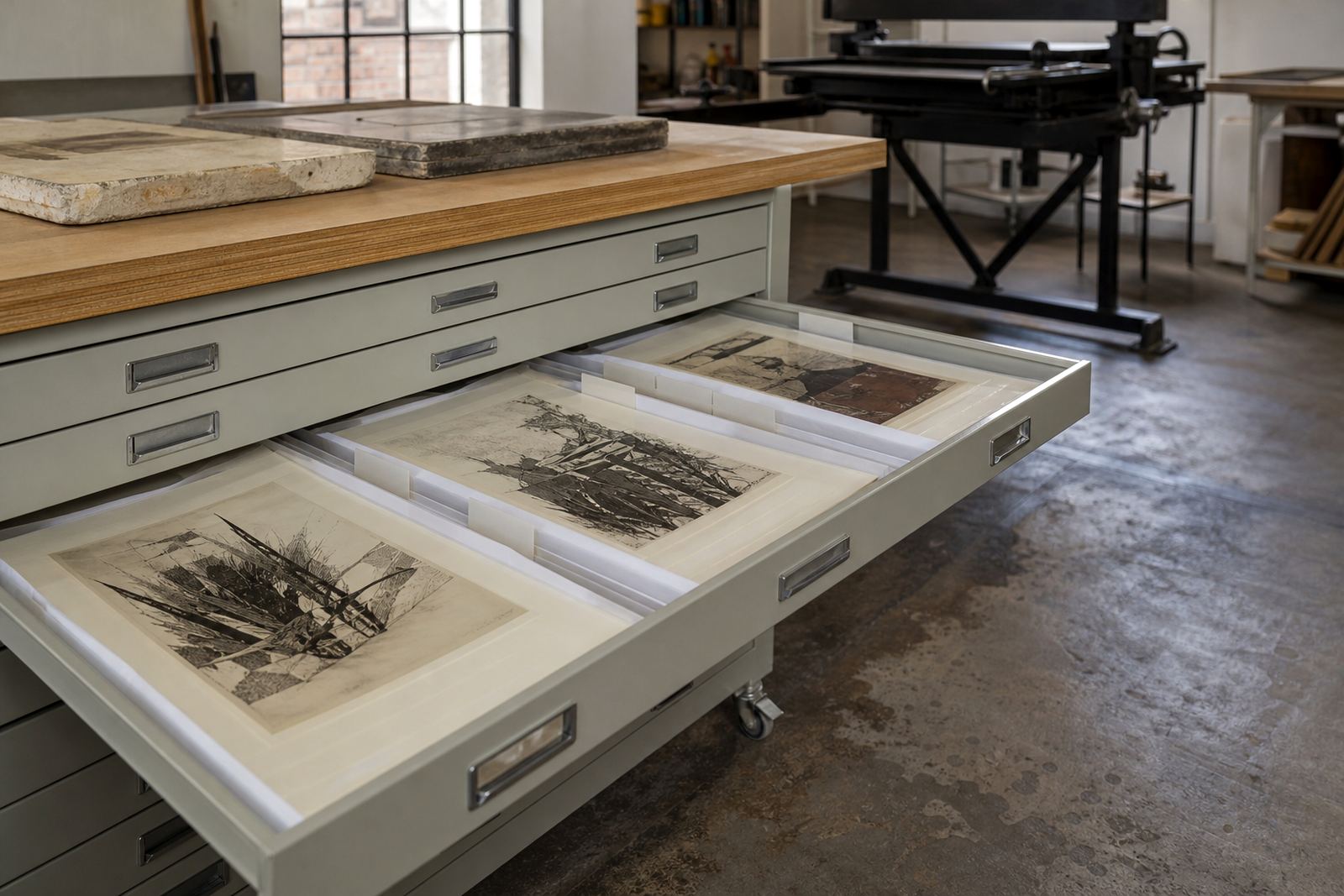
When moving a framed work, hold it upright and avoid resting it face down on a hard surface. If you need to store it temporarily, keep it in a dry room, off the floor and away from direct sunlight.
- Dust the frame with a dry soft cloth only.
- Do not spray cleaner near the glass or frame joints.
- Never use tape, staples or blu tack on the artwork itself.
- Check for damp after heavy rain or a burst pipe.
- Rotate works occasionally if one wall gets much more light than another.
When to seek advice before hanging or re-framing
If you have an artwork that is already old, unframed or showing signs of wear, get advice before placing it on a bright wall. Cracked paper, foxing, fading or cockling should be assessed before the piece is displayed again.
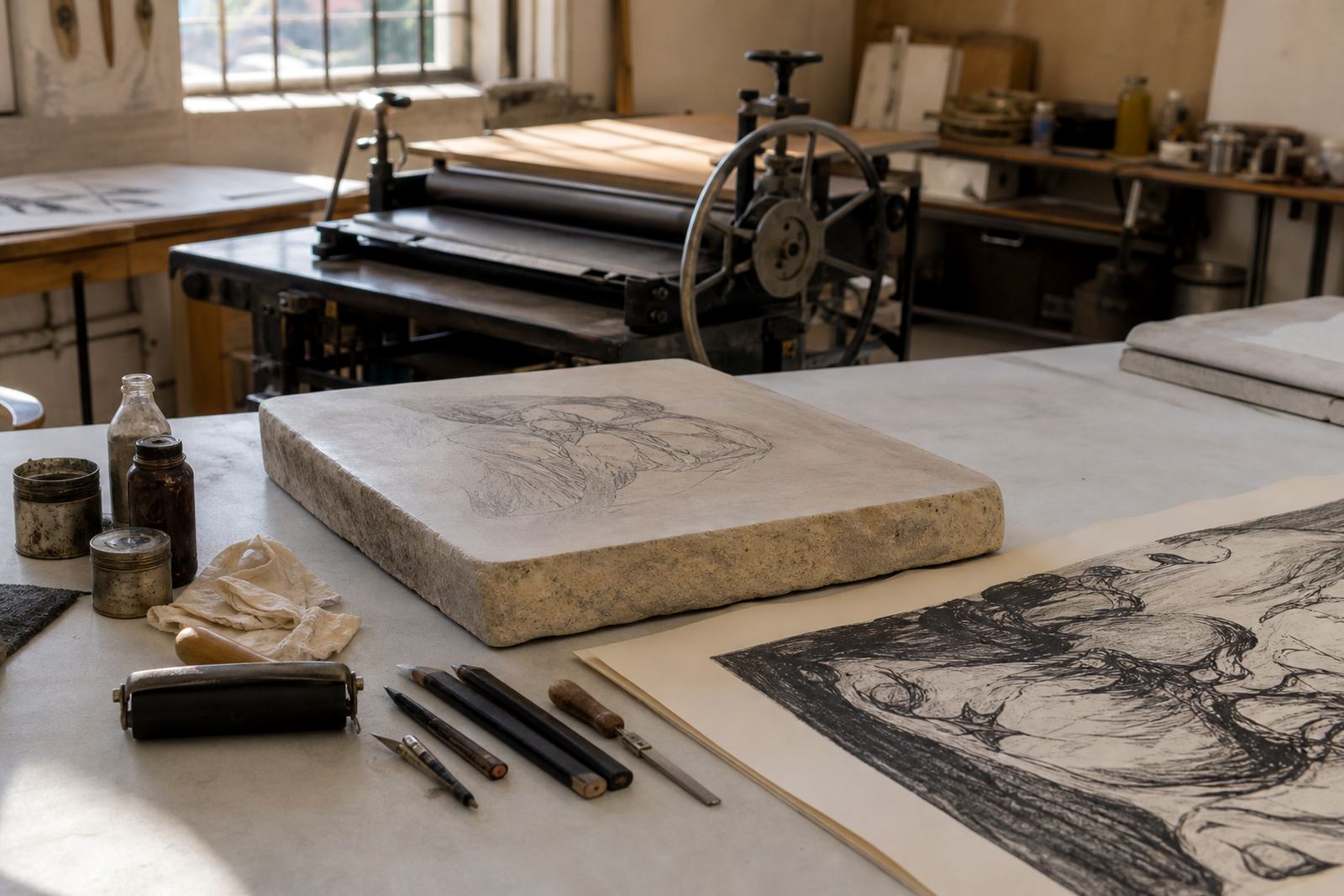
At a fine-art stone lithography studio, the right advice usually covers paper choice, edition handling, proofing marks, packing and framing coordination as well as display conditions. That is especially helpful for collectors who want to keep a limited edition print in good condition while still enjoying it at home. If the work will travel between Cape Town, Stellenbosch, Durban or Johannesburg, it is wise to think about packing and light exposure together, not separately.
A well made print can last a long time, but good placement is part of caring for it. A little planning at the start saves trouble later and keeps the image looking true.