Why paper matters in stone lithography
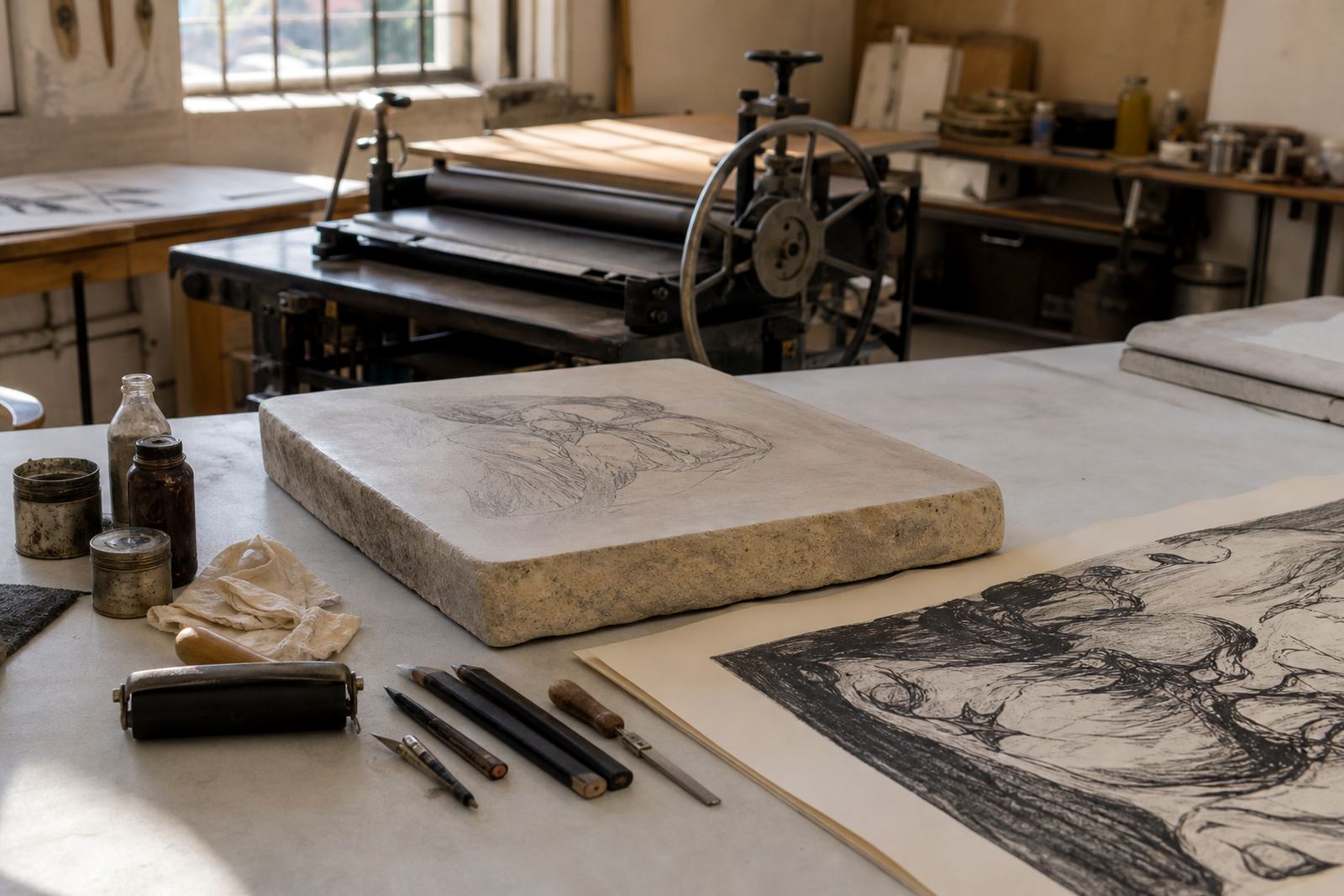
Stone lithography relies on the contact between the prepared stone, the greasy image and the dampened sheet. Paper that is too light can cockle or mark under pressure, while paper that is too stiff may not take the image evenly. In a fine-art edition, the paper is part of the artwork, not just a support.
For editions made in a Woodstock studio, paper choice also needs to suit local conditions. Cape Town humidity, winter damp and summer dryness all affect how sheets behave before and after printing, so a paper that handles moisture well is usually the safer choice for edition work.
Choosing the right weight for the edition
Paper weight is usually measured in grams per square metre. For lithography, mid to heavier weights are often preferred because they can take repeated passes through the press and still hold a clean impression. Lighter sheets can work for certain editions, but they need careful handling and tighter press control.
A useful way to decide is to think about the final purpose of the print. If the edition will be framed and handled minimally, a lighter sheet may be suitable. If the print is likely to be collected, shipped nationally or stored for a long period, a heavier sheet gives more stability.
- Ask whether the sheet will be pressed once or printed in multiple colours
- Check if the paper is sized for damp printing
- Confirm that the sheet can handle signing, numbering and packing without surface damage
- Match the weight to the image scale and the expected edition size
Texture and surface: smooth, toothed or mould-made
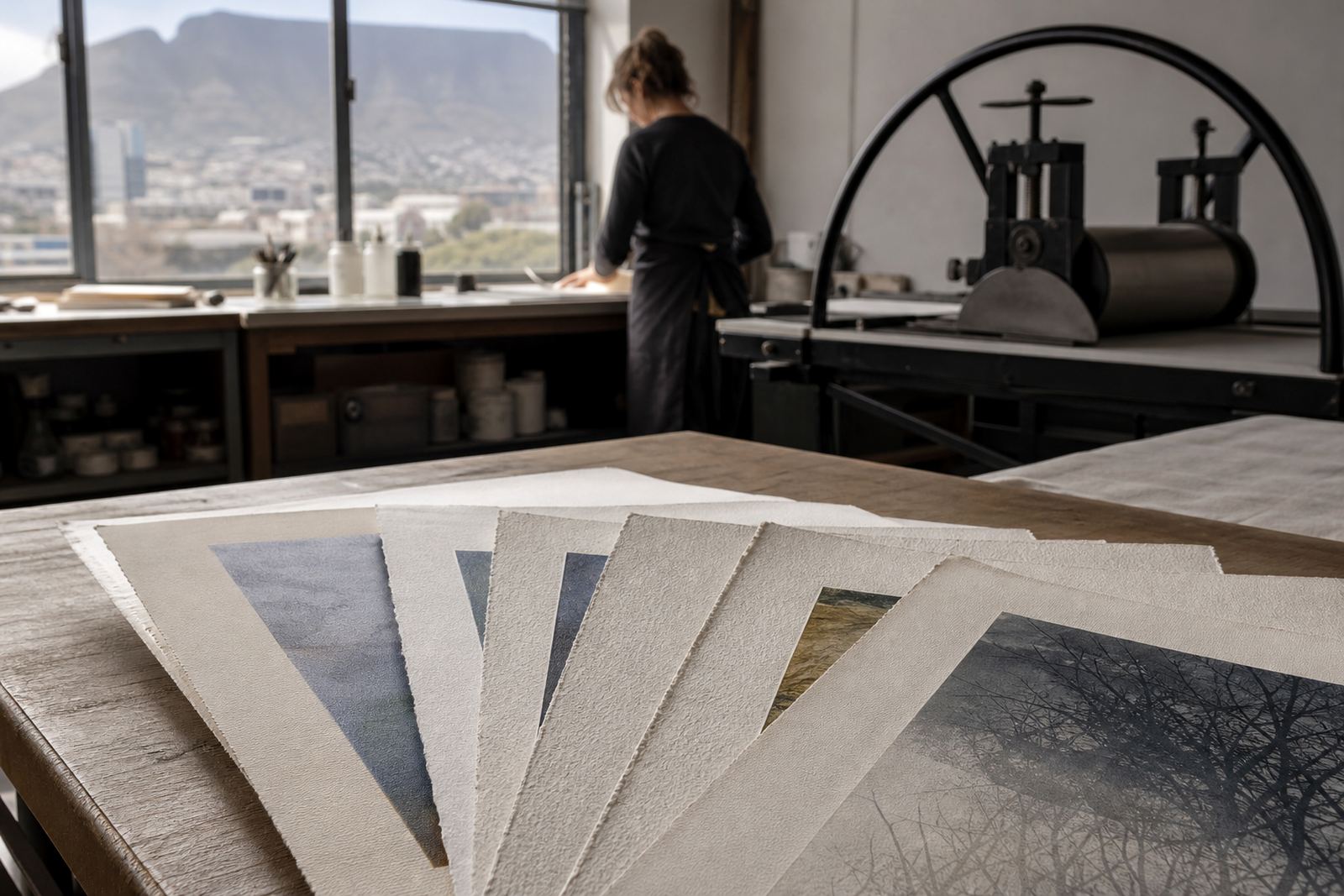
Stone lithography can sit beautifully on a smooth surface, but a little texture can give the ink more life. A very smooth paper may suit fine linework and delicate tonal passages, while a paper with a soft tooth can bring warmth to broad areas of wash and crayon work. The final look depends on the image, the inks and the pressure at the press bed.
Mould-made papers are often chosen for edition work because they tend to feel consistent and print cleanly. Hand-made papers may offer more character, but they can vary from sheet to sheet, so edition planning needs to account for those changes. For collectors, that hand-made feel is often part of the appeal.
Single colour, colour layers and paper behaviour
Where a print uses several colours, paper choice becomes even more important. Each layer adds moisture and pressure, so the sheet must return to flatness between passes. If the paper swells too much, registration can drift. If it dries too fast, the print can lose richness or print unevenly.
For colour work, the studio will usually test a few sheets before the edition begins. That gives a clear sense of how the paper behaves under the blankets, how it releases from the stone, and whether the surface marks easily. In our experience a good proof run saves time later and keeps the edition cleaner.
- Look for even absorption across the sheet
- Check whether the paper stays flat after dampening
- Watch for picking, scuffing or surface lift during proofing
- Confirm the sheet can tolerate multiple colour passes without blur
Handling, storage and packing before printing
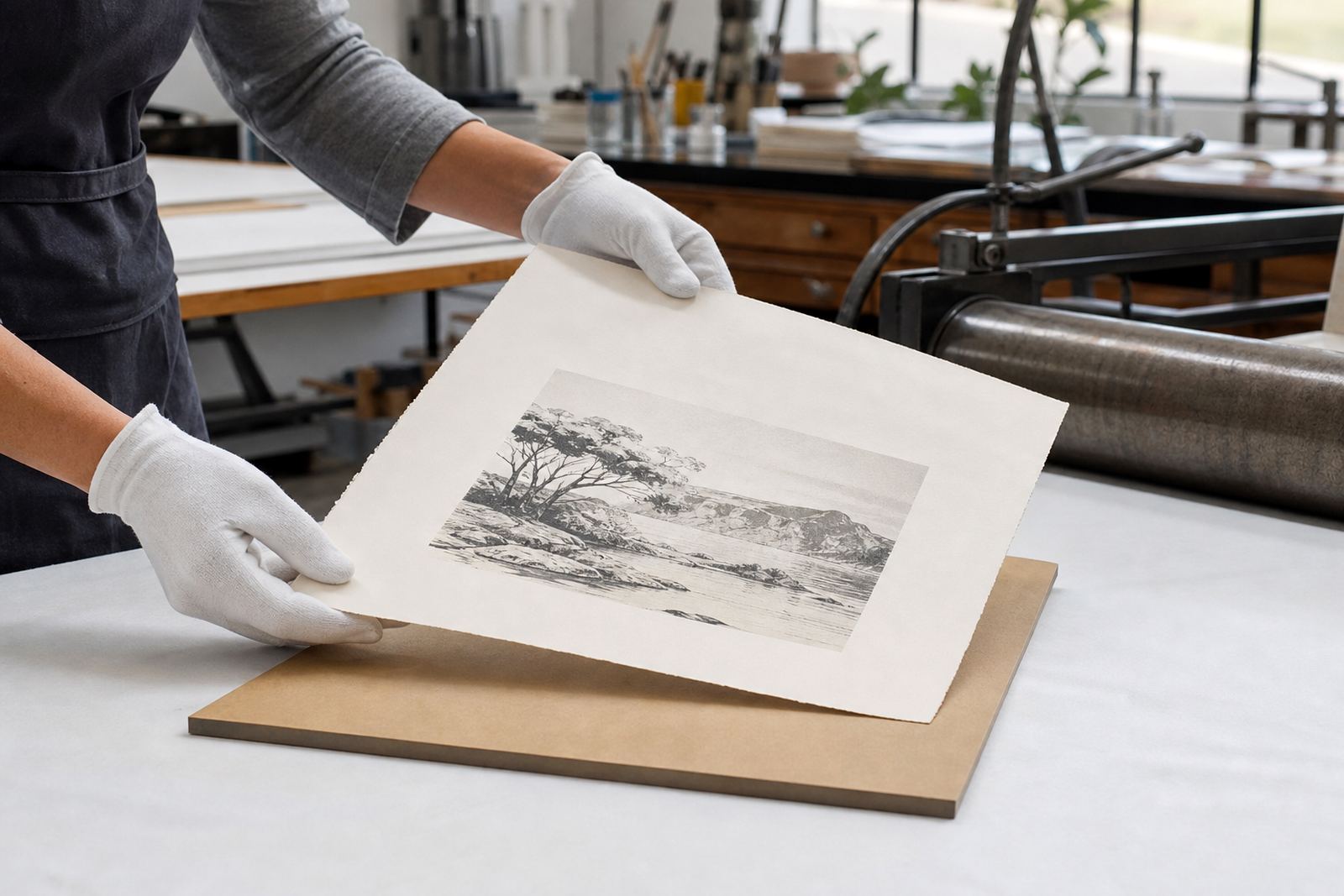
Paper can be damaged long before it reaches the press. Finger oils, dust, humidity and poor stacking all leave marks that become visible in the final print. Sheets should be kept in a clean, dry area, flat and well supported, away from direct sunlight and open windows. In coastal areas like Sea Point, extra care is needed because moisture can creep into a stack overnight.
When moving sheets into the studio, handle them by the edges and keep them covered until needed. If the paper has been transported from Johannesburg, Pretoria or Durban, allow it time to settle into the room before printing starts. That simple step helps reduce curling and awkward movement at the stone.
- Store paper flat, off the floor and away from damp walls
- Use clean gloves or dry hands when handling finished sheets
- Keep the stack covered between sessions
- Let paper acclimatise before dampening or printing
Care after printing and framing choices
Once a lithograph has been printed, the paper still needs proper care. Sheets should dry fully before signing, numbering or packing. After that, keep them away from direct sun, kitchen steam and high heat. Harsh light can fade inks over time and poor framing can warp the paper or stain the mount.
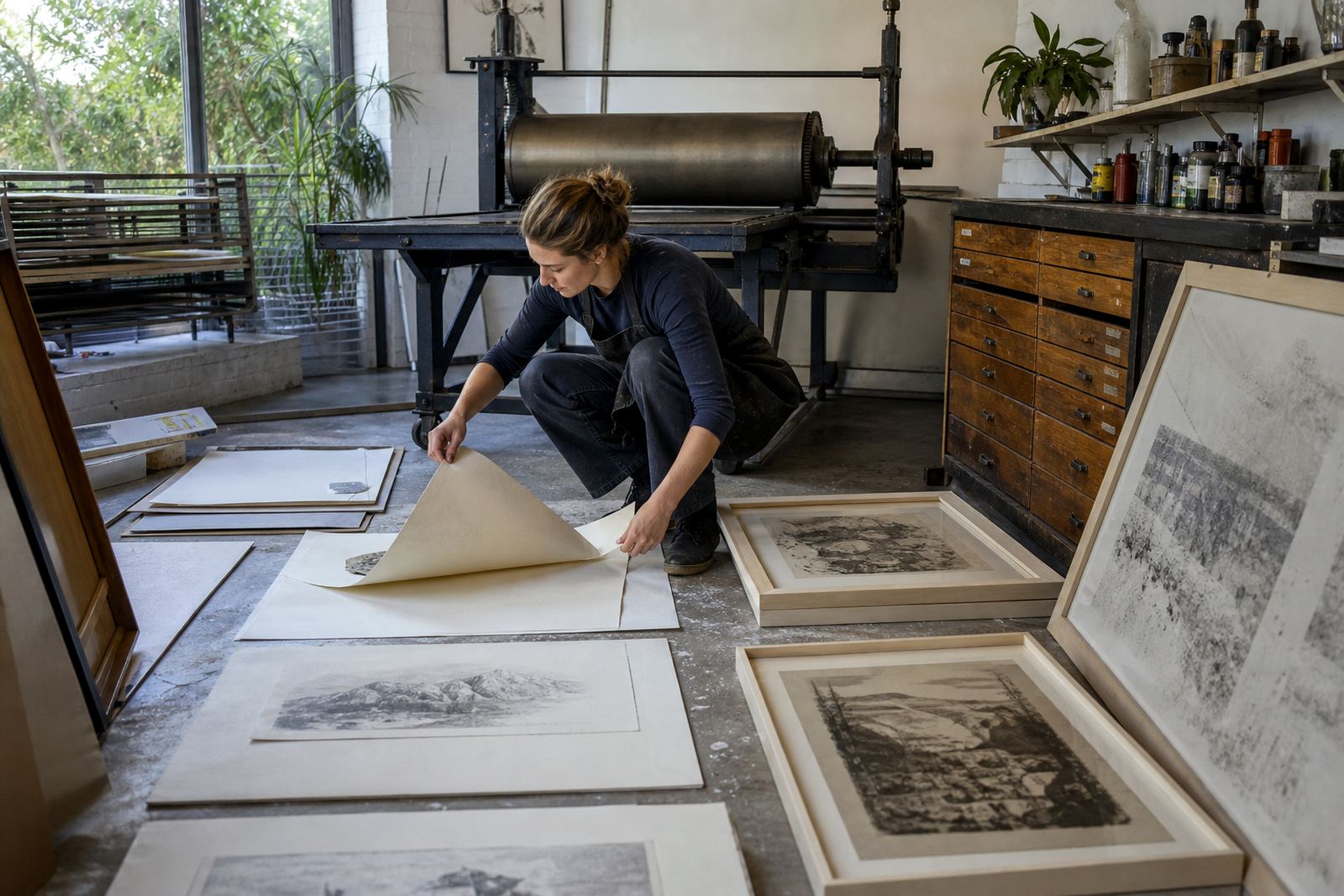
For collectors, the safest approach is acid-free storage and framing materials, with enough space between the print and glazing so the surface does not stick. If a print is being sent to Stellenbosch, Newlands or further afield, archival packing matters as much as the sheet itself. Carefull packing prevents bends, corner damage and surface rub during transport.
If you are unsure about the best paper for a specific image, a short proofing session is usually the best starting point. It lets the artist, printer and client compare surfaces before the edition is committed.