Start With Clean Hands And A Clear Table
Before you touch a lithograph, make sure the surface below it is clean, dry and free of grit. A kitchen table may look harmless, but crumbs, dust and moisture can mark the paper fast, so use a smooth board, a clean dining table or a flat archival surface instead.
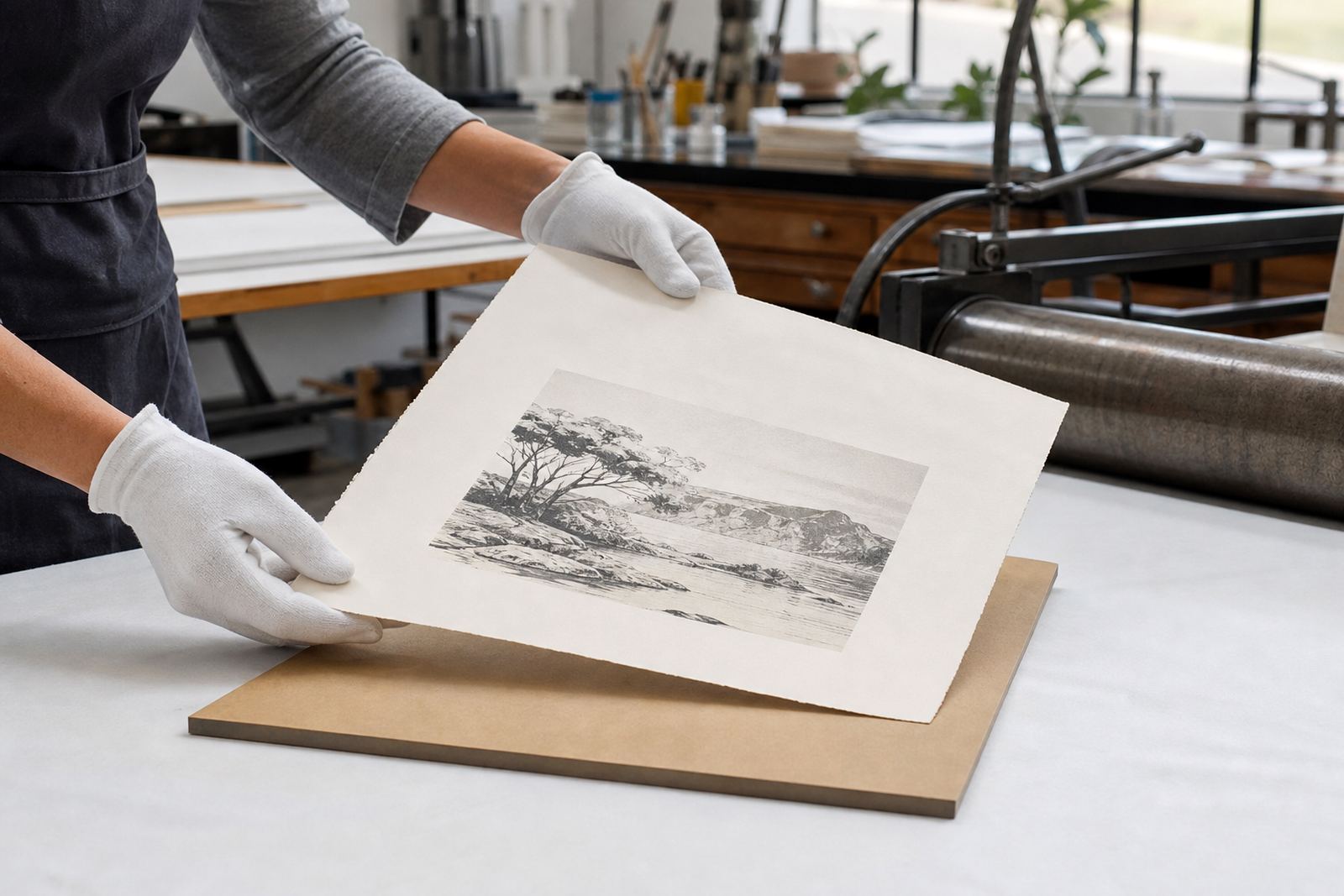
Wash and dry your hands well first. Some collectors prefer cotton gloves, but clean dry hands are usually better for gripping paper because gloves can slip. Handle the sheet by two opposite edges and avoid pressing on the printed image. If the print is framed, move it with two hands and keep it upright, especially in windy Cape Town weather or when stepping out of the car in humid Durban conditions.
How Stone Lithographs Are Made And Why That Matters
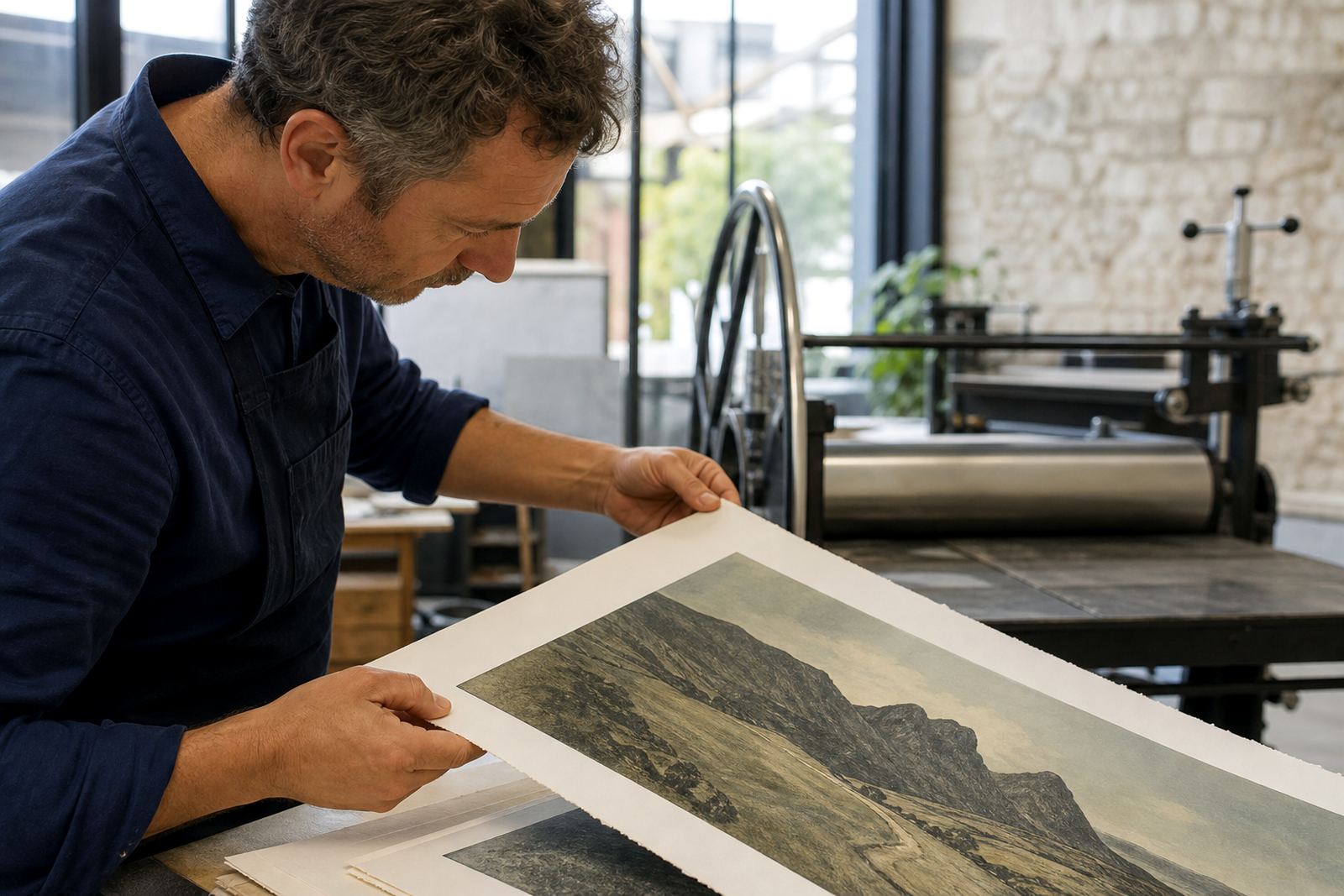
A prepared limestone block forms the basis of this direct printing method. The artist draws on the stone with greasy materials, the image is chemically fixed, and then the stone accepts ink only where the drawing sits. Because the print is pulled from a stone, each impression carries a natural variation in texture, tone and pressure.
That same paper sensitivity means care starts right away. Fine-art lithographs can have soft plate marks, deckled edges or lightly inked areas that should not be rubbed or folded. If you are unsure whether a piece is an editioned print or a working proof, keep it flat and do not add tape or stickers to the back. A print in good condition should always show clear image edges, clean margins and legible signing details when present.
Moving Unframed Prints Without Creasing The Sheet
When a lithograph is unframed, the safest way to move it is flat and supported. Never roll a print unless it was issued that way and you have been advised it can be rolled. Folds can crack the paper fibres and the image surface may show stress lines that do not go away.
- Carry the print between two clean boards or a portfolio folder.
- Keep it away from food, water bottles and loose tools.
- Do not stack heavy books or boxes on top of it.
- If the sheet is large, ask someone to help you carry it level.
- In the car, place it flat on the back seat or boot floor, not against a hot window.
If a print must travel across town, for example from Woodstock to Stellenbosch or from Sea Point to Newlands, protect it from sudden movement by securing it so it cannot slide. Road dust and a quick stop can do more damage than many people expect.
Viewing A Print Safely At Home
Good viewing light should show the detail without heating the paper. Natural daylight from a nearby window works well if the sheet is not in direct sun. Bright direct light can bleach colour over time, while strong heat can dry and distort the paper. In a coastal home, watch for condensation on cool mornings and do not display unframed work near open windows if sea air reaches it.
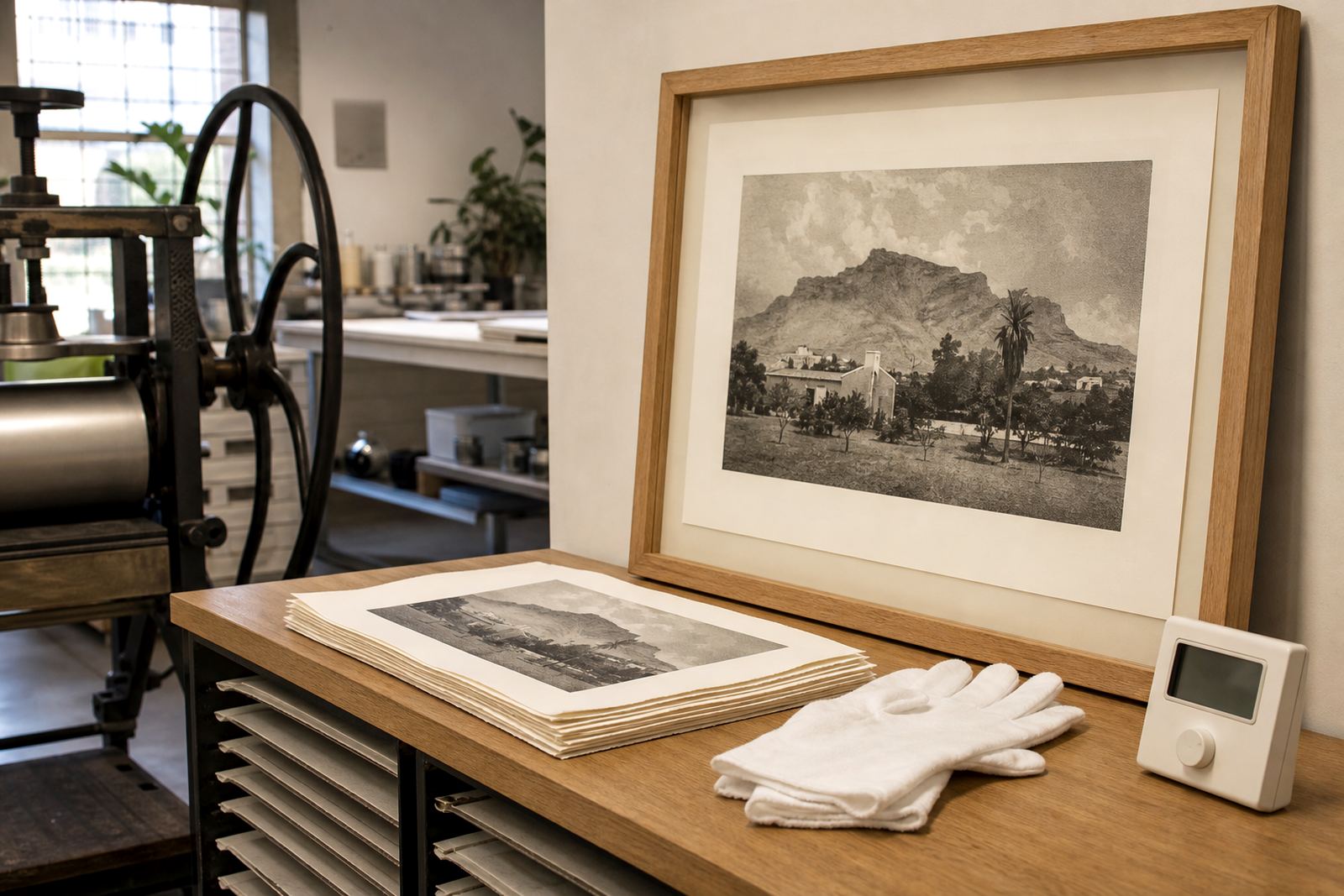
If you are showing a lithograph to guests or moving it from storage to display, support the full sheet with two hands. Do not touch the front of the image if there is any powdery pigment or delicate surface finish. For framed work, check that the backing is secure and that there is a spacer or mount keeping the paper off the glass. Prints should never stick to glass in humid conditions.
Edition Details To Check Before You Store Or Hang
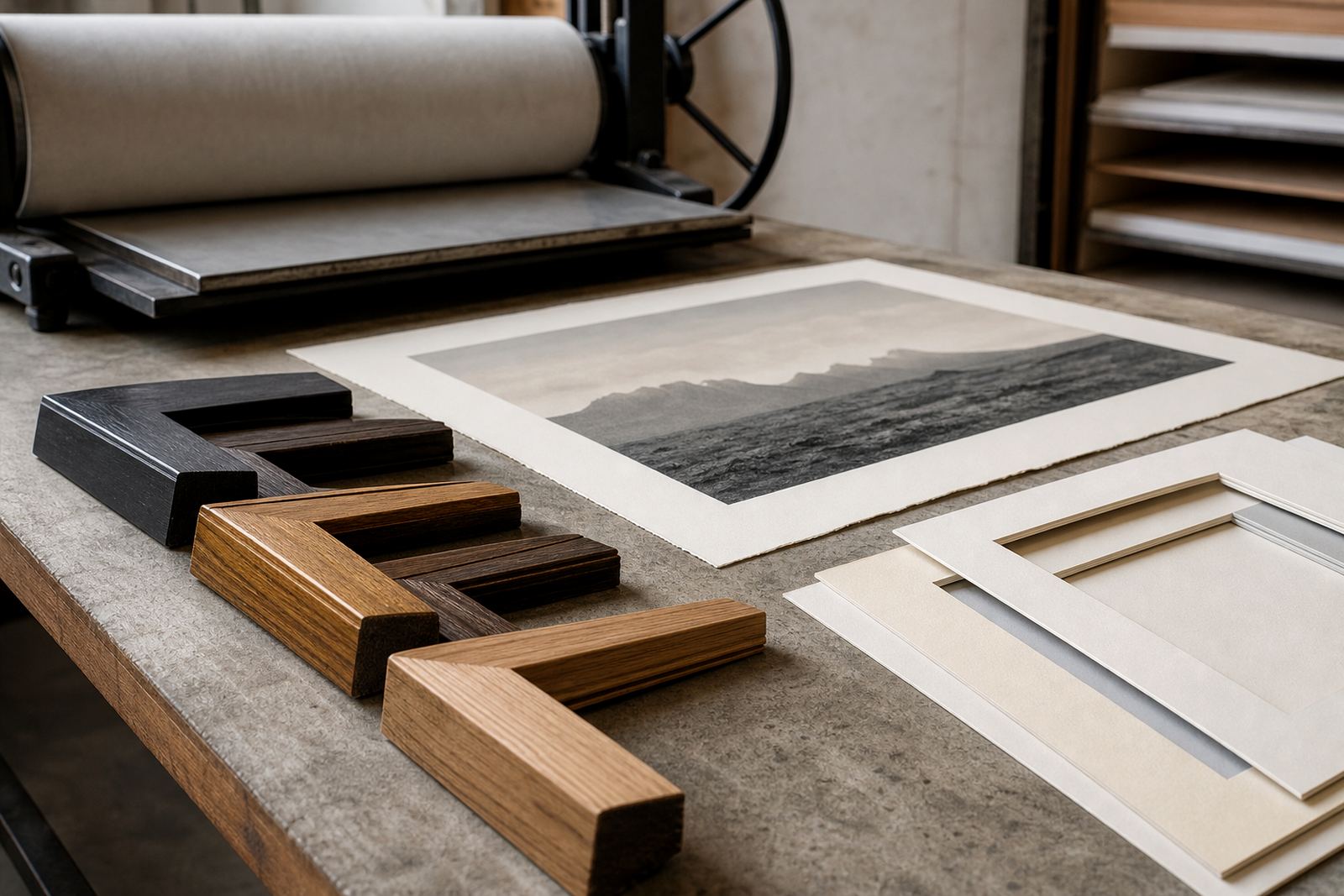
Editioned lithographs are usually numbered, signed or marked with proof notes. Those markings help identify the print within the edition and should be protected as part of the work. Avoid trimming the margins just because they feel wide. Those blank areas often hold the signature, title, edition number or chop marks.
- Check that the edition number is clear and unaltered.
- Keep any notes from the studio with the print in a sleeve.
- Store certificates, receipts or shipping notes separately but together.
- Do not write on the front or back of the sheet.
- If framing, make sure the edition details remain visible where intended.
For collectors, these small details are part of the work’s record. If you need help confirming how a sheet should be presented, ask before making changes that cannot be reversed.
Storage Tips For South African Homes And Studios
The best storage is flat, dry and stable. A cupboard above a laundry room or a garage in summer is rarely suitable because heat and damp can move through the paper quickly. In Johannesburg and Pretoria, dry indoor air can be harsh on unprotected sheets, while in coastal areas moisture can cause waviness or mould if the print is not packed correctly.
Use archival tissue, a sleeve or a map drawer if you have one. Keep prints away from direct floor contact, sunlit walls and rooms with poor ventilation. If a print has been packed for transport, let it rest in its sleeve at room temperature before unwrapping. Sudden changes in air can make paper curl, especially after a long drive or a wet winter day.
When To Seek Help From A Professional Studio
If a lithograph has been bent, rubbed, marked by tape or exposed to damp, do not try to clean it with household products. Water, erasers and sprays can leave stains or disturb the ink. A professional studio can advise on flattening, packing, re-framing and whether a sheet needs extra care before it is handled again.
Collectors who are building a group of works often benefit from a simple routine: inspect the print, note the edition details, store it flat, and only frame it once the room and materials are ready. That is the safest way to keep a stone lithograph looking correct over time, whether it will live in a private collection in Cape Town or be moved between homes in Durban, Johannesburg or Pretoria.
When in doubt, move slowly, keep the print supported and treat the paper as part of the artwork, not just its carrier.