1. Start with clean hands and a clean surface
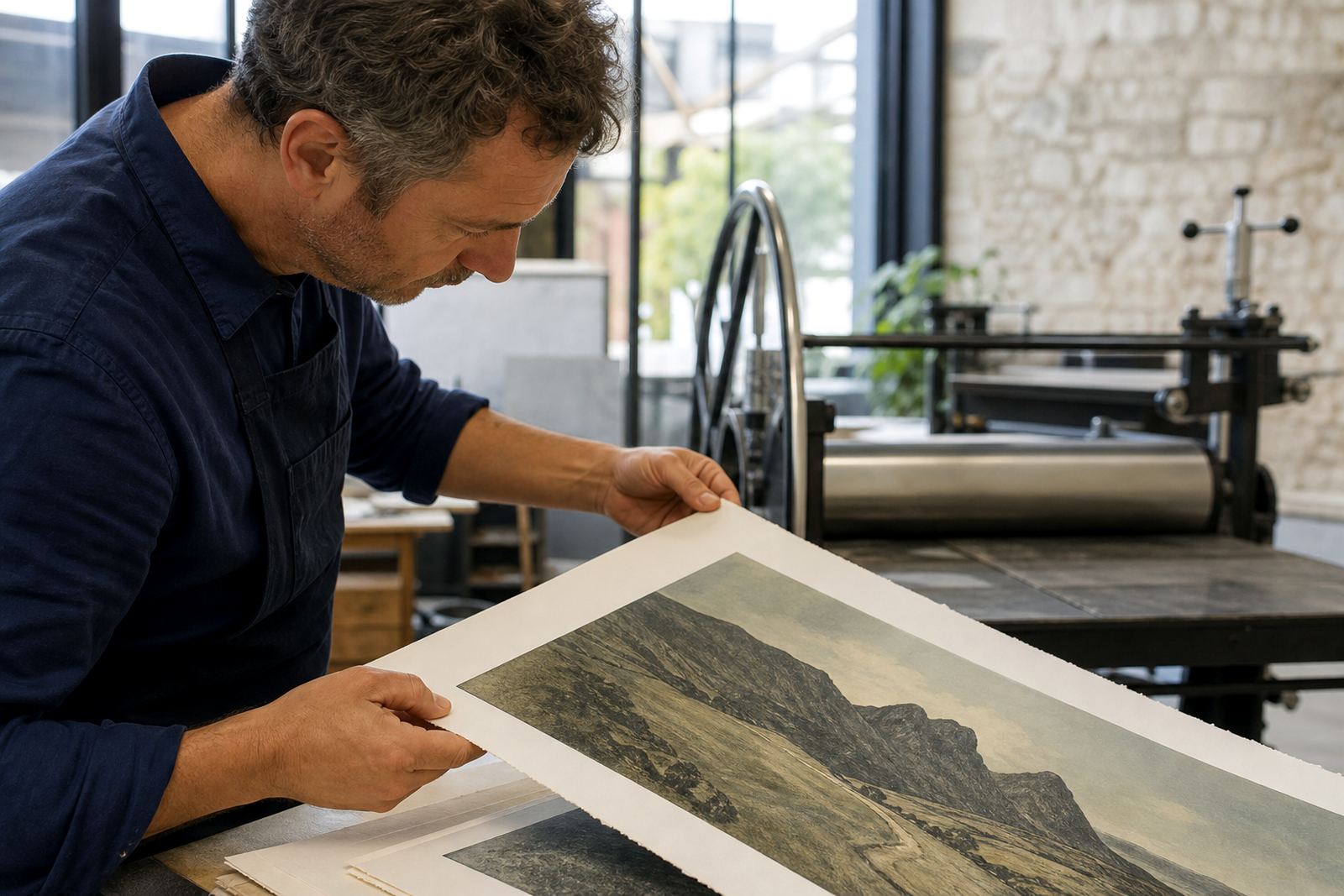
Before handling any lithograph, make sure your hands are clean and dry. If a print has just arrived from the studio or from framing, work on a flat, uncluttered surface with enough space to move the sheet without bending it. A table covered with a clean cotton cloth or acid-free paper is a good option, especially when you are unwrapping several works at once.
Hold the print with both hands, supporting it from underneath rather than gripping the corners. If you need to move it a short distance, keep it level and avoid flexing the paper. Even a small crease can show later, and sharp fingernails, jewellery or rough sleeves can leave marks.
- Wash and dry your hands before touching the print
- Clear the work area of food, drinks and loose objects
- Keep pets and children away while unwrapping
- Never lift a print by one corner only
2. Keep light and heat under control
Light is one of the main causes of fading. Lithographs, like most works on paper, should not sit in strong direct sun for long periods. In Cape Town, Stellenbosch and Durban, bright daylight can be especially harsh on a wall that gets morning or afternoon sun. Near windows, ultraviolet-filtering glass or film can help, but the safest option is still indirect light.
Heat is also worth watching. Avoid hanging prints above heaters, fireplaces, kitchen stoves or in areas that trap warm air. In offices, printers and air-conditioning units can blow dry air across a framed work, which may cause the paper to shift or the mount to lift over time.
- Hang away from direct sunlight
- Use UV-filtering glazing where possible
- Keep prints clear of heaters and air vents
- Do not place framed works in hot cars or near windows for long periods
3. Watch for damp, mould and coastal air
South African coastal humidity can be hard on paper. If you live or work near the sea in areas such as Sea Point, Woodstock or Durban, make sure the print is not stored against a cold exterior wall or in a room that traps moisture. Damp air can cause cockling, staining and, in bad cases, mould.
If you notice a musty smell, small brown spots or a waviness in the paper, move the work to a drier room and check the framing. Never seal a damp print inside a frame. It is better to let it acclimatise slowly in a dry space than to trap moisture behind glass.
- Store prints in a dry room with steady airflow
- Avoid bathrooms, kitchens and laundry rooms
- Keep framed works off exterior walls if condensation is a risk
- Check the back of frames after heavy rain or during humid weeks
4. Use proper storage for unframed prints
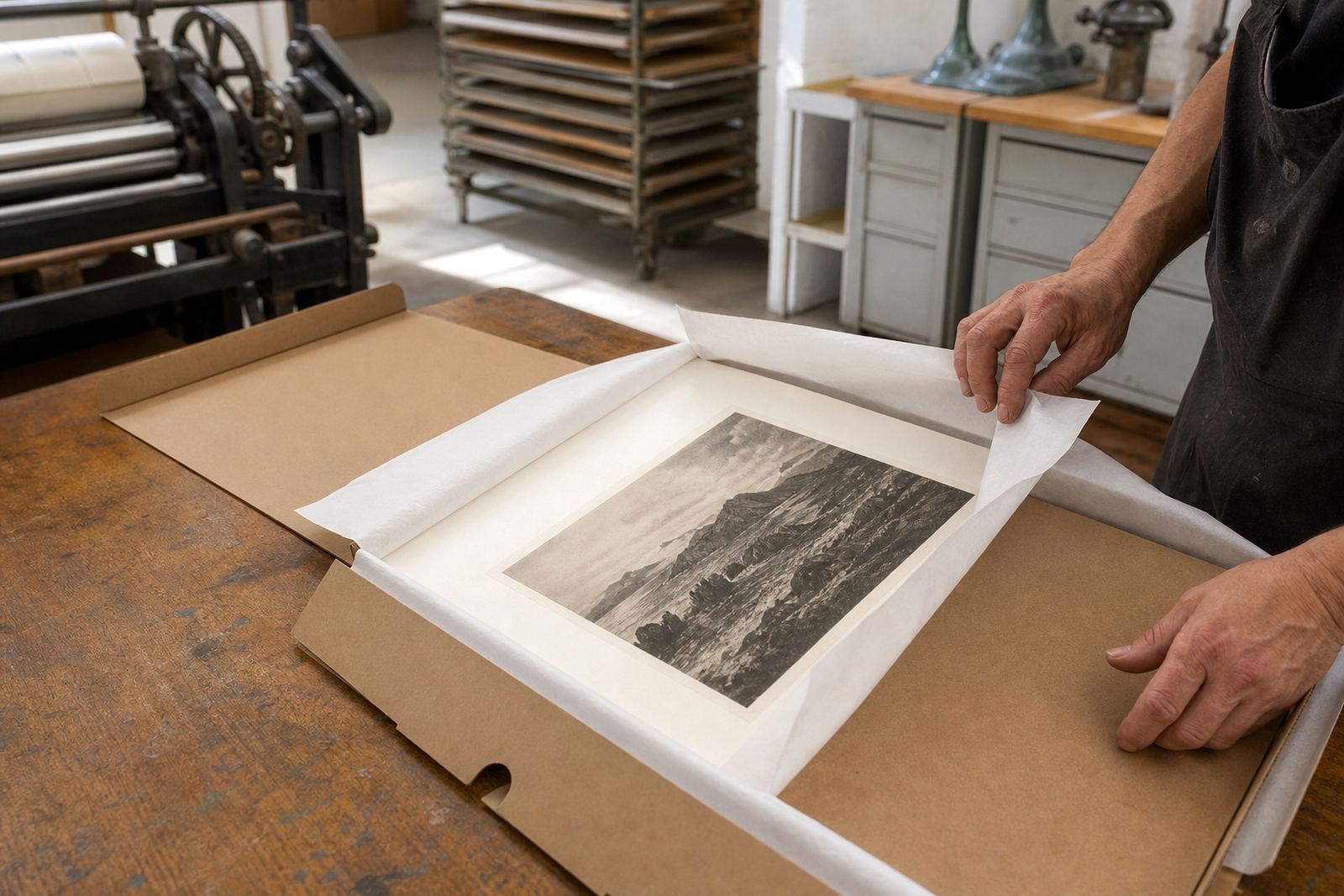
If your lithograph is not framed, flat storage is best. Place it between sheets of acid-free tissue or archival paper, then keep it in a portfolio, map drawer or archival box. Do not roll a print unless it is absolutely necessary, and never use tape directly on the artwork. Rolling can stress the fibres of the paper and leave the sheet difficult to flatten later.
When stacking several prints, separate each one so inks and surfaces do not transfer. Keep the storage area away from sunlight, dust and pests. In older homes or studios, check for leaks after storms or plumbing work, as even a small drip can damage a whole edition.
- Store flat whenever possible
- Use acid-free tissue, sleeves or interleaving paper
- Keep prints off the floor and away from water pipes
- Label each sheet clearly so it is handled less often
5. Frame with care and choose the right materials
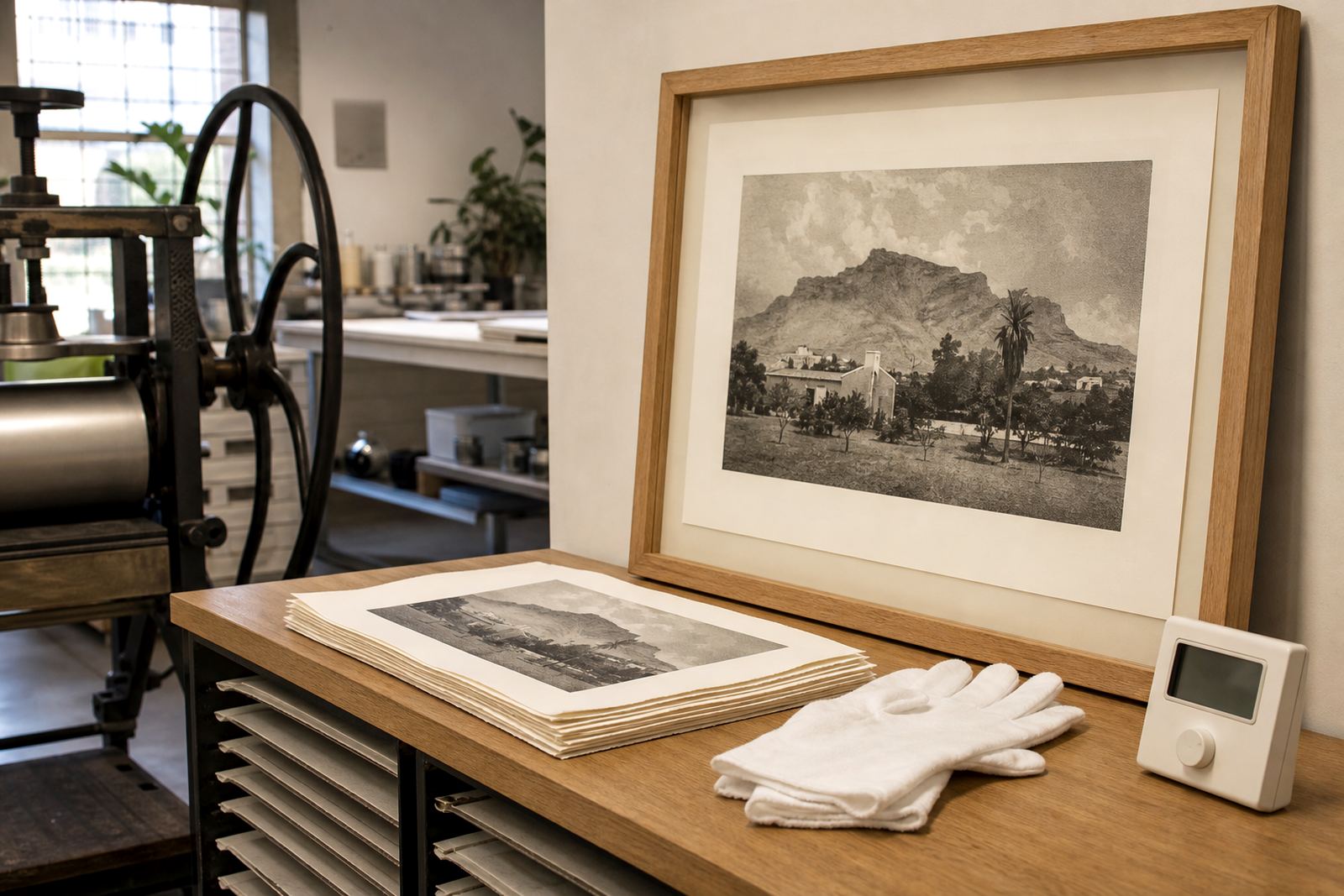
Good framing protects a lithograph, but only if the materials are suitable. The print should not touch ordinary cardboard or sticky tapes that can yellow over time. Ask for archival mount board, proper spacers if needed, and glazing that reduces UV exposure. A float mount can work well for some prints, but the method should suit the artwork and the paper size.
For collectors in Johannesburg, Pretoria and Cape Town, framing should also take local conditions into account. Dusty air, dry winters and changing temperatures can all affect paper and adhesives. If the print is valuable or part of a limited edition, make sure the framer knows it should be treated as a fine-art paper work not a poster.
- Use archival mount board and backing materials
- Avoid pressure-sensitive tapes on the artwork
- Ask for UV-filtering glazing where suitable
- Make sure the frame is sealed against dust but not trapped moisture
6. Handle editions, labels and signatures correctly
Editioned prints should be kept with care from the first day. Keep the certificate, invoice or edition note in a separate safe place, not behind the glass with the work unless the framer has designed for that. If the print is signed and numbered, do not cover or rub that area during cleaning. The margin is part of the object and should stay clean and visible.
When moving a framed lithograph, carry it upright with two hands and avoid pressing against the glass. If you need to transport several works at once, wrap each frame individually with soft, clean padding. For galleries, offices and homes, a simple check every few months is enough to catch dust, loose fittings or signs of movement before they become a problem.
- Keep edition information and paperwork separately filed
- Do not clean signatures or numbering with liquid
- Carry framed works upright and with support
- Inspect the frame, hanging wire and corners regularly
7. Simple home and office checklist
If you want a quick routine, use this short list every season. It helps whether your print hangs in a lounge, studio, gallery office or meeting room. A little attention goes a long way, and most damage happens through small habits rather than one major accident.
- Check for direct sun on the wall at different times of day
- Feel the room for damp, stale air or unusual heat
- Look for dust, mould, buckling or discolouration
- Confirm the frame is secure and level
- Ask a professional framer or print studio if anything looks uncertain
If you care for your lithographs in this way, they can stay crisp and presentable for many years. Small checks now are easier than repairs later, and they help protect both the image and the paper.